SONYA WOHLETZ
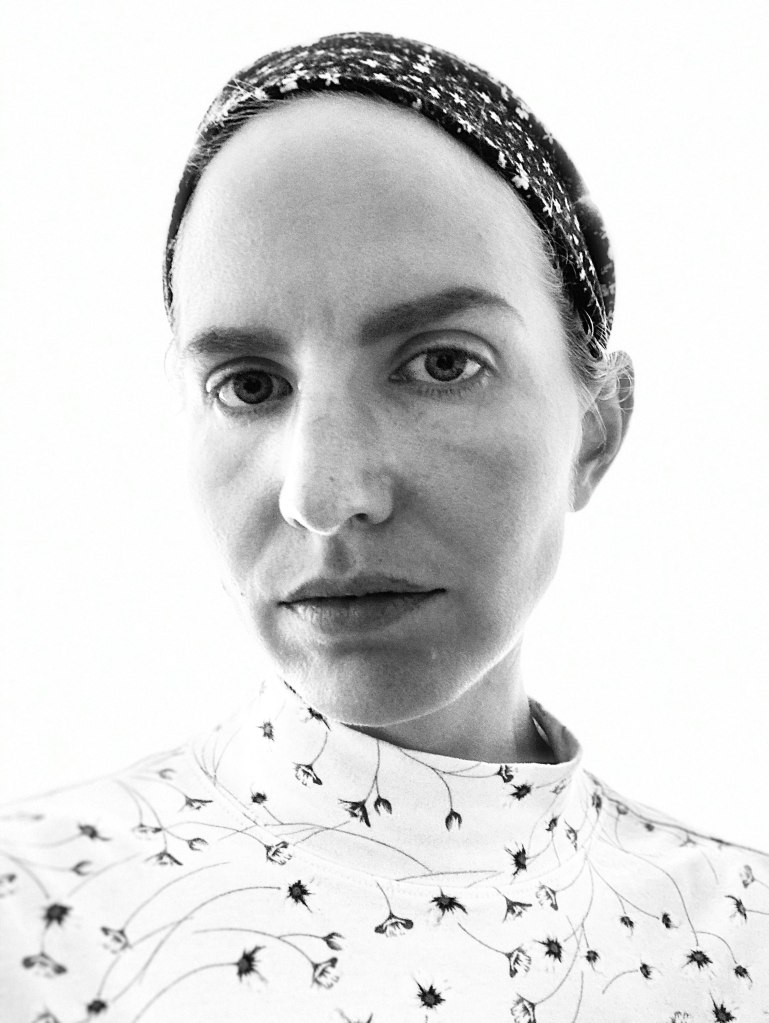
Sonya Wohletz is a writer and poet living in the Pacific Northwest. Her first book of poetry, Bir Sıra Sonra/One Row After, was published by First Matter Press in 2022.
BOOKS
+MILKLINGS+ // South Broadway Press (Forthcoming)
Bir Sıra Sonra/One Row After // First Matter Press
ONLINE PUBLICATIONS
Two Poems // South Broadway Press
Promise: October 17th, 2025, Mexico City // Roanoke Review
Ritual Grief // La Piccioletta Barca
Easyboned // The Orange Rose Literary Magazine
Swallow // Trace Fossils Review

AUTHOR INTERVIEW
South Broadway Press interviewed Sonya Wohletz to get to know the author of the forthcoming full-length poetry collection +MILKLINGS+ a little better.
SBP: WHAT IS FUELING YOUR CREATIVITY RIGHT NOW? WHERE DO YOU FEEL AT YOUR MOST CREATIVE?
SW: I seem to have various cycles of creativity, which include times of inwardness, reflectiveness, and visions, as well as times of intense productivity. I feel creative in different ways depending on my current energy levels and seasonal cycles. After an intense period of creative output, I have to go into my hibernal mode where I am taking things in, resting, and dreaming. This is also creative work. I feel most creative when I have time to be in touch with myself, including calm and quiet space. I also feel very creative when I am outdoors and in touch with nature.
SBP: WHAT MADE YOU FALL IN LOVE WITH POETRY?
SW: I wanted to be an academic researcher, and I always felt that if I wanted my writing or ideas to be taken seriously, they had to be expressed in an academic language. Education was always important to me, and so I was disheartened when I failed to succeed academically. The urge to write and create never went away, though. I have had this in me since I was a child. When I finally let go of the self-imposed restriction that I needed to achieve academically in order to write, I found myself writing poetry. I realized this was a very intuitive mode of expression and learned to read poetry in a way that I never had before. I also started to listen to poetry readings and recordings. Joy Harjo, Adriana Pinda, Jane Hirschfield, Louise Glück, and Luci Tapahonso were the some of the first poets I listened to that really drew me into the world of poetry through the sounds of their voices. The more I read and listened, the more I learned to be in touch with my creative urge. I also love to draw and paint, but while caring for young children having many art supplies/projects out in the open is not easy. The intended project inevitably becomes something else. I suppose that is true with all creative projects, though. Writing poetry is something that I can always do regardless of my situation—economic, physical, etc. All I need is a pen and paper (and sometimes just some time to zone out and let words arrive as they sometimes do). Poetry as an art form is very free, yet also very rigorous and demanding. It can be so many different things—a puzzle, a form of play, a mystery to solve, an archaeological site, a mantra/repetitive rhythm, or the verbal equivalent of a doom drawer/mess.
SBP: WHO DO YOU HOPE FINDS YOUR POETRY? WHO IS YOUR ART FOR?
SW: I hope that other writers and poetry lovers find my work. If they like it or remember it, I would be deeply flattered. So much of creative work happens in solitude for me, and the few times where I have an opportunity to share or receive appreciation (or even criticism) reminds me that I am alive and my efforts have meaning. Hopefully my work speaks to other people who have mental health challenges, motherhood, grief, and other life experiences that commonly find their way into my work.
SBP: IF YOUR WRITING WERE A KEY, WHAT DOOR WOULD IT UNLOCK, AND WHAT WOULD YOUR READERS FIND ON THE OTHER SIDE?
SW: This is a tough question to answer! I would say it unlocks or opens permission to live in multiple states of consciousness and awareness—the living and waking dreams and visions, and experiences of language that emerge through daily interactions, thought processes, and hearing the sounds of the earth. Permission to be in the experience of it all and not to impose internal restrictions, meanings, or linear interpretations.
SBP: WHAT POEM IN YOUR BOOK WENT TO A PLACE YOU WEREN’T EXPECTING, OR WHICH WAS THE MOST/LEAST CHALLENGING TO WRITE?
SW: I had a lot of challenging poems that I grappled with in the writing of this book. I think one of the poems that really surprised me was “Memorial (For Martha)”. I wasn’t expecting to write that poem, and then it became an important piece for me.
SBP: WHAT HAS BROUGHT YOU JOY THIS LAST YEAR?
SW: Being with my children.
SBP: WHAT IS YOUR CURRENT OBSESSION?
SW: Rituals.
SBP: WHAT MAKES SOMETHING HARD TO WRITE OR CREATE?
SW: Anything that is painful or deeply important.
SBP: WHAT IS THE VALUE OF WRITING AND ART IN THE CURRENT STATE OF THE WORLD?
SW: It is necessary to realize that all living (and non-living) things are capable of creative thought and action. Even rocks are creative, and their creative actions are something to be respected. Each person also has their own creativity to be respected and nourished, each community. Human creativity has and will always be a necessary condition for survival. Death and endings are also a part of these cycles. I don’t know if that answers the question. Will writers and artists save the world? Writers and artists in a sense create the world(s) and ritualize passages into new states of being and non-being.

 south broadway press