Kodak Black Man Reads Poetry | Said Shaiye

Image: Ben Kolde

Kodak Black Man Reads Poetry

St. Paul 2021 

You double tap hold your Airpods. Noise canceling activated. You have your sunglasses 
on. 

You are indoors, in a book shop, somewhere in St. Paul, Minnesota. You are waiting for 
your turn to read. All these people are here to watch you read. Not just you, though. It’s 
never just you.  

Your mentor is on stage reading an essay. He is animated. He can spit like a muhfucka.  

You realize what essay he’s reading, and how traumatic it is for you to listen to. It 
reminds you of the Summer of Floyd, when everything burned around you. When you 
were afraid of racists from Wisconsin, who drove through these streets, laying cans of 
gas in alleyways. Shooting up Black homes. Coming back later that night to set them on 
fire. 

You ask yourself how on God’s green earth you ended up in a place as racist as America.

You realize you never had a choice. Much like being a writer, you never had a choice. 

Your family left Africa for this shit.  

On your first night in America, it was a drive-by on your block in Atlanta.

You’ve always told that story and repeated that catchphrase: we left Africa for this shit? 

You’re in the thick of it now. That essay is starting to crescendo. You can see the impact 
it’s having on your mentor. He is getting more animated in his delivery. 

Damn, that nigga can spit. 

Also: he is feeling it. You are feeling it, too. Pacing the corners of the room, nervous. You 
turn on Kodak Black. Kodak raps about murder, but it calms you down. Kodak raps 
about the things which he was born into, which he had no choice but to survive. Kodak 
raps about the struggle cuz it made him a man. You know about the struggle, but this 
audience of white faces won’t understand. 

Your mentor is done reading now. It’s almost your turn to go on stage. You instinctively 
start walking towards him. You meet him just outside the audience’s expectant eyes. 
White people are always expecting something from us, aren’t they?  

You embrace your mentor, now. He is shaking. You see the tears in his eyes. Not quite 
tears, but more like… a swelling, of moisture, just shy, of teardrops.

You hug him now. You stand there hugging. It is a shared struggle, these Black male 
bodies, in this country built on the understanding that all your bodies are worth 
is the price of strange fruit. 

Poplar trees, nigga. Emasculation. Manhood stuffed inside of mouth. Tarred
and feathered. 

This the country where niggas like you come up missing. Whether you rap about murder 
like Kodak, or you stand in front of white audiences like a poet professor. You could come up missing, young nigga. No matter how old you are, you will always be a boy to  them. 

And you know this. Not even deep down, you know this consciously. 

That’s why you don’t care about their praise, about their critique, about their putdowns.

You don’t care about their fear of your manhood. About their fetishes surrounding it.

You don’t care about their cuckold fascination.  

White wives, Black dick. You don’t care about it. 

You only care about your words, about your honor, dignity, life.  

You go on stage to spit these bars, but you don’t even care about them half the time. 

You only care about this moment, this shared embrace. Two Black men, acknowledging 
each other’s existence. Holding each other in ways that the world is incapable of.  

You only care about the now.  

And now… you go on stage.  

Dim the lights.  

Turn off that Kodak. 

Fade to Black Man.

Said Shaiye is an Autistic Somali Writer & Photographer. His debut book, Are You Borg Now? was a 2022 Minnesota Book Award Finalist in Creative Nonfiction & Memoir. He has contributed essays to the anthologies Muslim American Writers at Home, The Texas Review’s All-Poetry Issue, and We Are Meant to Rise: Voices for Justice from Minneapolis to the World. He has published poetry & prose in Obsidian, Brittle Paper, Pithead Chapel, 580 Split, Entropy, Diagram, Rigorous, Night Heron Barks, and elsewhere. He holds an MFA from the University of Minnesota, where he was a Graduate Instructor of Creative Writing, as well as a Judd International Research Fellow. He teaches writing to Autistic kids through Unrestricted Interest, as well as in the English Departments of several colleges in the Twin Cities.
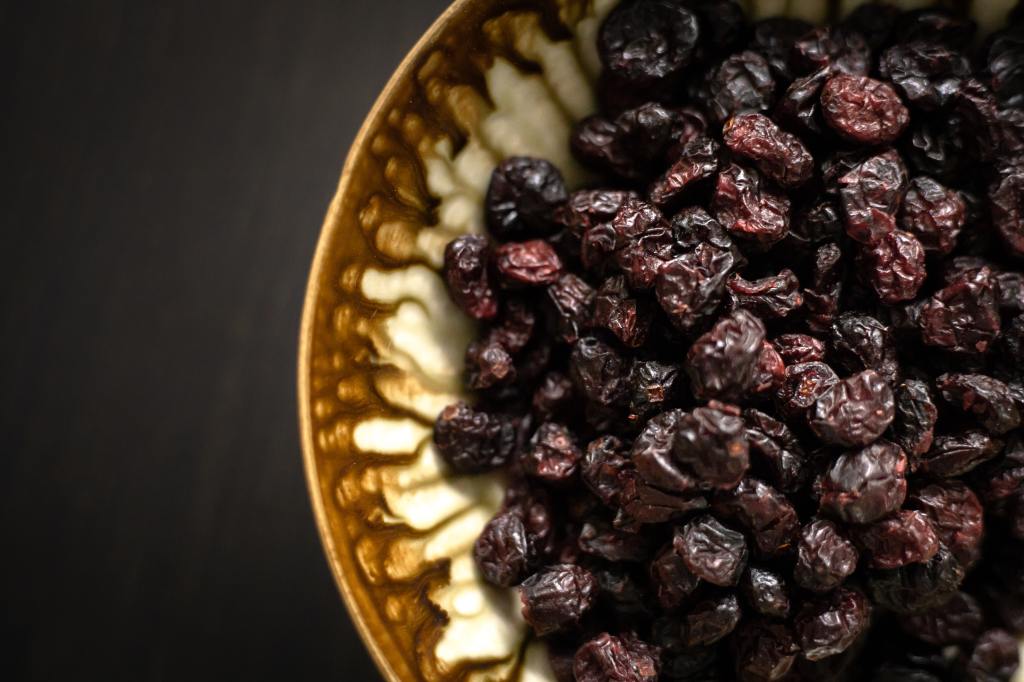
reasons for raisins | Jeffrey Spahr-Summers

Image: Andreas Haslinger

reasons for raisins (6)

tell me you know something
of the love lost on grapes
of skin peeled away
very carefully
and while eating the grapes
skinned and exposed
for what they really are
think of those of us who crave them
who want only to eat them
again
and again
and again
who want only to hold them
to save them for another day
to do the very human
thing and change them
into raisins or wine

reasons for raisins (7)

call it age if you like
or experience or maturity
just as wine matures with age
or call it a step in the cycle
through which all living
things must pass
in order to survive as
humans we believe
in the pleasures of life
this is why we eat grapes
or drink wine
or plant such seeds
and as humans we ultimately
mature so as to provide for
ourselves and the ones we love
this is why we must grow old
so it is also with grapes

reasons for raisins (13)

here are the ones
that got away the ones
so cocksure and cool the ones
who ran so electric
as they slipped under the
stove the refrigerator and the sink
how sad they all seem now
cloistered in the corner dust

Jeffrey Spahr-Summers is a poet, writer, photographer, and publisher. He is the publisher and editor of Jasper’s Folly Poetry Journal.

El Miembro Marchito | Amy Wray Irish

Image: The Two Fridas, by Frida Kahlo

El Miembro Marchito

   after Frida Kahlo’s The Two Fridas, 1939

Separated, yet inseparable.
Invented, yet genuine as pain.
Perhaps all women do this—split

Ourselves, brutally cutting the pulsing wood
of our psyches, dividing
into two branches of self.

One—the withered limb, desiccated
by the outer blow. The other—still bright
with possibility, the ‘might have been.’

The before, the after. The killing stroke
that always comes.  Ironic that ‘growing up’
halts growth, strips all our weakness bare.

Perhaps inevitable—that we are no longer alive
with possibility. But once shattered,
we are still fed by childhood.

Strength still trickles in. Our other half still pumps
blood into the damaged core, those uprooted
roots. Believes that miracles still exist.

Perhaps all women do this—we replant
in our own fallow bodies, over and over,
gestating our own rebirth.  Perhaps we separate

So there is still someone to offer succor,
still someone to love that withered limb,
still someone to hold onto to hope.

Perhaps all women do this—we survive.


Amy Wray Irish was raised on regular visits to The Chicago Art Museum, where she developed her passion for writing about art and history. Her 2020 chapbook, Breathing Fire, received the Fledge Award from Middle Creek Publishing. Her forthcoming chapbook, Down to the Bone: Poetry for a Post-Roe World, was the winner of Poetry Mesa’s 2022 chapbook contest. To read more of her work, go to amywrayirish.com.

Pressing Leaves | Lyndsie Conklin

Image: René Vincit

Pressing Leaves

I took three ginkgo leaves
from two trees transplanted
in the heart of our metropolis.
How odd the ancient arbors
seem hidden in the aspens
and junipers, which outgrow
the non-native bushel
in the quantity of limbs,
leaves, and outstretched height.
But I wouldn’t dare pluck
the conical cliche of yellows,
nor could I keep the needles
of evergreen foliage.
Instead, I wanted these green,
bifurcating, fan shapes
to be a small reminder
of a beautiful morning
on a city park walk with caffeine
and donuts, hand in hand
intimacy, late in September
as all the other leaves
began their cycle of death.
Once home, pettily distant
from the innocent memory,
I grabbed my notebook
and store-brand scotch tape
and began to catalog
all the symbolism of the day.
I considered how long the leaves
could remain pressed
in the unlined, coil-bound book
but not if the tape
would hold steady
and the cylinder seam
began to dry and die.
But somehow, those three leaves
remain in their place,
bookmarking our morning
and the difference between
native and ancient trees.

Lyndsie Conklin (she/her) is a Montanan transplanted to Colorado, living with her husband and cat, Beans. She enjoys getting outside, being a cat mom, breakfast foods, Diet Coke, oversharing Type 1 Diabetic memes, and writing poetry and erotica. Lyndsie attempts to find romance, beauty, and darkness hidden within the little things while highlighting these little, gross beauties within complex, current topics, such as mental health and LGBTQ+ and women’s issues. Lyndsie holds a Bachelor of Arts in English from Western Colorado University and a Masters of Education in Higher Education Administration from Post University. Some of her work has been featured in Soupcan Magazine, The Sleeve Magazine, Pile Press, and Dreamer by Night Magazine.

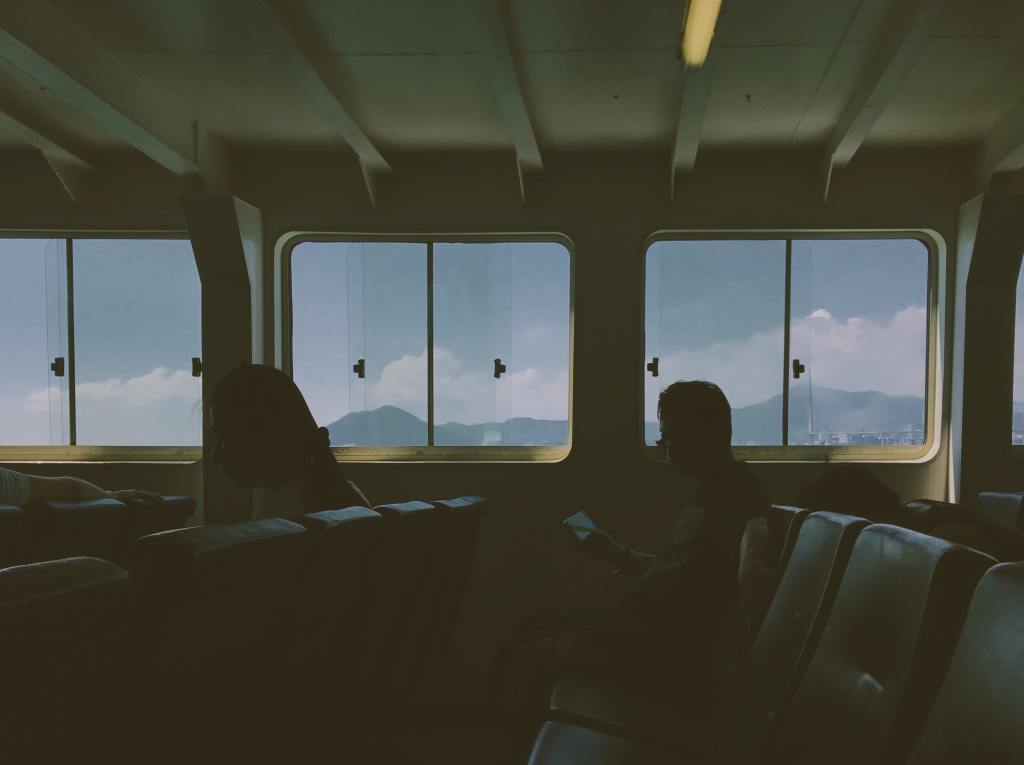
Stay, Illusion! | Liam Max Kelley

Image: Thought Catalog

Stay, Illusion!

Some purple pile of angels,
stone, by base of worn stairs, watch
eagles adorned with your teacups,
saucers—

and Shakespeare is mistaken
for Jesus going sideways down
the metro escalator.

I’m warmer for your shaking.
My pills hurt swallowing

—the king assumes his photographer
wields rifles and vermin
instead of
red spinning tops—horses too tall
for stars to hold
any meaning beyond
lost beanies and orange wine.

(Somewhere it’s Thanksgiving, so I’ve left
                everyone.)

Maybe an old woman veins out
licorice toffee
to each of her teeth chatting
on the morning train
fortressward, coastalward…
she smiles,
offering to bag me,
and I take the first my fingers find.

Another lady, bald,
offers me four licorice cough drops.
Though one falls from my hand.

Mouth beating black three
—I cross over
the ocean seat. My scarf doubling
a pillow
for wrist splints—the fog
spreading out over the window,
old blood on a warm bandage.

I take back-to-back photos of you
scalpelled behind yesterday’s closed eyes.

Hamlet’s cream puff pulls espresso
with broken glass pain and
our future light, the
question burning—

my napkins parade away towards
a mooring…

You stable that Christmas
rat in your arms—

for one you stand sleeping,
steps broken,
the other your stare
bungees under shadow
of labyrinthine brows,

buried deep
in the casemates
by Holger Danske, the bats, God,
and that penis
gunned down in stone.

You took a bite of my cheese
sandwich at the station—right before
I tossed the timeline ruler.
For a moment I could’ve swore
I’d taken you for a swan
or beached Ophelia,
but I recalled then
this country’s hole is a castle—
words, cannons
—please remember we are in a church.

I vain thanks for a moment

to remind myself
of where the metal ball should be—
then board a top car backwards,
returning home to you…

Liam Max Kelley is a Chilean-American playwright, poet, and teacher. He is a board member and open mic host at Stain’d Arts, an arts non-profit based in Denver, Colorado, and the co-founder of RuddyDuck Theatre Company, a local absurdist theatre group. He writes poetry to avoid making an argument, to highlight life’s horrid ambiguities, and to turn the heads of those he holds dear.

The moon | Steve Anc

Image: Sven Aeberhard

The moon

She is the peddler at the end of our dreams,
With a beautiful surface.

The dance of the morning,
where gentle sight abides.

The feast of clear color
with smiling song and form.

The sight that sees beyond the sea
And the coming home of the fishes.

The song of the kindly living,
And the coming home of the lovely breeze.

Steve Anc is the son of Ajuzie Nwaorisa, a Nigerian poet. He is a poet with searching knowledge and deep meditation on universal themes, he is quite a modern poet in his adherence to language and his use of metaphor is soul-searching. Anc’s works have been published in Open-door Poetry Magazine, Poetrysoup, Goodlitcompany, Voice From The Void, Our Poetry Archive, I Become The Beast, Fire Magazine

Letitia’s Memories | Sylvia Byrne Pollack

Image: Keith Chan

Letitia’s Memories

are silent films    slapstick and melodramas
projected onto old white sheets   hung 
inside her skull    If she wants a sound track 
she has to create it herself

Memories blur   and   emulsion molds   
even on precious 35mm Kodachrome slides   
evidence of her family   her childhood   
her dogs   Lassie   and   Bambi

She squirrels letters   photographs   clippings   
opera programs   museum tickets   trip itineraries   
in 8 x11x 4 inch boxes on shelves in her study 
She can’t remember what’s in the boxes   

Who cares what’s in the boxes – 
a memento is not the memory    

Memory requires mind   electrical waves sweeping 
over the cortex   sweeping cobwebs from corners   
swapping one year with another   one face with another   
flux of memory trails through forests of fact and fiction

Memories do not stay stacked neatly in boxes 
but dribble   foam   seep   sublime onto the rug   
into corners   over window sills   flow down 
the clapboards on the side of the house

They trip her up when she goes outside to water 
the garden   Tigers of grief pounce when her back 
is turned    Sudden tears on the anniversary of her 
mother’s death even though it was more than fifty years ago

To look back is to flirt with becoming 
a pillar of salt    but   says Letitia   
with a shrug   it adds needed flavor 
to whatever I’m stewing in today

Sylvia Byrne Pollack, a hard-of-hearing poet and former scientist, has published in Floating Bridge ReviewCrab Creek Review, The Stillwater Review and many others. A two-time Pushcart nominee, she won the 2013 Mason’s Road Literary Award, was a 2019 Jack Straw Writer and a 2021 Mineral School Resident. Her debut full-length collection Risking It was published by Red Mountain Press (2021.) Visit her at www.sylviabyrnepollack.com

Until Death | Talya Jankovits

Image: Oscar Keys

Until Death

One day our bodies
won’t work this way—
won’t fit together 
coaster on tracks, 
wild
ride rise fall plummet 
                                         into
                                                         oblivion.
exhilarate
tummy turned
knotted nausea
panting
fingers clenching,
holding onto,
pushing into,
leaning back to

              There might be 

bedpans.
diapers.
A neat row of teeth 
soaking in solution.
Bones so arthritic
they can’t bend 
towards each other. 
              or unbend, 
and still
I will reach 
for you. 

Talya Jankovits’ work has appeared in a number of literary journals. Her short story “Undone” in Lunch Ticket was nominated for a Pushcart Prize and her poem, My Father Is A Psychologist in BigCityLit, was nominated for both a Pushcart prize and The Best of the Net. Her micro piece, “Bus Stop in Morning” is a winner of one of Beyond Words Magazine’s, 250-word challenges. Her Poem, “Guf” was the recipient of the Editor’s Choice Award in Arkana Magazine and nominated for the Best of Net. Her poem, A Woman of Valor, was featured in the 2019/2020 Eshet Hayil exhibit at Hebrew Union College Los Angeles. She holds her MFA in Creative Writing from Antioch University and resides in Chicago with her husband and four daughters. To read more of her work you can visit www.talyajankovits.com, or follow her on twitter or Instagram @talyajankovits

A broken-window wind. | DS Maolalai

Image: Thom Masat

A broken-window wind.

a broken-
window wind
and these flutters
of unsettled
evenings,
pushing elbows
through shelves
in a second-
hand bookshop.

pages flutter wildly,
falling wide open –
flags flying to signal
all nations.

DS Maolalai (he/him) has been described by one editor as “a cosmopolitan poet” and by another as “prolific, bordering on incontinent”. His poetry has received eleven nominations for Best of the Net and eight for the Pushcart Prize, and has been released in three collections; “Love is Breaking Plates in the Garden” (Encircle Press, 2016), “Sad Havoc Among the Birds” (Turas Press, 2019) and “Noble Rot” (Turas Press, 2022)

In My Forest | Sojourner “Hughes” Davidson

Image: Jez Timms

In My Forest

Even in light of all this good
I feel down
I have been opening my chest up
Letting all the creatures in
Trying to heal my aversion
To mycelium
I grow to reach another root
Couple
Intwine
Become closer to another being

I don’t know if I search for the right thing
I am tethered to all my past mistakes
And rotten relationships
I try to make my roots grow out
And into the deep
Dark underground
Explore the things
That I only glimpse on the surface

The underground is terrifying
The place from which new life springs
Is not so easy to navigate
I am a labyrinth
Within a labyrinth
Trying to solve a beautiful puzzle
Always finding myself in the wrong place
And exactly where I should be

Sojourner “Hughes” Davidson is a poet based out of the DMV area. Their interest in poetry began in high school English and grew in college as they began reading and writing more poetry. As a college student, they had two poems published in my college’s lit mag (The Greenleaf Review) and worked as the art editor. Their work has also been published in Knee Brace Press. Hughes’ poetry tends to explore politics, identity, relationships, the mind, and the body. They try to bring everything back to the mind and the body. Hughes believes poetry is felt both emotionally and physically, and a poem is great when it reaches you in both places. Instagram