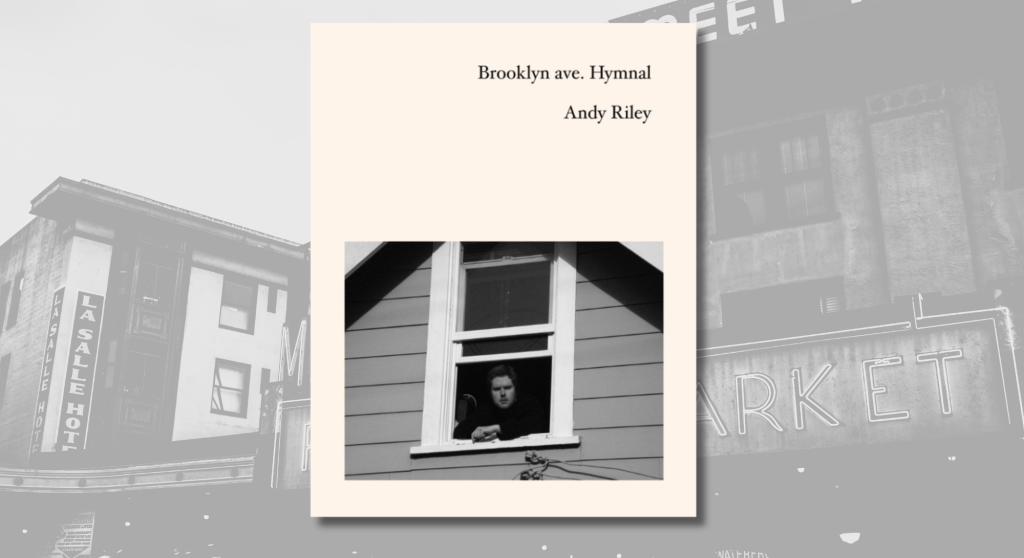
Book Review: compost your despair by hayden dansky

Book Review: compost your despair by hayden dansky

A BOOK REVIEW BY LIZA SPARKS

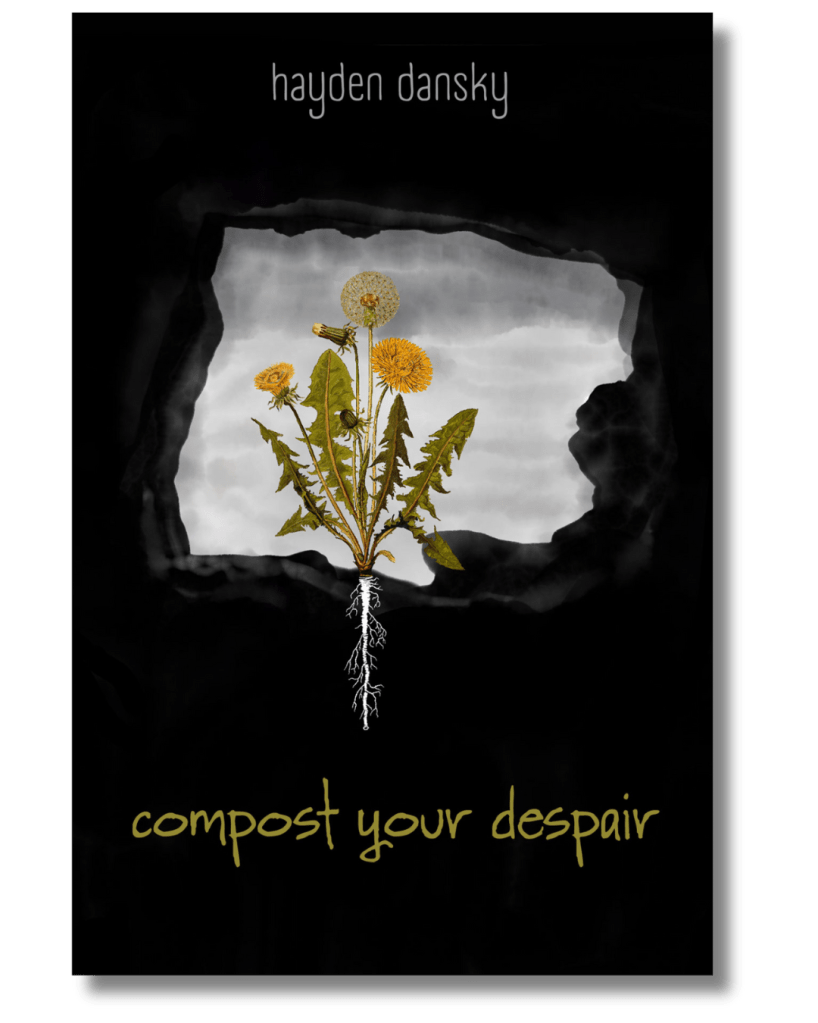
Compost Your Despair is Hayden Dansky’s love letter to Palestine, community organizers, to the “queer and weird and trans and disabled,” to the “dark and indigenous,” to “those of us who live in liminal spaces, or are kin to it,” to their past self, to anyone who feels empathy, anyone with a heartbeat.

The speaker in these poems writes with a fierce urgency that begs us to pay attention and asks us to move our bodies towards action.

In “Now That I Have a Voice,” the speaker defiantly asserts:

So let them
Burn me
with the rest of them
Burn me like they did
my ancestors before time and place
made me white
Burn me like the heathen they call
me for my love, desire, joy
Burn me with the rest because
now that I have a voice
I will never close
my mouth

These poems tumble down the page like spoken word and it does feel like Dansky is speaking just to us. They capture our attention. They invite us in to the prayer. This poetry is a communal act—a protest poetry spoken on the street.

They write in, “Until They Hear Us:”

What else can we do
besides scream from every corner

There is not a lot of excess in these poems; there is not flowery language, sentimentality, romanticization of struggle. They write with a conversational language that seeks to be understood. In “Climate” they write:

it really, really matters how we treat
each other

There is the examination of complexity and Dansky struggles with their own positionality of privilege and oppression. They write:

Peace is a process of
relationship to self
just as much as
relationship to other.

They write, in regards to the ongoing genocide in Gaza,

I will scream that this is not
my Judaism.

These poems demand a megaphone.
There is not the promise of peace or justice, but an impulse towards it. In “Until They Hear Us,” the speaker repeats, “I will try” and “I can try.” It is a vulnerable and humble sentiment. In times like these, what else is there to do but try? Trying is the first step towards action.

There is a force in these poems that is driven by the musicality of repetition, like the drumbeat of “Burn me” in the final stanza of “Now That I Have a Voice.” The speaker is not afraid to write in defiance of powers that will oppress them and the people they love, and they will say it again.

In the poem, “Climate” the speaker struggles with the power of words. What can words actually do in “a burning world.” They write, “How can I trust these words.” Yet, Dansky is driven to speak, to write, and to share. There is a deep desire to be heard. There is a fierce drive to express.
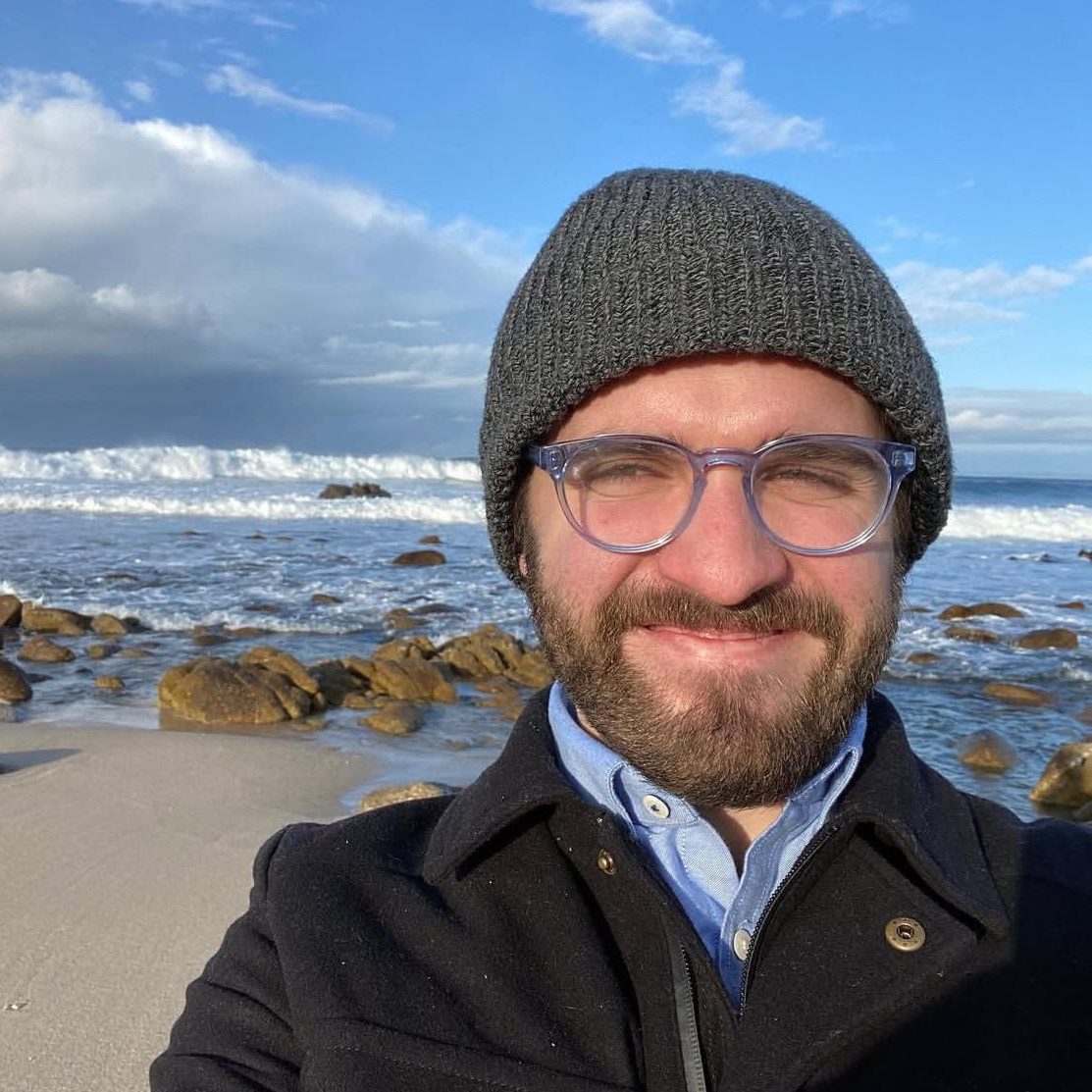
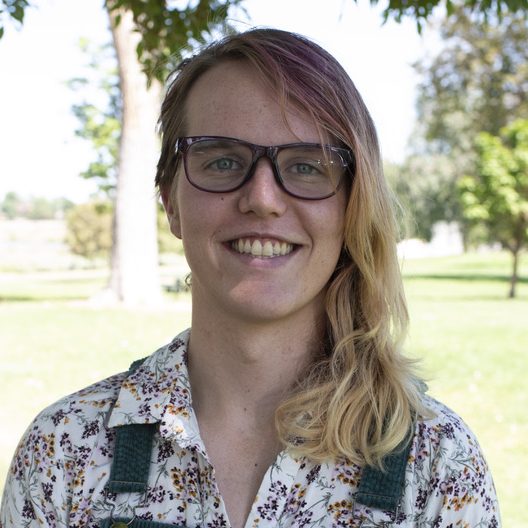
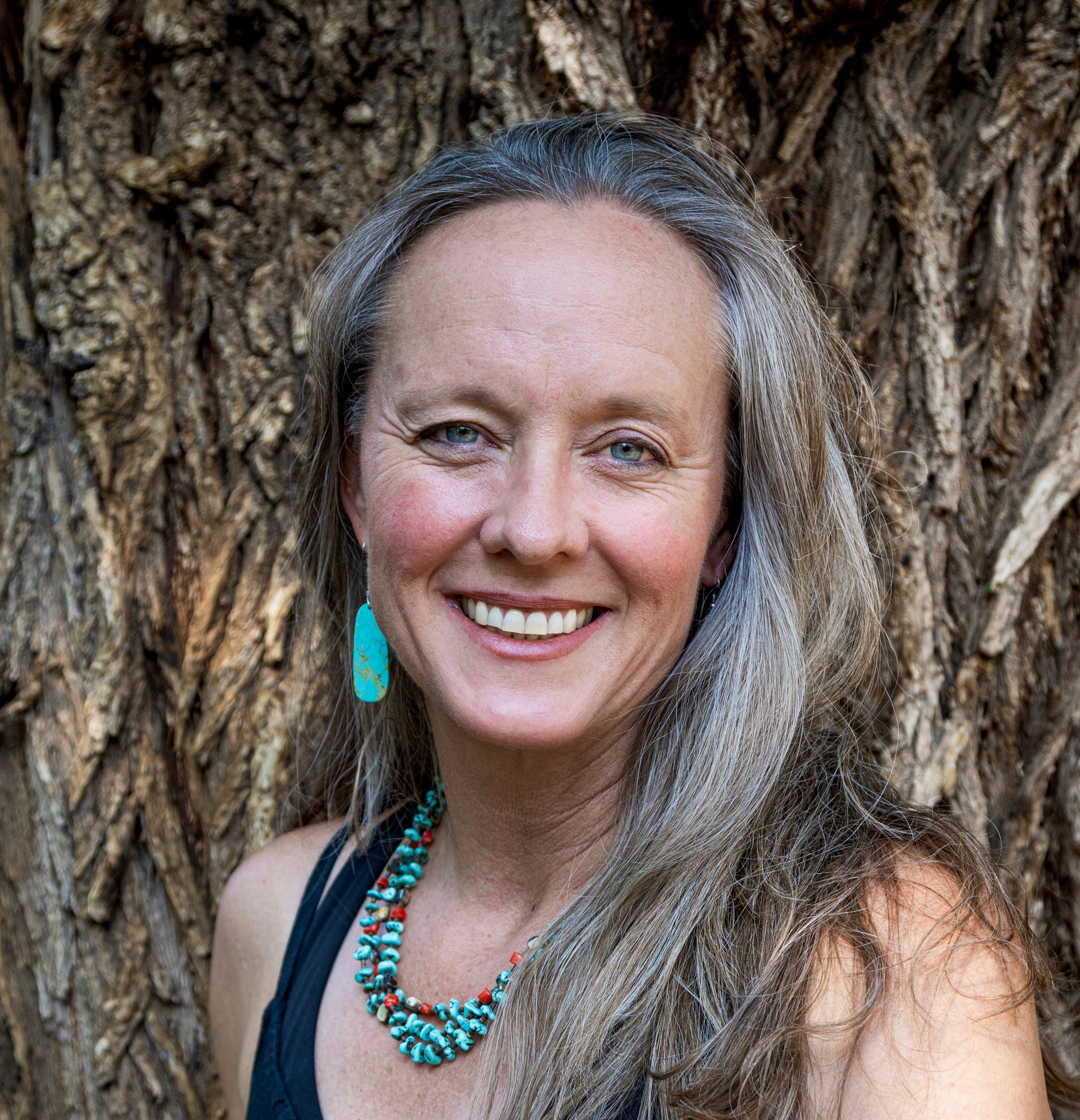
Author Hayden Dansky

These poems bring to mind the Audre Lorde quote: “I have come to believe over and over again that what is most important to me must be spoken, made verbal and shared, even at the risk of having it bruised or misunderstood.” With that same sentiment—Dansky must speak, must write, must share.

There’s a hunger in the speaker to understand the past and the present, to make sense of the trauma and their position and responsibility.

In “Nex” there is a firm defiance against the powers of hate:

Our bodies are resistance.
Our love is survival.
Our identities are our anchors,
always in transition.

“Nex” is addressed to Nex Benedict, a 16-year-old non-binary student, youth, and precious soul who died as the result of anti-LGBQTIA+ policies. Dansky’s poems do not exist merely on the page, but are in deep conversation with the world around them.

And although the world around them is apocalyptic, there is hope in these poems. In “A Pandemic Note to the Creative Organizers,” the speaker writes:

You are not alone.
When you listen
you will remember
you never have been.

and in “A Pandemic Note to Self,” the speaker asserts:

Fall into the earth like it’s your home
It has always been.

Dansky’s impulse towards social justice is driven by a deep love for their fellow humans and for the world. In “Gaza” they write:

called by a deep love
of all humanity
of a belief
that nobody will be free
until we all are.

Compost Your Despair asks the reader to look at their own privilege and positionality—What drives you? What moves you? What do you love?

In “Pride,” Dansky reminds us that

Pride is not complacency

our lives are choices
and we are choosing to stay

Dansky’s poetry asks the reader: What are you choosing to do with your life? What are you choosing to do with your voice?

compost your despair

BY HAYDEN DANSKY

AVAILABLE NOW!

Liza Sparks (she/her) is a student in the 2025-2026 Poetry Collective at The Lighthouse Writers Workshop in Denver, Colorado. Liza follows her literary obsessions and collects books the way toddlers collect rocks and pinecones (beloved friends, sacred treasures). She is a Pushcart Prize and a Best of the Net nominee.

Book Review: Leaf Manifesto by Laurel Radzieski

WILD NATURE, WILD WOMEN, A WILD ECOPOETICS:
LAUREL RADZIESKI’S LEAF MANIFESTO

A BOOK REVIEW BY SHELLI ROTTSCHAFER

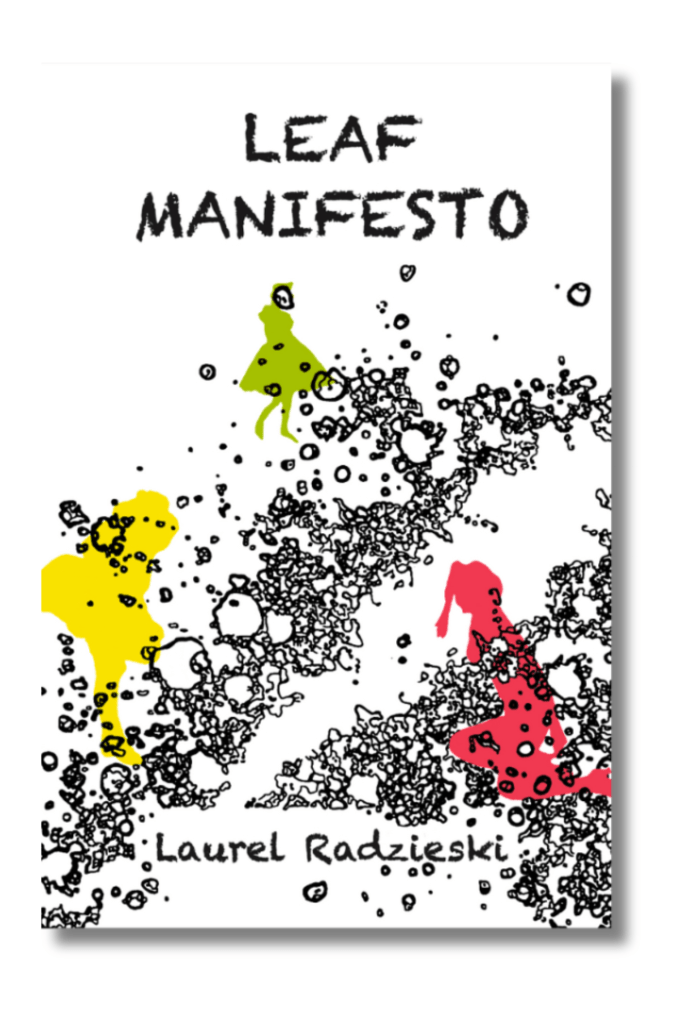
Laurel Radzieski welds her pen to manifest an embodied poetics and advocacy for the wild.  Wild nature. Wild Women.  This collection is unique because she plays upon the page physically and artistically in form, as many of these poems take shape within female curves. The growth from within is her child, and in this way the verse thrives.

The collection follows a flora lifecycle.  Each section reminds the reader of this beginning to end:  Seed, Germination, Sprout, Seedling, Sapling, Tree, Flowering, and ultimately the tempestuous Fruit.  Radzieski sets out upon her poetics journey stating, “One day I said aloud / I might like to be a tree” (11) and so she entices her reader to figure out what this may mean.

Throughout Leaf Manifesto Radzieski prompts us with questions: “What is a woman?” (15). And provides multiple choice answers, that only lead to more internalized questions.  Through this feminist lens she taunts her reader to poke at their own preconceived perceptions.  “Who gets to be a woman?” (16).  “What use is a woman?” (17).  “What’s it like to be a woman?” (21).  Once again, she tests her reader through a True / False dichotomy.  She dares us to shade in our answer fully with a #2 Lead Pencil.

In “How to Identify as a Tree” (38), Radzieski considers identity, origin, and belonging.  “Consider what others would want to know about your bark patterns and inner rings.”  Yet how a tree-body-person may appear doesn’t describe the within.  Rather, “roots and family tree” nudge toward fuller truths.  Especially as it oft happens, “If you are on unseeded land, know the history of the ground, how it got that way.”  In this way, Radzieski alludes to those who came before us.  She acknowledges that the land of her manifesto is of indigenous origins and birthright.

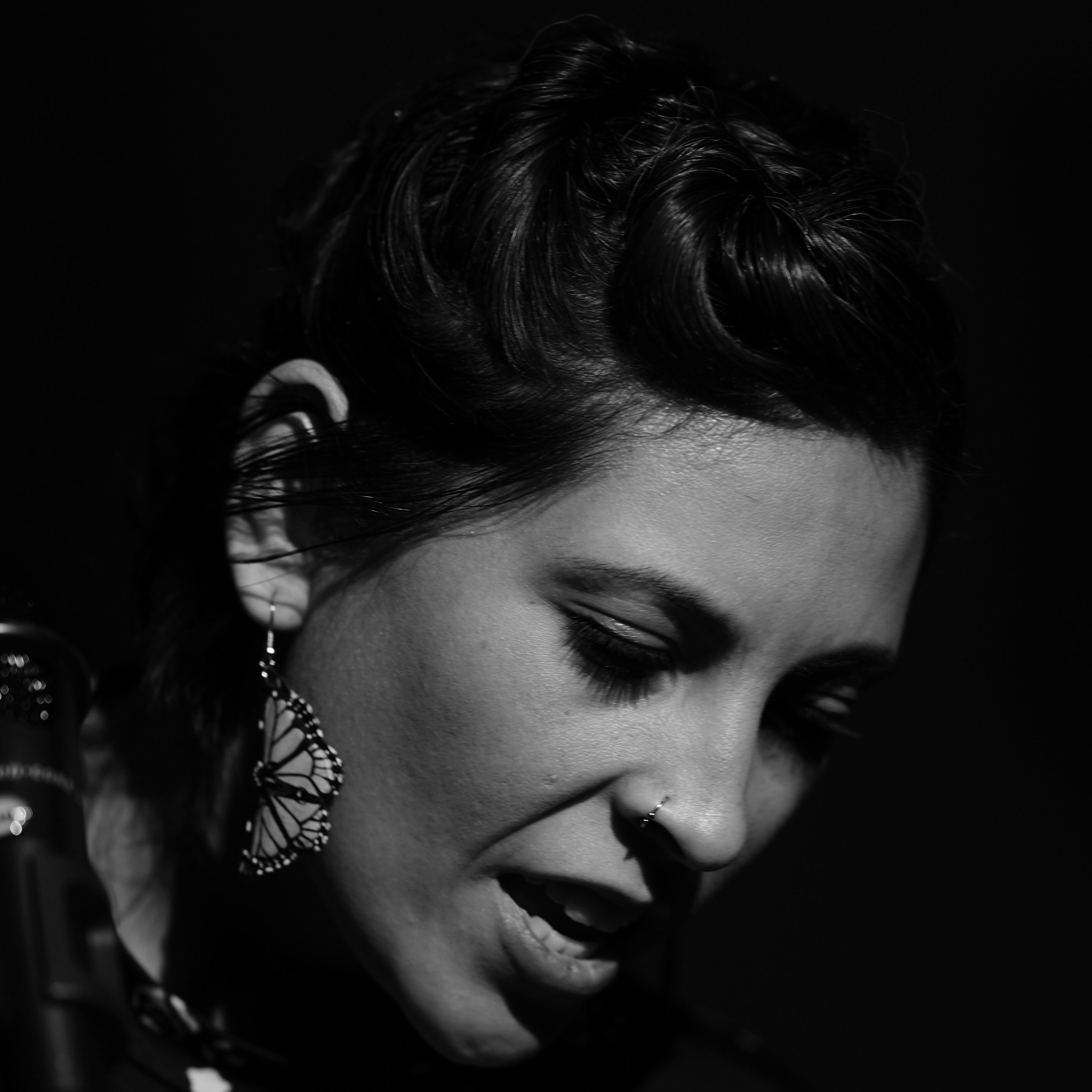
Author Laurel Radzieski

Throughout her collection, Radzieski offers up Ven Diagrams.  In “Woman Tree” (69), she encloses what these two entities have in common: branches, limbs, mistakes, leaves, organs, roots, flesh, rings, family, pain, and flowers.”  At least with this last word, she ends on hope.

Radzieski’s final poem in the collection, “Past Life Regression” (121) is a haiku:

Fallen walnut.  Such
a long way down, but then
soft idea of grass.

This seasonal form representing a walnut tree’s lifespan, culminates in a fruit-nut’s finality.  Not eaten, but allowed to cascade to an end-place.  Tranquility lands in grass.  Her bed, which begins again the tree’s lifecycle as the seed buries into soil knowing she will sprout once more. 

Laurel Radzieski won the Halycon Award from Middle Creek Publishing & Audio for this collection.  It is her second full collection of poetry.  Other poems have found a home in Rust + Moth, The New Your Quarterly, and Atlas.  She lives in Reading, Pennsylvania and is the Director of Grants at Alvernia University.

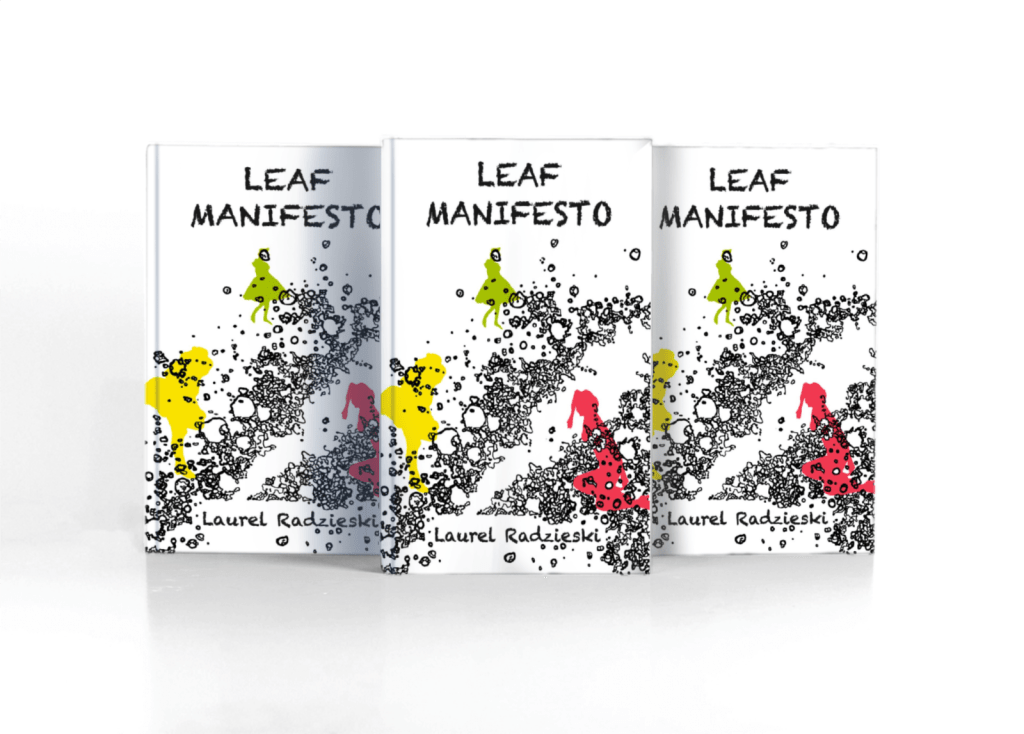
LEAF MANIFESTO

BY LAUREL RADZIESKI

AVAILABLE NOW!

Shelli Rottschafer (she / her / ella) completed her doctorate from the University of New Mexico, Albuquerque (2005) in Latin American Contemporary Literature. From 2006 until 2023 Rottschafer taught at a small liberal arts college in Grand Rapids, Michigan as a Professor of Spanish. She also holds an MFA in Creative Writing with a concentration in Poetry and coursework in Nature Writing from Western Colorado University (2025).

Shelli’s home state is Michigan, yet her wanderlust turns her gaze toward her new querencia within the Mountain West where she lives, loves, and writes in Louisville, Colorado and El Prado, Nuevo México with her partner, photographer Daniel Combs and their Pyrenees-Border Collie Rescue. 

Discover more of Shelli’s work at: www.shellirottschaferauthor.com

2026 Pushcart Prize Nominations

We are incredibly excited to announce South Broadway Press‘ 2026 Pushcart Prize nominations! Please join us in celebrating these wonderful poets.

The Pushcart Prize: Best of the Small Presses series, published every year since 1976, is the most honored literary project in America – including Highest Honors from the American Academy of Arts and Letters.

Since 1976, hundreds of presses and thousands of writers of short stories, poetry and essays have been represented in our annual collections. Each year most of the writers and many of the presses are new to the series. Every volume contains an index of past selections, plus lists of outstanding presses with addresses.

The Pushcart Prize has been a labor of love and independent spirits since its founding. It is one of the last surviving literary co-ops from the 60’s and 70’s.

Pushcart Prize Nominees

FROM SOUTH BROADWAY PRESS’ SUMMER & AUTUMN 2025 EDITIONS

One Foot in the New Year

BY LEO ROSE RODRIGUEZ

Geranium

BY ASPEN EVERETT

Scribe

BY T. LYDIA MCKINNEY

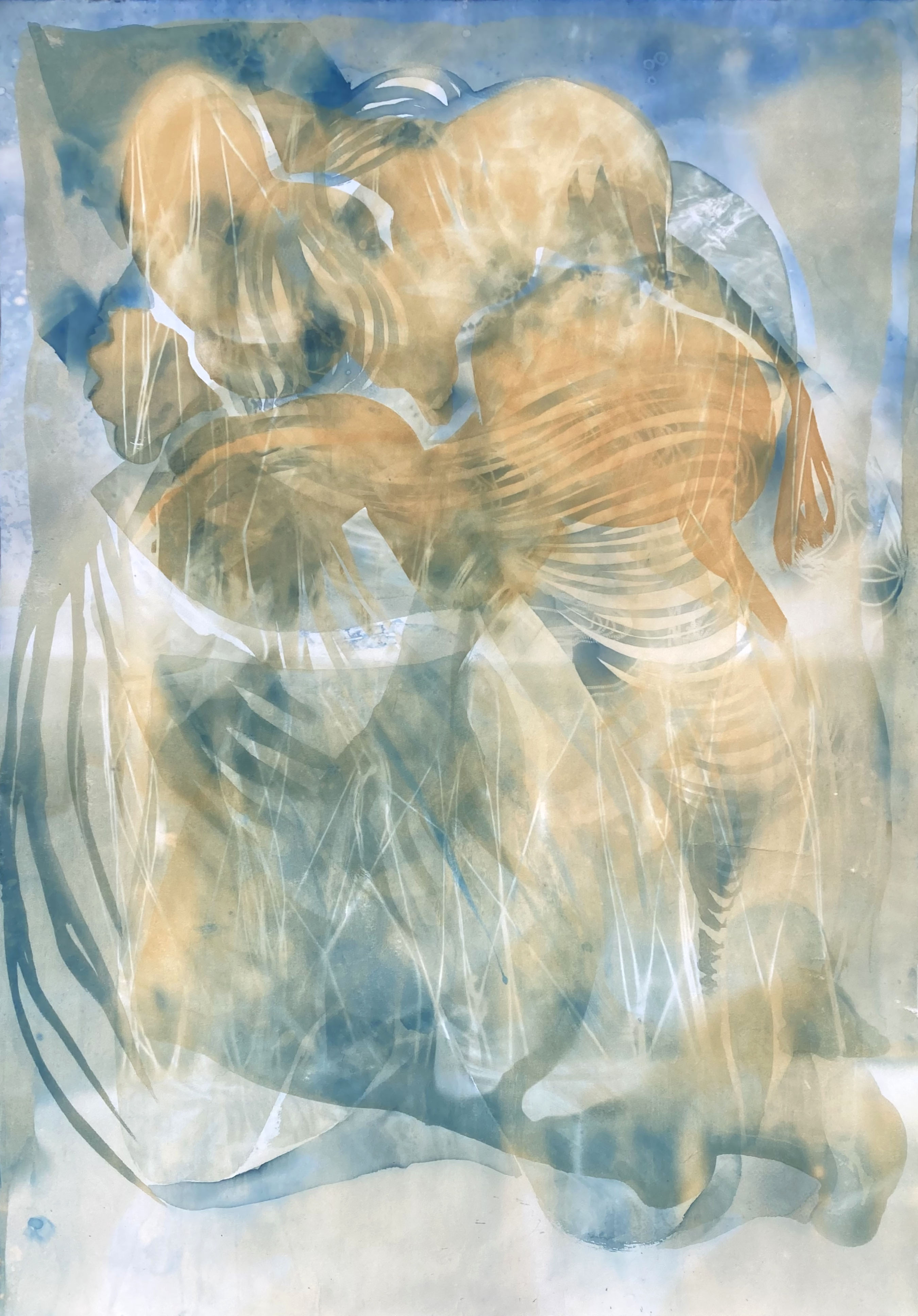
Artist Feature: Rachel Mulder

ARTIST STATEMENT

My work is a swirling devotion to process and surrender.

Since 2019, cyanotype has taught me subversive techniques via states of play, acceptance and transformation. This alternative photographic process uses light-sensitive chemicals which are applied to a surface like paper or fabric, exposed to UV light, and developed with water to create brilliant blue and white images. Additional processes like bleaching and toning (with everyday kitchen witchery like baking soda or tea!) make for additional color possibilities using the same old chemistry.

Both imagery and process are relational, with my work often revealing my own emotions to me before I’m even aware of their presence. I often explore this terrain by painting shapes with the chemistry, placing objects onto the surface to resist the light, rinsing and repeating this process in multiple layers. The paper holds the memory of each new layer, dodging destruction while creating space for possibility. 

Conversely, there are also magical moments where the image snaps into place in one exposure, as if by a flick of the wrist. The simplicity can be electrifying. The paradoxical nature and generative inertia of making these painterly cyanotypes continually invites me to learn and my work to transform.

INTERVIEW

South Broadway Press asks Rachel Mulder a few questions to get to know this artist a bit better.

SBP: WHERE ARE YOU FINDING INSPIRATION AS OF LATE?

RM: As a leo (sun, mercury and mars), I feel really grateful that a major part of my practice is actually worshipping the sun! Cyanotype is such a whirling dervish of magic, it’s really easy to be endlessly captivated by the process itself. I also enjoy listening to podcasts while I work, including Dean Spade’s Love in a F*cked up World (named after his most recent book, which I haven’t read yet) and Margaret Killjoy’s Cool People Who Did Cool Stuff (especially the four-parter on how the Surrealists were even cooler than we thought!)

WHAT DO YOU HOPE TO ACCOMPLISH, IF ANYTHING, WITH YOUR ARTWORK?

Currently, I feel like I’m at a kind of journeyperson stage with cyanotype; I have a lot of confidence and trust with the chemistry and timing but I feel as though I’ve barely begun deepening the secondary processes available to me, like toning or adjacent methods like anthotype or Solarfast (the latter offers lots of different colors outside of the traditional blue!). I’m also passionate about sharing this magical process with others, and am on the lookout for an ideal, accessible location where I can continue to offer more masks-required cyanotype workshops for people of all ages and abilities here in Portland.

SBP: WHAT IS BRINGING YOU JOY RIGHT NOW?

I’ve been spending a lot of time in parks lately, and I feel really lucky and grateful when a dog or baby locks eyes with me and demands to become my friend. Like, when a dog you just met gives you The Lean or crouches beneath your legs like you’re its protector, that’s like the highest compliment. 

SBP: ANY UPCOMING EVENTS?

My solo show SUNWORK will be on view at Elbow Room in Portland, Oregon next month! The opening reception is on Sunday, October 26 from 3:00 – 6:00 pm and will be up through November 27. I’m also part of a little co-op called Grover’s Curiosity Shop where I sling prints, stickers, cards and more, and we host sweet and weird events there. My website is rchlmldr.com and there you can easily sign up for my newsletter or find my online shop. I offer a selection of prints where 25% of my sales are shared with Palestinians and mutual aid efforts in Gaza, like the anticapitalist mutual aid fund Bridge of Solidarity. Last, I have a Patreon where at the $5 tier or higher you get monthly postcards in the mail as well as behind the scenes process stuff, discounts in my shop and more.

Rachel Mulder (she/they) lives in Portland, Oregon, with her two cats, Opal and Tomasina. She was born in rural Wisconsin and when she was small she spent a lot of time sitting in the grass staring, obsessing about animals, watching cartoons and peeling her skin off. Now she makes drawings using a variety of media that often yield printmakerly textures – residual effects from earning her BFA in Printmaking at Milwaukee Institute of Art & Design in 2007. A process-oriented artist, her work vacillates back and forth between the meticulous and obsessive to playful experimentation and experientiality. Whether it’s drawing with human hair, mud, cyanotype, gel pen or graphite, her imagery explores human connection, expression, and the strangeness of existing in a body. Encouraging others (and herself) to create/exist sincerely is a parallel passion of hers that braids itself into her visual work.

Three Poems // Wheeler Light

Image: Louis K. Harlow

I DO NOT CARE IF YOU ARE ACROSS THE COUNTRY

BY WHEELER LIGHT

or down the country, or around the country.
The country, an exercise in understanding the space

of the country. I do not care if you are my friend
or my best friend or a collection of memories

I can talk to about the memories you are.
I do not care about meaning or anger

or hope or apocalypse when I care about laughter.
I do not care if it makes sense to call you

too many times in a day until you pick up
to tell you a joke you will like and laugh and laugh.

What I care about is distance as a measure
of effort to overcome said distance. If the distance

between us is the country, then the effort
is the world. You are a world away. I am

a world away. When I stare into the middle
of nowhere, you are there laughing at the joke

I traveled around the world to tell you.

THE BAD NEWS

BY WHEELER LIGHT

You wake up
knowing nothing.

The day, the shape
of a chrysanthemum

bell. Unraveling
is the start

of eventually hoping.
Oh, I too mistake

disaster
for salvation.

I take my medication
the same as anyone else,

staring at myself
in the bathroom mirror

to see what I recognize.
My actions reflected—

the bad news
is the actions.

The good news
is the reflecting.

Mistaking the self
for its consequences.

Mistaking the self
for anything at all.

The bad news
is the self.

The good news
is waiting at the end

of the illuminating
hallway of you.

SAWMILL RUN

BY WHEELER LIGHT

Writing about a mountain
because there is a mountain.

Photographs of the mountain
capture more than words

can carve out of enjambment’s
live edge. Oranges and reds

at the end of fall litter
my eyes with the image

I try to translate into imagery.
Can’t you see the green

peeking between naked birch
trees? The sun reflecting off

the fog blanketing everything?
A photograph is a headstone

which mourns the moment
it was taken. Up the road,

there is another overlook
and another. Different angles

to view the jagged document
of time, these peaks erupting

and softening over enough millennia,
their existence nearly makes you forget

dry brush, pipelines, controlled
burns, doe crossing the road doesn’t

make it. The present, a cloud of smoke
invisible behind the cliff in the distance.

Writing about the earth
because there is the earth

cracking its knuckles
and arching its back.

At the overlook, I get out of the car
and step on a pile of broken glass.

Wheeler Light received his MFA in creative writing from University of Virginia. His work has appeared or is forthcoming in Tupelo Quarterly, Barely South, and Allium, among other publications. You can find his poems at www.wheelerlight.net.

Sinew // Three Poems by KD Hack

Image: David Young
EDITOR’S NOTE: THESE POEMS ARE BEST READ
ON TEXT OR HORIZONTALLY ON A MOBILE DEVICE.

LAGNIAPPE

BY KD HACK

I could’ve held you / the whole night / through / the wilderness / of my body-mind / asks /
too many questions / but I am parched / & prefer / too many answers / meet me / at every
river bank / along the Mississippi / your name / a prayer / my name / a promise / your kiss / a
wish / it’s good medicine / it’s my command / teach me / something sweet / something
mother-father-auntie-grandma / tongue / I want / the knowledge / to blacken on / my tongue
/ I want / the taste / to linger / the lagniappe / of a love / freshwater / & somehow / still
molten / I molted / here / on these rocks / slippery / but not too heavy / to hold /  I will bring
them / back / to you / like precious stones / like something / we might build with / the levees
won’t break / there / the gumbo will be / glorious / & the bowls / never empty / bring your
spoons / bring your lover’s lover / bring your appetite / bottomless / as the river / where we
sent up Hail Marys / like shooting stars / fletting but full / of feeling / a feast / we won’t soon
forget.

DIOSCOREA POLYSTACHYA

BY KD HACK
Fairy 
as in
frolick
as in
lick
my faggity ass
while you’re at it
we’re all wild
here
& freer
than
they want us
to think
when the water
grew
too frigid to dip
a toe into
my friend
fluorescent
in the finger-smudged
mirror made
a man
out of mascara
& might
& I might not be
convincing anyone
but myself
but you
can kiss
my faggity ass
& even my lips
while you’re at it
I promise
I won’t bite
unless you ask
nightly
I wish
for whiskers
I whisper
in their ear
let me
come
nearer
let me
come
closer
to the fairy prince
I promised
to be
in the woods
where we dug
our faggity fingers
in the soil
in the seams
making streams
across our bodies
I’d dig a grave
in the space
between
your breasts
& your belly
my legs melt
into jelly
when you lick me
hard
enough
this is not
a metaphor
this is not
a death wish
this is
a grave
I’m digging
down where
the fairy potatoes
grow I am not
asking
you to
die
but to be
reborn
beneath the soil
I’ll meet you
down there
soon.

BLOOD MOON

BY KD HACK

KD Hack is a Queer/Trans writer, Death Doula & land steward. Their artistic practices were nourished across the Northwoods of Wisconsin, & reside in the spaces between fingers in the soil & pencils on the page. His work is featured in Peach Fuzz, Fruitslice, Querencia Press, Transfix, Tence, & Volume One, among others.

Mending Bones // Hillary Gonzalez

Image: Matt Artz

MENDING BONES

BY HILLARY GONZALEZ

In college, I sat in a room, painfully
lit by the overhead fluorescents,
at an uncomfortable desk meant
for someone much shorter than me,
listening to my Anthropology professor,
as he asked a room full of half-awake
students, what the first evidence of civilization was.
It was a test, which most people failed.
One intrepid student answered Egypt,
another offered the presence of agriculture,
others stared blankly–waiting for an answer.
It was a broken bone, he said.
Thousands of years ago,
a human broke their femur–
that long bone connecting hip to knee.
Had they been an animal,
they would have been left,
weakened and alone,
And as the day shortened
into the terrors of a wild night,
other animals would have crept in, no doubt,
circled around them, picking
them off as the weakest in the herd.
But this human was cared for.
Their bone was mended.
This was the pivotal sign that other humans
had wanted to care for them,
had perhaps thought of them as family,
had perhaps loved them.
Today, as I scroll on my phone,
I see video after video
of people begging to be seen as human,
of children whose limbs were blown off,
of people with no homes
holding up signs that say, “hungry,”
and I wonder if we can
still call ourselves a civilization?
Somewhere along the line,
perhaps when we traded
oral tradition for computer screens,
and living off what the earth
so readily wants to give to us,
for speedy factory convenience,
we forgot about the human
with the broken femur.
we forgot that deep down in our lineage,
we share the same tree roots.
now, I see signs in my city
as people march down the street,
saying “Jesus was a refugee,”
and I wonder if the people
yelling at the ones protesting
to protect our siblings,
would they even recognize
the face of their god,
if he were holding up a sign
in that same crowd,
demanding the deportations stop.
When did we lose our humanity?
What will it take for us
to see the value in mending
bones again–not for profit,
but because it’s what the spirit needs?

Hillary Gonzalez (she/they) is a Baltimore based queer, disabled, and AuDHD poet, whose work explores themes of eco-consciousness and reconnecting with the land, identity, and healing. They are the authors of Seasons and Wild Unfelt World, a collection of eco-poetry coming in 2026 from Gnashing Teeth Publishing. Their poems have been published by South Broadway Press, and in anthologies by Bi+ Book GangYellow Arrow Publishing, Loblolly Press’ zine: Understory, a fundraising anthology for the victims of Hurricane Helene, and In Praise of Despair, an anthology for disabled artists by Beyond the Veil Press.

SUN IN YOUR EYES // Azalea Aguilar

Image: Siora

SUN IN YOUR EYES

BY AZALEA AGUILAR

(Dad is wiping frantically at the windshield
condensation catching up
we are blind to the road ahead)

My therapist is wearing teal glasses today
When did this begin for you?
she lifts the wire frames
gently off the cushion of her cheek
pushing them closer to sight
was there a time before, I wonder
have I always been
meticulously watching
contemplating movement
sirens from school chairs
calculating distance
traveling closer or further
like counting seconds
between lightning and thunder
one one thousand
two one thousand
three one thousand
anticipating arrival
creak of a wooden floor
boots land heavy
do they shuffle or drag
are they staggered or constant
is he coming or going
slamming of a screen door
angry or rushed
in or out
her or him
idling in front of a fridge
hunger or thirst
boredom or pleasure
is it the beginning or the end
I tell her I can’t
remember
a time before

Azalea Aguilar is a Chicana poet from South Texas, gulf scents and childhood memories linger in her work. Her poetry delves into complexities of motherhood, echoes of trauma, and resilience found in spaces shaped by survival. Her work has appeared in Angel City Review, The Skinny Poetry Journal, and The Acentos Review.

Two of Cups // Erica Reid

Image: he zhu

TWO OF CUPS

BY ERICA REID
Even the  lions sprout  wings 
in a dream this desperate,
the one you begged for,
early bedtimes & lucid
machinations. Here, you
finally have it — if only in
a watery fog already
dissipating. For now it is
yours: harmony true as a
caduceus, clarity regular as
day. The dream’s central
art: your riven heart, the
other half given away.

Erica Reid is the author of Ghost Man on Second, winner of the Donald Justice Poetry Prize (Autumn House Press, 2024). Erica’s poems appear in Rattle, Cherry Tree, Colorado Review, and more. ericareidpoet.com

salmon run // Dara Goodale

Image: Ľudovít Varga

SALMON RUN

BY DARA GOODALE
every year     the air turns cold 
& trees catch fire—orange embers
glow backlit by pale
autumn sun
it is time to migrate

saltwater salmon go home
to the rivers of their youth
travel in leaps
of scales that shimmer
in afternoon light
the vice-grip of evolution
commands them to procreate
its primal hands tight
around slippery throats
most of them will not survive
the journey is high-risk
uphill battle they swim upstream
in the rush of current many are lost
there is no time to mourn

when they hit freshwater
salmon deny the need to eat
their bodies nothing but empty
vessels meant to sire new
offspring in sacred genesis
those who make it to the gravel beds
where they were born
lay their eggs & wait
for death—

pulled back
by invisible thread
salmon give up the free
expanse of ocean
where the world is boundless
for a wet grave—
they renounce the promise
of future & return to birthplace
where they die
martyrs
for their species
with no one left
to grieve them

Dara Goodale (they/she) is a Romanian-American lesbian, poet, and university student living in Lausanne, Switzerland. Their work has appeared or is forthcoming in the American Poetry Journal, Cleaver Magazine, Thimble Literary Magazine, Underbelly Press, The Passionfruit Review, and more.