Notes Toward an Essay on the Evolution from Postmodernism to Metamodernism as Tracked Through Popular Comedic Forms. – Wesley Hunt

DEB2
Image: Paweł Czerwiński

seed-of-life

Track the progression of comedic methodologies from the 1990s through the early and late 2000s, as demonstrated in the different stages of The Simpsons (from satire—early ‘90s—to sitcom—mid ‘90s—to absurdist comedy—late ‘90s—to deconstructionist meta-parody—early 2000s—to randomized pop cultural overload—current)—as a show that persisted while changing to align with the comedic zeitgeist, to demonstrate the shift from postmodernism to metamodernism. Do this and don’t look out your window—one of many belonging to the tenement building you and your father have lived in all your life—and, whatever you do, definitely don’t go out the door and catch a cab to the hospice, at least not until you’re finished.

seed-of-life

Connect these Simpson-stage-shifts to the shifts orchestrated by other popular comedies.

seed-of-life

Anchor Man (which you and Dad would quote), in tandem with Family Guy (which only you would quote) popularized the absurdist non-sequitur pop cultural references and self-referential allusions to the pop cultural references (the ones they make). Anchorman as the shift toward absurdity and Family Guy toward non-sequitur meta-referential pop culture—FG commenting on the humor of Will Ferrell, and eventually even on itself (deconstruction). Simpsons had to change to keep up.

seed-of-life

Remember the hinder-sounds of the door opening and closing around 8pm every night—after the two of you ate dinner, where he helped you with your homework, and if you finished quick enough he’d watch the first fifteen minutes of a rerun with you while getting ready (this happened less and less as you both grew older)—and how you’d strike out all the lights, after he’d said love you as the door shut, so the room danced with the shadows of the movement on the screen, and remained there in the dancing light until the door opened and closed again, around 6am (this time without a love you but instead a soft groan), and until the dancing shadows drowned in the sunlight streaming through the window you rarely looked out then, back when he could work, and even more rarely now.

seed-of-life

Connect to Frederic Jameson’s diagnoses of postmodern culture, and thereby late capitalism, as schizophrenic—i.e. extends the symptoms of the psychoanalytic qualifications of Schizophrenia (unable to accede into the realm of language, thereby unable to form a solid identity—no “I”=no ego) to the masses in the form of pop cultural overload of disconnected webs of signifiers (e.g. MTV rapid fire television) that confuse the subject and make critical thinking near impossible—let alone clear thinking, let alone human connection outside the network of pop-cultural reference. Argue that pop culture has only increased its rapid fire pace.

seed-of-life

Connect to escaping into the naked glow in the dark of the living/dining room (first from the television, then the computer, now both), and to the way the nature of that escape changed as plot and image changed, and how the shouting and the crying and the laughing from the other apartments, and out the window, first made the quiet of yours feel loud but eventually became indistinguishable from the shouting and crying and laughing from the screen and from your body, as did the hinder-sounds of the door opening and closing and the love you’s and soft groans (which became first a light cough and then a violent hack and then a quiet but constant groan that you barely hear anymore because you don’t visit the hospice).

seed-of-life

In postmodern pop culture the rapid fire imagery was slow enough to still allow for some forms of critique—thus the satire, sitcom, and abusurdist stages of the Simpsons. He wasn’t sick during these stages, though the coughing began toward the end of the third.

seed-of-life

Anchorman as the justification for the type of absurd humor that makes the pop references of Family Guy a valid form—i.e. it executed absurdity in such a way that the masses could embrace. This is the limit of postmodernism and thereby late capitalism. The overload of the convoluted webs of interwoven signifying chains as only made possible by the existence of the internet. This shift is the movement toward meta-modernism: e.g. Youtube culture. You remember this shift because he bought a computer, despite the voicemails from the medical billing agencies, and he gave it to you for homework and said Stay classy San Diego, and instead of saying thank you, you said I feel like a talking baby punching Ferrell in the face for making Bewitched—in a good way, and he might have laughed were it not for the coughing and for not getting the reference.

seed-of-life

Family Guy and Simpsons picked up on this shift, and the rapid-fire webs of signifiers became more convoluted, randomized, and meaningless outside of its own network of reference. He thought the Simpsons had fallen off. You disagreed.

seed-of-life

Argue that postmodernism was less insidious than metamodernism because the speed and volume of despotic webs of signifiers has exploded with the development of the internet. The overload of self-referential nonsense make subversive critique near-impossible in that it is sucked into the meta-ironic whirlwind. When Dad said love you, you used to say it back, but then you just started to quote shows, and he knew what you meant; then you started to quote YouTube videos of clips from shows, and he didn’t.

seed-of-life

Finish this soon so he can read it before he dies.

seed-of-life


0bfc32_df25c1dbede16027881ccbb8731bcd98.jpg

Wesley Hunt hails from Baltimore, Maryland, and is a writer, experimental filmmaker, musician, and connoisseur of fine Salisbury steak. He is a former editor at the literary magazine The Welter, and graduate of University of Baltimore. His words have appeared in publications such as Horror Sleaze Trash and The Fine Print. Listen to his music at treeforts.bandcamp.com. Or don’t. This is a democracy, after all.

Three Poems // Kevin Rabas

DEB2
Image: Nad X

[Dying Favor]

BY KEVIN RABAS

I ask you
..to take this cup
from me. I don’t want
..to die alone
in a white room
..some Monday,
my lungs
..full, but
without
..a breath left.

[TV]

BY KEVIN RABAS

…….I.
…….You can stop the TV,
…….get off your phone, and write.
…….It may hurt
…….to think, but you can.

…….II.
…….If you don’t write
……….or make songs
…….or paint, you have
……….to go and live in some
…….other person’s dream.

[unintended birthday gift]

BY KEVIN RABAS

The neighbors have it,
the pastor and his 6 kids,
held a bday party
the night before
the lockdown started,
and now they’ve got it,
every single one.

Rabas Author Photo

Past Poet Laureate of Kansas (2017-2019) Kevin Rabas teaches at Emporia State University, where he leads the poetry and playwriting tracks and chairs the Department of English, Modern Languages, and Journalism. He has thirteen books, including Lisa’s Flying Electric Piano, a Kansas Notable Book and Nelson Poetry Book Award winner. He is the recipient of the Emporia State President’s and Liberal Arts & Sciences Awards for Research and Creativity, and he is the winner of the Langston Hughes Award for Poetry.

Submit | Poetry Anthology Raising Money for Denver Food Rescue

jonas
Photo: Jonas Renner

SUBMISSIONS FOR THOUGHT FOR FOOD ARE CLOSED.

YOU CAN VISIT OUR FUNDRAISER FOR THOUGHT FOR FOOD HERE.

In these times of COVID-19 and social isolation, many people are out of work and lacking the resources necessary to even feed themselves.

South Broadway Press, the parent LLC of South Broadway Ghost Society, would like to help suppport local non-profit Denver Food Rescue by raising funds through an anthology of poetry entitled “Thought For Food”.

Denver Food Rescue

What Denver Food Rescue does:

We increase health equity with Denver neighborhoods by rescuing high-quality, fresh produce and perishable foods that would otherwise be thrown away by grocery stores, farmers markets, and produce distributors. With the help of our amazing volunteers, the food we rescue is delivered (often biked!) to Denver neighborhoods for direct distribution at No Cost Grocery Programs (NCGPs).  NCGPs are co-created with existing community organizations like schools, recreation centers, and nonprofits that are already established and trusted within the neighborhood, decreasing transportation barriers. Residents of the NCGP community lead the distribution of rescued food, and many also help with food rescue shifts. This participation decreases stigma of traditional food pantries, empowering each neighborhood to create a program that is appropriate for their culture & community.

“Food For Thought” will be an anthology featuring a single poem by each selected contributor. Copies of “Thought For Food” will be available to contributors for $6. They will sell to other folks for $15 each.

Poems can be on any theme. If you’d like to be prompted, consider writing on the theme of food, or on life in the face of a pandemic.

“Thought For Food” marks South Broadway Press’ first release.

Submissions for this project will close on May 11th of 2020.

We will accept previously published materials.

If you would like to submit please send an email to submissions@soboghoso.org with the following information:

Subject: THOUGHT FOR FOOD

  1. Your name.
  2. A brief 100-word-or-less bio.
  3. Up to three poems as a Word document or a Google Doc. We are not paying contributors for this project, but contributor copies will be available at a discounted rate of $6 each.

Please email us at submissions@soboghoso.org with any questions.

shallow focus photo of sliced orange fruits
Photo: Kristof Zerbe


At the Bottom of Everything (Bright Eyes) – Rebecca Hannigan


image

Rebecca Hannigan is a fiction writing in Denver who also plays music every. now and then. She studied environmental science, but enjoys social science and general social interactions. You can find her serving food at the vegan hotspot in town, or at https://rebeccahannigan.wordpress.com/. She’s always happy to make friends, or to just talk about anything worth talking about. Feel free to follow her on various platforms @rwehappyigan

For Your Peace of Mind — Alyssa Jordan

bush
photo by: Hadley Jin

She likes to pull out her pubic hair one at a time. She waits until a forest of spindly black vines has grown between her thighs, eagerly anticipating how strong each strand will be, how thick the roots will have become.

Little slivers of pain accompany the loss of each hair. She studies the water-encapsulated tip, the fibrous black strand. She would like to uproot other things. If she could, she’d start with all the people who have caused her pain.

Mostly, she’d like to uproot the people she hears about on the news, the ones who are sometimes women but usually men.

She likes to imagine her hand gripping a pair of tweezers, snapping the pincers open and shut—like a hungry alligator—before fitting the silver tongs around each of their heads, pulling them out at the root.

Each time she tweezes her pubic hair, the pain gets a little sharper. Her smile grows a little wider.

How nice it is, she thinks, to clear the debris.


Processed with VSCO with g1 preset

Alyssa Jordan is a writer living in the United States. She pens literary horoscopes for F(r)iction Series. Her stories can be found or are forthcoming in The Sunlight Press, X–R-A-Y Literary Magazine, Reflex Fiction, and more. When she’s not writing, she’s hanging out with her partner or watching too many movies. You can find her on Twitter @ajordan901and Instagram @ajordanwriter.

Election Day – Susan Zeni

DEB1
Photo: Pamela Calloway

First, election day, and then
not so strange being close in bed
but first being strange
but not being in bed
being in body kind;
being slow, being not hurried for pleasure
being not at all the fantasie in men’s eyes;
being two, but not us, we
being lips, being breasts,
being you, being me, the bed being round,
plunging line of winter being one,
careful we, cutting away what is death.

Not even necessary, love
but there is love
and earlier there was my sadness for summer again
and the black dog chewed a squirrel
winter people crawled into tin holes.

Election day, I choose you, choose me, choose you
and earlier, the old woman wheeled to the polling place by her son,
a great book in her lap
fat boy in a green jacket, sparrow on a black roof
orange room very dry
but not dry, very lonely
but not lonely
only the blue jay
only the blue jay pecking on the window
not flying but then flying
from the black roof
not hearing my own voice loving for a long time
and then not even necessary, love,
not so strange being close in bed
but first being strange
being in body kind
careful we
falling through the fruits of winter
cutting away what is death


F5C804D246DA434EBFEB4222260D96B5

Susan Zeni wants her poems to tell the stories of people living on the margins of society. She lived in Manhattan on Avenue A, in Chinatown and in Harlem for five years, Seattle for ten, and is now ensconced back in the Midwest after years of teaching community college.  Publications and honors include a Lucille Medwick Award for a poem with an humanitarian theme, “Black Angel,” published in the New York Quarterly, danced by the Erick Hawkins dance troupe, and read up on stage with Gwendolyn Brooks; a Seattle Weekly portrait of Ralph and Mary moved out of their Second Avenue Hotel digs by the Seattle Art Museum; and “The Street Walker’s Guide to Wealth,”recently published by the Minneapolis StarTribune.

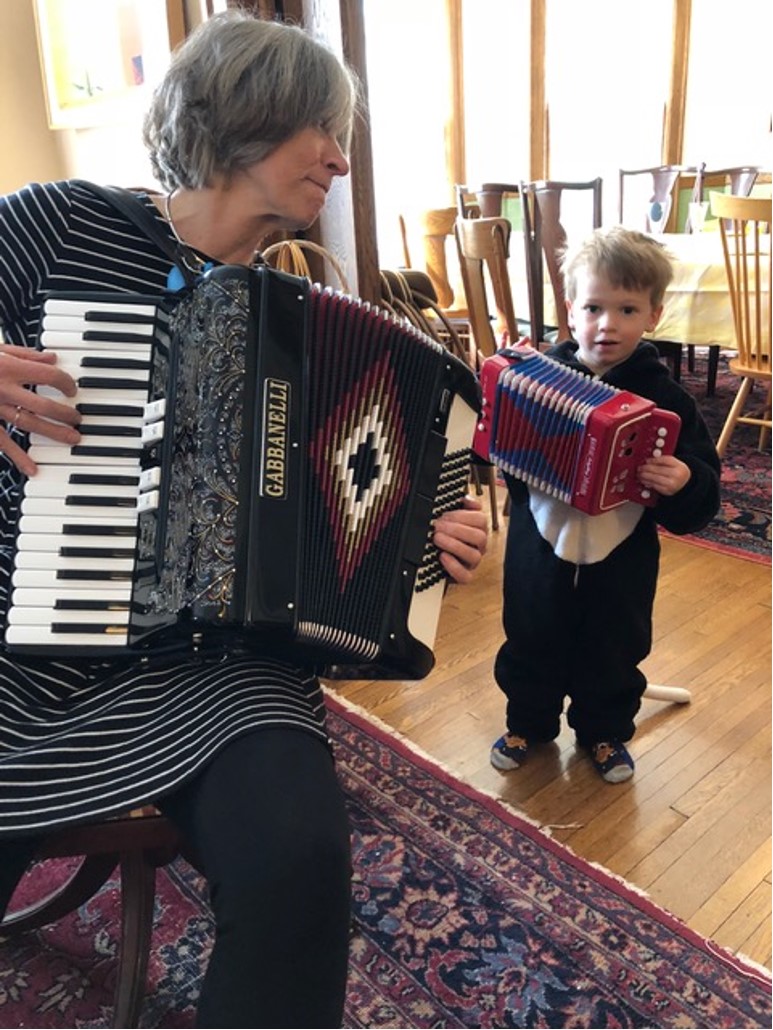
Susan gets her kicks playing accordion, having been in a number of bands, including the Polkastra and the all grrrl klezmer band, the Tsatskelehs, as well as performing solo at local art openings, Quaker events, and farmers’ markets.

Body Sculpt: Suffer for Beauty – Addison Herron-Wheeler

DEB1
Photo: Viktor Talashuk

She went in wanting the standard procedure, about 50 percent less body fat, no more skin on the eyelids, just lashes fluttering from the skull, and a sculpting procedure to get rid of every wrinkle, dimple, cellulite ridge, and blemish.

The red on her cheeks was washed clean, the red spots on her breasts and thighs erased. Her hairlines was brought forward so her blond bangs dangled close to the long lashes.

She also opted for the stakes driven into her heels to improve her posture and keep her spine straight. The gossamer gown they had given her, which at first clung to her every crevice and curve like a hug, now hung loose over a stick-like frame. She thought she could feel her ribs growing.

Her blood was thinned, her saliva replaced with perfume. Her ears were made smaller; her nose was removed. They cut off the tips of her fingers to make them proportional to her feet.

When it was all done, she put on a black, velvet robe and looked in the mirror. “You have to suffer for beauty” she mouthed, her thin lips pursed, her skin glowing neon blue.

She felt her ribs heaving as though they wanted to escape her body. She smiled, batting her eyelids, feeling the velvet on her tight skin. “You have to suffer.”


80274606_10157658038907593_776344535939678208_o

Addison Herron-Wheeler is editor of OUT FRONT Magazine, web editor of New Noise Magazine, and an avid sci-fi and metal nerd. Her first collection of fiction, Respirator, will be out in 2020 on Spaceboy Books

Diaries of a Lost Pregnancy – Amanda E.K.


hello-i-m-nik-TuW3Ip1m2Oo-unsplash
Photo by Hello I’m Nik 🎞


Diaries of a Lost Pregnancy

5.18.17

Yes, Doctor, I will take a pregnancy test. I’ve been nauseous since last Thursday.

I’m in pain. I’m three days late.

5.24.17

Pelvic ultrasound to try and figure out this pain. Still haven’t heard back from the doctor.

5.30.17

I bought a stick on my way home from work. Called doctor again and they still won’t release my results. This all feels a bit dystopian and surreal.

A little too Twin Peaks: The Return.

My pain is invalidated by the people who can help me.

I’ve been nauseous and I’m never nauseous and my boobs hurt as though gripped in a vice.

Oh kill this thing inside me if it does indeed exist! 

Drinking wine and eating Twinkies that I bought along with the store brand stick. 

My husband is out of the country. I’m scared and alone.

5.31.17 

6:30 am: 

The test is positive

11:59 pm:

I wonder if it would be a boy or a girl. I stretch my face in the mirror, imagining the combination of our features. Not that I want it. It’s only thought-play.

I don’t go to bed. I go for a walk after dark, to Observatory Park, walking in shadows, spinning on playground spinners, stumbling up a tree, swinging as high as I can go for as long as Radiohead’s “Ful Stop” plays on headphones.

I need to be higher, or lower, and since I don’t have any digging tools, up I go.

Sometimes the traffic outside my window sounds like music.

I scheduled an abortion outside an elementary school.

6.1.17

Started miscarrying during my preschool students’ graduation.

Started crying in front of the families, saying how much their children have meant to me. Several moms teared up and gave me hugs. 

My student Mariah asked me: Ms. Amanda, why are you crying? Me: I have a tummy ache. 

Crying after coming back from the bathroom, finding blood, not knowing what was happening to my body, my co-teacher asking if I’m okay and I shake my head, dissolve into tears.

I translated a message into Arabic for Elyas’s mom about how he’s been one of my favorite students and I’ll miss him. She teared up and hugged me and I felt such love for her. Translated a message into Spanish for Ricardo’s mom. I will miss the daily diversity of being a classroom teacher.

I will miss my beautiful little family.


headshot

Amanda E.K. is the editor-in-chief of Denver’s Suspect Press. She’s also a writing instructor and a longstanding member of the Knife Brothers writing group. Her work has been featured on the Denver Orbit podcast and on Mortified Live. She has work in Suspect Press, Birdy, Jersey Devil Press, the 2018 Punch Drunk Press Poetry anthology, and Green Briar Review. She’s currently working on a memoir about her sexual development while growing up in evangelical purity culture, and she is co-writing a television series. FB: /AmandaEK  Twitter: @AmandaEKwriter  Insta: @amanda.ek.writer

Sex at the Airport – Paula Bonnell

DEB1

This is an act
in which the other is absent
They may or may not
be physically present
but always abstracted
David Leavitt leaves
the house next door
Arriving passengers
complain to you
of the static – your sex
jammed their headsets
and shocked their children
They would have you believe
what you did was not private
But did anything happen?
you ask yourself hopelessly
It was carnivorous
they accuse
and yet
naming your feelings
seems almost an insult
to the other
when what is wanted
are acts of love
serum-filled
specific as dreams


BtA_Author_JPEG_571kb_marmar

Paula Bonnell’s poems have appeared in such periodicals as APR, The Hudson Review, Rattle, and Spillway, and in four collections, including Airs & Voices, chosen by Mark Jarman for a Ciardi Prize; Message, a hardcover debut, and two chapbooks: Before the Alphabet, a story in free verse of a child’s kindergarten year, and tales retold, as well as winning awards from the New England Poetry Club, the City of Boston, and Negative Capability, among others.  www.paulabonnell.net

Growl – Eden Axx

maria-teneva-3K7jJn3QAa0-unsplash

You call me beautiful, cruel, tired, washed in red light, starved.
I am all of it, an aching stomach feeding off of its own lining.
My insides break down a little more with every step I take,
Towards you or away,
The loss of myself has nothing to do with you,
Despite your self-inflated groanings,
Protests of your worth to me.
I am waiting only for your inevitable decay,
All rot and words I never asked for out of a mouth I would eat clean off of your skull if given half the chance.
I am full of empty space you were never able to fill up,
But there is nothing I would not try to ease my insides growling
My stomach is a shattered gap
A thin mucous lining is the only distance protecting you from my acid
My thin body-shaped lining is the only distance protecting me from your criticism
I speak your skeleton thin language,
Or so you think, when you feed me bones,
Starved carcass of an animal you say you once loved.
I scoop handfuls of dirt down my throat,
Buried alive inside out
My gravestone teeth gnashing famished
I have never been full
Hungry stomach rumble is the drumline of my life, if it were beautiful. If it were a song.
I was never taught to be tame,
Leather wrapped ravenous
Rattle-boned desperation
My ribcage is made of zipties straining to break,
Every labored breath and ground clawed step is a victory
You see me, peckish hollow bone bird in a gilded cage by your desk,
But I am fever dream lullaby, snake in your garden while your eyes are closed, listening to the music
It’s a wish you’ve made to stars that burned out long before your birth
That you could be enough.
But you return to my room and find pinched thin  skinny.
You watch as I open my mouth and blood pours out, papercuts deep in my throat, shredded remains of all your love letters caught between my sharp stained teeth.
I know you see my open grave future in my sunken cheeks and light-lost eyes.
You kiss me, cracked lip craving in a room where the walls know only howling
There’s half a chance, here.
A lion doesn’t wait for prey when it emaciates
They aren’t deliberately cruel, lions.
But you called me beautiful,
And I waited for you.
I don’t know how to breathe when I eat.
I leave gasping.
I leave bloody, and still growling.
We both knew you could never sate me.


90577076_2568614280046529_1958159913339322368_n
Hey, I’m Eden. I like lizards and poetry and eating the flesh of politicians. Follow me on Instagram @edenaxx for completely unrelated content, by which I mean only selfies.