Lack of a lover Lack of children Lack of pets Lack of flatmates Lack of arguments Starting out petty Lack of partitioned space Lack of visitors Unless they’re invited— Just me In my little house Two room Inner sanctum Where I could be Just me— A living Situation I seem Condemned to & somehow
Prefer—
Dee Allen is an African-Italian performance poet based in Oakland, California. Active on creative writing & Spoken Word since the early 1990s. Author of 7 books–Boneyard, Unwritten Law, Stormwater, Skeletal Black [ all from POOR Press ], Elohi Unitsi [ Conviction 2 Change Publishing ] and from February 2022, Rusty Gallows: Passages Against Hate [ Vagabond Books ] and Plans [ Nomadic Press ]–and 42 anthology appearances under his figurative belt so far.
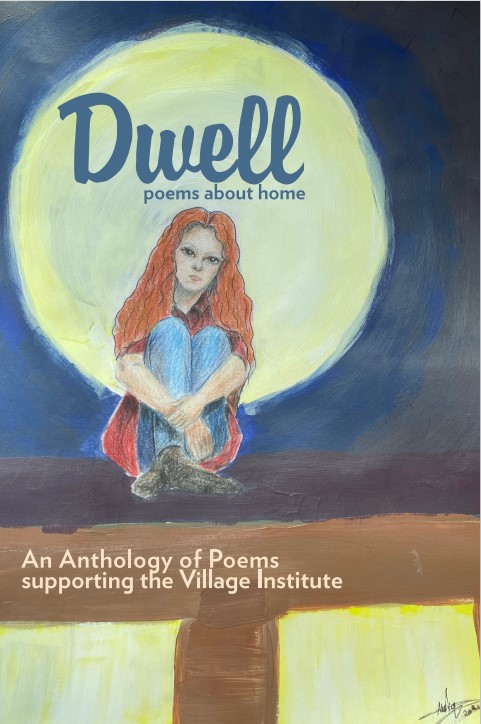
This poem is from South Broadway Press’ new anthology, Dwell: Poems About Home.Purchase here.
Pansy to Pale

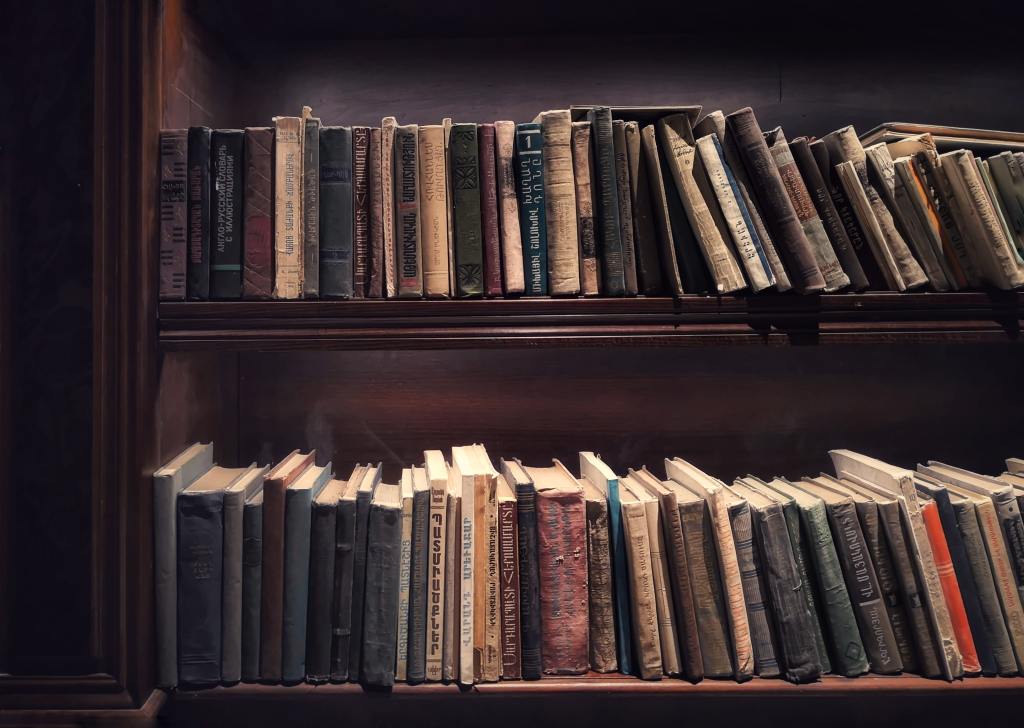
My books in our apartment
                                                       have faded a different color
Dark spines now shades of lavender
the titles have gone
                                         from pansy to pale
Even when she fingers the blinds
closed all day
                             light finds a way
to wear ink thin
                                 To combat excess
new vines dangle ubiquitous
Over each shelf
                                a graveyard
with shadows tucked
                                            kitty-corner portraits
Sometimes I rotate the words
less direct sunlight
                                       spells a shared wear-and-tear
My toenails shine orange
                       after I’ve painted them
                                          with antifungal polish
and her paintings each are purple
after she combined
                                      cracked makeup
with acrylic medium
When we moved in
                                       we called it eclectic
Now I forget what my books look like
until she opens a window
Liam Max Kelley is a Chilean-American playwright, actor, poet, and high school language arts teacher. He is the program director at Stain’d Arts, an arts non-profit based in Denver, Colorado, and the co-founder of RuddyDuck Theatre Company, a local absurdist theatre group. He writes poetry to avoid making an argument, to highlight life’s horrid ambiguities, and to turn the heads of those he holds dear.
This poem is from South Broadway Press’ new anthology, Dwell: Poems About Home.Purchase here.
bristling old wool shorn and barbed from so much wear. knitted with cheap
yarn, the acrylic kind that tightens too much, squeaks after
time and so many washes. a thick polyester clinging to the body
odor of the great aunt who first wore it. a light chiffon scarf
draped, artful but nonchalant. a coat patched too obviously.
stinking of the mothballs from a long-untouched winter closet.
how you are sewn into it
how you drive around a town you have not lived in for fifteen years. the
streets so foreign for the first few days. you, without clear compass or
signpost. home, a place of now-unfamiliar intersections. until on the
third day you feel a strange tug. a too-tight stitch pulling beneath the
muscles in your chest. a breath caught in the button of your throat.
because you suddenly know these storefronts, just with different
names. because you remember the shape and weight of who still
patterns the pavement below. who forever married a part of you to
this neighborhood. whose cord has been knotted to yours all along. you
have driven frightfully close to where something terrible happened. until
now you forgot the event even took place in a house at all. it existing
all this time only in the unnamable space of your hazy recollections.
and the stains it collects, the memory
every time you put on the shirt, your eyes go right to the small spot of
redness. you know the exact meal you were eating. how you were sitting at
a not proper dining space. how the sauce splashed when the pot boiled
over. how her homemade jam was thinner and dripped more. when the
brown corduroy got that conspicuous patch of dried glue along the front
most thigh. the leaking pen. the accident. the accidental. that which
you pick at and sniff at and rub in and soak with hopes of it fading more.
how you wear it, but also, how you are woven of it
you sense the distinct tastes inside your mouth whenever you look at the
photo. it is almost unbelievable now, teaching kindergartners to cook.
trusting such small and wild hands with knives to chop the radishes, a hot
griddle to fry up tortillas. you made butter as a class, taking turns shaking
the mason jar of cream. the excited aggression you all stifled around pet gerbils
and younger siblings having found an escape. a riot of children given task
and purpose for their agitation. you hold a photo of this day, see your own
smile as you chew a bit of buttered bread. see how you once delighted
so in it. how delicious it could be, the violence of so many hands.
Jade Lascelles is a writer, editor, musician, and letterpress printer based in Boulder, Colorado. She is the author of the full-length collection The Invevitable (Gesture Press, 2021). Selections of her work have also appeared in numerous journals and the anthologies Women of Resistance: Poems for a New Feminism and Precipice: Writing at the Edge, as well as being featured in the Ed Bowes film Gold Hill and the visual art exhibit and accompanying book Shame Radiant. Several of her poems were recently translated into Italian for the journal Le Voci della Luna. Beyond her writing endeavors, she is a longtime steward of the Harry Smith Print Shop at Naropa University, a core member of the art group The Wilds, and plays drums in a few different musical projects.
This poem is from South Broadway Press’ new anthology, Dwell: Poems About Home.Purchase here.
I can recall my father walking me through the process
At an early age, he would say
Walking is one of the simplest ways you could show someone
Your freedom
“See, the first step to being enslaved is to actually get caught!
Why do you think Martin Luther King Jr and Cesar Chavez
Spent all that time marching!?”
“You have to stay on your toes, Mijo
This system has interesting ways of turning a man into a slave”
If you asked my father for a ride
He would tell you to
Walk
After crossing the desert for a better life
My father sees my walk to any Open Mic
As an easy stroll through the park walking
In my father’s footsteps has taught me that
If you love something you will do anything you
Can to get to it
Your feet will get you there if you allow them to
My father walks with the determination of an immigrant
Like his children will starve if he doesn’t walk fast enough
Like there are immigration agents chasing after him
He is America’s worst nightmare
A bad ass in a foreign country and I
Always wanted to walk just like him but
I always seem to take the wrong steps
Walking in and out of Jail
Pacing in my cell like a caged Ocelot
These must have been the ways you get
Enslaved my father talked about and
It all started in the seventh grade when doctors
Explained to my parents why I walked with a slight limp
My right leg was shorter than the left
Forcing me to apply most of my body weight on the right side
I developed a walk that would quickly label me a thug
I guess the inequalities I was exposed to finally
Drenched through my clothes and into my bones
So now I walk like I got a wounded knee
Like the structure holds me down by my back pockets
Saggy jeans are one of the side effects left over
From my oppression and
When you walk with this much weight at an
Early age your steps
Begin to sound like ticking bombs
The type of walk that’d make a motherfucker
Move out the way the type of walk
That’d make a cop want to follow you
In 2012 Trayvon Martin
and all the years after
Mike Brown
Eric Gardner
Jessie Hernandez
Sandra Bland
George Floyd was murdered for
Having the same walk as me
Trayvon was only 17
They asked me why I cried
Because he walked just like me
Because he was just like me!
Still perfecting his own walk still getting use to the
Feeling of walking in a black man’s shoes
This is the reason why boys like us
Never achieved social mobility
How can we climb the ladders of class if we can’t even
Walk through our neighborhoods without feeling like
Someone is chasing after us
But I’ll risk it all to show my son and the rest of the
Chavalitos in the world that we can walk to a
Better future instead of having to walk away from everything
That we can walk across the stage and graduate
Instead of having to walking in front of a judge
That if we all walk at the same time
The weight of our steps would force the world to flip its rotation
So stand up and walk with me
We have the world at our feet I think it’s time
That we exercise our freedom
Jozer G is a poet, musician and actor based out of Denver, Colorado! Jozer’s work has been featured on American Theater Magazine, HBO, PBS and Univision. Jozer released his debut EP on June 24th, and a new book at the end of the year!
This poem is from South Broadway Press’ new anthology, Dwell: Poems About Home.Purchase here.
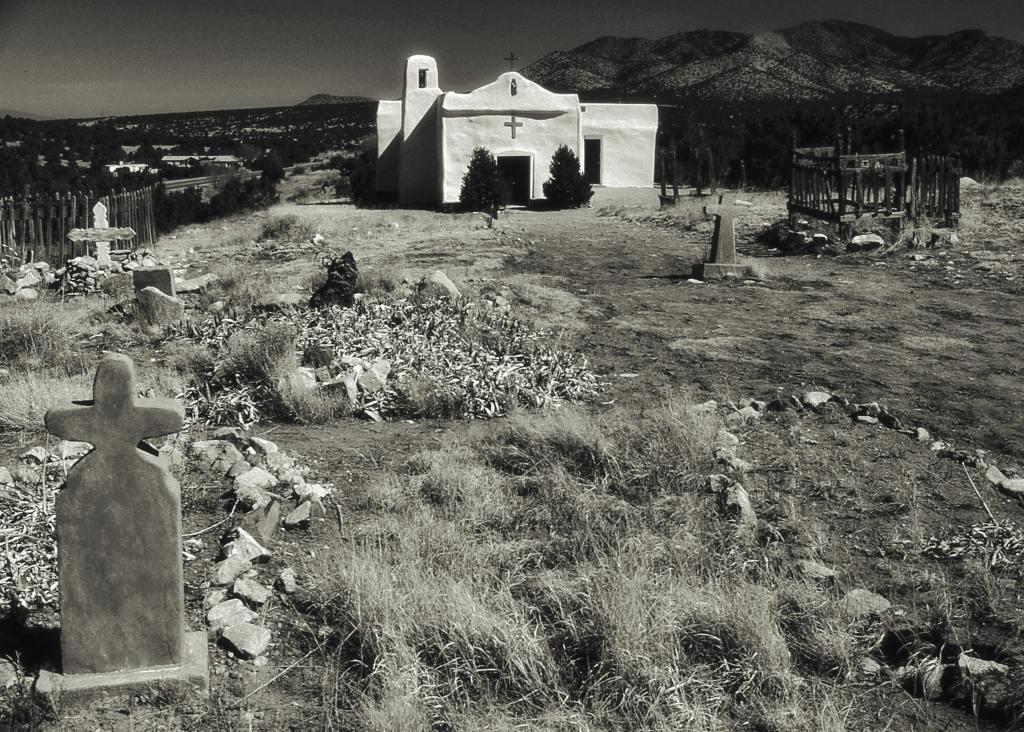
Moonlit Slabs of Light on a Hernandez Church Floor

a cemetery
                                is lit by the light
                                of the moon, while time
                       stands seemingly still,
                     lamenting a
             timeless value,
which covers the empty floor
             in a shape
                                of a dying face,
the hollow bell knells solemnly
                       for the dead to linger there,
                       to be buried again
hollering is the reason for
                                      the isolation of solidarity--
                                             a tragedy
that befell the dead,
               the decaying reason has taken their chance
beneath a standing tree made into crosses,
the mountains are alive
                                      yet they appear dead,
                       there is no willful purpose,
while a fly sit humming on the sill
               and ants gather,
to confirm the time is still ticking,
that light gleaming on the floorboards,
never ends the ceasing shadow	—but it does
                                                                —but that light
                                                                   is beyond the dead
Crisosto Apache is from Mescalero Apache Reservation in New Mexico (US) and lives in Lakewood, CO. They are Mescalero, Chiricahua Apache, and Diné of the Salt Clan born for the Towering House Clan. They are Assistant Professor of English and Associate Poetry Editor for The Offing Magazine. Crisosto’s debut collection GENESIS (Lost Alphabet) stems from the vestiges of memory and cultural identity of self-emergence as language, body, and cosmology. Crisosto is an Associate Professor of English at the Rocky Mountain College of Art & Design. They hold an MFA from the Institute of American Indian Arts in Santa Fe, NM. Their latest collection of poetry, GHOSTWORD, is available now through Gnashing Teeth Publishing.
This poem is from South Broadway Press’ new anthology, Dwell: Poems About Home.Purchase here.
My family grew corn in the heartland, but I’ve never seen it quite like this:
Angelic, husk-winged, guarding every shard of bone hidden in the soil.
How is it that I didn’t know I had thousands of angels? They were with me all the time.
I remember going out into the fields with my grandpa, crossing into the humid network, stalks sending out messages to each other across droplets of August air.
I could hear their choir, their low and incandescent hum, the sway of bass clef notes rocking me to sleep in the farmhouse.
Emily Dickenson advised us all to tell the truth slant, and I remember this is what hailstorms taught the fields. The slant truth seemed tragic, in a way, as if nothing stays upright or rooted for long. Not even cornstalks.
Not even families.
Not even farmhouses, burned to the ground long after they’ve become vacant, when the small town fire department needs a fire to practice on.
Something is always missing.
Maybe it’s just a three-hundred-sixty degree view, the ability to see that everything is overflowing,
all the time.
Cortney Collins lives on the Front Range of Colorado with her two beloved feline companions, Pablo (after Neruda) and Lida Rose (after a barbershop quartet song in The Music Man). She is the founder of the pandemic-era virtual poetry open mic, Zoem. Zoem produced an anthology of its poets’ work, Magpies: A Zoem Anthology, of which she is co-editor. Her work has been published by South Broadway Press, 24hr Neon Mag, Amethyst Magazine, Sheila-na-Gig, Back Patio Press, and others. Cortney considers herself a poet secondarily; her first calling is encouraging others’ beautiful words in community.
This poem is from South Broadway Press’ new anthology, Dwell: Poems About Home. Dwell will be available to purchase August 1st, 2022.









 south broadway press