INTERVIEW: LAUREN CAMP

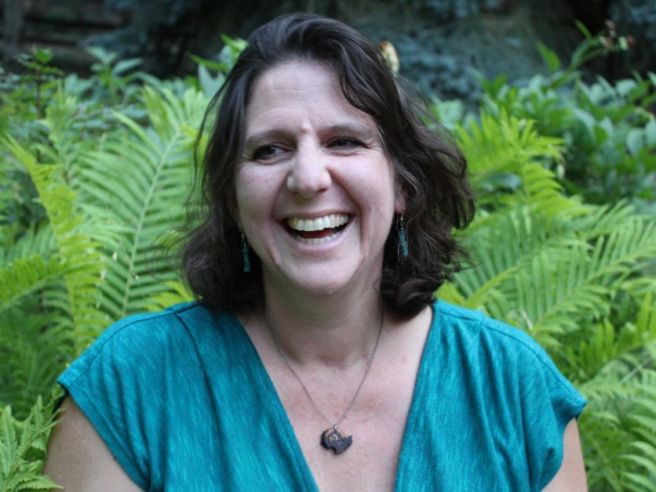
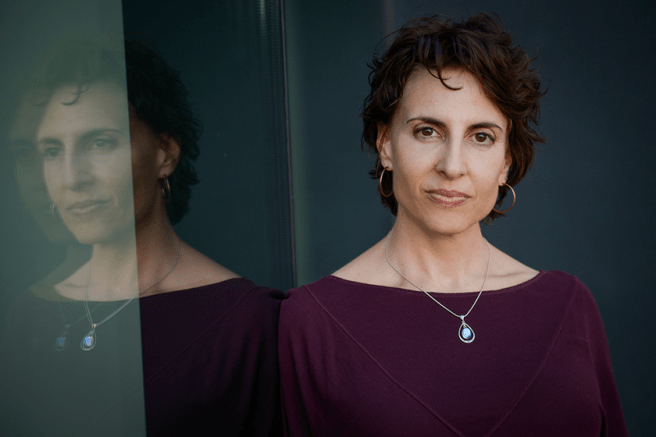
Lauren Camp is an Arab-American poet.  She is a first-generation daughter of a Jewish-Iraqi immigrant.  Often, she writes about the immigrant diasporic experience and how that personally has influenced her.  Lauren grew up in New York, attended Cornell University ‘88, and now calls Santa Fe, New Mexico home. Before she dedicated herself to writing and being  an educator, she worked as a visual artist in fabric and thread, and was a radio producer and host. During 2022-2025 Lauren was the Poet Laureate of New Mexico. Is Is Enough (2026) is her ninth poetry collection.

Poet, author, and frequent reviewer for the South Broadway Press journal, Shelli Rottschafer, recently sat down to interview Lauren.

SLR: Lauren, thank you for this interview.  I have been excited to ask you questions ever since Is Is Enough was released this past March.

Is Is Enough considers your relationship with your father.  Like so many of us, we have interesting relationships with our parents.  In this case, your dad struggled with dementia.  

In some way, does your poetic verse try to recuperate memory before it is lost?

LMC: Thank you for making time for my new book! This isn’t the first book I’ve written that focuses on my dad. In my earlier book, One Hundred Hungers (Tupelo Press, 2016), which imagines and tracks my father’s childhood in Iraq, I was definitely trying to gather and unfold memories long hidden and had been possibly already lost. 

Alzheimer’s Disease can’t support more than the immediate now. For Is Is Enough, I wasn’t probing memory; instead, my attention was on dealing with a present moment and whatever was happening in my father’s mind. 

Though it was difficult in my father’s last years to “daughter”—to watch what was disappearing, and in more action-oriented ways, to take care of his wellbeing, his finances, and his worries—it was a joy to craft these poems. I got to step to the side of responsibility and simply notice, and find language for, what was occurring. 

SLR: Many writers have the quandary of “do I write about family, or should I not?”  

How did you come to terms with that internal wonder? How would you encourage others to overcome that doubt?

LMC: I never question whether I should write something; I only question whether I should publish it. I wrote these poems for myself. I wasn’t writing for a reader. I didn’t know that some of the 100+ poems I wrote about this time would become a book. I hardly even know they were poems. For a long time, they were only notes—things I wanted to hold onto because they were my father’s behaviors, and charming or devastating. I wanted to tack down and keep what wouldn’t exist the next time I saw him. 

Families and relationships are complicated. I might write something in an early draft that expresses anger or hurt. But by the time I get through the revision process (which could last months or even years, with long stretches of waiting in between drafts), hopefully that emotion has tempered. While still being honest, I can look at any imbalance in my thinking and be more fair in my assessment and presentation of anyone else.

SLR: “Original Hope” was in particular very moving to me.  It seems to consider your father at his final moments.  Family is gathered and remembers.  What is interesting is that certain memories, especially those captured in family pictures, mean one thing to one person and symbolize something much different to another.  Each has their own perspective, their own interpretation.  

Can you speak about this poem for the South Broadway Press audience?

LMC: Surprisingly, I have no other drafts of this poem. I usually revise (quite happily), but this poem was fully formed when I got to the page. By using the impersonal pronoun “one,” the poem could be speaking to or for any reader. The perspective was not specific to the author, or any specific family member. That choice made “Original Hope” feel aphoristic or proverbial to me, and I liked that. When I write about or into a subject repeatedly, I leave behind approaches I’ve exhausted and begin to look for new language or angles to come at the topic. I love this effort and find it revelatory. By the time I get to the 20th or 80th poem I’ve written about something, things get wilder or shift in some other significant way.

SLR: Lauren, your writing has taken you to many interesting places.  Your collection, In Old Sky (2024) was written in conversation with your time spent at Grand Canyon National Park as the Astronomer-in-Residence. While there you worked alongside park rangers and witnessed the Dark Skies.  

Can you tell us a bit about your residency?

LMC: In 2022, I was invited to spend a month at the South Rim. Each of those nights I investigated the shifting darkness that surrounds the canyon, trying to figure out how it felt. My goal was to write for readers who might not know what pristine darkness is like, perhaps readers who live in an urban environment where light pollutes their skies too much to see anything above—and certainly not the Milky Way.  I found the darkness at the Canyon safe and enveloping. I couldn’t get enough of it. I watched as it dropped down and gradually closed off my ability to see. In fact, as that sense shut down, I began considering what was happening with my other senses. What could I hear? What was the texture of the air? 

I wrote a book worth of poems that month, which Grand Canyon Conservancy made into In Old Sky. A surprise gift, that collection. The experience changed my interpretation of self and culture. I now regularly have a perspective of our time and deep time, and I consider/re-consider my place in each. 

SLR:  In the poem, “Bluest” you ask questions of the stars.  

You look upon their sparkle, millions of light years away, and wonder:

How will I greet you when I am back,
the spectrum not yet diminished in me?

This liminality of time, a transcendence of one point in time to infinity, it makes us humans question our time on earth and what we do with that precious time.  

Is the answer ‘open ended’?  Or is the answer ‘be creative with that time’?

LMC: When I left the Canyon, I was challenged by how to shift from a place of endless, deep wonder to a place of ordinary goodness (my home). Whenever I leave a place I’ve loved, whether from a brief vacation or a significant immersion, I want to keep a bit of it for as long as possible, to incorporate it, somehow, into my daily existence. 

At the Canyon, I was reminded of the benefit of focus. Our lives are so full of multi-tasking. In the dark, I would do a single thing: sit on a giant boulder looking into a nearly invisible canyon, or walk, watching only the slight circle the red headlight offered in front of me. 

There’s a generosity in that.

SLR: As Poet Laureate of New Mexico, your project was “The New Mexico Epic Poem Project” and its intention was to visit all 33 counties within the state of New Mexico and to write in place with collaborative pieces from each audience you worked with.  I witnessed this in action myself as I attended your workshop at the Taos Center for the Arts.  

What was it like for you to lead others to write collaboratively?

LMC: I had done something similar while at the Grand Canyon, inviting park visitors to respond to prompts and statements about darkness. It can be scary and off-putting to ask someone to write a poem, but with this approach, individuals are instead encouraged to contribute a few elements to a greater whole. I adopted a similar approach for the New Mexico Epic Poem Project, giving residents a chance to write about the community they call home. Once I had those responses, I worked as an architect, building the poem from the scaffolds and details people contributed. The result presents a chorus of voices. 

SLR: As a result of this three-year project, which of all the many workshops you led, were you most surprised by?

LMC: Oh, such an unfair question! I couldn’t possibly pick. Each town or rural village—and the libraries, arts centers, coffee shops and other venues that hosted our gatherings—offered something wonderful. Some individuals showed up not knowing anything about poetry, but were receptive. Some showed up to figure out whether what they were doing in secret might qualify as poetry. And others had good experience with the art form already. Because of the format, I gained as much as (I hope) the participants did. I had the chance to learn more about each location through its people. 

SLR: Having had a career in Marketing and as a Visual Artist, how did that prior experience help you promote yourself once you dedicated to write full-time?

LMC: I have learned that full-time creative work is a bit of a myth. If you want to reach an audience, you need to either hire help or do the marketing yourself. When I worked as a professional artist, I understood that I needed to spend nearly half of my time on elements of the job that weren’t artmaking. Everything from correspondence and contracts to exhibit organization and other details; those all take time. 

From marketing classes in grad school, I learned the rule of 7—that it takes that many exposures before someone will register what you’re offering. It can be awfully hard to promote something even once, much less seven times. But this reminds me that there’s no shame in sharing something at least once (and maybe more, if I can stand it). 

SLR: If you could have a conversation with your younger self and knowing where you are now, and the knowledge you have gained as a writer, what would you remind young Lauren?

LMC: From the time I was small, I always knew creativity as my partner. I never veered from that, though the medium I worked in has changed a few times. I’d like to remind the me now that the “making” is always the revelation. The audience’s response is sometimes a side benefit, but the process is the true triumph.

SLR: Many readers of South Broadway Press also are creatives and appreciate a nudge.  

What are you working on now that you plan to incorporate into a writing workshop? Do you have a prompt or advice for our audience?

LMC:  Right now, I’m working poem to poem, focused mainly on poems that originate from a place and its facets. 

Advice? Remember to keep the “making” close to you. Make your poems for yourself, not for an outside audience. There is no formula, no correct way, no need to ever follow any other path than your own. That’s where the answers and excitement are. But also… embrace revision. I believe that’s where the magic is. I believe you (and I) can push a draft further from its start than we ever thought possible. Challenge yourself in some way with each poem. Don’t worry; 

it will right itself eventually. New amazing things come out of that process and the patience to wait for it. 

SLR: Thank you so much Lauren for answering these questions in support of creativity and the creative life.

READ:
SHELLI ROTTSCHAFER’S REVIEW OF LAUREN CAMP’S IS IS ENOUGH
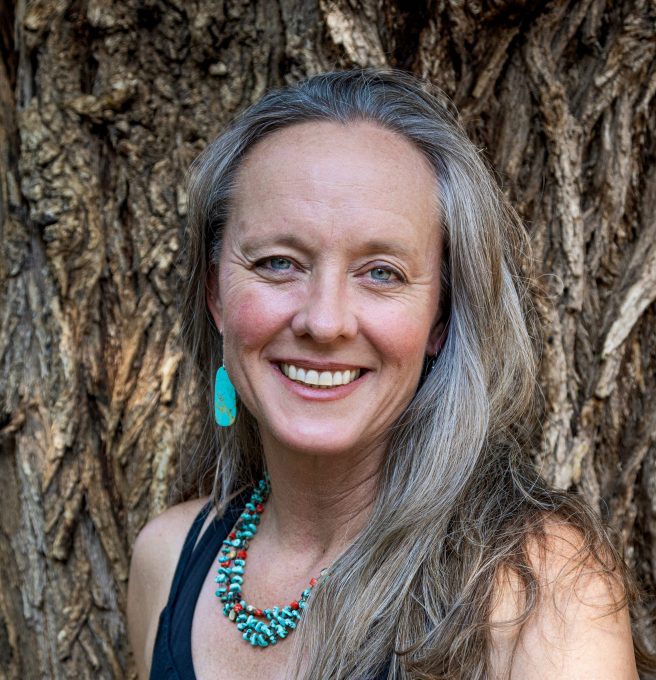
Shelli Rottschafer (she / her / ella) completed her doctorate from the University of New Mexico, Albuquerque (2005) in Latin American Contemporary Literature. From 2006 until 2023 Rottschafer taught at a small liberal arts college in Grand Rapids, Michigan as a Professor of Spanish. She also holds an MFA in Creative Writing with a concentration in Poetry and coursework in Nature Writing from Western Colorado University (2025).

Shelli’s home state is Michigan, yet her wanderlust turns her gaze toward her new querencia within the Mountain West where she lives, loves, and writes in Louisville, Colorado and El Prado, Nuevo México with her partner, photographer Daniel Combs and their Pyrenees-Border Collie Rescue. 

Discover more of Shelli’s work at: www.shellirottschaferauthor.com

INTERVIEW: MAYA JEWELL ZELLER

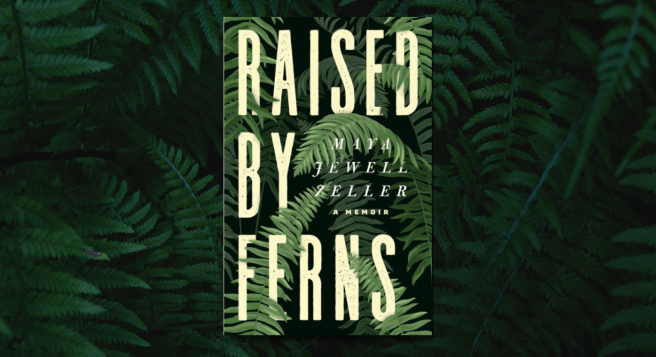
Maya Jewell Zeller’s most recent publication is Raised by Ferns, a memoir-in-essays released by Porphyry Press (March 2026.)  Raised by Ferns details how Maya became a creative, a writer, and an advocate for the wild.  She now lives in Ellensburg and Spokane, Washington with her children.  She teaches English at Central Washington University, and is Faculty of Poetry and Nature Writing within the low-residency MFA Creative Writing Program at Western Colorado University in Gunnison, Colorado.  She can be found wandering huckleberry lined trails, gazing up toward towering ponderosa pine trees, and sniffing roses in city botanical gardens. https://mayajewellzeller.com  

Poet, author, and frequent reviewer for the South Broadway Press journal, Shelli Rottschafer, recently sat down to interview Maya.

SLR: Dear Maya, thank you for this interview.  

I am excited to learn from you about where life has led you and how your path has influenced your writing.  

It seems to be clear you have a keen sense of play, especially in how you teach.  I have seen this in your collaborative academic text written with Kathryn Nuernberger.  At the end of each chapter you both encourage students to experiment, you give “invitations to reflect,” and even provide writing prompts on “remixing nursery rhymes.” 

Can you talk about the importance of play in writing?

MJZ: Thank you for underscoring that, Shelli! I am a huge fan of the pedagogy of play. When I taught high school, I used to introduce Henry David Thoreau’s “Civil Disobedience” by reading aloud the children’s book Henry Climbs a Mountain, by D.B. Johnson; and in my in-person poetry classes at the college level, we often begin study of duende with a campus scavenger hunt (spanning art and science buildings and programs). In both cases, play opens up the brain and body to experiment and adventure—two of the aspects of a healthy curiosity that allows learning and growth. In writing—as we know—playing games and making our own rules can sometimes lead to new discoveries. If we approach ‘received forms’ as play—as in a nursery rhyme remix—we can also discover.

SLR: In that co-edited text – Advanced Poetry: A Writer’s Guide and Anthology. NY: Bloomsbury, 2024 you have a chapter on the “Poetics of Spells.”  You use that practice in your poetry collection, Alchemy for Cells & Other Beasts (2017).  Throughout it you create incantations, you invoke chants, and you weave in textures almost making your words touchable.  

How are repetition and sensory details additives in verse?

MJZ:  I love it when poets interview poets, spellmakers convene with spellmakers! I know that you also practice repetition and sensory details in your work, so you know: spells are poems and poems are spells; they are small powerful incantations, whether we call them charms or not. Poems make something happen, through repetition and invocation—saying something over and over can feel like summoning or conjuring, and the sensory world translated into verse can make us FEEL it viscerally, as if we are experiencing it. A spell-poem is a translation of desire for, or protection from, the tangible world and its beings. 

SLR: Your 2023 collection, Out Takes / Glove Box, which was the winner of the New American Poetry Prize, teaches a unique form of poetry–the Out Take Poem.  

Can you explain this inventive form?  How do you select your “golden lines”?

MJZ:    Yes. Merriam-Webster defines out take as “something that is taken out: such as a : a take that is not used in an edited version of a film or videotape, or b :  a recorded musical selection not included in a record album.” In a craft talk I give on this concept, I define out take three ways, the first of which is:  “the images, narrative, or other materials behind the poem or the final image; those materials which did not make the printed version, and which may be less formal/ polished/ directly narrative/ contributing to a clear and direct discourse, but which may access a layer of the psyche or subconscious hinted at but not explored in the original image” (Jewell Zeller, “Out Takes From the Making: The Story Behind the Image”). Put simply, a poetic out take is simply taking unexplained or mysterious allusions/ images from a parent-poem, and then unfolding what’s behind them—kind of like giving those images an origin story. My “out takes” were invented when I took a poem I’d written, called “Documentary,” and then pulled images to make seven other poems, the “Out Takes From the Making” of the documentary—like cuts from the final film. That series was first published in Juked in 2017, but folks could also pick up the (2023) book and see how the images scatter through other poems. Thanks for asking about it!

SLR:  Both Alchemy for Cells & Other Beasts (2017) and The Wonder of Mushrooms: The Mysterious World of Fungi (2025)—which is a Foreword Indies 2025 Finalist in the Nature Category, are beautifully illustrated. Alchemy pairs each of your poems with visual artist Carrie DeBacker’s nature-based paintings. The Wonder juxtaposes illustrator Jenny deFouw Geuder’s woodland scenes with your descriptive prose.

How does ekphrasis tell a herstory rooted in m(other) nature?

MJZ:    I love that you’re picking up so directly on intersectional feminist undertones, Shelli. So for Alchemy, it was a true collaboration—we sent poems and images back and forth and composed in response to one another’s work. The ekphrastic responses were true makings based from another woman’s work, as well as Lorca’s “deep spirit of the earth” coming up through each other’s art. Then our publisher arranged them for the final draft of the book. 

In The Wonder of Mushrooms, it was less ekphrastic and more of an illustration. Jenny and I were both contracted for the book by AdventureKEEN, who also worked with me to set an outline of topics/ phenomena they wanted covered. While Jenny did wait to get the final copy of the word file from me before painting, it was more about illustrating content than making something up in response. So, it was probably more rooted in the earth than in our creating from it—a kind of mycelial response. 

SLR: Throughout Raised by Ferns your poetic-lines come through the prose.  An example of this is your essay, “Sestina for Foragers” which is a fusion of the haibun with the sestina.

There are other examples of this inventiveness within your writing as well. 

Raised By Ferns, Mayz Jewell Zeller’s new memoir

Why experiment with different forms?

MJZ:  That’s so brilliant. I hadn’t thought of “Sestina for Foragers” as a haibun, but I love that you are making that connection—and of course it is there!— the essay is about place and journey as much as it is about mystery and repetition. I have another essay, that precedes the ones I wrote for this memoir, called “Lower Columbia Watershed Haibun: Field Notes on Going Home Again,” first published in Passages North, that I am sure was a predecessor to “Sestina,” and which didn’t make it into Ferns. So to answer your question, I love it when a received form gives us permission to play in another genre: it’s like a fun puzzle, trying to see what fits and where and how—except that in addition to the already structured edges of the puzzle pieces, you can invent shapes while putting the others together. So there’s a bit of magic in that process. Making a poetic sestina, which repeats six words in a predetermined pattern in six sestets and a final tercet, into six sections and a prose envoi, is like creating that final picture—but with some surprise deviation from the predetermined pattern: like following a map to treasure but remaking the map in the process. It’s another way to discover, to play.

SLR: In the essay “The Privilege Button” in Raised by Ferns, you quote Spanish poet and playwright Federico García Lorca. You both call to break with traditions, and in your narrative you use creative leaps to say what is often left unsaid, that liminal space between the lines. 

Could you share with us why this resonates with you?

MJZ:  Lorca wrote that “In order to live, a metaphor needs two elements: a form, and a radius of action. A central nucleus and the perspective surrounding it. The nucleus opens like the flower that startles us by its strangeness; but within the radius of light we learn the name of the flower, and we get to know its perfume.” In my Advanced Poetry textbook chapter on duende, I wrote: “I think of Lorca’s form as the image or figurative language that carries the concept, and the radius of action as how the metaphor moves in the poem. The startling occurs when we are transformed or transferred through the process so that we are able to experience it synaesthetically and feel its embodiment viscerally—a relationship with image that transports us, as if by magic, what we first felt in art and then spent the rest of our lives attempting to find again and recreate” (Nuernberger and Zeller, Advanced Poetry: A Writer’s Guide and Anthology). In deep image poetics, this arrives as the mysterious image, such as those in Out Takes. In Ferns, there is an echo of this with the rhizomes brought up throughout the book, and coalescing in the various forms, and later footnotes of the title essay. The leaping of Lorca resonates so deeply with me because I am also made of “thistle and terminal stones” like he references in “Theory and Play of the Duende.” 

SLR: Your memoir is a heavy self-gaze.  It’s a chronicling from creative youth to creative adult, a herstory of resilience.

In hindsight, what would you tell young Maya now?

MJZ:   I think I’d tell her she’s going to face a choice in young adulthood, and she’ll think that one path is the way to stability, to security, but that instead, she could be her own anchor. That she is the stabilizing factor she seeks. I’d tell her to choose herself….  [and that] art isn’t a wildness you have to prune or garden in secret between the things other people need; it’s the wildness you should cultivate by going into it. 

SLR: You have relationships with young creatives because you are a mother and an educator.  

In our hard times as we face challenges with international conflict, climate change, and juggling to have and to have not,

what could you advise your audience? 

MJZ:   Shelli, thank you for this beautiful set of scaffolded questions that pay such deep attention to my lineage and canon of work, in our world that pulls us in so many directions. I think my last answer (above), about art and wildness is part of the advice I’d give, but I also think there’s something in advice that is particular to each individual, and to the worlds they inhabit and in which they might create and act to protect others. 

So this is [what I would say in] general: make something that gives you joy, and that probably, in that discovery, will also offer joy to others. Make it out of scraps if you can, but don’t think you only deserve cast-off scraps. 

And of course try not to use up everything: leave some huckleberries for the bears, and leave some for the next people who come to pick. And remember that you don’t own the land you’re walking on, and that if you do take something, you better give something back. If you feel yourself being erased by someone else, don’t imagine they will color you back in later, or that you don’t deserve to be all the shades of yourself that you are. 

SLR: Maya, thank you for reminding us that we all need to make space for others, that we need to pay attention to ourselves, and that all children and animals and plants are sacred. Thank you for gathering upon the page with us here at South Broadway Press.

READ: SHELLI ROTTSCHAFER’S REVIEW OF MAYA JEWELL ZELLER’S RAISED BY FERNS

Shelli Rottschafer (she / her / ella) completed her doctorate from the University of New Mexico, Albuquerque (2005) in Latin American Contemporary Literature. From 2006 until 2023 Rottschafer taught at a small liberal arts college in Grand Rapids, Michigan as a Professor of Spanish. She also holds an MFA in Creative Writing with a concentration in Poetry and coursework in Nature Writing from Western Colorado University (2025).

Shelli’s home state is Michigan, yet her wanderlust turns her gaze toward her new querencia within the Mountain West where she lives, loves, and writes in Louisville, Colorado and El Prado, Nuevo México with her partner, photographer Daniel Combs and their Pyrenees-Border Collie Rescue. 

Discover more of Shelli’s work at: www.shellirottschaferauthor.com