It doesn’t take too much
to forget:

Leave the Bramble Cay Melomys
out of the next dictionary.

Those rats are already dead,
homes wiped out by rising tides.
Not many know their name,

same as the Kittlitz’s Murrelet.
No kid dreams of seeing
the Murrelet’s mottled body blending
into the sea spotted with sunlight.

It’s safe to delete
them too.

If the name’s not
in textbooks, postcards, or magazines,
no one will know to search.

Move the erasures
more and more inland,
low tide dragging away
wolf spiders and honeycreepers,
Sierra Nevada Blues and golden toads.

Readers won’t learn
how far the damage’s gone—
just keep erasing.

Afterall, people forgot
they once could be singular.
Victorians hid that
under grammatical change

so keep erasing
until nothing remains but
a white sea.
Emma Ginader is a bisexual poet and editor from northeastern Pennsylvania. She recently graduated from Columbia University with an MFA in writing. Her poetry has appeared in The Moth Magazine, Vox Viola, december, The Rational Creature, and FU Review [Berlin]. She has work forthcoming in Mantis, Lavender Review, great weather for MEDIA, and They Call Us. Ginader previously worked as the online poetry editor for the Columbia Journal and as the social media editor & business reporter for The Daily Item newspaper in central Pennsylvania. Find her Twitter account, @EmmaGinader.
Vision

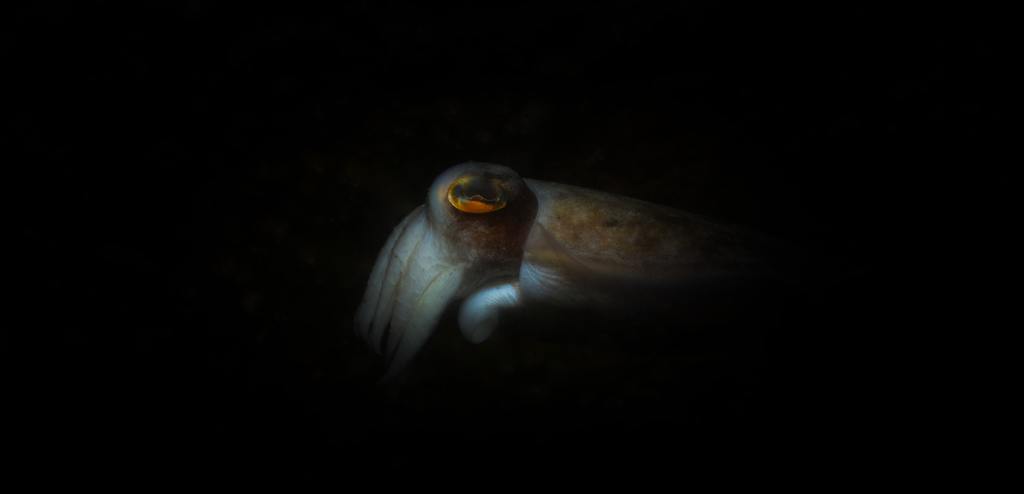
If a giant squid
Were to breach the waves
To observe the night sky,
Her eyes unaided
Could see past Neptune
To the dwarf, Pluto.
Not a corpse,
She is neither
Crushed, maimed, or compressed.
Her delicate skin
A shimmering silver, intact,
Flashes when she undulates.
Her eyes, dinner plate big,
Her three hearts, beating
Slowly, restfully.
A winking silver coin,
She drifts below,
Sauntering to the deep,
To the black water,
No different than space.
Mountain

I write you shorter.
I write you smaller
I write you fetal
I write you shivering
I write you intimidated
I write you alone
I write you into the background
I write you silent
I write you stunned
I write you fat
I write you tall
I write you muscular
I write you thin
I write you quiet
I write you stoic
I write you extroverted
I write you self-conscious
I write you at peace.
Cheryl Aguirre is a queer biracial poet based in Austin, Texas. You can find their previously published work in Ghost City Press, decomp journal, and The Whorticulturalist. You can follow them at @drowsy_orchid on Instagram and @Wheat_Mistress on Twitter.
often, in the wilderness
I recall the words—
not human hearted

a hungry mountain cat
stalks a lost child
vultures await the scraps

the horror of these
less-than-human hearts—
yet what of those?

unearthed shattered skulls and
the pages of history tell their story
even the good book drips

and before that, nothing—
a silence into which, like mothers,
we scream an Eden to life
Brian Rihlmann lives and writes in Reno, Nevada. His work has appeared in many magazines, including The Rye Whiskey Review, Fearless, Heroin Love Songs, Chiron Review and The Main Street Rag. His latest poetry collection, “Night At My Throat,” (2020) was published by Pony One Dog Press.
emerge from winter cocoon into daffodil spring, the cracking of bones & ice and the slush slipping from pine— the yawns & shhs emerge— duckling dawn earth cleans her scars this way: lifting & washing under the folds, fresh cotton flapping like a surrender to the restarted zodiac, to the irrational golden fleece of Aries unshaven despite the warmth— how the tides deliver a new salt to upper lips, an emerging, a dusting out of all coughs cooped by winter; the pages aren’t clean, the pages aren’t even pages, they’re still trees, still grand along the yet-unbroken sky ! the pinnacle of her year exists in cool mountain runoff the blue dunk & minnows along curious toes after a long creek-side stroll, the relief of the stretch and the new dogwood petals that ferry their way to a better tomorrow, to a brighter ocean shore.
Cassie Hottenstein is currently between Denver and Jacksonville, mountain and ocean. Her poetry and stories have been featured in magazines such as Boulder Weekly, the Talon Review, Every Pigeon, and the Tampa Review Online. When she’s not writing poetry, she’s probably playing Animal Crossing or doing someone’s taxes in exchange for money and tasty peanuts.
Our east coast minister-philosopher leaves god at the railroad station in a brown satchel. Pandemic hikes are recommended, with caution, then canceled. The national state of emergency boards up restaurant, book store, strip club, theater, and bar amusement. The three sisters mountain peaks legend stands. We keep busy online, with books, at the liquor store, and in laundry rooms. Our gender flows like freshwater tumbling from moss.
History Storm | XII
The White House garden buds red and green peppers from Council on Foreign Relations (CFR) language debris. Yellow Post-its dedicate classic innovation to you. Dialectic court calls the whale out to the sacrificial field. The online devil agreement signature line is chosen. We have eaten Emily Dickenson’s grave squash flower. Death shrugs from a Hyundai.
Illuminati
Nearly a century of global economics, two world wars, a cold war, site specific global economic wars, and pandemics and there are still no masterminds, only groups of fumbling narcissists with resources.
Michael Rerick currently lives and teaches in Portland, OR. Their work recently appeared or is forthcoming at Clade Song, COAST|noCOAST, Epigraph Magazine, Graviton, Mannequin Haus, Marsh Hawk Review, and Parentheses. They are also the author of In Ways Impossible to Fold, morefrom, The Kingdom of Blizzards, The Switch Yards, and X-Ray.
I remember being seven years old and still loving Iowa spring, believing it to be all cheap gingham and wild onions sprouting. But as I grew I learned that to be a child in promised Iowa spring is to feel sentimental and uneasy. We would return to patterns marking the nurturing rhythm of time familiar: full brush piles, vinca vines blooming, cicada choruses at sundown, lilac bushes spilling over. And with these easy April lullabies came those subliminal spring hints, trailing towards adolescence, hidden in the blossoming, the ripening. Spring pushed childhood forward; we all became wiser when the monarchs returned north. When the soil thawed from months of winter frost, I would kneel in my garden, rusted trowel in hand, knees muddening while I ripped through roots, sent worms wriggling. Trying to dig a hole deep enough where I could hide from spring and remain a child forever.
One day while I was digging I spotted through the soggy loam a flash of moonwhite, smooth and still. It was a perfect stone of life, a bird’s egg whole and glowing. The egg remained cupped in my care for over a week, placed in an old shoebox under the lightbulb of a table lamp. Every day I checked on my dear April lullaby, waiting for it to hatch, and I announced to everyone the news of my beautiful egg, my baby bird-to-be. When I told my elementary school teacher, she invited me to bring my treasure to share with the class. I knew my classmates would be so envious of the springtime life I carried, and I so packed my little egg to bring to school with me the next day.
I wish I had known how fragile those little stones of life tend to be. It seemed that all the resilience of my bird-to-be was spent fully on its fall from the nest. Certainly not enough left to survive a ziploc bag inside a child’s backpack. When I went to my cubby to get my egg, I slowly unearthed a sickly yellow mess. I held my ziploc high to examine the moonwhite shards, jagged and crumbled, yolk lumping thick in between. I shoved it away and went to the bathroom to cry. To mourn. I had killed my April lullaby, my cheap gingham and wild onions sprouting.
Seasons don’t slow for a shattered bird’s egg. Iowa spring kept passing through; each year the monarchs would return north, and I would cry at their beloved homecoming because I didn’t want to get any wiser. Yet my body grew too big to fit inside any dug up garden holes. I could not stop the blossoming, the ripening; springtime would come to welcome my first training bra, my first kiss. The uneasiness of Iowa spring paired cruelly with the sweet smells of chopped lilac in the kitchen vase, a vision of childhood sentiment. And in the thick of that tiptoe towards adolescence I would think back to my precious egg, imagining a world where it had hatched. I dreamt of my bird growing radiant and strong, big enough to carry me away, so that we may leave spring behind and fly forever towards Iowa winter, chasing those months of still and freeze where life remains unchanging.
Carson Schulte is a senior at Luther College studying social work and Spanish. She grew up in Iowa and recently moved to Denver to complete her social work practicum. On days off from her internship at a child residential treatment center, Carson enjoys knitting, baking, and snuggling with her cat. She is an emerging writer in the field of creative nonfiction, with work forthcoming in the Oneota Review.
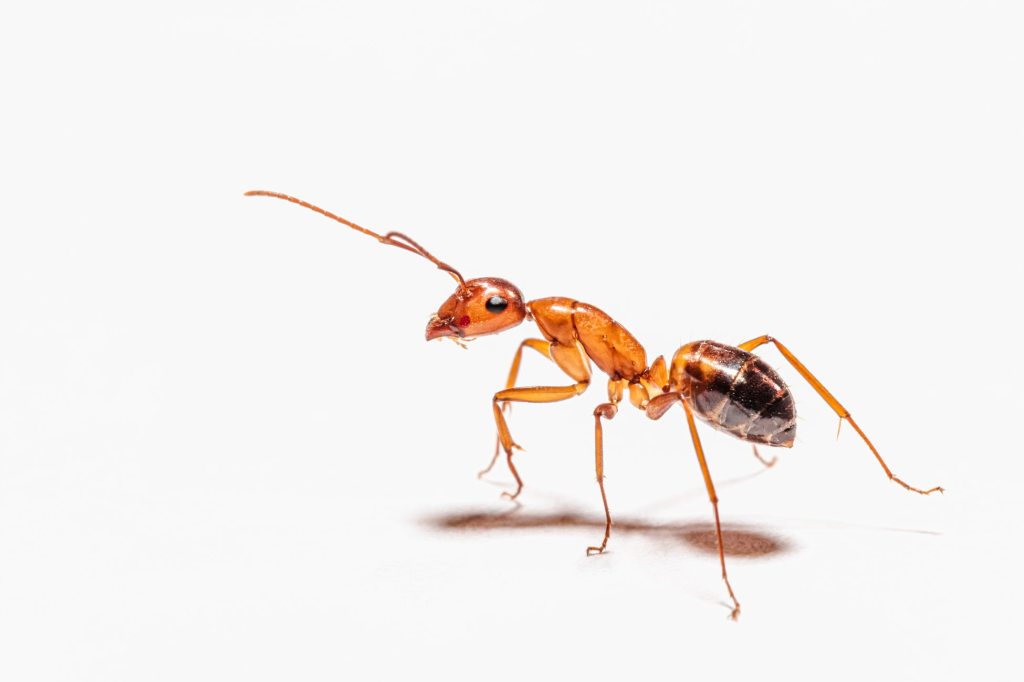
It would seem to me

             that in the vast
                            underground kingdom

              of the anthill, along
                                          with burrowing and
                       tunneling, heaving and
hoisting, fending off
                            outside invasions down
                      to the very last ant and

conquering rival kingdoms
                                    with no mercy (and all
         the various other assigned

   	     tasks and roles from the
       home office / H.Q. of
                                   the collective hive-mind),

   surely dreaming must,
                                     also, be an

                      essential

                              civic duty.
Jason Ryberg is the author of thirteen books of poetry, six screenplays, a few short stories, a box full of folders, notebooks and scraps of paper that could one day be (loosely) construed as a novel, and, a couple of angry letters to various magazine and newspaper editors. He is currently an artist-in-residence at both The Prospero Institute of Disquieted P/o/e/t/i/c/s and the Osage Arts Community, and is an editor and designer at Spartan Books. His latest collection of poems is The Ghosts of Our Words Will Be Heroes in Hell (co-authored with Damian Rucci, John Dorsey, and Victor Clevenger, OAC Books, 2020). He lives part-time in Salina, KS with a rooster named Little Red and a billygoat named Giuseppe and part-time somewhere in the Ozarks, near the Gasconade River, where there are also many strange and wonderful woodland critters.
They Tap Me on the Shoulder and Say They are Going to Ensure My Poverty Will Erase My Last Name and My Homeland Forever (But the Smiths and the Jones Will Live On)
BY RON RIEKKI
When I was in the military, we marched over the purple coneflower and milkweed and powderpuff and canna lily until they were dead from the war of our feet and later when they haze-crucified me I aspirated on my own vomit and saw death marching through the undergrass and he was a he and he was not as seismic as I’d come to expect and
when I was on the football team, they installed debt in my chest and they drove their trucks on the swamp conifers and carved encyclopedias into the pines and our homecoming king took a knife to his abdomen to spell the words MINING TOWN.
When I worked in the prison, they concreted everything so that the yard wasn’t, and the smell was of feces and lives frozen as poison and
when I worked in security, they put me in an isolated guard shack where there was no heat and no one else around for miles and I’d listen to the wolves and would wonder if they were coming from inside me.
When I worked on the ambulance, my partner would make fun of the patients as soon as the patients weren’t our patients and he would reenact their pain by holding his body in the distorted positions in which we found them and I’d go home and warn my parents that if they are ever on an ambulance to record everything because God can see everywhere but not inside the walls of piss and pus, and
when I was in middle school, they’d put us in lockers and light little pieces of paper, throwing them through the hole, telling us that we were going to experience what it’s like to be the sun and afterwards I’d go outside and stare up at it in the hope that I’d go blind forever and it didn’t happen because I could never take the pain and instead would go home and swim in the neighbor’s empty pool, me and a buddy, just moving our arms and walking in that big useless pit.
When I was in PTSD counseling, my counselor fell asleep so I decided to go to sleep too except I could see the helicopters on fire when I closed my eyes and so I just sat there, staring at him, watching him age so slowly, seeing the grandfather and the great-grandfather and the grand-corpse just begging to come out and
when I was in high school, we cheered the violence and admired the violence and encircled the violence and awarded the violence and moved back for the violence and watched the violence and the violence did its thing.
When I was dead, I realized that the earth was everything, that all there is is the earth, that the people on it are just dots, dips, dark, that we are spiders, that our arms are air, replaced so quickly.
But the earth.
But the earth.
Ron Riekki’s books include My Ancestors are Reindeer Herders and I Am Melting in Extinction (Apprentice House Press), Posttraumatic (Hoot ‘n’ Waddle), and U.P. (Ghost Road Press). Riekki co-edited Undocumented (Michigan State University Press) and The Many Lives of The Evil Dead (McFarland), and edited The Many Lives of It (McFarland), And Here (MSU Press), Here (MSU Press, Independent Publisher Book Award), and The Way North (Wayne State University Press, Michigan Notable Book). Right now, he’s listening to Nick Drake’s “Northern Sky.”
The remains were raised by the Mississippi—an old song in shards. Was it burned by accident? Or captured when New Orleans was,
run up to Yazoo River to escape Union hands, ashore in a bend? Lincoln so wanted to roll unvexed to the sea.
Muted pitches in an old steamboat, its firebox is a gaping mouth for coal. The river has the last say.
Each Natchez meant more bales, more boilers. There was no music like the Natchez’s whistle. Heard was the length of the open
valve, vibration in steam—not air but rising steam rarefying in the bell. But music doesn’t give out any answers.
The steam’s been gone. No one’s bragging on the Race of the Giants or Captain Leathers anymore. The floating palace, wood rot come up
for air. The river is the last say.
Heather Dobbins is a native of Memphis, Tennessee. She is the author of two poetry collections, In the Low Houses (2014) and River Mouth (2017), both from Kelsay Press. She graduated from the College Scholars program at the University of Tennessee and earned her M.F.A. from Bennington College. Her poems and poetry reviews have been published in Beloit Poetry Journal, Fjords, The Rumpus, TriQuarterly Review, and Women’s Studies Quarterly, among others. For twenty years, she has worked as an educator (Kindergarten through college) in Oakland, California; Memphis, Tennessee; and currently, Fort Smith, Arkansas. Please see heatherdobbins.net for more.
The banks look like a Goodwill store washed up, clothes everywhere
Our bodies run down to the surf shells bubble out of the sand
Salt teeth bite at our ankles then our labia, breasts and eyes
We are fifty-six laughing little islands of loamy flesh
We wash up onto the sand pink and glinting in the sun
We find our clothes, soft as homespun, warm as August dunes of sand
Four fire-lords build a circular blaze that sways and rises to meet us
We too rise and sway, huddled like fur weanlings at the breast
our chests rising and falling in sync our smiles lit up and flickering.
We raise a sunny, rubicund cone high, high into and through the fog
We shout, laugh and cry firelit eyes each a salty ocean
We release it with smoke into the chill air and dissolve into dance and drums
and silent pairs, trudging up the banks trailing bits of circle as we go.
Mo Lynn Stoycoff is a writer and visual artist whose poems have appeared in Poetry Now, Rise Up Review, The American Journal of Poetry, California Quarterly, Speckled Trout Review and many other journals and anthologies. Mo works in the performing arts and lives in Central California.












 south broadway press