

Book Review: compost your despair by hayden dansky
A BOOK REVIEW BY LIZA SPARKS
Compost Your Despair is Hayden Dansky’s love letter to Palestine, community organizers, to the “queer and weird and trans and disabled,” to the “dark and indigenous,” to “those of us who live in liminal spaces, or are kin to it,” to their past self, to anyone who feels empathy, anyone with a heartbeat.
The speaker in these poems writes with a fierce urgency that begs us to pay attention and asks us to move our bodies towards action.
In “Now That I Have a Voice,” the speaker defiantly asserts:
So let them
Burn me
with the rest of them
Burn me like they did
my ancestors before time and place
made me white
Burn me like the heathen they call
me for my love, desire, joy
Burn me with the rest because
now that I have a voice
I will never close
my mouth
These poems tumble down the page like spoken word and it does feel like Dansky is speaking just to us. They capture our attention. They invite us in to the prayer. This poetry is a communal act—a protest poetry spoken on the street.
They write in, “Until They Hear Us:”
What else can we do
besides scream from every corner
There is not a lot of excess in these poems; there is not flowery language, sentimentality, romanticization of struggle. They write with a conversational language that seeks to be understood. In “Climate” they write:
it really, really matters how we treat
each other
There is the examination of complexity and Dansky struggles with their own positionality of privilege and oppression. They write:
Peace is a process of
relationship to self
just as much as
relationship to other.
They write, in regards to the ongoing genocide in Gaza,
I will scream that this is not
my Judaism.
These poems demand a megaphone.
There is not the promise of peace or justice, but an impulse towards it. In “Until They Hear Us,” the speaker repeats, “I will try” and “I can try.” It is a vulnerable and humble sentiment. In times like these, what else is there to do but try? Trying is the first step towards action.
There is a force in these poems that is driven by the musicality of repetition, like the drumbeat of “Burn me” in the final stanza of “Now That I Have a Voice.” The speaker is not afraid to write in defiance of powers that will oppress them and the people they love, and they will say it again.
In the poem, “Climate” the speaker struggles with the power of words. What can words actually do in “a burning world.” They write, “How can I trust these words.” Yet, Dansky is driven to speak, to write, and to share. There is a deep desire to be heard. There is a fierce drive to express.

These poems bring to mind the Audre Lorde quote: “I have come to believe over and over again that what is most important to me must be spoken, made verbal and shared, even at the risk of having it bruised or misunderstood.” With that same sentiment—Dansky must speak, must write, must share.
There’s a hunger in the speaker to understand the past and the present, to make sense of the trauma and their position and responsibility.
In “Nex” there is a firm defiance against the powers of hate:
Our bodies are resistance.
Our love is survival.
Our identities are our anchors,
always in transition.
“Nex” is addressed to Nex Benedict, a 16-year-old non-binary student, youth, and precious soul who died as the result of anti-LGBQTIA+ policies. Dansky’s poems do not exist merely on the page, but are in deep conversation with the world around them.
And although the world around them is apocalyptic, there is hope in these poems. In “A Pandemic Note to the Creative Organizers,” the speaker writes:
You are not alone.
When you listen
you will remember
you never have been.
and in “A Pandemic Note to Self,” the speaker asserts:
Fall into the earth like it’s your home
It has always been.
Dansky’s impulse towards social justice is driven by a deep love for their fellow humans and for the world. In “Gaza” they write:
called by a deep love
of all humanity
of a belief
that nobody will be free
until we all are.
Compost Your Despair asks the reader to look at their own privilege and positionality—What drives you? What moves you? What do you love?
In “Pride,” Dansky reminds us that
Pride is not complacency
our lives are choices
and we are choosing to stay
Dansky’s poetry asks the reader: What are you choosing to do with your life? What are you choosing to do with your voice?
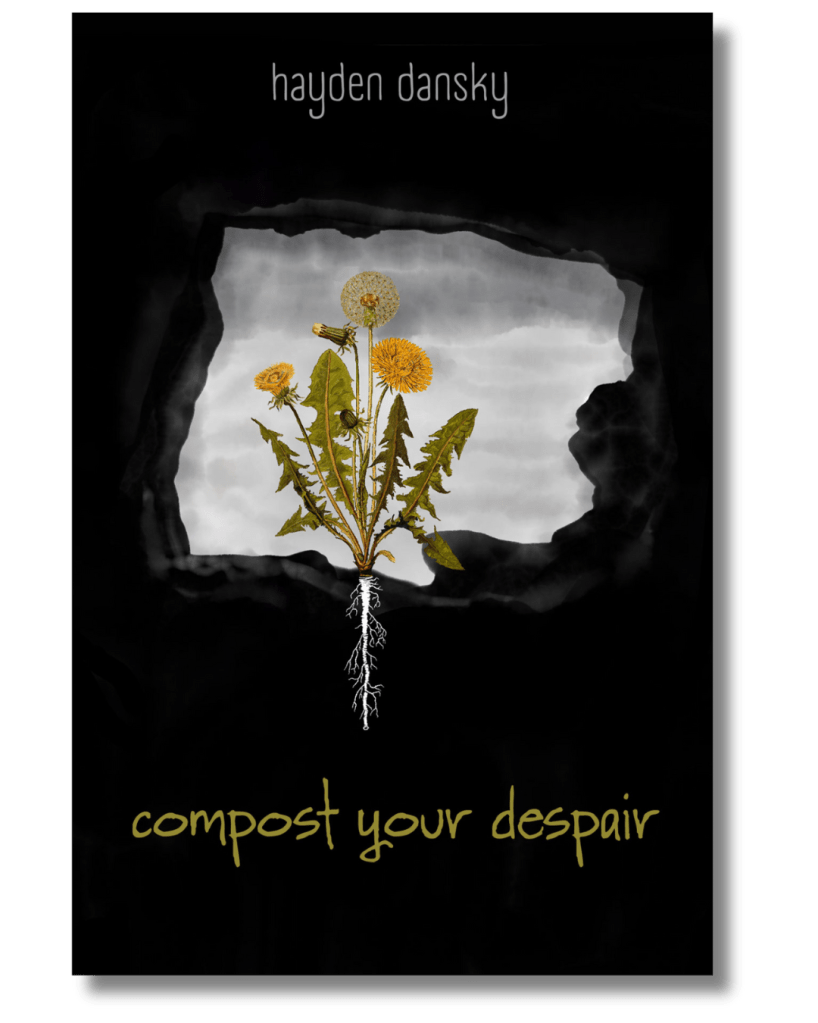
compost your despair
BY HAYDEN DANSKY
AVAILABLE NOW!
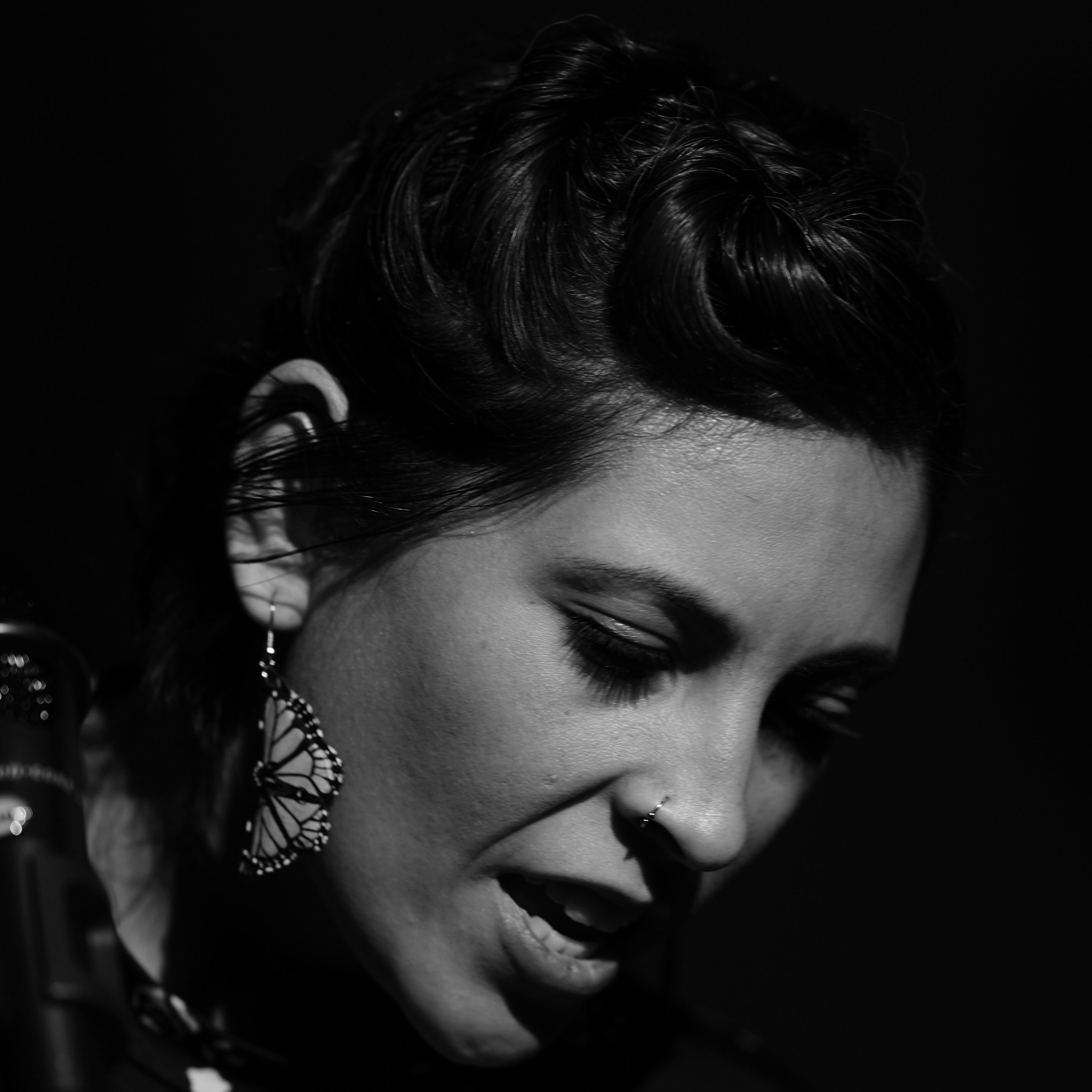
Liza Sparks (she/her) is a student in the 2025-2026 Poetry Collective at The Lighthouse Writers Workshop in Denver, Colorado. Liza follows her literary obsessions and collects books the way toddlers collect rocks and pinecones (beloved friends, sacred treasures). She is a Pushcart Prize and a Best of the Net nominee.







 south broadway press