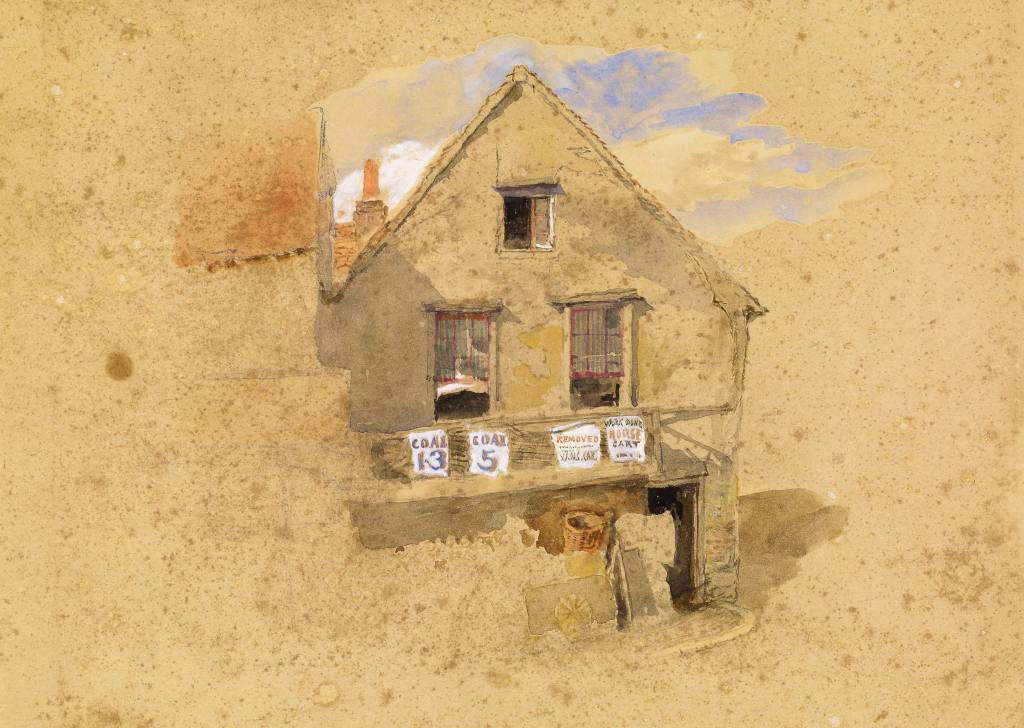
Long beams are carried in on strong arms, belts fitted with tools and the Oklahoma sun warming the backs of the heads of workers remodeling the house across the street though it’s colder than usual for these parts in February—even a dusting of snow. The grass crunches beneath their boots, dry, and blonde like a young woman’s hair, as I watch them unload their truck, turning toward one another now and then to chat or chuckle or pat a back before lifting another board. The windows of this home must be original, the same panes of glass it was born with and I wonder if they will be replaced, if the paper that surely continues to adorn the walls, peeling, will be stripped, its bones re-fleshed in fresher hues, if the organs that pump life into toilets, showers, and sinks, into outlets, lights, hairdryers, and phones will undergo surgery. How long until the porch is secure and the roof healed of all its leaking? A few bi-fold doors lean against the home’s old siding— closets, it seems, have been opened and rendered doorless as heaps of a former life are gathered in piles of trash that exit the home in large bags. Down the street at the halfway house, men smoking cigarettes also observe this pageantry with me and I wonder if they are thinking what I am thinking—that someone bought that house with all its imperfections, after an assessment, not knowing exactly how the whole thing will turn out. The sky grows overcast and snow begins to fall again so the men at the halfway house drop embers unto the sidewalk to go indoors as the workers hood their heads and continue working. I pull my blanket tighter over my shoulders letting the cool flakes fall against my face and litter the doorstep around me. I can’t leave now no matter what happens— this is the part of the story I still like.
The stray dogs bite. There’s glass in the sand, too worn to cut a toe. A toddler giggles running from her family toward the waves. They urge her back. On the beach road, I can’t tell if the sound of a car approaching from behind is the surf until headlights flash. The gate of the abandoned school for “incapacitados” is chained shut, has been for months, sargassum and plastic washing under. Classroom walls of cracked concrete. Graffiti on graffiti. A phantom yell of gringo! Spitting rain. It will pour any minute. Then it doesn’t. The yacht club sells pizzas to expats but no one is hungry tonight. Wind scatters plastic chairs around tables as if customers were full and anxious to get home, then as if the patio were raided by stray dogs. Each palm tree has a personal hair dryer. The expats, like stray dogs, growl at newcomers, bark at each other into the night. The expats feed the stray dogs. Cheapest alarm system I ever had, says one to another. A pack gathers in front of his second home like hyenas, vicious, grinning. Testicles, teats, purpled, withered fruit clinging to the vine. They shit where they want. A passerby steps in it, curses. A passerby kicks out but we see who is really afraid. A passing car accelerates, achieves revenge. The corpse of a stray dog in a ditch stinking until it won’t anymore. Expats think the pandemic a hoax or conspiracy initiated by Jews. The expats are assholes, says an expat, but they are old. They die quick. One, on his moto, was run over by a microbus last week. He exploded like a McDonalds ketchup package.
2.
I speak to a loved one on the phone. She insists, there is something you’re not telling me. Twists and flecks of iridium, extraterrestrial metal, shocked quartz and glass beads discovered in the rock core. Water-winged children hurling themselves into cenotes, earth’s empty eye sockets, prehispanic graveyards, skeletons fished out from 100 meters deep, bats zig-zagging over water underground. I’m alone in the port city of Progreso. Chicxclub, site of climate disruption, mass extinction, ancient rerouting of life. A meteor with the power of 1,000 atomic bombs. We won’t give the universe time for another go. A seagull missing a foot lands near my dinner, gingerly using the stump for balance, swaying more than usual in the breeze. A flamingo limping across a salty lake. A stray dog hopping. An ex-pat in a wheelchair. Landmine in Afghanistan. Crowded hovels with no running water inland. Abandoned mansions on the coast. Mold, erosion, dilapidation. A hurricane isn’t at fault. The money ran out or virus. Crackling bass and reggaetón and shouts from inside one shell of a building that isn’t theirs, the windows boarded up and papered over. From the terrace three floors up a young Mexican points to the liter of beer in his hand and yells, ¡Súbate, Güero! I pass through a door with a busted lock.
3. A group of 20-somethings chugging beer around an empty pool. Racing to inebriation. Pulling ahead in the race to elude annihilation. Assembled from various regions of Mexico, here to construct a suburbia of sorts outside the port city, an international village. They pass me a joint, I bum them English cigarettes too expensive for Mexico. They push a phone with a PowerPoint presentation in front of me. Condos with rooftop gardens, windmills, and solar panels resembling Mayan pyramids constructed over the ruins of Mayan pyramids long ago chewed, swallowed, and still being digested by jungle. Graphene super metal and recycled plastics. Bubble tech and defoaming. Optimum insulation and acoustics, less CO2 release. Jargon, gospel, babble of sustainability. New lingo for the industry, the lexicon, the public imagination. Off the grid. Supposedly free from the control and corruption of government, of cartels. I say it sounds like a cult and an interior designer giggles wiggling her pointer finger up and down, says sí, sí, como Charley Manson. Voice automated everything—your entertainment, your coffee pot, your bidet. All-inclusive. More amenities promised than a liberal arts college. A Burger King. Probably a mini-Target. The promise of consumerism preserved amid the crash of exterior markets. Top priority: Security. AK-47s, M-16s, Uzis. Bulletproof vests and jackets that look like you’re going to church or brunch. Fences with barbed wire as tall as border walls. Here in the shell of an ex-expat’s vacation home the other American dream of the gated community lifted, romanticized, enhanced. Ultra-militarized. Elon Musk might support the project, claims an energy specialist. Living there will be like working for Google, boasts the jungle rave DJ. There is opportunity in crisis, they add. They have acquired the land. Started construction. Convinced expats to invest, possibly retire there. I jokingly ask the CEO, Who will be eaten first when the apocalypse comes? He nods toward a stray dog eying us from below and as serious as climate change says, could be any of us.
Dustin King teaches Spanish and runs a small organization that provides aide to undocumented community in Richmond, Va. His poems appear in Blood and Bourbon, Ligeia, Tilted House, Drunk Monkey and other magazines. He most recently made the longlist in the 2021 UK national poetry competition.
This poem is from South Broadway Press’ new anthology, Dwell: Poems About Home.Purchase here.
Sittin’ at the kitchen table—cup of black coffee in one hand, cigarette in the other—I look past catches of blue paint and the remains of flies on screen door mesh, toward the sorghum field just beyond the ranch gate. Death’s stillness—a gravity all its own—has seeped into every corner, permeated the grout of tiled countertops and spaces in between fruit magnates on the old, white Frigidaire like the smell of rabbit in the oven or hints of storm riding out on the breeze. Life’s left the room—no pulse under these linoleum tiles—it seems, leaving it darker, a bit colder, despite morning’s come to call through the window above the sink. I take another sip—bitter on the tongue—then a drag (or two), finding myself—absent-minded–fingering the contents of a chipped, pink and white bowl of green stamp china (of which she was so proud). Four pennies, two dimes, and a nickel. Two rusty paper clips. A half-used packet of B&C headache powder. A dead fly. I remember eating from it—sweetened raspberries, red and golden, from bushes in the garden—when I was small. How I’d toss them back in grubby fistfuls, between chokes on the juice, as honied explosions—sour and sweet—took me to Heaven and back then ‘round, again, while she looked out the screen door, tossing hair from her eyes—cup of black coffee in one hand, cigarette in the other—staring at my father working in the field, beyond.
David Estringel is a Xicanx writer/poet with works published in literary publications, such as The Opiate, Azahares, Cephalorpress, Lahar, Poetry Ni, DREICH, Somos En Escrito, Ethel, The Milk House, Beir Bua Journal, and The Blue Nib. His first collection of poetry and short fiction Indelible Fingerprints was published April 2019, followed Blood Honey and Cold Comfort House in 2022. David has written five poetry chapbooks, Punctures, PeripherieS, Eating Pears on the Rooftop, as well as Golden Calves and Blue (coming 2023). His new book of micro poetry little punctures will be released in December 2022. Connect with David on Twitter @The_Booky_Man and his website www.davidaestringel.com.
This poem is from South Broadway Press’ new anthology, Dwell: Poems About Home.Purchase here.
The front was sand and yellow wheat and brown horseflesh and night whistle of a train. The back was a gate unlatched onto summer – flower patches and sprinklers, blue television windows floating in the dark. Before builders poured foundations down the block, I ran there between rows of corn. Sunsets blazed or whispered and disappeared past railroad tracks at the horizon, the distance I could figure going under my own steam, the faraway I imagined growing up to find.
Lori Brack is the author of A Case for the Dead Letter Detective(Kelsay, 2021),Museum Made of Breath (Spartan Kansas City, 2018) and A Fine Place to See the Sky (The Field School, 2010). She lives on the prairie two blocks from the Garden of Eden and 14 miles from the geodetic center of North America.
This poem is from South Broadway Press’ new anthology, Dwell: Poems About Home.Purchase here.
She eyes the tired roadhouse tucked between junk yards filled with car doors and still-good hubcaps,
hickory smoke heavy on night air, rubbing against her like a cat. Inside, past shadowy booths
grimy with time, guitars draw her in with a walkin’ blues line, shuffle through 12 bars like they mean it.
Ya feelin’ blue? the drummer growls, and the crowd spills onto the dance floor where she joins women with tight jeans
and tight smiles, moving alone, faces painted hopeful. When the tune slows, she takes the hand of a sad-eyed guy—
they slide and sway, his breath on her neck a sweet refrain in a song of love gone wrong.
Susan Carman is a Pushcart Prize nominee, and served as poetry editor for Kansas City Voices. Her poetry appeared most recently in I-70 Review, Heartland! Poetry of Love, Resistance & Solidarity, and the anthologies Curating Home and The Shining Years. Retired from non-profit management, she lives in Overland Park, Kansas, where she is an ESL volunteer.
This poem is from South Broadway Press’ new anthology, Dwell: Poems About Home.Purchase here.
Growing up, my home was a closet. Not the metaphorical closet where I tucked my sexuality. More precisely, my home was an 8x11in guide to Colorado fish my grandfather gave me to mold my sexuality. Which I tucked inside my closet. In which were tucked letters to my adolescent loves like Jamie, Ally, Shelly, and Jack (especially to Jack). In which, I dreamed of our skeletal home without closets. Where my mother did not tuck her guilt, and the father did not tuck his abusive addictions. Where Jack drove the Hot Wheels car he gave me after our play date. Just like Ken in Aqua’s Barbie Doll.
There is no instruction manual with the postscript delivered by the owl to your closet proclaiming, “You’re a homosexual, Harry.” By trial and error, you come to understand the fragility of home. And the fragility of queer. And how both must often be constructed like lean-tos on the pull-out couches of allies.
Like tornados, like earthquakes, like tsunamis, like men in I.C.E. uniforms, my nature was a disaster a home could not weather. So, home became a lonely rainbow. A refraction of tears staining pictures of cutthroat trout.
Whether by cosmic dramatic irony or systematic oppression, when your home is queer, so often your home becomes a bar. Where fags bundle like fags. And smoke fags. And drink like, well, like fish. Most of whom are obsessed with being fish. So, I learned a new language that gave transformative space to my transient home. Sashay! Shontay! Cinched! Boots the house down! Beat for the gods!
I learned that language, too, was a home. Ours was one that could not be deciphered. Because no one cares to decipher why our family struggles with substance abuse at nearly twice the average rate. How our expansive forest of intersectional trees denoting our lineage drinks from a stigmatized watering hole. Yet, the branches stay sturdy enough for us to take our lives at five times the average rate.
I have read enough obituaries to know how mine may sound. Taken unexpectedly. After a long struggle. As if the struggle was never an indication of the homophobe. Or the revolver. Or how unsurprisingly often they’re the same. I mean, the gay homophobe with a revolver. Taking a family with him that would have died to show him how to live. In a home called queer.
I will be survived by a long list of family that never embraced me. With no mention of the love that allowed me to survive.
But I have found home.
My home is not a structure I ride shotgun to in Jack’s hot wheel car. Home is not a bed on which I lay my head when the world insists I don’t belong. My home cannot be taken by a natural or xenophobic disaster. Home is not a mortality statistic. My home is not an early grave.
My home is queer.
And I vow my home will always be open to anyone who thinks theirs is just a closet filled with unread love letters.
Caleb Ferganchick is a rural, queer, slam poet activist and author of Poetry Heels (2018). His work has been featured and published by the South Broadway Ghost Society (2020, 2021), “Slam Ur Ex ((the podcast))” (2020), and the Colorado Mesa University Literary Review. He organizes the annual “Slamming Bricks” poetry slam competition in honor of the 1969 Stonewall Riots and serves as a board member to Western Colorado Writer’s Form. A SUP river guide, Caleb also dreams of establishing a queer commune with a river otter rescue and falconry. He lives in Grand Junction, Colorado.
This poem is from South Broadway Press’ new anthology, Dwell: Poems About Home.Purchase here.
And here you are standing two feet bare on the floor of your kitchen turning back to the wall behind as though he were standing bare-footed there with you again as he did those years prior. Before the days dissolved into the rising of time immemorial and you who had just kept your head above water now live in the after so far below you have come to know the nocturnal creatures who in quiet habits roam from shore to shore only under all the weight of dark stars. What can you do but let flow through your fingers—the now and him too though he was yours for a time and gave you such happiness. The distances between keep widening and soon it will be that you cannot recall his eyes or the scent amongst his thick curls. Turns out you knew—had known all along this was coming. It was why you held him close for so long why you saved him in dreams so many times you lost count. It was the one sure thing you held in your heart and though you knew it to be true you gave him everything even so—even though you knew in the coming years he would be gone from you. And here you are standing two feet bare on the floor of your kitchen turning back to the wall behind you as though he were standing bare-footed there.
Jessica Rigney is a poet, artist, and filmmaker. She is the author of Follow a Field: a Photographic & Poetic Essay (2016), Entre Nous (2017), Careful Packages (2019), and Something Whole (2021). Her work was nominated for a Pushcart Prize in 2022. She lives and wanders in Colorado and northern New Mexico, where she films and collects feathers and stones. www.jessicarigney.com
This poem is from South Broadway Press’ new anthology, Dwell: Poems About Home.Purchase here.
There is no such second place in the world where so many noteworthy moments have been saved. How many of your breaths flickered on the walls, how many of your tears soaked the floor, nobody knows. A part of your heart will stay here forever, no matter where the wings of fate take you. It’s a magic point, the mind remembers it as the heart longs for it, one and only—home.
Norbert Góra is a 32-year-old poet and writer from Poland. He is the author of more than 100 poems which have been published in poetry anthologies in USA, UK, India, Nigeria, Kenya and Australia.
This poem is from South Broadway Press’ new anthology, Dwell: Poems About Home.Purchase here.
I’m airing out the house of my heart. All the cobwebbed corners, the shelves of knickknacks, are being dusted unmercifully. I’m opening the shutters letting the wind blow out the musty smell of disuse. I’m putting flowers in all the rooms. Even the basement, the attic ignored for so long are getting a going over. All that old junk has got to go. It’s just shelter for spiders that tap away when the lights come on.
I’m trying to put the house of my heart in order. “Smarten up,” I say, adjusting the bowties of my fears. “Stand up straight,” I say, brushing off the jackets of my doubts. “Everyone be on your best behavior,” I say to my wants and needs. “We have a guest coming.”
The nt. is cold & flesh is sold in galleries just down the road
Long spaces of silence are speech & the stars are knives
that stab @ your eyes
You stumble home past churches & brick shit-houses
all the pots & pans hating the buildings they live in
All the houses are heads & the windows are eyes
each house has a different haircut
@ home,
this is goddam
serious business, lazy
electric red lilies asleep in the window, your eyes
playing tennis w/ stars & light
in a glass frying pan
all nt.
Other times it’s a joyride,
exhaust pipes flashing in the sunset—zoom—
You get there. You have dreams. You love someone.
The only certainty infection w/ illusion. Some people are there. You
try to make plans. It breaks down. You keep going. It hurts.
There are books, statues. It breaks down again. You keep going.
You’re the only one there. You’re the only thing real.
A storm of light on the plane of time.
Zack Kopp is a freelance writer, editor, photographer, graphic artist, and literary agent currently living in Denver, Colorado. His informal history of the Beat Generation’s connections with Denver was published by The History Press in 2015. Kopp’s books are available at Amazon, and you can find his blog at the website for his indie hybrid press at www.campelasticity.com featuring interviews and articles and links to other websites. His improvised novel, Public Hair, was described by one critic as “simultaneously the best and worst book ever.” The latest chapter of Kopp’s “fantastic biography” (Cf. Billy Childish), Henry Crank’s History of Wonders is expected in 2022.
This poem is from South Broadway Press’ new anthology, Dwell: Poems About Home.Purchase here.











 south broadway press