as in the one who feeds you with her chest, the one who housed you next to her most sacred innards, the one your eyes search for as you cry.
a woman in relation to a child or children to whom she has given birth; [3]
the unparalleled truth of motherhood: only one person will ever birth you.
the unbearable truth of motherhood: no world she births you into will as be as safe as the one she made.
(also in extended use) a woman who undertakes the responsibilities of a parent toward a child [4]
every place that has ever felt like a second home to me has had the influence of a woman who houses the strength and presence of a whirlwind framing everything from the door to the walls to my heart.
I am queer noir. The smoked clenched night. The dark alley, The pissed stained bathroom club floor. I am the slammed door of rejection. The constant rampant tapping to let me in. The hot palpitation of a night. The hookup line and sinker.
I am the low end speaker, the part of you that know’s something’s wrong.
I hold the light of morning inside my heart.
I am queer noir.
Cipriano Ortega (they/them) has been fortunate enough to have their work recognized and shown both nationally and internationally. Cipriano strives to create works of art that probe the mind and make people question what they perceive as the normative. Whether that is shown in music, theater, visual art or some sort of culmination of all of the above; Cipriano enjoys blending all creative forms of expression. As a sociological artist, Cipriano deconstructs the worlds around them and observes it under a nihilistic perspective. As an indigenous POC, they also have no choice but to deal with colonialism head on by making it a daily practice to see the divisions we as a society create and continue to make the ‘normative.’
I hadn’t seen the woman from Chicago in months though the guy still walked their hulking labrador.
But this was the city in sickness and in health, it wasn’t polite to impose.
Under what conditions might a sheet by the road not assume a body? The shroud
stained funereal so near to the point of some levied labor.
Is there a condition in which a ghost is not suspected?
Plastic bags trawl the landscape. Stone beds wait for us to seed.
The clementines congeal into the grapes shrink past sweetness and affix themselves
in the rot of last month’s spinach. Already dust settles in the bedroom and piss from a recalculating cat
shadows the tile in the study if you know where to look.
Last week I found a sand dollar with only a small hole left of center, I reminded myself
even the winged rats had to eat, had to play some part, so we’re told.
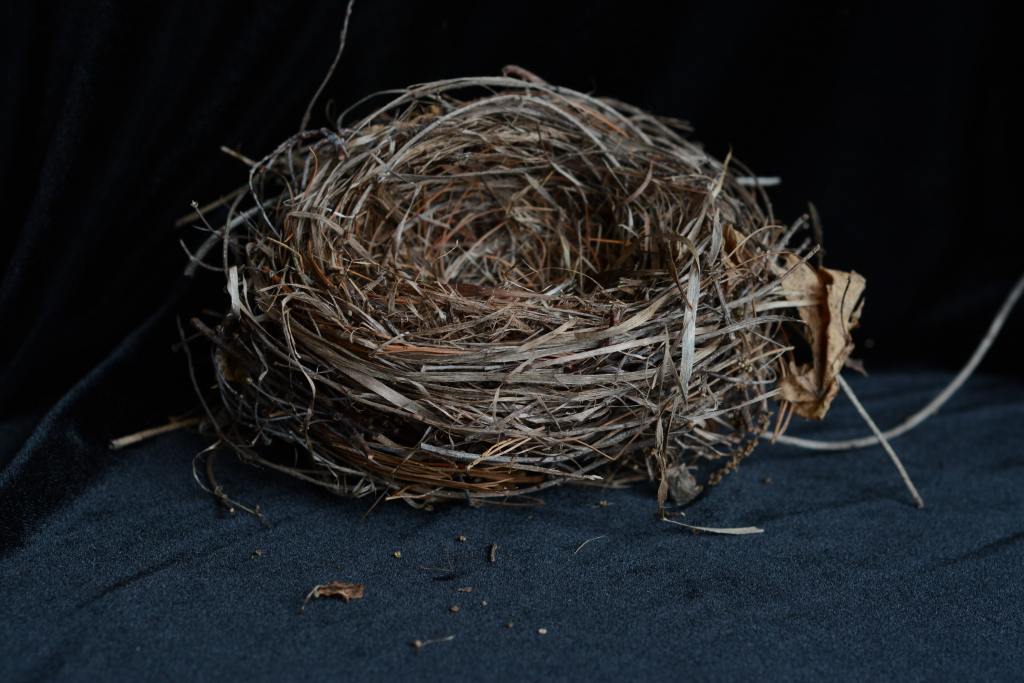
Even birds, requiring something solid to alight have been known to thread the nest with our disposal.
This morning I saw the black spot my left ovary a cavity
from which my ark had wrested in motion. But what about the body
that might or might not have been underneath the sheet?
The condition always the same:
Let me be some manner of ship or yes, again, a fish
suited to these streets
Abigail Chabitnoy, member of the Tangirnaq Native Village in Kodiak, is the author of How to Dress a Fish (Wesleyan 2019), shortlisted for the 2020 International Griffin Prize for Poetry and winner of the 2020 Colorado Book Award, and the linocut illustrated chapbook Converging Lines of Light (Flower Press 2021). Her poems have appeared in Hayden’s Ferry Review, Boston Review, Tin House, Gulf Coast, LitHub, and Red Ink, among others. She currently teaches at the Institute of American Indian Arts and Eastern Oregon University low-residency MFA programs as well as Lighthouse in Denver. Find her at salmonfisherpoet.com.
She tried to tell me that the past could be simply abandoned like unclaimed baggage at the airport or bus station,
or even, one day, with the closing of a door and the turning of a key—
left behind forever in the rear-view mirror like a house full of someone else’s belongings (not yours, not anymore) in a town full of strangers who never did you any favors.
But, I say the past can slip a microchip on you when you’re not looking;
I say the past always knows your current GPS location.
Jason Ryberg is the author of fourteen books of poetry, six screenplays, a few short stories, a box full of folders, notebooks and scraps of paper that could one day be (loosely) construed as a novel, and, a couple of angry letters to various magazine and newspaper editors. He is currently an artist-in-residence at both The Prospero Institute of Disquieted P/o/e/t/i/c/s and the Osage Arts Community, and is an editor and designer at Spartan Books. His latest collection of poems is Are You Sure Kerouac Done It This Way!? (co-authored with John Dorsey, and Victor Clevenger, OAC Books, 2021). He lives part-time in Kansas City, MO with a rooster named Little Red and a billygoat named Giuseppe and part-time somewhere in the Ozarks, near the Gasconade River, where there are also many strange and wonderful woodland critters.
This poem is from South Broadway Press’ new anthology, Dwell: Poems About Home.Purchase here.
if I die on the dance floor tonight know that I did not go willingly
that tomorrow I had dreams of morning breath kisses from a boy I pray is left behind
if I die on the dance floor tonight console yourself that it is how we wish
for I died doing what I loved surrounded by friends and family peacefully in muted gunfire
if I die on the dance floor tonight please don’t stop the music
I cannot bare to hear the silence anymore
Caleb Ferganchick is a rural, queer, slam poet activist and author of Poetry Heels (2018). His work has been featured and published by the South Broadway Ghost Society (2020, 2021), “Slam Ur Ex ((the podcast))” (2020), and the Colorado Mesa University Literary Review. He organizes the annual “Slamming Bricks” poetry slam competition in honor of the 1969 Stonewall Riots and serves as a board member to Western Colorado Writer’s Form. A SUP river guide, Caleb also dreams of establishing a queer commune with a river otter rescue and falconry. He lives in Grand Junction, Colorado.
Lack of a lover Lack of children Lack of pets Lack of flatmates Lack of arguments Starting out petty Lack of partitioned space Lack of visitors Unless they’re invited— Just me In my little house Two room Inner sanctum Where I could be Just me— A living Situation I seem Condemned to & somehow
Prefer—
Dee Allen is an African-Italian performance poet based in Oakland, California. Active on creative writing & Spoken Word since the early 1990s. Author of 7 books–Boneyard, Unwritten Law, Stormwater, Skeletal Black [ all from POOR Press ], Elohi Unitsi [ Conviction 2 Change Publishing ] and from February 2022, Rusty Gallows: Passages Against Hate [ Vagabond Books ] and Plans [ Nomadic Press ]–and 42 anthology appearances under his figurative belt so far.
This poem is from South Broadway Press’ new anthology, Dwell: Poems About Home.Purchase here.
Pansy to Pale

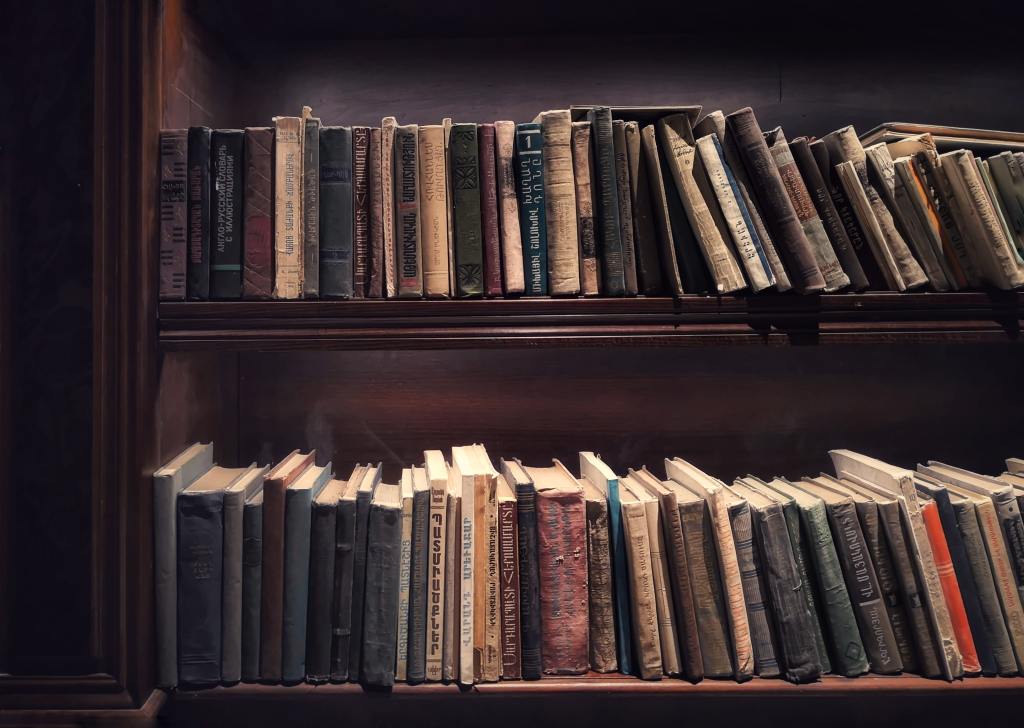
My books in our apartment
                                                       have faded a different color
Dark spines now shades of lavender
the titles have gone
                                         from pansy to pale
Even when she fingers the blinds
closed all day
                             light finds a way
to wear ink thin
                                 To combat excess
new vines dangle ubiquitous
Over each shelf
                                a graveyard
with shadows tucked
                                            kitty-corner portraits
Sometimes I rotate the words
less direct sunlight
                                       spells a shared wear-and-tear
My toenails shine orange
                       after I’ve painted them
                                          with antifungal polish
and her paintings each are purple
after she combined
                                      cracked makeup
with acrylic medium
When we moved in
                                       we called it eclectic
Now I forget what my books look like
until she opens a window
Liam Max Kelley is a Chilean-American playwright, actor, poet, and high school language arts teacher. He is the program director at Stain’d Arts, an arts non-profit based in Denver, Colorado, and the co-founder of RuddyDuck Theatre Company, a local absurdist theatre group. He writes poetry to avoid making an argument, to highlight life’s horrid ambiguities, and to turn the heads of those he holds dear.
This poem is from South Broadway Press’ new anthology, Dwell: Poems About Home.Purchase here.
I can recall my father walking me through the process
At an early age, he would say
Walking is one of the simplest ways you could show someone
Your freedom
“See, the first step to being enslaved is to actually get caught!
Why do you think Martin Luther King Jr and Cesar Chavez
Spent all that time marching!?”
“You have to stay on your toes, Mijo
This system has interesting ways of turning a man into a slave”
If you asked my father for a ride
He would tell you to
Walk
After crossing the desert for a better life
My father sees my walk to any Open Mic
As an easy stroll through the park walking
In my father’s footsteps has taught me that
If you love something you will do anything you
Can to get to it
Your feet will get you there if you allow them to
My father walks with the determination of an immigrant
Like his children will starve if he doesn’t walk fast enough
Like there are immigration agents chasing after him
He is America’s worst nightmare
A bad ass in a foreign country and I
Always wanted to walk just like him but
I always seem to take the wrong steps
Walking in and out of Jail
Pacing in my cell like a caged Ocelot
These must have been the ways you get
Enslaved my father talked about and
It all started in the seventh grade when doctors
Explained to my parents why I walked with a slight limp
My right leg was shorter than the left
Forcing me to apply most of my body weight on the right side
I developed a walk that would quickly label me a thug
I guess the inequalities I was exposed to finally
Drenched through my clothes and into my bones
So now I walk like I got a wounded knee
Like the structure holds me down by my back pockets
Saggy jeans are one of the side effects left over
From my oppression and
When you walk with this much weight at an
Early age your steps
Begin to sound like ticking bombs
The type of walk that’d make a motherfucker
Move out the way the type of walk
That’d make a cop want to follow you
In 2012 Trayvon Martin
and all the years after
Mike Brown
Eric Gardner
Jessie Hernandez
Sandra Bland
George Floyd was murdered for
Having the same walk as me
Trayvon was only 17
They asked me why I cried
Because he walked just like me
Because he was just like me!
Still perfecting his own walk still getting use to the
Feeling of walking in a black man’s shoes
This is the reason why boys like us
Never achieved social mobility
How can we climb the ladders of class if we can’t even
Walk through our neighborhoods without feeling like
Someone is chasing after us
But I’ll risk it all to show my son and the rest of the
Chavalitos in the world that we can walk to a
Better future instead of having to walk away from everything
That we can walk across the stage and graduate
Instead of having to walking in front of a judge
That if we all walk at the same time
The weight of our steps would force the world to flip its rotation
So stand up and walk with me
We have the world at our feet I think it’s time
That we exercise our freedom
Jozer G is a poet, musician and actor based out of Denver, Colorado! Jozer’s work has been featured on American Theater Magazine, HBO, PBS and Univision. Jozer released his debut EP on June 24th, and a new book at the end of the year!
This poem is from South Broadway Press’ new anthology, Dwell: Poems About Home.Purchase here.
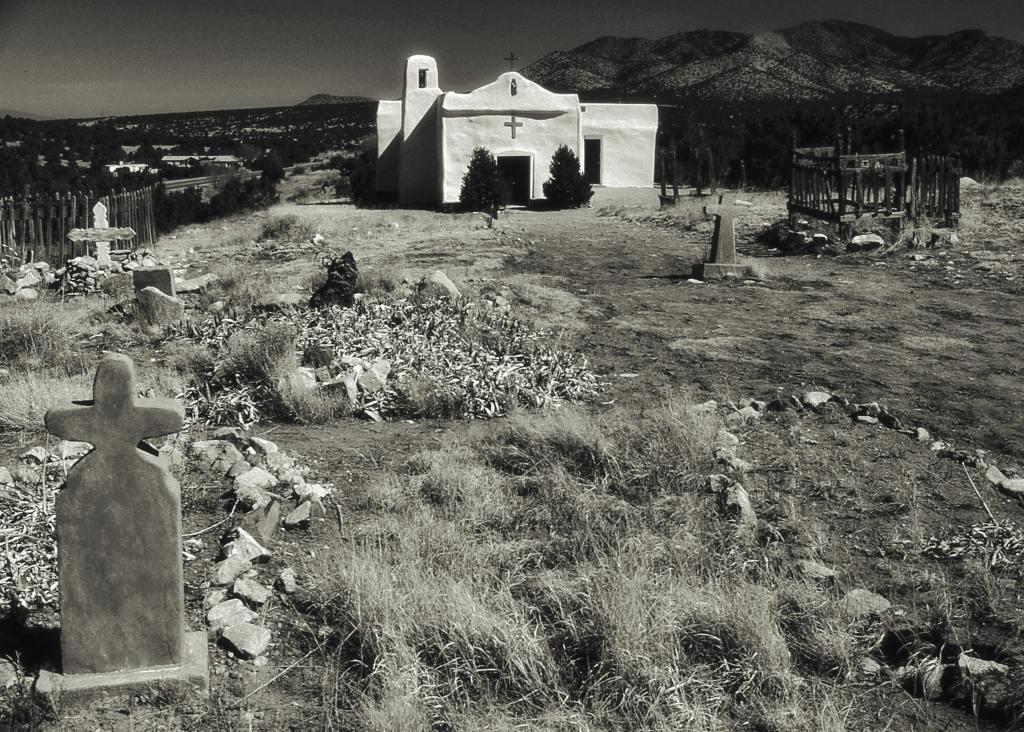
Moonlit Slabs of Light on a Hernandez Church Floor

a cemetery
                                is lit by the light
                                of the moon, while time
                       stands seemingly still,
                     lamenting a
             timeless value,
which covers the empty floor
             in a shape
                                of a dying face,
the hollow bell knells solemnly
                       for the dead to linger there,
                       to be buried again
hollering is the reason for
                                      the isolation of solidarity--
                                             a tragedy
that befell the dead,
               the decaying reason has taken their chance
beneath a standing tree made into crosses,
the mountains are alive
                                      yet they appear dead,
                       there is no willful purpose,
while a fly sit humming on the sill
               and ants gather,
to confirm the time is still ticking,
that light gleaming on the floorboards,
never ends the ceasing shadow	—but it does
                                                                —but that light
                                                                   is beyond the dead
Crisosto Apache is from Mescalero Apache Reservation in New Mexico (US) and lives in Lakewood, CO. They are Mescalero, Chiricahua Apache, and Diné of the Salt Clan born for the Towering House Clan. They are Assistant Professor of English and Associate Poetry Editor for The Offing Magazine. Crisosto’s debut collection GENESIS (Lost Alphabet) stems from the vestiges of memory and cultural identity of self-emergence as language, body, and cosmology. Crisosto is an Associate Professor of English at the Rocky Mountain College of Art & Design. They hold an MFA from the Institute of American Indian Arts in Santa Fe, NM. Their latest collection of poetry, GHOSTWORD, is available now through Gnashing Teeth Publishing.
This poem is from South Broadway Press’ new anthology, Dwell: Poems About Home.Purchase here.










 south broadway press