Our east coast minister-philosopher leaves god at the railroad station in a brown satchel. Pandemic hikes are recommended, with caution, then canceled. The national state of emergency boards up restaurant, book store, strip club, theater, and bar amusement. The three sisters mountain peaks legend stands. We keep busy online, with books, at the liquor store, and in laundry rooms. Our gender flows like freshwater tumbling from moss.
History Storm | XII
The White House garden buds red and green peppers from Council on Foreign Relations (CFR) language debris. Yellow Post-its dedicate classic innovation to you. Dialectic court calls the whale out to the sacrificial field. The online devil agreement signature line is chosen. We have eaten Emily Dickenson’s grave squash flower. Death shrugs from a Hyundai.
Illuminati
Nearly a century of global economics, two world wars, a cold war, site specific global economic wars, and pandemics and there are still no masterminds, only groups of fumbling narcissists with resources.
Michael Rerick currently lives and teaches in Portland, OR. Their work recently appeared or is forthcoming at Clade Song, COAST|noCOAST, Epigraph Magazine, Graviton, Mannequin Haus, Marsh Hawk Review, and Parentheses. They are also the author of In Ways Impossible to Fold, morefrom, The Kingdom of Blizzards, The Switch Yards, and X-Ray.
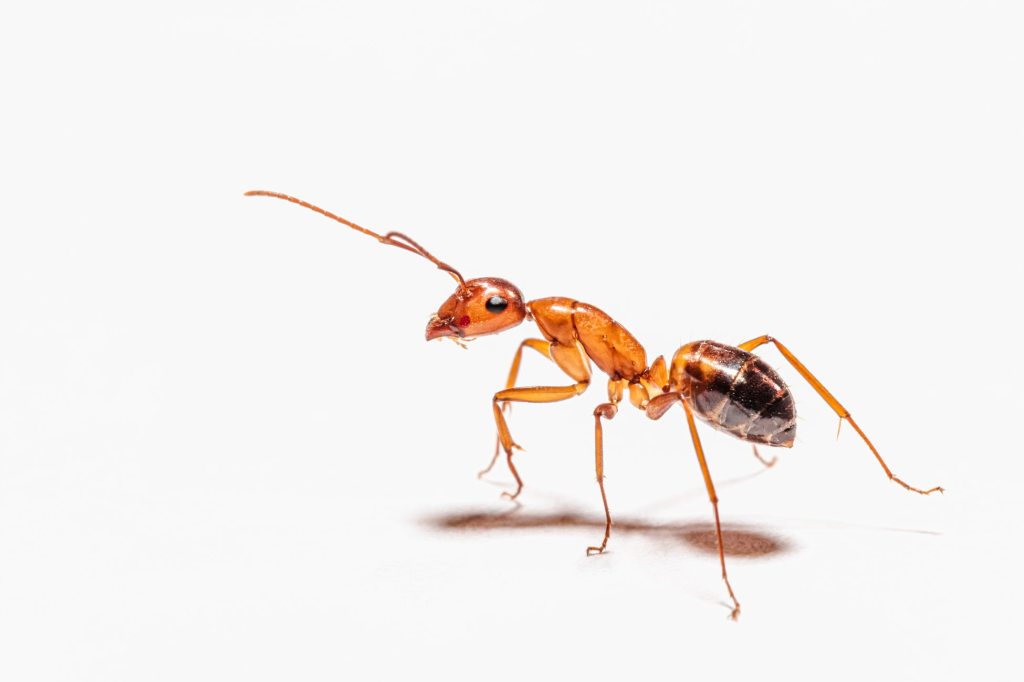
It would seem to me

             that in the vast
                            underground kingdom

              of the anthill, along
                                          with burrowing and
                       tunneling, heaving and
hoisting, fending off
                            outside invasions down
                      to the very last ant and

conquering rival kingdoms
                                    with no mercy (and all
         the various other assigned

   	     tasks and roles from the
       home office / H.Q. of
                                   the collective hive-mind),

   surely dreaming must,
                                     also, be an

                      essential

                              civic duty.
Jason Ryberg is the author of thirteen books of poetry, six screenplays, a few short stories, a box full of folders, notebooks and scraps of paper that could one day be (loosely) construed as a novel, and, a couple of angry letters to various magazine and newspaper editors. He is currently an artist-in-residence at both The Prospero Institute of Disquieted P/o/e/t/i/c/s and the Osage Arts Community, and is an editor and designer at Spartan Books. His latest collection of poems is The Ghosts of Our Words Will Be Heroes in Hell (co-authored with Damian Rucci, John Dorsey, and Victor Clevenger, OAC Books, 2020). He lives part-time in Salina, KS with a rooster named Little Red and a billygoat named Giuseppe and part-time somewhere in the Ozarks, near the Gasconade River, where there are also many strange and wonderful woodland critters.
They Tap Me on the Shoulder and Say They are Going to Ensure My Poverty Will Erase My Last Name and My Homeland Forever (But the Smiths and the Jones Will Live On)
BY RON RIEKKI
When I was in the military, we marched over the purple coneflower and milkweed and powderpuff and canna lily until they were dead from the war of our feet and later when they haze-crucified me I aspirated on my own vomit and saw death marching through the undergrass and he was a he and he was not as seismic as I’d come to expect and
when I was on the football team, they installed debt in my chest and they drove their trucks on the swamp conifers and carved encyclopedias into the pines and our homecoming king took a knife to his abdomen to spell the words MINING TOWN.
When I worked in the prison, they concreted everything so that the yard wasn’t, and the smell was of feces and lives frozen as poison and
when I worked in security, they put me in an isolated guard shack where there was no heat and no one else around for miles and I’d listen to the wolves and would wonder if they were coming from inside me.
When I worked on the ambulance, my partner would make fun of the patients as soon as the patients weren’t our patients and he would reenact their pain by holding his body in the distorted positions in which we found them and I’d go home and warn my parents that if they are ever on an ambulance to record everything because God can see everywhere but not inside the walls of piss and pus, and
when I was in middle school, they’d put us in lockers and light little pieces of paper, throwing them through the hole, telling us that we were going to experience what it’s like to be the sun and afterwards I’d go outside and stare up at it in the hope that I’d go blind forever and it didn’t happen because I could never take the pain and instead would go home and swim in the neighbor’s empty pool, me and a buddy, just moving our arms and walking in that big useless pit.
When I was in PTSD counseling, my counselor fell asleep so I decided to go to sleep too except I could see the helicopters on fire when I closed my eyes and so I just sat there, staring at him, watching him age so slowly, seeing the grandfather and the great-grandfather and the grand-corpse just begging to come out and
when I was in high school, we cheered the violence and admired the violence and encircled the violence and awarded the violence and moved back for the violence and watched the violence and the violence did its thing.
When I was dead, I realized that the earth was everything, that all there is is the earth, that the people on it are just dots, dips, dark, that we are spiders, that our arms are air, replaced so quickly.
But the earth.
But the earth.
Ron Riekki’s books include My Ancestors are Reindeer Herders and I Am Melting in Extinction (Apprentice House Press), Posttraumatic (Hoot ‘n’ Waddle), and U.P. (Ghost Road Press). Riekki co-edited Undocumented (Michigan State University Press) and The Many Lives of The Evil Dead (McFarland), and edited The Many Lives of It (McFarland), And Here (MSU Press), Here (MSU Press, Independent Publisher Book Award), and The Way North (Wayne State University Press, Michigan Notable Book). Right now, he’s listening to Nick Drake’s “Northern Sky.”
The remains were raised by the Mississippi—an old song in shards. Was it burned by accident? Or captured when New Orleans was,
run up to Yazoo River to escape Union hands, ashore in a bend? Lincoln so wanted to roll unvexed to the sea.
Muted pitches in an old steamboat, its firebox is a gaping mouth for coal. The river has the last say.
Each Natchez meant more bales, more boilers. There was no music like the Natchez’s whistle. Heard was the length of the open
valve, vibration in steam—not air but rising steam rarefying in the bell. But music doesn’t give out any answers.
The steam’s been gone. No one’s bragging on the Race of the Giants or Captain Leathers anymore. The floating palace, wood rot come up
for air. The river is the last say.
Heather Dobbins is a native of Memphis, Tennessee. She is the author of two poetry collections, In the Low Houses (2014) and River Mouth (2017), both from Kelsay Press. She graduated from the College Scholars program at the University of Tennessee and earned her M.F.A. from Bennington College. Her poems and poetry reviews have been published in Beloit Poetry Journal, Fjords, The Rumpus, TriQuarterly Review, and Women’s Studies Quarterly, among others. For twenty years, she has worked as an educator (Kindergarten through college) in Oakland, California; Memphis, Tennessee; and currently, Fort Smith, Arkansas. Please see heatherdobbins.net for more.
The banks look like a Goodwill store washed up, clothes everywhere
Our bodies run down to the surf shells bubble out of the sand
Salt teeth bite at our ankles then our labia, breasts and eyes
We are fifty-six laughing little islands of loamy flesh
We wash up onto the sand pink and glinting in the sun
We find our clothes, soft as homespun, warm as August dunes of sand
Four fire-lords build a circular blaze that sways and rises to meet us
We too rise and sway, huddled like fur weanlings at the breast
our chests rising and falling in sync our smiles lit up and flickering.
We raise a sunny, rubicund cone high, high into and through the fog
We shout, laugh and cry firelit eyes each a salty ocean
We release it with smoke into the chill air and dissolve into dance and drums
and silent pairs, trudging up the banks trailing bits of circle as we go.
Mo Lynn Stoycoff is a writer and visual artist whose poems have appeared in Poetry Now, Rise Up Review, The American Journal of Poetry, California Quarterly, Speckled Trout Review and many other journals and anthologies. Mo works in the performing arts and lives in Central California.
Bristlecone twist upon twist, layer upon layer, like fingers of the crone or braids of her mother, reaching for the sky. Cold air, hot sun. High desert survivor
dared erosions and fires, needed only a few small strips of bark to stay alive, outlive them all. But 5000 years were undone in one afternoon.
We want to know, to name. We are Machiavellian in this pursuit. Prometheus stole fire from the gods, carried it
in giant fennel stalk, gifted it to humans. For this, he was bound to a rock, his liver to be eagle-eaten every day, regrow at night and be eaten again.
To understand the brain’s hemispheres, we cut the corpus collosum. To learn the spread of virus, we cull the herd, open skulls. To know the oldest, we bored the bark,
failed, then cut and sectioned, hauled and processed. Counted rings, counted time. Only then did we understand the ignorance and arrogance.
Still, we kept one slab at Ely casino, then convention center. Respect reserved for the lab or the field, now national park in part because scientist-cum-lumberjack pushed
to protect remaining pine, hobble the folly of men, like him, believing they need to know, no matter the damnation, no matter the pain.
Update: Bourbeau’s poem “Prometheus Felled” is now part of her 2023 collection of poetry, Monarch, forthcoming from Cornerstone Press. You can find a copy of her book here.
Heather Bourbeau’s fiction and poetry have been published in 100 Word Story, Alaska Quarterly Review, Cleaver, Francis Ford Coppola Winery, Short Édition, The Cardiff Review, and The Stockholm Review of Literature. Twice nominated for a Pushcart Prize, she is the winner of La Piccioletta Barca’s inaugural competition and Chapman University Flash Fiction winner. She has worked with various UN agencies, including the UN peacekeeping mission in Liberia and UNICEF Somalia.
This piece is a part of South Broadway Press’ March issue, Language of the Earth.
Peas zigzag through weeds, scaling borage instead of trellis.
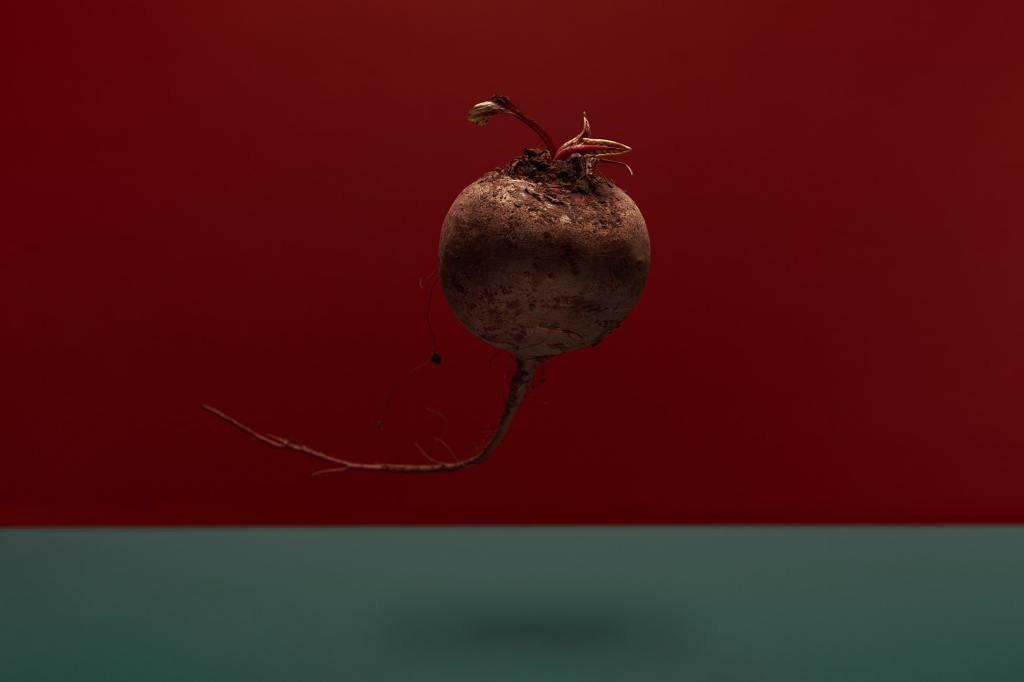
Tomatoes stagnate, grass and clover thrive, tender beets

sprout alongside dandelions tubers. Uprooting one hefty weed
evicts the fledgling vegetables. It all grows, though the weeds

grow best. My own roots reach back to clean plow lines and blooming
rows: eighty acres of fruit farm plus a rectangle of Ontario’s Eden

beside the old garage: all-you-can-eat green beans, snow peas, cherry
tomatoes, rhubarb for pie and stewed berries over ice cream.

I grew up knowing a weed is a weed and a plant
is sacred. Behold my upscaled quagmire—Royal Burgundy Beans,

rainbow chard, heirloom Spanish radishes, yellow pear tomatoes—
mingled with timothy, dandelion, broadleaf plantain. A feast of colours

descendant of rain-scented soil spread down a long laced
table, paired with a leggy wine. Inside, I hear the garden

call. Dillweed whispers and waves, its delicate imitation
fern summons rusted canning rings while blue morning

glories drown everything by mid-August.
Wendy BooydeGraaff’s poems, stories, and essays have been included in Critical Read, Not Very Quiet, The Journal of Compressed Creative Arts, Meniscus, and elsewhere. Originally from Ontario, where she grew up on a fruit farm, she now lives in Michigan suburbia.
This piece is a selection from South Broadway Press’ March issue, Language of the Earth.
Long, limber stalks with out-sized bulbous heads Could be confused with other specimens, Especially to folks who’ve never seen Exotics rooted in a foreign pod.
By night they leave protected flowerpots.
Exhaling oxygen, these beings fly, Determined to reverse what climate change Eroded by offsetting greenhouse gas With purifying breaths, restoring trees, And tackling global warming, ice-shelf melt.
I won’t reveal this methodology.
My job is to provide fresh nutrients ― ― Ingredients from our rare biosphere.
Then curious balloon contraptions sail These pods to sites that need repair and care.
Disguised as gladiator allium, Purple florets compressed inside a round, Attractive head, the team disperses from Each stem ― ― a green antenna ― ― gets to work.
Earthlings don’t know extraterrestrials
Are wise, solution oriented, pained By man’s destruction, astral gifts blood-stained.
Night winds blow golden over what’s reclaimed And what’s unfinished. Damaged nature won’t Regenerate except through tender tips Renewing fruited plains, life’s green wealth, ’til Earth rejoices in its own undeath.
Native New Yorker LindaAnn LoSchiavo, recently Poetry SuperHighway’s Poet of the Week, is a member of SFPA and The Dramatists Guild. Her poetry collections “Conflicted Excitement” [Red Wolf Editions, 2018], “Concupiscent Consumption” [Red Ferret Press, 2020], and Elgin Award nominee “A Route Obscure and Lonely”‘ [Wapshott Press, 2019] along with a contribution in “Anti-Italianism: Essays on a Prejudice” [Macmillan in the USA, Aracne Editions in Italy] are her latest titles.
This piece is part of South Broadway Press’ March 2021 issue, The Language of the Earth.
We were observing ourselves colliding with ourselves as if in a dream, as if on a king’s road, with horses, with dogs, with spears, the air tinted in red, the age-old branches between us and the hidden stars. We were keeping a record of proceedings.
Underneath the skin, upon which the devastating battle for tenderness is being played out, there is a cocoon. In a cocoon of blood, I am bathing – a red egg, a red butterfly – in full safety behind the curtains of the bloodfall.
Yes, I brought my shield down. My breasts were bared, elongated. Around my ankles, there was dust.
The roads wept. I gave them my eyes.
Margarita Serafimova is the winner of the 2020 Tony Quagliano/ Hawai’i Council for the Humanities International Poetry Award, a 2020 Pushcart nominee and a finalist in nine other U.S. and international poetry contests. She has four collections in Bulgarian and a chapbook, “A Surgery of A Star” (Staring Problem Press, CA: https://bit.ly/3jDU793). Her digital chapbook, ‘Еn-tîm’ (Wilderness), is forthcoming by the San Francisco University Poetry Center Chapbook Exchange in 2021. A full-length collection, ‘A White Boat and Foam’, is to be published by Interstellar Flight Press in 2022. Her work appears widely, including at Nashville Review, LIT, Agenda Poetry, Poetry South, Botticelli, London Grip, Steam Ticket, Waxwing, A-Minor, Trafika Europe, Noble/ Gas, Obra/ Artifact, Great Weather for Media, Origins, Nixes Mate. Visit: shorturl.at/dgpzC.
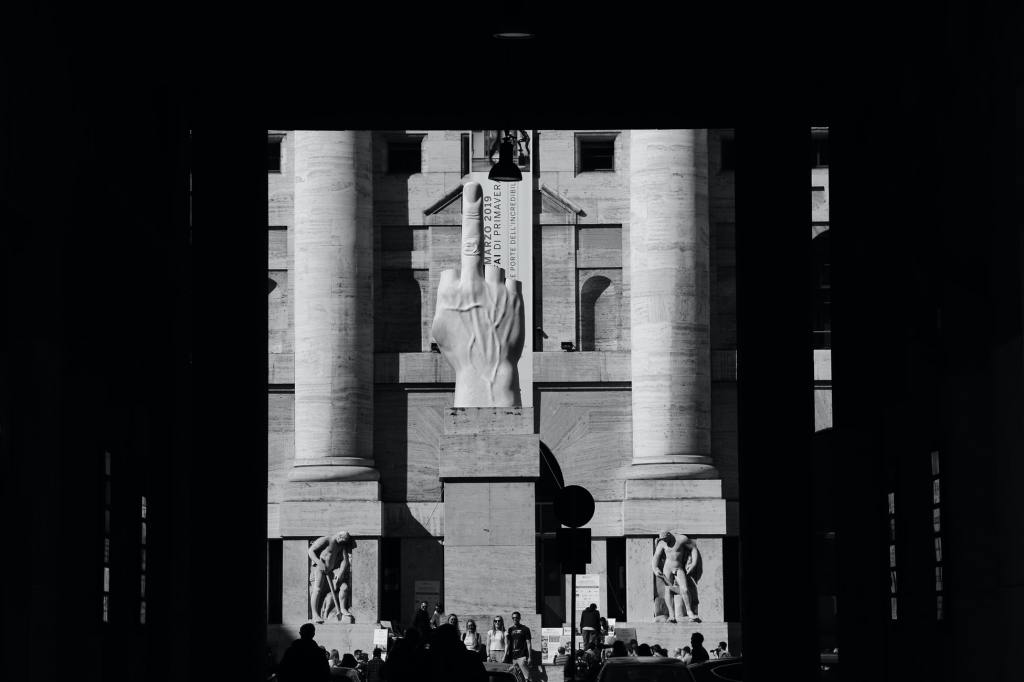
Fuck word counts, and fuck regret, and fuck enjoyment, and guess what? Fuck origin. That’s right, fuck origin, and fuck memory. Do you know what fuck means? A girl told me back in middle school: Fornication Under Consent of the King. She said the word was posted on the front door of every reputable home, and that it meant yes, we got the okay from our royal leader to mate, copulate, dance the horizontal polka, put the thing in the other thing. We’re sinners with a lifetime indulgence we bought in advance. We fraternize with the devil, but only according to protocol, baby.
So I say fuck word counts, and fuck regret, and fuck enjoyment, because that’s what fuck is. Fuck is enjoyment. Fuck is regret. The Fuck Word Counts. Fuck is the apology before the infraction, the permission before the play. And who is fuck for? Fuck is for the people who look like Matt Damon and Marilyn Monroe, for bodies concealed just well enough to display. Fuck is for paleness and paler-than-paleness, a certain shape of eye, a certain girth of waist, a certain functionality of limb, a certain history of genitalia. And I say fuck that.
I say fuck origin, and fuck memory, and fuck death, because fuck is a gift, and Fornication Under Consent of the King is Matt Damon in a red velvet hat and a red velvet cape, a walking blood-filled penis with a golden wand, pretending to give out fucks when in reality, he doesn’t give a fuck. I say fuck origin because fuck is origin, because before you and I were you and I, we were twinkles in the eyes of people, maybe lusty, maybe frightened, maybe willing, maybe not. I say fuck memory because fuck is memory, because no one was watching when you or I morphed from a twinkle in those eyes to a glob of cells, as the glob of cells halved and doubled into the tube that formed a mouth and an asshole, two instruments of fucking, consent of the king or not.
Fuck is one person. Fuck is two. Fuck is three. Fuck is more. Fuck is rapid addition. Fuck is no gender. Fuck is all genders. Fuck is silent. Fuck is loud. Fuck is ordinary. Fuck is occasion. Fuck is insult. Fuck is compliment. Fuck is monetized. Fuck is freely given. Fuck is hot. Fuck is cold. Fuck is chafed skin, hidden liquid, violation, ceremony. The Fuck Word counts.
Samantha Steiner is a Fulbright Scholar and two-time Best of the Net nominee. Her 2019 essay “To the Current Tenant” appears in the print anthology Coffin Bell 2.2, and other works are published or forthcoming in The Emerson Review, Apple Valley Review, and The Citron Review. Follow her on Twitter and Instagram @Steiner_Reads.











 south broadway press