life, it twists, frayed at the edges, its seams expose where dreams and disappointment touch
the day’s reach, slenderest blue heaven, heaviest cloud, longest hour past youth’s back door, what we experience
how many twists can be endured, split, cross section after cross section each thread pulled through the eye of a needle
it appears misshapen but every block creates a pattern mistakes, landscapes of torn cloth create a thing of beauty as each fabric, stitch and multi-layered piece completes the bed we can finally take shelter in. —
TAK Erzinger is an award-winning poet. Her collection At the Foot of the Mountain (Floricanto Press California, 2021) won the University of Indianapolis Etching Press, Whirling Prize 2021 for best nature poetry book. It was also a finalist at The International Book Awards 2022, Willow Run Book Awards and Eyelands Book Awards. Erzinger’s forthcoming poetry collection Tourist (Sea Crow Press, Massachusetts) is due out in April 2023. Erzinger is an American/Swiss poet and artist with a Colombian background. She lives in a tiny hamlet in Switzerland with her husband and two cats.
—–I found a head in my garden. Not a lettuce head, but among the lettuce heads –an actual head. A human head. It was wide eyed and alluring, a bit like Jeff Goldblum. At second glance, a lot like Jeff Goldblum. This head, it was Jeff Goldblum’s, or if not, an exact replica, nothing to distinguish it from the real thing. It wasn’t severed off, the remains of an act of violence or some horrific accident. Instead, it had smooth, unbroken skin under the chin where a neck should have been. No scars. The head was always a head, not a head that had been removed from a body. —–A bit disturbed, I buried it. I didn’t know what else to do. I didn’t need a bodiless head in my life. So I dug among the lettuce heads and deposited the actual head –the human head– into the earth. I watered the spot, thinking of Jeff Goldblum down there in the dark under my feet, thirsty maybe, even if he had no stomach to store the water. I patted the soil, got sentimental, and fertilized the patch with liquid seaweed. With luck, the head would take root and grow. Into what? A full embodied star. —–Then I waited. But nothing came. In a way, I was relieved, though a larger part of me felt the weight of disappointment. I tried to ignore it: the pang of loneliness that came with a world free of your own, personal Jeff Goldblum. But in the end, that small seed of desire grew larger than a prize-winning cabbage head. It grew to fill me entirely, the height and weight of a man. —–Weeks later, when it was time to harvest the lettuce heads, I decided to unearth the actual head –the human head. When I dug down, I grazed two elastic ears to hit the broad foundations of a wide set of shoulders. I kicked aside the lettuces, no longer caring about the sauerkraut I had planned to make. I dug, and dug some more, six feet or maybe six-foot-three, because that’s how tall he is, that’s how tall the fully-formed body had grown beneath the ground among the writhing earthworms and teeming microbes. —–“Can you speak?” I asked him. —–Then, with the bedazzling charm and charisma one might expect from Jeff Goldblum, he spoke in rich, honeyed, tones –all confidence– his words streaming in profusion in that Jeff Goldblum way, a way in which one’s dialogue fails to keep up with a mind that is churning ideas faster than a cocaine-amped cheetah with its ass on fire, yet still flows from a set of delicious lips with adequate eloquence and a unique, amusing delivery. I couldn’t tell you exactly what he said, but it left me weak at the knees. The one thing I do recall from that sermon of silver-tongued soliloquy was the comment and question that came at the end. —–“That’s a whole heck of a lot of cabbages there, my friend,” Jeff Goldblum said with jovial wonder. “Say, how would you like to gather those big boys up and make a tremendously large batch of sauerkraut, maybe some kimchi? That is, of course, if you’re a spice kind of person, and you strike me as a spicy kind of person, if you know what I mean.” His wink and smile was so Jeff Goldblum. I wasn’t about to say no to making sauerkraut with this wonderful man. So we gathered the cabbages and went inside. —–In the kitchen, we lay out the purple and green brassicas, each one like a furrowing rosebud the size of a human head. I fetched the great ceramic crocks that would house the fermenting cabbage while Jeff got busy with the grater. He was very lively, energetic, and like a newly-opened jar of pickled vegetables, was fizzing with enthusiasm for the task at hand. And it was his hand, in fact, that he nicked, somewhat careless, which took his graceful finger clean off his immaculate hand. —–“Whoops,” Jeff casually remarked, offering a comic, oops-a-daisy face and shrug, before placing his severed finger into the crock along with the shredded cabbage. I nearly dropped the cabbages bundled in my arms, such was my shock at seeing the layers of vegetable fibers on display across his open wound, no blood or bone to speak of. —–I set down the large vegetables and gathered my calm, finding both my voice and my courage, before asking a man who by all appearances seemed to be Jeff Goldblum, yet grown from the soil, apparently made entirely of cabbage, “Are you the real Jeff Goldblum?” —–“Of course,” he said, and smiled with the same knit eyebrows and are-you-crazy? expression that I had seen on the face of a beloved actor so many times in so many wonderful films over the decades. But then he sneezed and his forehead flapped open, a crisp and fresh green cabbage head. —–I asked for the grater, which the cabbage man yielded up, but not without a winning smile that nearly left me paralytic. I waded through his uncanny charm, his insanely weird sex appeal, and with effort, took up the grater. I looked at a man-shaped cabbage who was the spitting image of Jeff Goldblum and decided I couldn’t trust a brassica that had more charisma than me. With difficulty, I reasoned that I didn’t need a heartthrob vegetable in my life. —–So I took up the grater and shredded Jeff Goldblum into ten thousand tallies of anemic green. I stuffed every bit of him, every scrap of cabbage confetti, into one of the great ceramic crocks and entombed the Jeff jigsaw with the placement of its heavy lid. —–Weeks later, lonely yet again, I opened the lid in anticipation for I knew not what. A gentle fizz aerated with seductive song from underneath the cabbage leaf seal, which I peeled back and discarded like the clothes from a lover who was ready to be ravaged. I smelled its pungent odor, its astringent tang. —–I took a bite, shoveling a sample in my mouth with my bare hands, and gasped in a pleasure accentuated by the purest of pain. It was hot, like a flame, like kimchi on steroids. I thought of Jeff’s words, his assumption about what sort of person I am, how I struck him as a spice kind of person. —–I swooned and hit the floor. He was absolutely right.
James Callan is a dual citizen of the US and NZ. He grew up in Minneapolis, Minnesota and lives on the Kāpiti Coast, New Zealand. His wife and son are human, but the remainder of his family are an assortment of animals, including cats, a dog, pigs, cows, goats, and chickens. His writing has appeared in Bridge Eight, White Wall Review, Maudlin House, Mystery Tribune, and elsewhere. His novel, A Transcendental Habit, is available with Queer Space.
when the earliest shamans emerged from the primordial mist adorned in skins and skulls with fists full of mushrooms
the dimensions flowed freely like rivers cutting through the rock after the younger dryas impact
our spines and chakras were aligned to receive those dimensional outputs magnetic bands of frequencies flowering from the gravitational center of the universe like a fractal mandala
shiva and shakti creating and destroying everything all at once bringing balance and purpose to the whole
but we became too focused on the physical environment overly busy avoiding predators while hunting and gathering food
our powerful thoughts became consumed with fear bending our spines and misaligning our chakras filtering out the higher dimensions hardening the density of physical 3d space replacing balance with chaos adjusting our bandwidth away from the meridians of the universal body trapping us in the concrete filaments of our devolving human minds
I writhe in the bed alone clutching a million imaginary illnesses that become real as I brood on them. Wrap one cloth around me and try to breathe
When that pain wracks my bones In between shuddering waves I sigh in pleasure Yes. Give me more.
Push the threshold until it dissolves pain bleeds over into ecstasy Yes give me more.
Angels straddle the line. That’s why shepherds cower when they appear. That’s why their music is death.
Van Gogh. Poe. Marat/Sade. Even their names sound like moans.
When two opposite sides of the coin melt together into mercury unbearable nirvana
Jenn Zuko (she/they) received their MFA in Writing and Poetics from Naropa University back in 2001, and has been teaching at the college level ever since. Some highlights of their published work include: Stage Combat with Allworth Press (2006), “I Do My Own Stunts” in the Fight Master (2014), and two series of cultural commentary articles, titled Problematic Badass Female Tropes and Problematic Toxic Masculinity Tropes, found on Writers’ HQ and A Wandering Road websites, respectively (2018-2020). Her Substack newsletter is called Zuko’s Musings, with regular original work posted three times a week. She has been professionally involved in live theatre since the ‘90s, and is active today as a fight director and intimacy coordinator. She also co-produces and performs in an old-school, ribald variety show called Blue Dime Cabaret. Her Facebook, Instagram, and TikTok accounts are all named Jenn Zuko. Her Twitter is @Bonzuko.
Hugging the hurt: without water by Lawrence Mack A review by Chris Bullock
“bravery is hugging the hurt you know will come”
Lawrence Mack
Several lines stood out to me while reading without water by Lawrence Mack, but this seemed to encapsulate not only the poetry but the whole approach to writing and living. Lawrence’s poetry is not only hugging the hurt, but anticipating the hurt, welcoming the hurt, and dancing with the hurt, finally making the hurt feel at home as a guest or part of the family, with some tea set out on the table. It is a book of poetry both deeply personal on an emotional level, but also as approachable and light as two strangers making small talk in the bar.
I had known Lawrence mostly through dance, as a frequent guest to several events around town, as someone who may study dance but still also enjoys dance. I had no idea he was a poet, but some of the best poets out there have developed lives which in turn inform their writing, like a written mirror held to life, and without water is not only a mirror, but a moving mirror, as if the surface of the bay, on which we float, until we wash ashore at the end.
These poems have a very casual air, recommended for any aficionado of Frank o’Hara and the New York School. Frank narrated his day with minor inconveniences and pleasures until learning that Billie Holiday had died, writing about the small everyday things in a way that underlines both their simplicity and importance. Tributes to friendships and relationships as important elements of life, with the brevity and wit of social interactions, wherein we let slip a penetrating insight between remarks about the weather.
Small talk hints at bigger things, or small talk avoids bigger things, but why do we need to address bigger things? Agnostics believe that the mind of man could not possibly comprehend the mind of God, so why try? Live how you are, who you are, when you are, with others or alone. It is what it is. We construct an independent image in the mirror, but we are also our past, with or without a family environment. The made could not possibly comprehend the maker, so don’t worry about it.
Probably the one that stuck in my mind after reading was “at least there are snacks”, picking up as a casket is lowered, and ending with the little things hinting at the big things “Pops says don’t forget the sandwiches in the trunk / Mom curses—she wouldn’t have bought so many / if she’d known so few / would show up”
This book really is a dance in stepping from pain to redemption to dry wit to exhaustion to joy within a single page, but also with the sense it was no big deal, just a dance, so lighten up if you can. Part of the environment is a newfound sobriety and understanding that sobriety can be the ultimate high, and taking please in noticing everything with a clear mind, and making the conscious choice to welcome the hurt that underlies any addiction. The hurt re emerges, the hurt approaches you, the hurt seems frightening, but it is also part of you, it is you. Once you accept it, you hug the hurt, dance with it, even welcome it into your life. And after any big welcome, there is small talk, topic to topic, and without water is a book of small talk which not only welcomes you and makes you comfortable, but also honors the struggle we may have endured to reach such nonchalant comfort.
How do you get a copy of a book if the poet is always out dancing awake and asleep? I would try an email to lawrencewritespoems@gmail.com and he will get to it when the music stops.
About the Reviewer
Tall City (Chris Bullock) was born and got bigger on Long Island, New York. He did a few things then moved to Colorado Springs after trying to study in Paris. He did a few things there too, then moved to Denver, where he went back to school for foreign language. A couple of years on scholarship in China, and he is back in Denver.
Goddess Wept a Daydream into echoes of silence and storm
Sarah danced through green grass across a field, a river and rocky plains gathered water from the well-springs, bathed in starlight infused pools
Morsels of sweet grew on reeds and beds made from its stalks Beside the fresh baskets… Fire spoke with moonlight and sleep behind her eyes
Dreams of quiet leopards in the night Raindrops petal upon thatch-top and stone As light painted gently upon her eyes
Fresh air and dew pooling water in baskets whispers of times yet passed the catch of small fish she washed with root and healed with twig in devotion to spirit and great grass sky
holding hands with the wind
Lee Frankel-Goldwater is a teacher and a poet seeking the sage’s path. He knows it’s about the journey, and yet dreams of the destination. One of peace, one of less fear, or worry, or shame for all. He believes there’s some good in this world worth fighting for, and prays that his every deed is made into this backdrop. Lee writes at the Writer’s Block, dances at Mi Chantli, and plays around Boulder, CO. He’s always ready for a story.
Sun—suppliant. Folded skies, a swallow: mirrored creeks, trailing—drifting, forever a mashing, mashed—fists of bark, scratched and scarred like beaks of melee—like eyes full of mud, stung from powdered stones.
Juxtaposed: craved teeth, snarled brow— a puff and a pout, such were the memories of glass and dew—of patched mounds tied by clasped grass, fingers crossed— a crossing among sticks of light, like hypnotic grazes of skin and bone, a release.
Pebble for pebble—a toss and a skip, a broken roof made way for a charm, floating—bumping—a ray of shadow for tongues to find the path, a path— wayward fallen upon knees, thin and pressed—one leaf or two, feathered like a rooster’s crow—so let it be gone— so let our failures dwindle in our palms as those who stagger and find bits of rope to climb until we look down and see the dirt of our wrists.
Through the Looking Glass

Land-starved and stubborn we pile
windows on top of windows and climb
so high everything looks small and distant.

Birds leap into the sky wide-eyed and unbound
and rocket themselves into cloud and blue-
stained glass stunned like butterflies

in freefall spinning and spiraling through
the wind. I heard the thick thump against
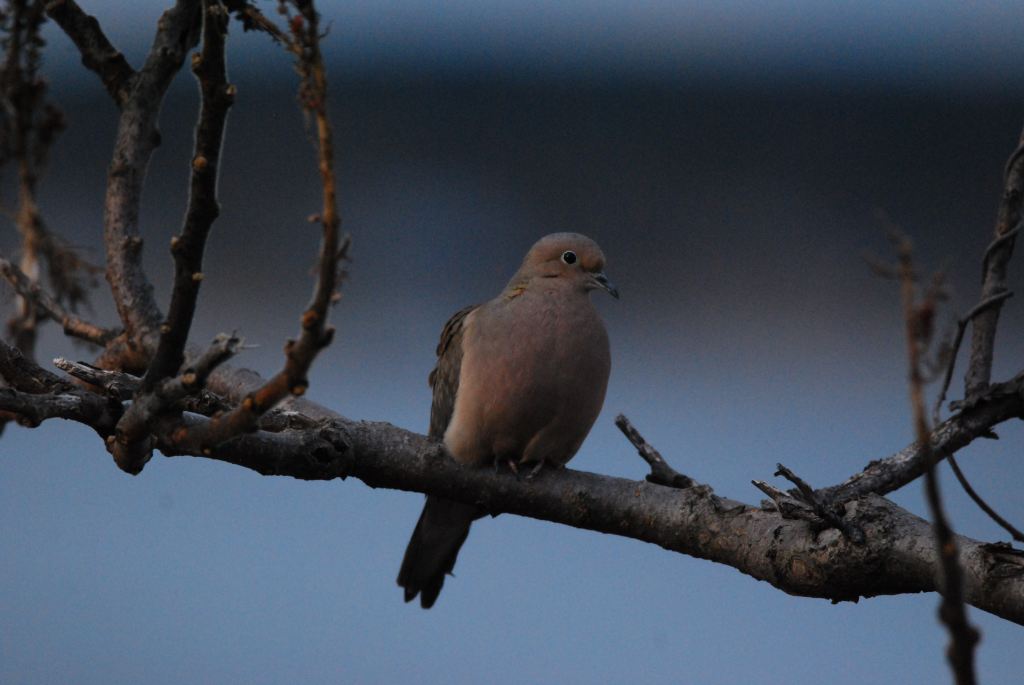
the double-pane and caught a mourning dove

as it fell solid as a blood-warm stone in my hands.
Its feathered imprint a chalk outline of wings
and beak left stamped against the looking glass.

Too often we see what we want to see until
it’s too late. I stick vinyl bird-shaped silhouettes
on the reflective surface like dusted ghosts

and recite them as I rub them flat with a card
     sparrow,     dove,     cardinal,    blue jay,
finch,     mockingbird,     grackle,     wren.
My Atomic Pin-Up

Binion’s Horseshoe is a rest stop on death’s highway.
We’re in the hotel’s north-facing room
on a sofa shaped like an old-style riverboat.
Igneous cracked succulents are pinned
like voodoo dolls against the sky.

Miss Atomic Energy
shakes fallout from her dress
and it frissons like a forest of morels
on the glitter gulch carpet.
The Evening Telegraph said she radiated loveliness.

A new part of the soul wakes up
when the desert wind cries on Frenchman’s Flat.
What does it sound like?
Like 16,800 years ago
when Lake Bonneville

bled out into southern Idaho
leaving the salt flats
to homegrown racers and their Gadgets

the speedway a buster-jangle
of roadsters and lakesters
winking like Trinitite on dry white rime.

Me and my atomic pin-up
put on sunglasses and count down from ten.
The sky, Gerboise bleue with teeth like flamethrowers;
our old-style riverboat upshot in a knothole of sand
and scorpion gunwale
And Then, Gone

When we decided to end it, I was stuck thinking of the night
---------with fried rice and blue calcite and all the orange
 light over rosé in the only restaurant open in town so late.
-- - ------ - -  -- It is the middle of winter in Marfa, and you watch me
- - - - - - - - ---  run through downtown in the width of the blue moon
to the car so we can drive to the lookout off Highway 90
- - - ----and watch the Marfa lights flare, bounce
and fall back down beside twitching desert grass.
---------------- - - ------  There’s a couple next to us who has been camping out here,
---------------------------documenting this phenomenon every night for a week.
- - - - -They tell us each light has its own behaviors, own patterns.
---------------- They speak about aliens and energy. The army and angels. You’re not
-----------------convinced by any of them. You whisper human possibilities
-----------------in my ear: maybe they’re cars moving on the highway
------- over the mountain, truck lights, fast food signs…
--------I point to one yellow light pulsating so faint far
------- out in the field, I must convince myself it even exists:
pulsing and fading, fading, and pulsing, and then,
gone. There is a moment when all the lights go,
--------and it is simply dark. Why do we keep watching?
----------------  Goddammit,
--------------------------if we want to know what this is
--------------------------why don’t we just run out and grab them?
But we don’t.
--------------------------The lights reappear again and bounce off each other
---------------- in silence. Melting and glowing.
---------------- We don’t want to know what they are.
The joy is the obsession, the pondering, the pulsing.
And the total darkness. Yes.
---------------- It is also that.
Elaina Edwards (she/her) is a poet from the Texas Hill Country. She has her MFA from Texas State University. She is an ecofeminist poet that loves to dabble in the supernatural. When not reading or writing, she watches way too much X files with her partner, Stephen.














 south broadway press