
Book Review: SOFAR by Elizabeth Bradfield

BOOK REVIEW:
SOFAR BY ELIZABETH BRADFIELD

A BOOK REVIEW BY SHELLI ROTTSCHAFER

Sofar is Bradfield’s fifth collection of poetry and it demonstrates how her craft has come so far.  In it she intertwines her love of nature, her understanding of ecology, and how the waves off Alaskan shorelines as well as her Cape Cod home have shaped her.  The sea floor, its swells and dimples, peaks and trenches are, “proof/ that what’s hidden can still be sensed” (3).

She comments on her life, how her emotions list like a boat, swaying from one side to the other. Tipping, “At/ the edge of what felt right.  And now, / here we are” – she learns to float, to lean into herself and her being, to selvage after a storm (5).  To pick up the pieces that have been discarded like flotsam.

Bradfield notices seasonal changes and “the change” of her body.  Both are unexpected (6).  She compares this strangeness with the surging emotions of her adolescent self as compared to the retreat that she now is experiencing upon reaching five decades.  Her poems give testimony to her coming out and her understanding as a queer woman in a misogynistic world.  Each tide are transformative and, “as capable / of damage as any / ungiving thing” (6).

In “Marlinspike” she observes herself and the many lives she has had, as boat hand, as naturalist, as poet – “despite the fact [that she] was a girl” (27).  Bradfield is compelled to go forward to keep moving, to follow her bait line so she, “can drift at last / from what holds us tight, what / binds us to such boring normalcy” (27).  And clearly in stating this her life’s path is everything BUT a complacent normal.
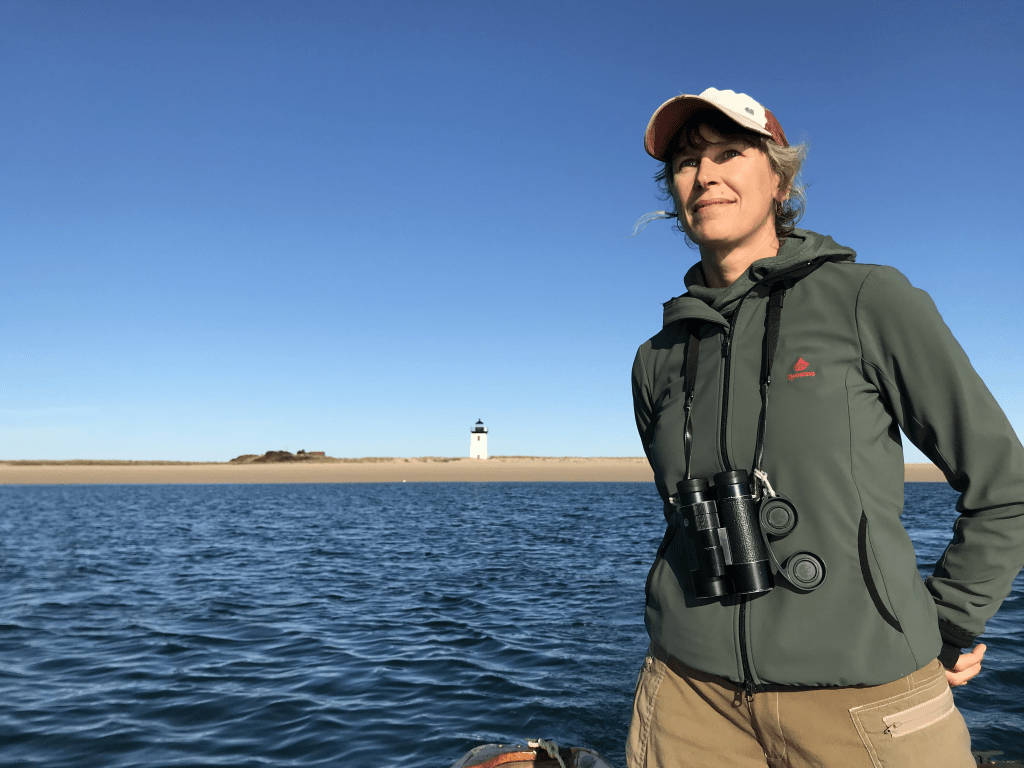
SOFAR Author Elizabeth Bradfield

Rather she embraces her voyageur-self.  “Vagus means wandering.  My days vaguer / and vaguer.  Was it yesterday or last year…. Where did time go?” (46). Bradfield recognizes she is buoyed, lifted up and jettisoned. An estrogen-related propulsion, a uteral roam within a world she wishes to explore.  

Her sights are added by, “Ded Reckoning” (48).

To know where you are and when

you’ll get where you’re going,

to deduce via reckoning, look to landmarks…

The known….

Which hold unknowns.

And through these renderings Bradfield has come to, “know / roughly where [she is]” (48) proving that life lessons are a constant moving equation.

In “Held/Treasured/Secret” Bradfield carries fragility within her.  She knows life is fragile like a paper nautilus.  She cups it in her hand, fingers curl shell-like.  By doing this, she understands that what she holds dear is a responsibility.  Picking it up, carrying it this far, requires a vigilance.  Yet decerning when it must be set down is the ultimate lesson of letting go.Elizabeth Bradfield furthers these lessons as an educator.  She teaches at Brandeis University in Waltham, Massachusetts and is the Director of Poetry at Western Colorado University’s low-residency MFA in Creative Writing Program in Gunnison.  Her work is heavily lauded.  Interpretive Work won the Audre Lorde Prize in Lesbian Poetry.  Approaching Ice was a finalist for the James Laughlin Award.  Cascadia Field Guide: Art, Ecology, and Poetry was a winner of a Pacific Northwest Book Award.  She also is the Editor-in-Chief of Broadsided in which Ekphrastic Poetry is in conversation with artwork.

SOFAR

BY ELIZABETH BRADFIELD

AVAILABLE THROUGH PERSEA
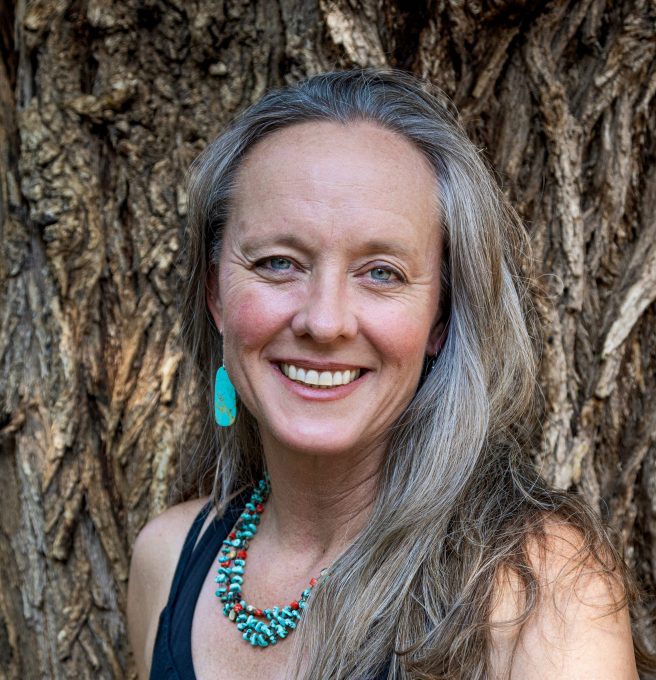
Shelli Rottschafer (she / her / ella) completed her doctorate from the University of New Mexico, Albuquerque (2005) in Latin American Contemporary Literature. From 2006 until 2023 Rottschafer taught at a small liberal arts college in Grand Rapids, Michigan as a Professor of Spanish. She also holds an MFA in Creative Writing with a concentration in Poetry and coursework in Nature Writing from Western Colorado University (2025).

Shelli’s home state is Michigan, yet her wanderlust turns her gaze toward her new querencia within the Mountain West where she lives, loves, and writes in Louisville, Colorado and El Prado, Nuevo México with her partner, photographer Daniel Combs and their Pyrenees-Border Collie Rescue. 

Discover more of Shelli’s work at: www.shellirottschaferauthor.com

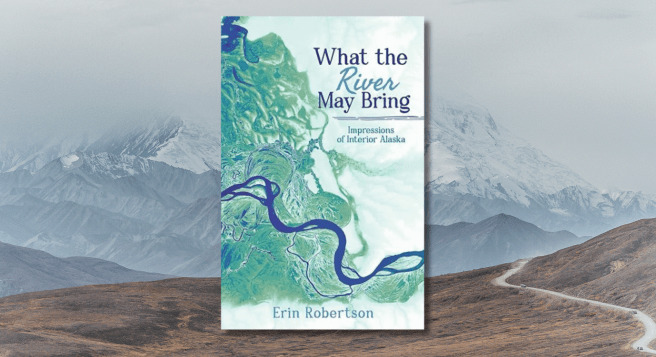
Book Review: What the River May Bring by Erin Robertson

BOOK REVIEW:
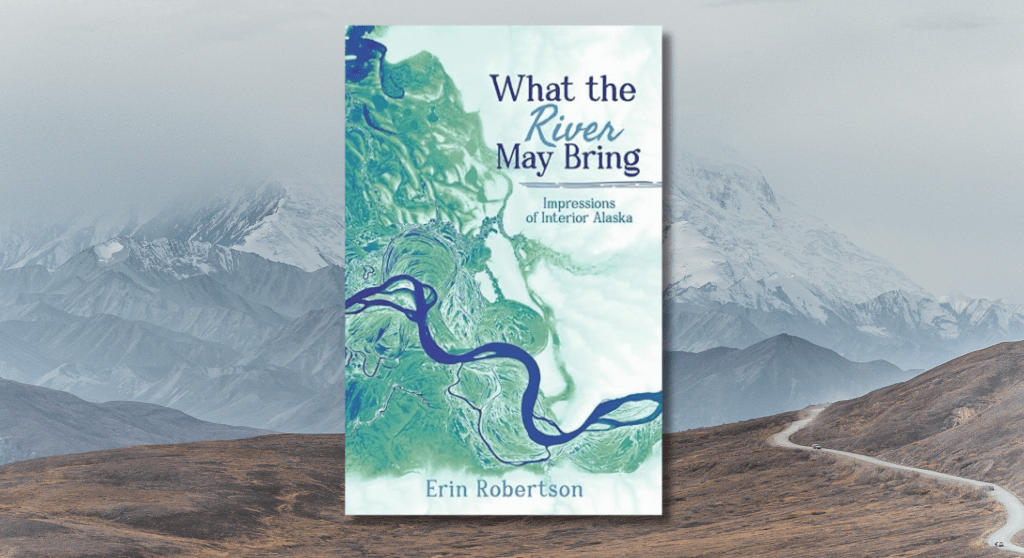
WHAT THE RIVER MAY BRING: IMPRESSIONS OF INTERIOR ALASKA BY ERIN ROBERTSON

A BOOK REVIEW BY SHELLI ROTTSCHAFER

Robertson gathers her words to advocate for the land and the confluence of both the Koyukuk and Yukon Rivers.  During her time in the Koyukuk National Wildlife Refuge she was embedded with biologists, collaborating with her craft through the Artist-In-Residence program “Voices of the Wilderness.

Her poetry draws us in, witnesses to her experiences upon this land, and helps us envision her impressions of interior Alaska.  It all begins, “when the float plane’s buzz fades” as she first settles into her sub-arctic residency.  She meets the, “devoted swans, tender loons, [and] dancing cranes.”  She follows moose tracks and moss lined trails.  These relationships with the other-than-human creatures she encounters bring her company.

Glaciers, and clouds, and wild country greet her.  Upon arrival in the Alaska Interior she leaves behind “creature comforts” and chooses a new freedom; trading suburbia, her partner and children, for a growing winter white and jagged mountains.  It’s a new opening, a new era of possibility for her.  “Wilderness Eve” seems to recollect a childlike wonder, a new version of awaiting gifts below a Christmas Tree:

waiting to see

what this wilderness holds

sleepless and sleepy

dreaming the space

and the silence (21).

Her time in Alaska and her observations while there is an unveiling where she comes to realize: 

I knew I hit the lottery

but hadn’t quite known

how many riches there’d be (25).

Robertson marvels at nature’s natural wonders.  For her, the Yukon River inspires just like Georgia O’Keefe’s infamous cloud-scapes or French Impressionists’ swirling lines.  The river:  

It bends and dapples and distorts…

Adding and subtracting shades (27).

Still, “You never know what / the river may bring… Everything comes down the river / if you watch long enough” (29).  And yet, like the old adage, one can never step in the same river twice, its purge and rejuvenation brings new waters that can both cleanse and drown.

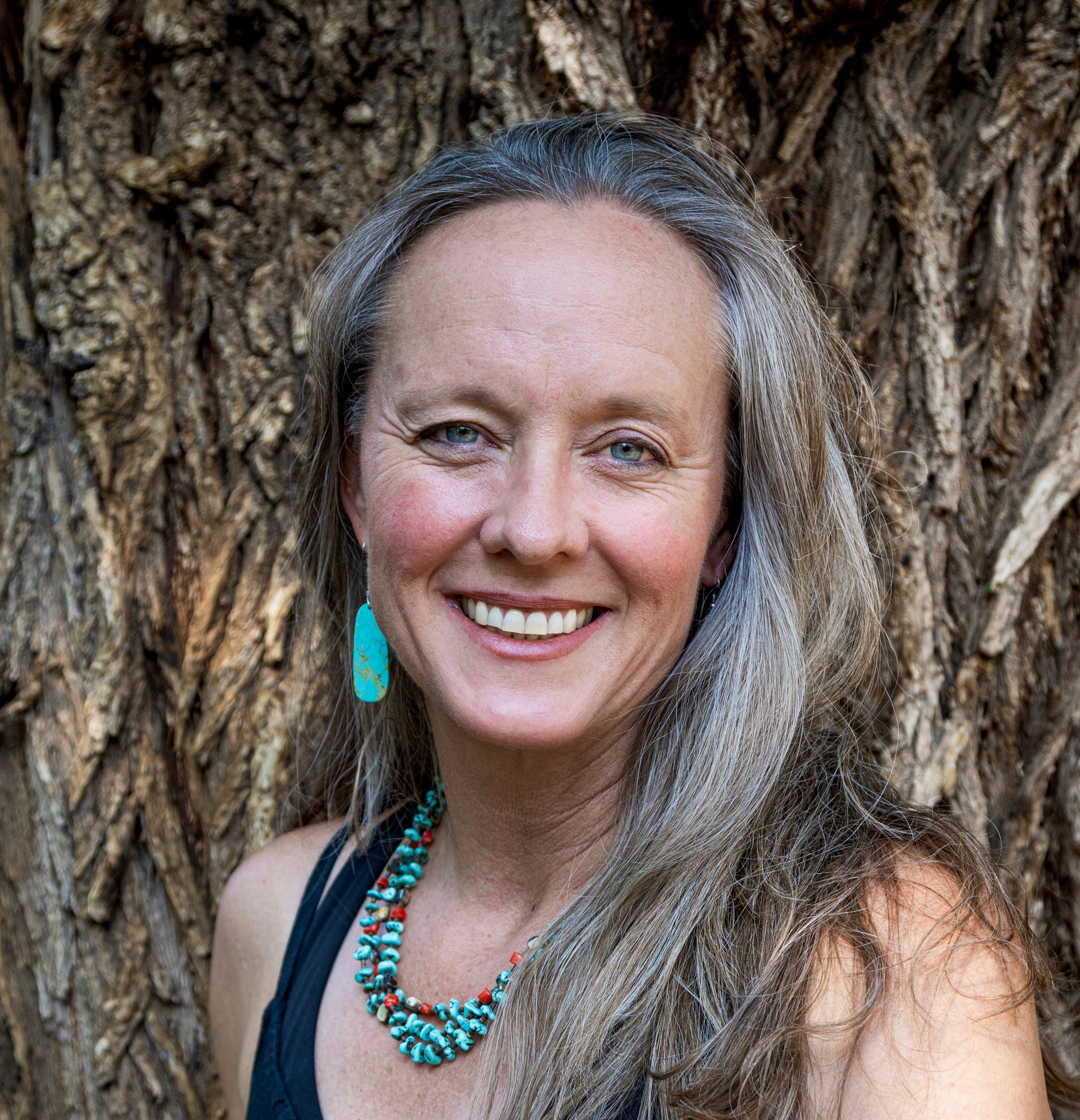
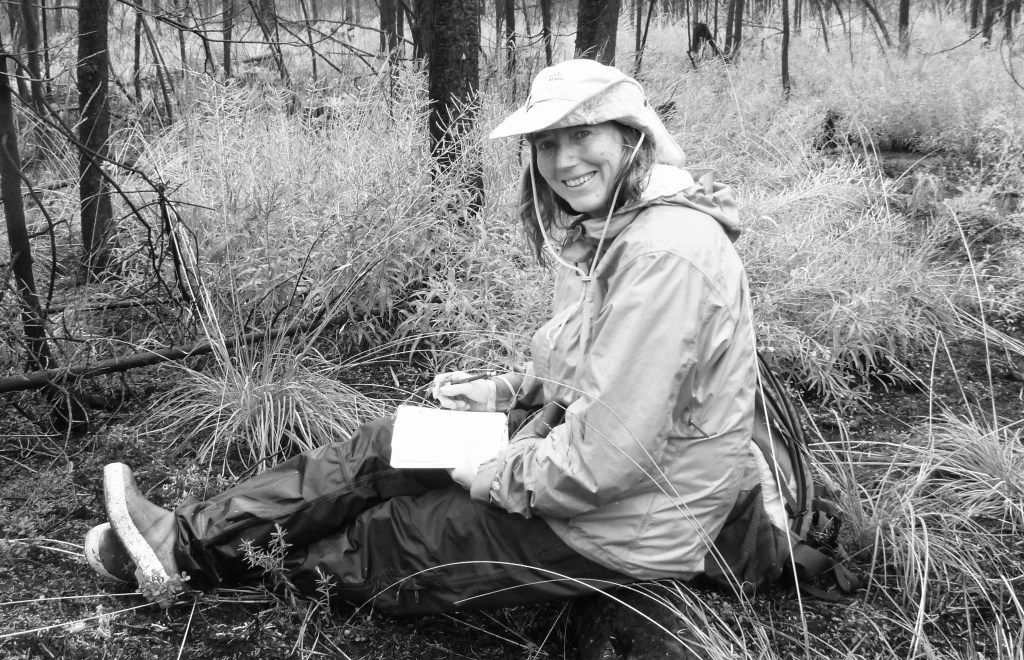
Author Erin Robertson

In her poetic meanderings, Robertson also takes on the persona of “Other Animals” like otter, caribou, peregrines, and Swainson’s Thrush.  She watches their lives, their passage onto new territory, and their passing into the beyond.  It’s a moment, a flicker, a stillness juxtaposed to the more rapid pace of her life back “home” in Colorado.

Fire, too is a constant, not only in the Alaskan Interior but throughout the Mountain West like Robertson’s home upon the Front Range.  She notes:

after the fire

naked birches are

black and white tapers

all blown out (56).

Even after a “Severe Burn” she comments on the stark beauty:

The burn dazzles

despite a blackened past (57).

Seemingly, it is a reality that we all have to come to accept because out of destruction, the ashes can reinvent a newness, a regrowth, another possibility.

Robertson’s experience as an Artist-In-Residence is a testament to her “Vocation” (105).  She embraces where this has taken her:

so many options open

when you go where you’re called

when you do what you love

when you toss every last bitter pill aside…

the earth is humming

with so many ways to play

what will you try next? (105).

This is the challenge that she sets before us.  In her closing poem, “Accounting for Awe” she sets us straight, like one hiking boot in front of the other and asks:

What is the sum of these days of devotion?

An accounting of the endless ways to direct awe.

Anywhere you look there’s a one-inch bit of wonder…

To not let it all burn yet (107).

Here is our reason, in our act of love for nature, we will find compassion for ourselves.

Boulder County Poet Erin Robertson carries this love for nature and compassion forward. She is the founder of BoCo Wild Writers where she teaches outdoor nature writing classes.  Her work can be found at http://www.erinrobertson.org

WHAT THE RIVER MAY BRING: IMPRESSIONS OF INTERIOR ALASKA

BY ERIN ROBERTSON

AVAILABLE THROUGH RAW EARTH INK

Shelli Rottschafer (she / her / ella) completed her doctorate from the University of New Mexico, Albuquerque (2005) in Latin American Contemporary Literature. From 2006 until 2023 Rottschafer taught at a small liberal arts college in Grand Rapids, Michigan as a Professor of Spanish. She also holds an MFA in Creative Writing with a concentration in Poetry and coursework in Nature Writing from Western Colorado University (2025).

Shelli’s home state is Michigan, yet her wanderlust turns her gaze toward her new querencia within the Mountain West where she lives, loves, and writes in Louisville, Colorado and El Prado, Nuevo México with her partner, photographer Daniel Combs and their Pyrenees-Border Collie Rescue. 

Discover more of Shelli’s work at: www.shellirottschaferauthor.com
Book Review: In the Soup by John Calderazzo

BOOK REVIEW:
IN THE SOUP BY JOHN CALDERAZZO

A BOOK REVIEW BY SHELLI ROTTSCHAFER

Calderazzo is an accomplished Nature Writer and emeritus professor within the English Department at Colorado State University, Fort Collins.  In The Soup is his latest poetry collection.  Expressed in three sections Calderazzo relays how he feels, in the soup, in the thick of life-after-retirement on the “Big Day,” as he is “Gathering Voltage,” and one “Windy Day at the Dump.”

Calderazzo begins with his titular poem, “In the Soup” – a psychedelic homage to his inner-man found at the bottom of a can of turkey noodle soup.  Calderazzo ponders the ingredients. What makes a man, what makes the contents of life, what inspires our mindfulness?  The ensuing pages hope to reveal these answers.

PART I: BIG DAY

“Second Coming” wonders about our connection to fading stars and skies laden with floating feathers that cascade like snowfall (13).  Calderazzo takes up his lament for extinct and endangered species.  The Passenger pigeon, “that once blocked the sun” now, “bearing down on oblivion” (13).  Will their eradication be the future for howling wolves and roaring grizzlies?  The same goes for unshackled rivers, and sludge gray oceans.  What will their fate be as climate change deepens?  Some may deny these cause-and-consequence actions but, “even the wind-bitten crew of / the farthest-out whale boat… began to comprehend / what we had done” (14).  

In “The Secret Life of Mountains: Front Range of the Rockies,” Calderazzo explicates his home-place in a meditation of tercets:

Deep in,
a lupine meadow
scored with trails

softens, mists over,
dousing spot-fires
of glacier lilies (33).

It is Spring. The Front Range is emerging into new life.  The:

Pasque flowers
close their petals
like eyelids folding (33)

into meditation,
relieved from 
the trespass (34)

This is Calderazzo’s means of telling his reader to “Go lite” and “Think Like a Mountain” as Aldo Leopold implores.  Yet to also take on John Muir’s challenge, “The mountains are calling and I must go,” but do so with care in order to preserve their beauty, and to protect them from “boot scrape” and drone’s “beauty-lust” (34).

PART II: GATHERING VOLTAGE

“Way Stones” told in three numbered stanzas stories acts of subtle environmental activism.  Beginning with his friend who knocks over cairns – the way stones marking paths on trails.  His friend, who shakes his head in disgust and kicks the keystones which topple in disarray, demonstrating that he prefers, like Robert Frost, to take the road less travelled by.  However, Calderazzo actually doesn’t mind them.  The stone pyres, “suggest a tall dance / with gravity” marking where, “The trail / goes this way… [and] Death is that way” (43).  Calderazzo notes that in other lands, cairns value prayer, offer blessing, and lead the way, “A last ride / through the stars,” which is entirely a different matter.

Author John Calderazzo

PART III: WINDY DAY AT THE DUMP

“Windy Day at the Dump” is a necro-pastoral poem which details environmental decline’s  connection to humanity by listing the things discarded within a landfill.  The poem documents Calderazzo’s personal letting-go of things and moments in his life that now decay within the dump’s depths.  Medical records of a last parent to die, the draft of a youthful novel too embarrassing to recycle, love letters, a broken wall clock, a fizzling floor lamp.  These objects mark his passing of time and are his mile markers of maturation.  They are the cairns that lead the way to his end flight (68-69).

Calderazzo’s closing poem of his collection, “Passing through” is his quest through Wingo, Kentucky in search of his final resting place.  However, “The casket shop has moved” and so he decides to, “pass on a casket, thank you.”  Instead he chooses for his final destination to be a “high flower valley” surrounded by “peaks of snowlit fire.”  He prefers for his ashes to “zephyr off while friends & family / lift their arms & sing” (87).  And in this way those who would remember him, mimic his chosen poetic lineage as they burst into a Whitman-like mighty yawp.

Calderazzo’s collection, In The Soup (2025) by Middle Creek Publishing & Audio nods to his literary community and those who came before him.  Through this gathering, he enters their company, and encourages others to tell their stories, communicate to the public about the importance of wilderness preservation, and find those ancient cairns while trekking among high mountains around the world.

IN THE SOUP

BY JOHN CALDERAZZO

AVAILABLE NOW!

Shelli Rottschafer (she / her / ella) completed her doctorate from the University of New Mexico, Albuquerque (2005) in Latin American Contemporary Literature. From 2006 until 2023 Rottschafer taught at a small liberal arts college in Grand Rapids, Michigan as a Professor of Spanish. She also holds an MFA in Creative Writing with a concentration in Poetry and coursework in Nature Writing from Western Colorado University (2025).

Shelli’s home state is Michigan, yet her wanderlust turns her gaze toward her new querencia within the Mountain West where she lives, loves, and writes in Louisville, Colorado and El Prado, Nuevo México with her partner, photographer Daniel Combs and their Pyrenees-Border Collie Rescue. 

Discover more of Shelli’s work at: www.shellirottschaferauthor.com
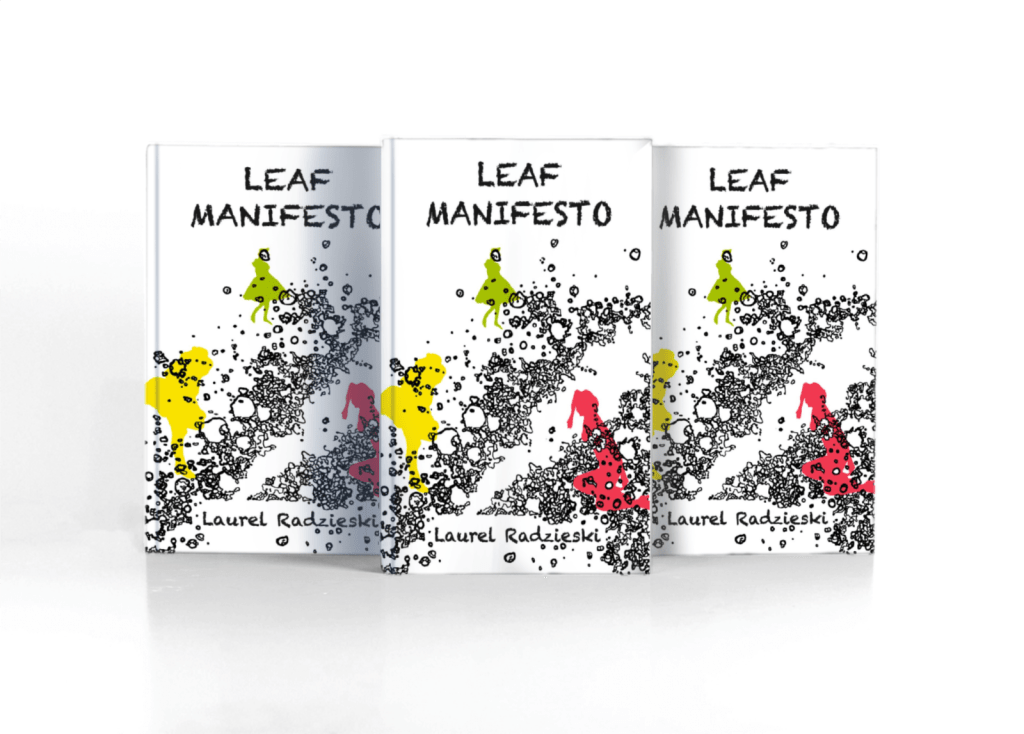
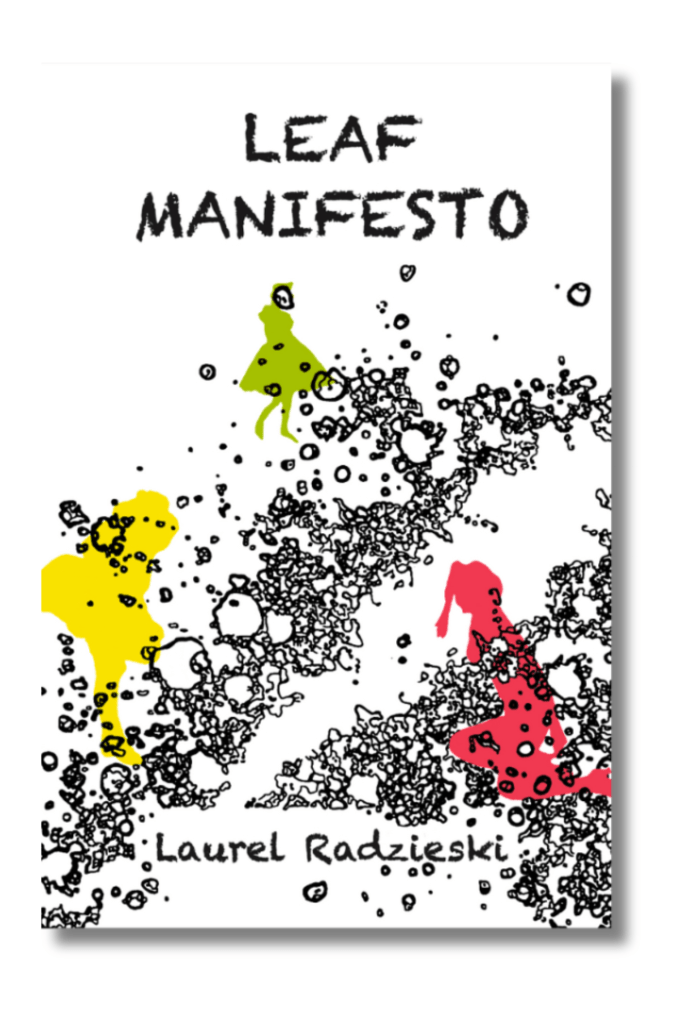
Book Review: Leaf Manifesto by Laurel Radzieski

WILD NATURE, WILD WOMEN, A WILD ECOPOETICS:
LAUREL RADZIESKI’S LEAF MANIFESTO

A BOOK REVIEW BY SHELLI ROTTSCHAFER

Laurel Radzieski welds her pen to manifest an embodied poetics and advocacy for the wild.  Wild nature. Wild Women.  This collection is unique because she plays upon the page physically and artistically in form, as many of these poems take shape within female curves. The growth from within is her child, and in this way the verse thrives.

The collection follows a flora lifecycle.  Each section reminds the reader of this beginning to end:  Seed, Germination, Sprout, Seedling, Sapling, Tree, Flowering, and ultimately the tempestuous Fruit.  Radzieski sets out upon her poetics journey stating, “One day I said aloud / I might like to be a tree” (11) and so she entices her reader to figure out what this may mean.

Throughout Leaf Manifesto Radzieski prompts us with questions: “What is a woman?” (15). And provides multiple choice answers, that only lead to more internalized questions.  Through this feminist lens she taunts her reader to poke at their own preconceived perceptions.  “Who gets to be a woman?” (16).  “What use is a woman?” (17).  “What’s it like to be a woman?” (21).  Once again, she tests her reader through a True / False dichotomy.  She dares us to shade in our answer fully with a #2 Lead Pencil.

In “How to Identify as a Tree” (38), Radzieski considers identity, origin, and belonging.  “Consider what others would want to know about your bark patterns and inner rings.”  Yet how a tree-body-person may appear doesn’t describe the within.  Rather, “roots and family tree” nudge toward fuller truths.  Especially as it oft happens, “If you are on unseeded land, know the history of the ground, how it got that way.”  In this way, Radzieski alludes to those who came before us.  She acknowledges that the land of her manifesto is of indigenous origins and birthright.

Author Laurel Radzieski

Throughout her collection, Radzieski offers up Ven Diagrams.  In “Woman Tree” (69), she encloses what these two entities have in common: branches, limbs, mistakes, leaves, organs, roots, flesh, rings, family, pain, and flowers.”  At least with this last word, she ends on hope.

Radzieski’s final poem in the collection, “Past Life Regression” (121) is a haiku:

Fallen walnut.  Such
a long way down, but then
soft idea of grass.

This seasonal form representing a walnut tree’s lifespan, culminates in a fruit-nut’s finality.  Not eaten, but allowed to cascade to an end-place.  Tranquility lands in grass.  Her bed, which begins again the tree’s lifecycle as the seed buries into soil knowing she will sprout once more. 

Laurel Radzieski won the Halycon Award from Middle Creek Publishing & Audio for this collection.  It is her second full collection of poetry.  Other poems have found a home in Rust + Moth, The New Your Quarterly, and Atlas.  She lives in Reading, Pennsylvania and is the Director of Grants at Alvernia University.

LEAF MANIFESTO

BY LAUREL RADZIESKI

AVAILABLE NOW!

Shelli Rottschafer (she / her / ella) completed her doctorate from the University of New Mexico, Albuquerque (2005) in Latin American Contemporary Literature. From 2006 until 2023 Rottschafer taught at a small liberal arts college in Grand Rapids, Michigan as a Professor of Spanish. She also holds an MFA in Creative Writing with a concentration in Poetry and coursework in Nature Writing from Western Colorado University (2025).

Shelli’s home state is Michigan, yet her wanderlust turns her gaze toward her new querencia within the Mountain West where she lives, loves, and writes in Louisville, Colorado and El Prado, Nuevo México with her partner, photographer Daniel Combs and their Pyrenees-Border Collie Rescue. 

Discover more of Shelli’s work at: www.shellirottschaferauthor.com