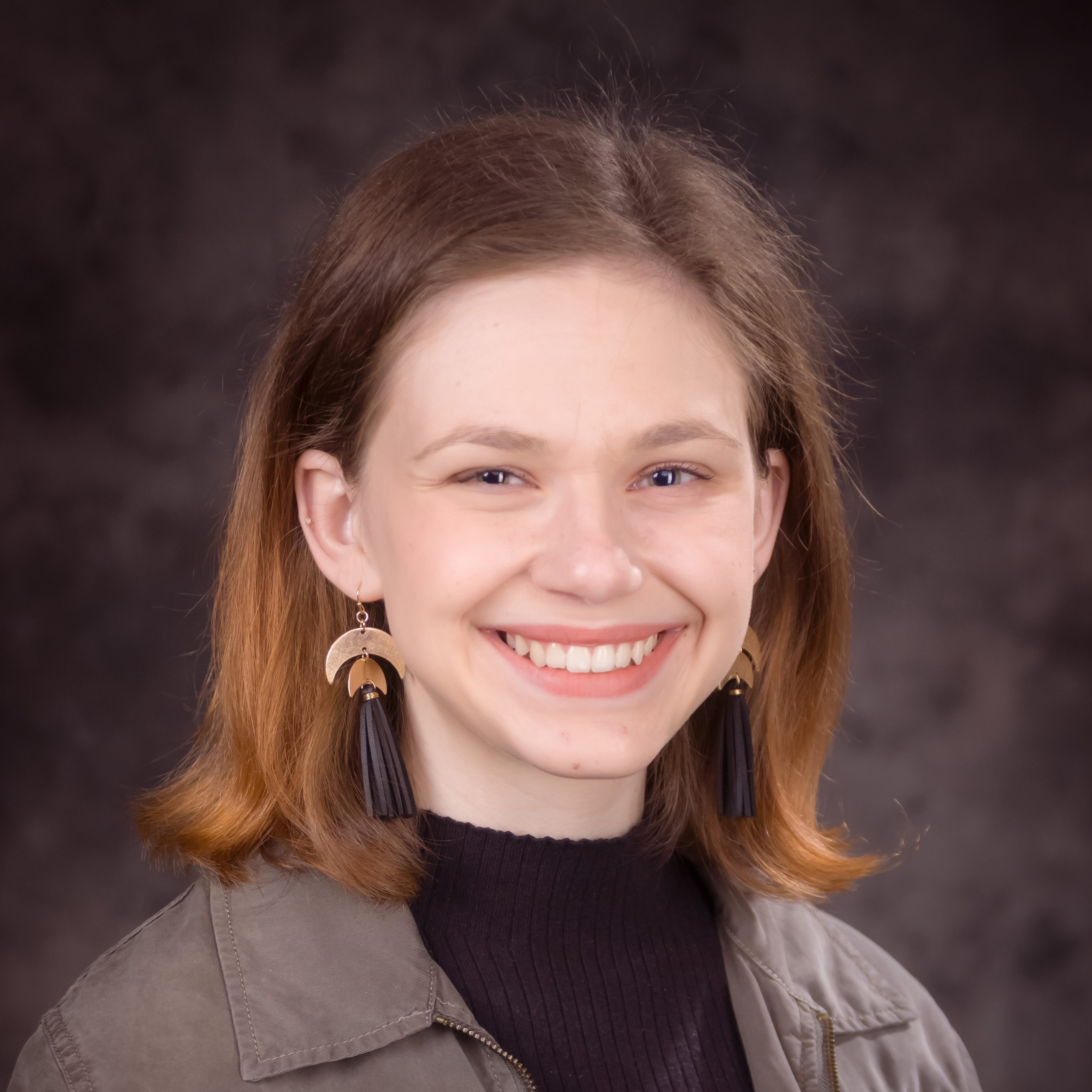
Artist Feature: Rachel Mulder

ARTIST STATEMENT

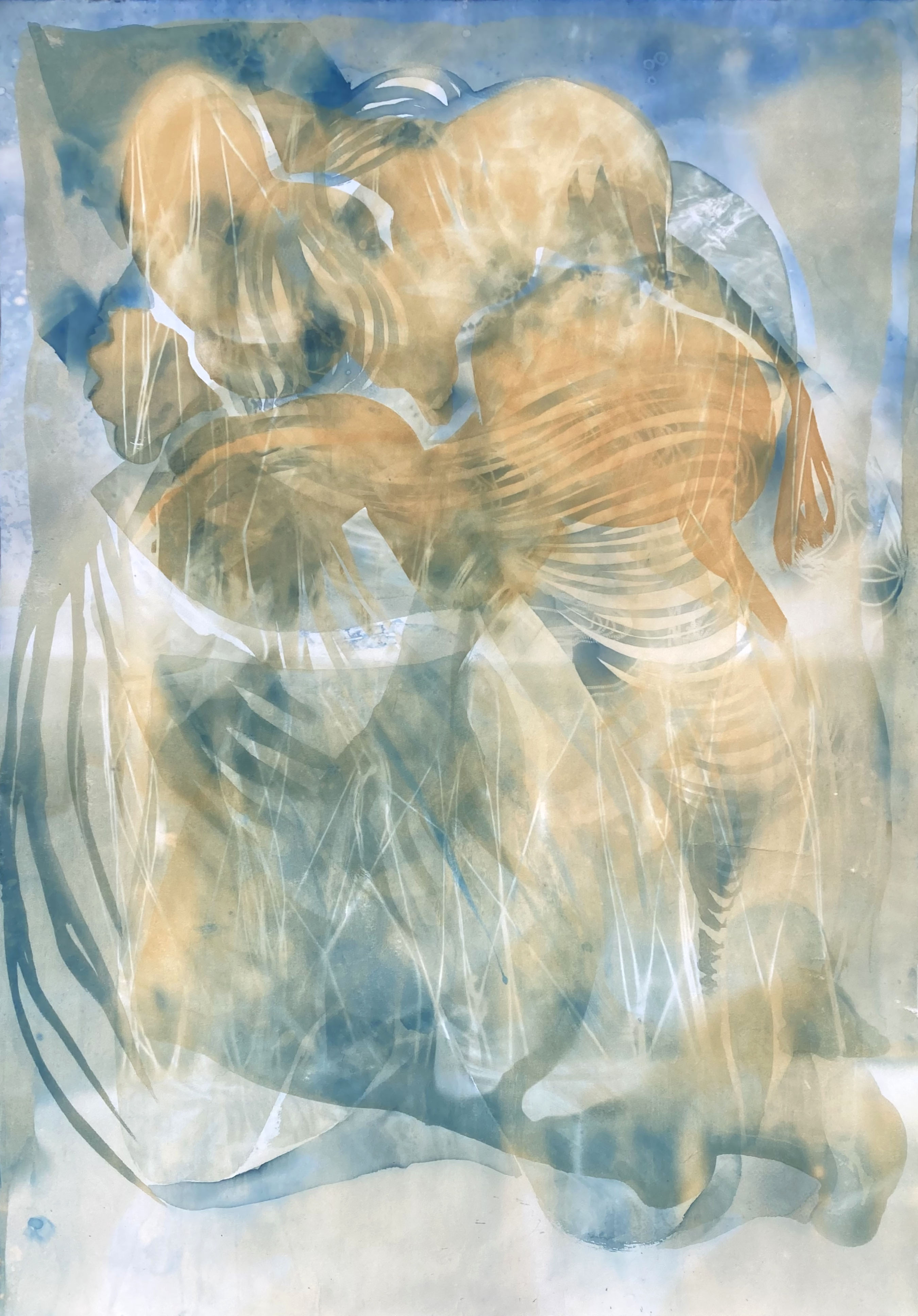
My work is a swirling devotion to process and surrender.

Since 2019, cyanotype has taught me subversive techniques via states of play, acceptance and transformation. This alternative photographic process uses light-sensitive chemicals which are applied to a surface like paper or fabric, exposed to UV light, and developed with water to create brilliant blue and white images. Additional processes like bleaching and toning (with everyday kitchen witchery like baking soda or tea!) make for additional color possibilities using the same old chemistry.

Both imagery and process are relational, with my work often revealing my own emotions to me before I’m even aware of their presence. I often explore this terrain by painting shapes with the chemistry, placing objects onto the surface to resist the light, rinsing and repeating this process in multiple layers. The paper holds the memory of each new layer, dodging destruction while creating space for possibility. 

Conversely, there are also magical moments where the image snaps into place in one exposure, as if by a flick of the wrist. The simplicity can be electrifying. The paradoxical nature and generative inertia of making these painterly cyanotypes continually invites me to learn and my work to transform.

INTERVIEW

South Broadway Press asks Rachel Mulder a few questions to get to know this artist a bit better.

SBP: WHERE ARE YOU FINDING INSPIRATION AS OF LATE?

RM: As a leo (sun, mercury and mars), I feel really grateful that a major part of my practice is actually worshipping the sun! Cyanotype is such a whirling dervish of magic, it’s really easy to be endlessly captivated by the process itself. I also enjoy listening to podcasts while I work, including Dean Spade’s Love in a F*cked up World (named after his most recent book, which I haven’t read yet) and Margaret Killjoy’s Cool People Who Did Cool Stuff (especially the four-parter on how the Surrealists were even cooler than we thought!)

WHAT DO YOU HOPE TO ACCOMPLISH, IF ANYTHING, WITH YOUR ARTWORK?

Currently, I feel like I’m at a kind of journeyperson stage with cyanotype; I have a lot of confidence and trust with the chemistry and timing but I feel as though I’ve barely begun deepening the secondary processes available to me, like toning or adjacent methods like anthotype or Solarfast (the latter offers lots of different colors outside of the traditional blue!). I’m also passionate about sharing this magical process with others, and am on the lookout for an ideal, accessible location where I can continue to offer more masks-required cyanotype workshops for people of all ages and abilities here in Portland.

SBP: WHAT IS BRINGING YOU JOY RIGHT NOW?

I’ve been spending a lot of time in parks lately, and I feel really lucky and grateful when a dog or baby locks eyes with me and demands to become my friend. Like, when a dog you just met gives you The Lean or crouches beneath your legs like you’re its protector, that’s like the highest compliment. 

SBP: ANY UPCOMING EVENTS?

My solo show SUNWORK will be on view at Elbow Room in Portland, Oregon next month! The opening reception is on Sunday, October 26 from 3:00 – 6:00 pm and will be up through November 27. I’m also part of a little co-op called Grover’s Curiosity Shop where I sling prints, stickers, cards and more, and we host sweet and weird events there. My website is rchlmldr.com and there you can easily sign up for my newsletter or find my online shop. I offer a selection of prints where 25% of my sales are shared with Palestinians and mutual aid efforts in Gaza, like the anticapitalist mutual aid fund Bridge of Solidarity. Last, I have a Patreon where at the $5 tier or higher you get monthly postcards in the mail as well as behind the scenes process stuff, discounts in my shop and more.

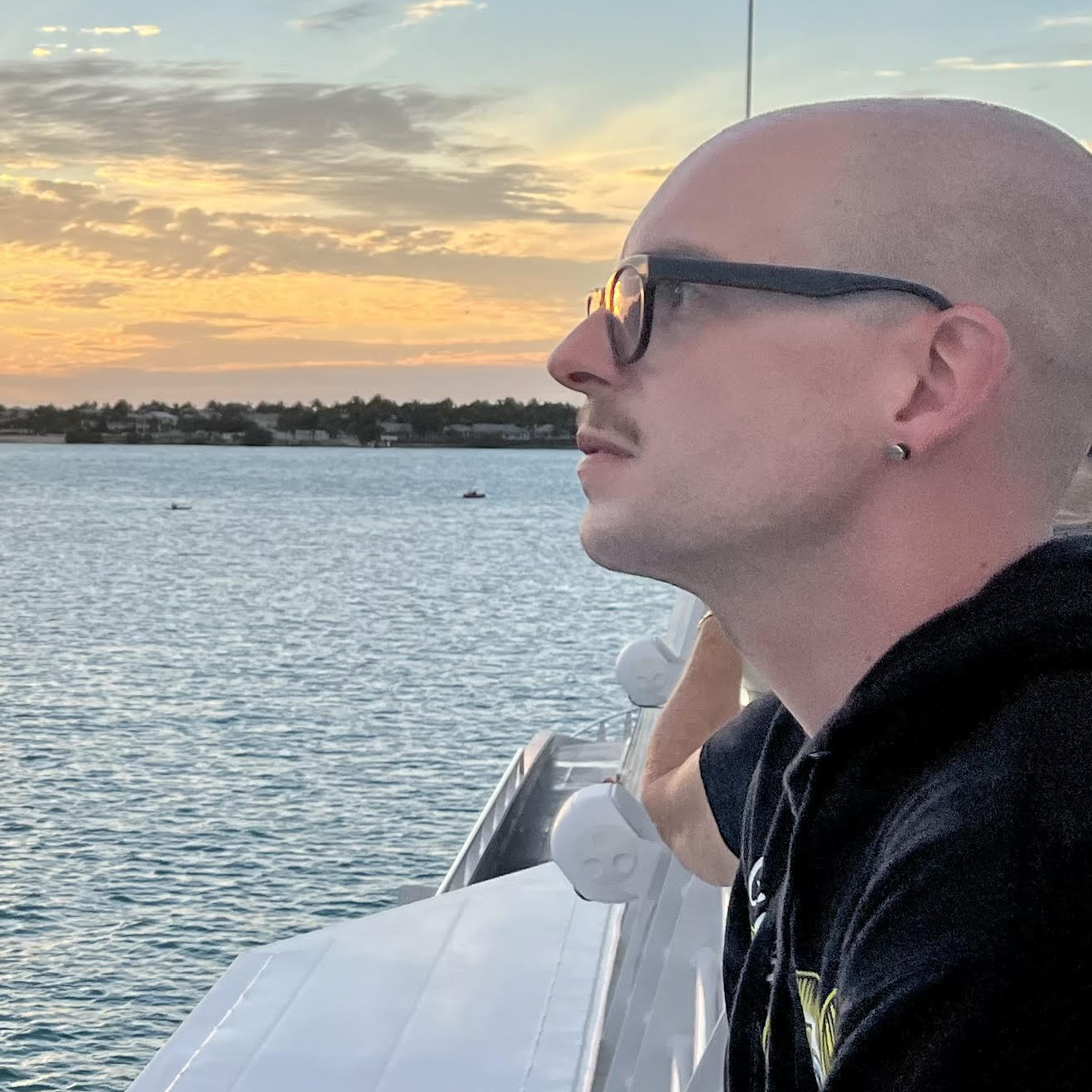
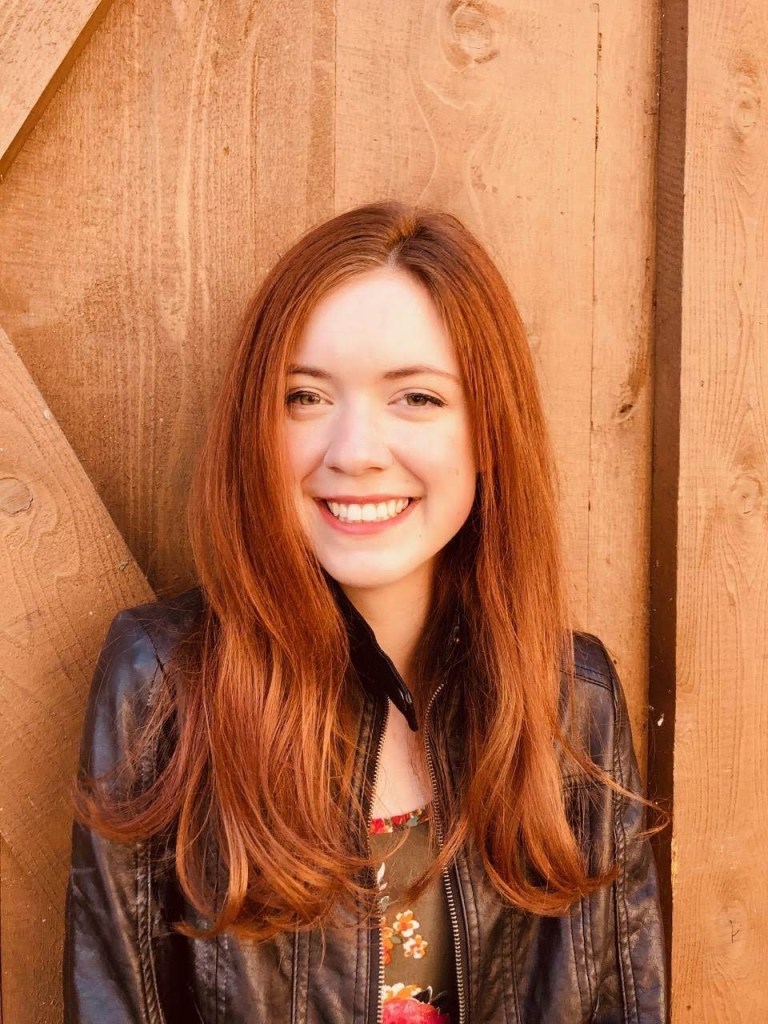
Rachel Mulder (she/they) lives in Portland, Oregon, with her two cats, Opal and Tomasina. She was born in rural Wisconsin and when she was small she spent a lot of time sitting in the grass staring, obsessing about animals, watching cartoons and peeling her skin off. Now she makes drawings using a variety of media that often yield printmakerly textures – residual effects from earning her BFA in Printmaking at Milwaukee Institute of Art & Design in 2007. A process-oriented artist, her work vacillates back and forth between the meticulous and obsessive to playful experimentation and experientiality. Whether it’s drawing with human hair, mud, cyanotype, gel pen or graphite, her imagery explores human connection, expression, and the strangeness of existing in a body. Encouraging others (and herself) to create/exist sincerely is a parallel passion of hers that braids itself into her visual work.

Crepuscular, adj., the behavior of animals most active at twilight | Neal Allen Shipley

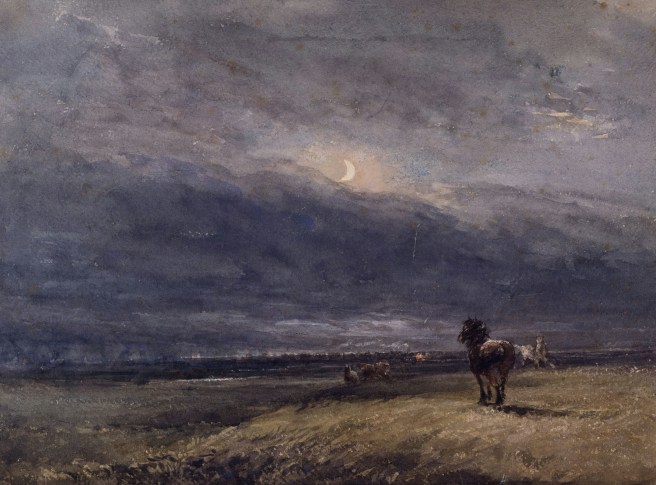
Image: The Night Train by David Cox

Crepuscular, adj., the behavior of animals most active at twilight

For Ash
BY NEAL ALLEN SHIPLEY

          It’s cold but the sky is clear, cleaved:
bright pink sits on blue and there are no clouds, but a stripe
of white would be poetic. This administration will ban the sky
if they can, executives ordering it to stop changing color – trying
to administer a world where there is only day and night.

Imagine, refusing to believe in twilight while the sun seeps
into the gums of the horizon – denying nightfall on a summer evening
when you savor sunset, still warm and purple on your tongue.
Hunting is restricted between sunset and dusk when these animals
are most active – to feed, to court – at the height of their power:

    *

          Odocoileus hemionus, mule deer
feed selectively at dusk, choosing the parts of sagebrush
that are most nutritious. Site-faithful, they return only to the safest,
most bountiful grounds, pawing the soft loam of your back yard
so close we could hand-feed them if we weren’t so loud.

You call me but you’re worried about other things – the dog
I pretend to hate is sick and it’s probably just normal shit, but still.
I forget to tell you that I know twilight is real, that it’s the most
beautiful time of day, the mountains’ silhouette like thick walls of a bowl
thrown up by practiced hands to protect us in this conservative city.

    *

          Vulpes vulpes pick-pocket their predators
in the gloaming, stealing yesterday’s prime rib for tomorrow’s supper.
The red fox knows to keep away from traffic – has learned to scent
the carbon steel of their hunter’s rifle on the wind, stow their stolen
goods deep beneath the snow where it will keep until leaner times.

This administration has convinced themselves there is only high
noon, masculine sun scorching the earth shadowless, baking
them where they stand without reprieve – the delicate frills of dawn
too dangerous for them, nighttime dragging her slow fingers down
their chests, the cold dew of Spring fresh in the corners of their mouths.

    *

          Canis latrans call to their young with soft woofs
when the sun sinks almost completely, a nightlight deep
within the mountains – small howls that make you lower your joint.
I tell you about the time a coyote invaded my cul de sac growing up,
our neighbors shepherding their dogs inside to avoid a slaughter.

You tell me the coyote is a mean bitch, but you’re meaner.
If they’re a threat, we’ll bring the girls inside and I’ll fight
this administration tooth and claw with you until it’s just
another neighborhood dog, one we’ve seen before, docile;
we stay outside with the joint, the soft glow of dusk around us.

Neal Allen Shipley (he/him) is a behavior analyst living in Colorado with a modest collection of pets and an unhinged collection of plants. His work has been nominated for the Pushcart Prize and appears in Creation Magazine, The Talon Review, and SCAB Magazine, among others. Despite the horrors, he loves a fancy hot dog. You can find him on Instagram @nealio9

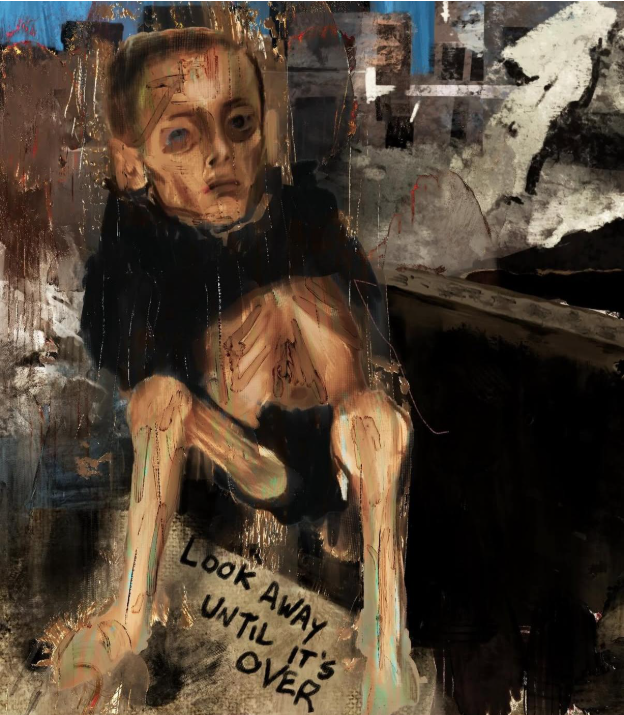
A Chorus of Mourning Echoing Out Toward Mecca | Ted Vaca

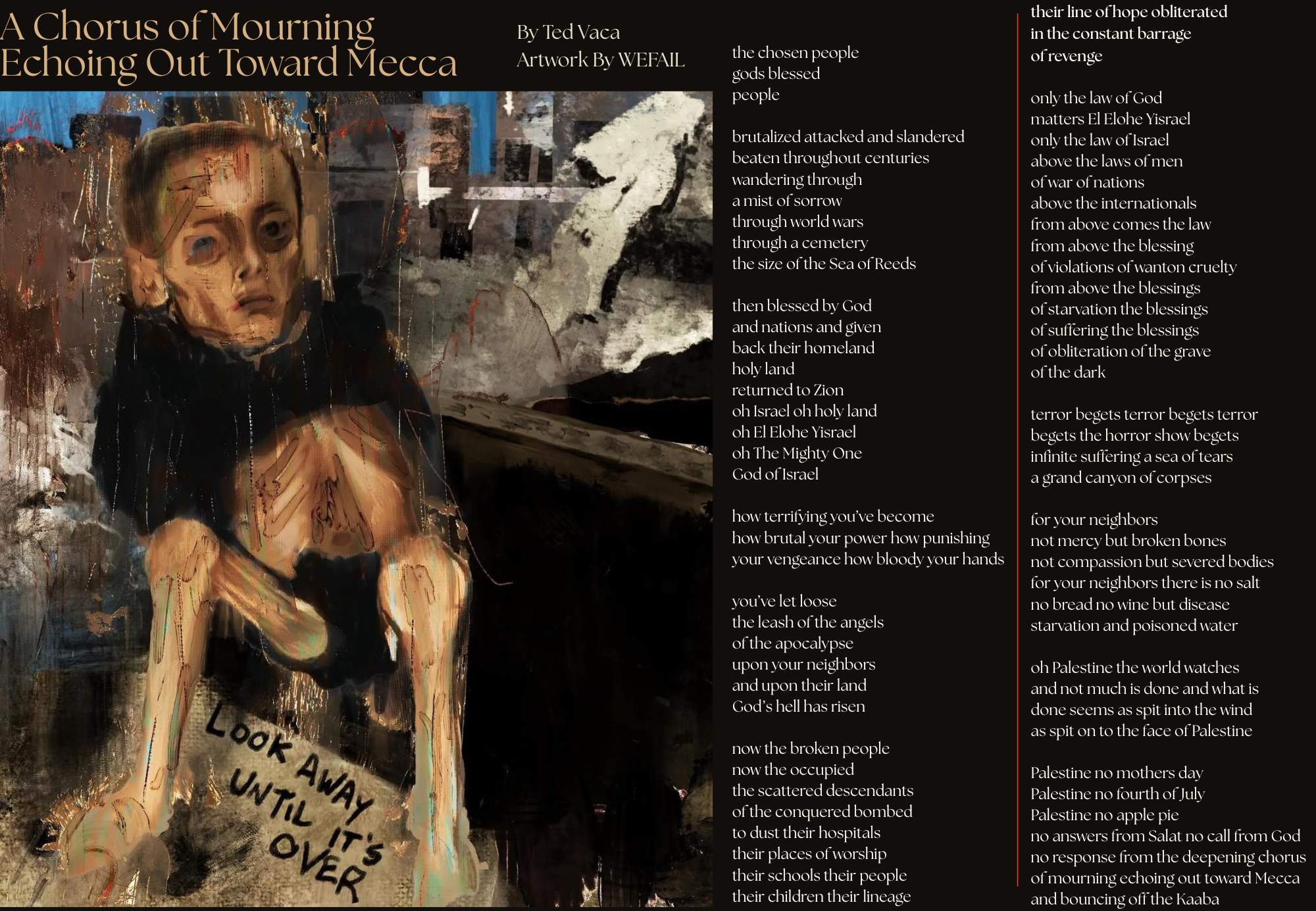
Image: WEFAIL

A Chorus of Mourning Echoing Out Toward Mecca

BY TED VACA

the chosen people
god’s blessed
people

brutalized attacked and slandered
beaten throughout centuries
wandering through
a mist of sorrow
through world wars
through a cemetery
the size of the Sea of Reeds

then blessed by God
and nations and given
back their homeland
holy land
returned to Zion
oh Israel oh holy land
oh El Elohe Yisrael
oh The Mighty One
God of Israel

how terrifying you’ve become
how brutal your power how punishing
your vengeance how bloody your hands

you’ve let loose
the leash of the angels
of the apocalypse
upon your neighbors
and upon their land
God’s hell has risen

now the broken people
now the occupied
the scattered descendants
of the conquered bombed
to dust their hospitals
their places of worship
their schools their people
their children their lineage
their line of hope obliterated
in the constant barrage
of revenge

only the law of God
matters El Elohe Yisrael
only the law of Israel
above the laws of men
of war of nations
above the internationals
from above comes the law
from above the blessing
of violations of wanton cruelty
from above the blessings
of starvation the blessings
of suffering the blessings
of obliteration of the grave
of the dark

terror begets terror begets terror
begets the horror show begets
infinite suffering a sea of tears
a grand canyon of corpses

for your neighbors
not mercy but broken bones
not compassion but severed bodies
for your neighbors there is no salt
no bread no wine but disease
starvation and poisoned water

oh Palestine the world watches
and not much is done and what is
done seems as spit into the wind
as spit on to the face of Palestine

Palestine no mother’s day
Palestine no fourth of July
Palestine no apple pie
no answers from Salat no call from God
no response from the deepening chorus
of mourning echoing out toward Mecca
and bouncing off the Kaaba

Ted Vaca is a Denver area based poet and performer.  He began writing steadily in the late 1980’s in his home state of California.  He has been published in numerous publications and has self-published two chapbooks.  He is a member of the 1995 Asheville National Slam Poetry Championship team.  He is a founding member of The Mercury Cafe Poetry Slam, (Denver, CO.) established in 2000, and ongoing since then.  He is the coach of the 2006 Mercury Cafe Slam Championship team.  He has hosted countless poetry readings and slams and special events throughout his 35-plus years in catering toward poetic pursuits.

Ted is an award winner of Colorado’s Lulu award for accomplishments in poetry and The James Ryan Morris Tombstone award.

Ted has worked for Art from Ashes, a Colorado based not for profit that encourages and teaches healing through art therapy, catering to youth in illness and at risk.

The Mother of the Oxford English Dictionary // Allison Maschhoff

Image: Quino

The Mother of the Oxford English Dictionary

BY ALLISON MASCHHOFF

mother, n.

definition a.

The female parent of a human being; [2]

as in the one who feeds you with her chest, the one who housed you next to her most sacred innards, the one your eyes search for as you cry.

a woman in relation to a child or children to whom she has given birth; [3]

            the unparalleled truth of motherhood: only one person will ever birth you.

the unbearable truth of motherhood: no world she births you into will as be as safe as the one she made.

(also in extended use) a woman who undertakes the responsibilities of a parent toward a child [4]

every place that has ever felt like a second home to me has had the influence of a woman who houses the strength and presence of a whirlwind framing everything from the door to the walls to my heart.

[2] [3] [4] from the Oxford English Dictionary

Allison Maschhoff is a creative writing MFA student at the University of Missouri, Kansas City. Her poetry has been published in The Blue Route, Green Blotter, Windfall, and Better Than Starbucks. She also writes fiction. You can find links to her work at www.allisonmaschhoff.com or follow @allison.maschhoff on Instagram.

This poem is from South Broadway Press’ new anthology, 
Dwell: Poems About Home. Purchase here.

I am queer noir | Cipriano Ortega

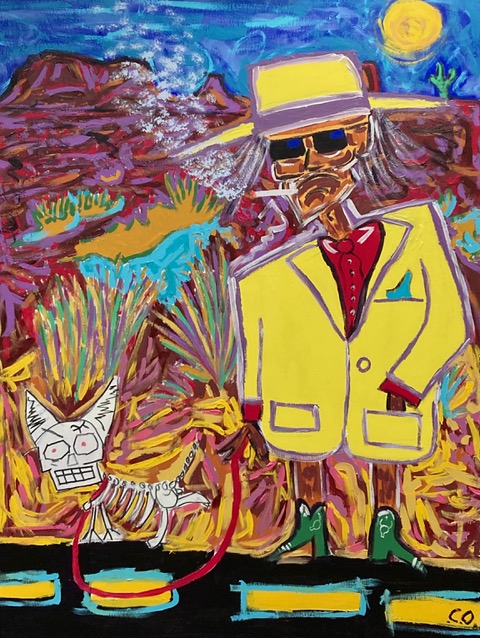
Image: Cipriano Ortega

I am queer noir

I am queer noir.
The smoked clenched night.
The dark alley,
The pissed stained bathroom club floor.
I am the slammed door of rejection.
The constant rampant tapping to let me in.
The hot palpitation of a night.
The hookup line and sinker.

I am the low end speaker, the part of you that know’s something’s wrong.

I hold the light of morning inside my heart.

I am queer noir.

Cipriano Ortega (they/them) has been fortunate enough to have their work recognized and shown both nationally and internationally.  Cipriano strives to create works of art that probe the mind and make people question what they perceive as the normative. Whether that is shown in music, theater, visual art or some sort of culmination of all of the above; Cipriano enjoys blending all creative forms of expression. As a sociological artist, Cipriano deconstructs the worlds around them and observes it under a nihilistic perspective. As an indigenous POC, they also have no choice but to deal with colonialism head on by making it a daily practice to see the divisions we as a society create and continue to make the ‘normative.’

strange, what fabric the body can be | Jade Lascelles

Image: 🇸🇮 Janko Ferlič

strange, what fabric the body can be

the materiality, texture layered atop itself

bristling old wool shorn and barbed from so much wear. knitted with cheap

yarn, the acrylic kind that tightens too much, squeaks after

time and so many washes. a thick polyester clinging to the body

odor of the great aunt who first wore it. a light chiffon scarf

draped, artful but nonchalant. a coat patched too obviously.

stinking of the mothballs from a long-untouched winter closet.

how you are sewn into it


how you drive around a town you have not lived in for fifteen years. the

streets so foreign for the first few days. you, without clear compass or

signpost. home, a place of now-unfamiliar intersections. until on the

third day you feel a strange tug. a too-tight stitch pulling beneath the

muscles in your chest. a breath caught in the button of your throat.

because you suddenly know these storefronts, just with different

names. because you remember the shape and weight of who still

patterns the pavement below. who forever married a part of you to

this neighborhood. whose cord has been knotted to yours all along. you

have driven frightfully close to where something terrible happened. until

now you forgot the event even took place in a house at all. it existing

all this time only in the unnamable space of your hazy recollections.


and the stains it collects, the memory


every time you put on the shirt, your eyes go right to the small spot of

redness. you know the exact meal you were eating. how you were sitting at

a not proper dining space. how the sauce splashed when the pot boiled

over. how her homemade jam was thinner and dripped more. when the

brown corduroy got that conspicuous patch of dried glue along the front

most thigh. the leaking pen. the accident. the accidental. that which

you pick at and sniff at and rub in and soak with hopes of it fading more.


how you wear it, but also, how you are woven of it

you sense the distinct tastes inside your mouth whenever you look at the

photo. it is almost unbelievable now, teaching kindergartners to cook.

trusting such small and wild hands with knives to chop the radishes, a hot

griddle to fry up tortillas. you made butter as a class, taking turns shaking

the mason jar of cream. the excited aggression you all stifled around pet gerbils

and younger siblings having found an escape. a riot of children given task

and purpose for their agitation. you hold a photo of this day, see your own

smile as you chew a bit of buttered bread. see how you once delighted

so in it. how delicious it could be, the violence of so many hands.

Jade Lascelles is a writer, editor, musician, and letterpress printer based in Boulder, Colorado. She is the author of the full-length collection The Invevitable (Gesture Press, 2021). Selections of her work have also appeared in numerous journals and the anthologies Women of Resistance: Poems for a New Feminism and Precipice: Writing at the Edge, as well as being featured in the Ed Bowes film Gold Hill and the visual art exhibit and accompanying book Shame Radiant. Several of her poems were recently translated into Italian for the journal Le Voci della Luna. Beyond her writing endeavors, she is a longtime steward of the Harry Smith Print Shop at Naropa University, a core member of the art group The Wilds, and plays drums in a few different musical projects.

This poem is from South Broadway Press’ new anthology, Dwell: Poems About Home. Purchase here.

Rooms | Liza Sparks

Image: Guillaume Lorain

Rooms 

“I dwell in Possibility—”
-Emily Dickinson

Every
body has a right
 to shelter in a home.
To be safe from cold, the heat,
the storm.

///

We want a house built by the people / we want walls of justice / 
we want liberation / we want windows and doors of possibility / 
look outside / in a world where everyone has a home / 
anything is possible / how do we transform / 

///

“Home is where the heart is.” The heart is the size of your fist. 
Some things are worth fighting for.

///

Homelessness is not a choice. 

Criminalizing survival is unconstitutional.[1]

///

The body—
my body is made of rooms of memory—
The body—
my body is made of hallways—
The body—
my body does not remember—
The body—
my body remembers everything

///

Here is my skin. Imagine all of the things I have touched.
Here are my bones. 

///

I do not remember leaving the dwelling of my mother’s body.
I do not remember being born.

///

What does it mean to care for another? 


[1] Denverhomelessoutloud.org

Liza Sparks (she/her) is an intersectional feminist, writer, poet, and creative. She is a brown-multiracial-queer-woman living and working in Colorado. Her work has appeared with Ghost City Review, Bozalta Collective, Cosmonauts Avenue, and many others; and is forthcoming with Honey Literary, Split This Rock’s social justice database—The Quarry, and will be included in Nonwhite and Woman Anthology published by Woodhall Press in 2022. Liza was a semifinalist for Button Poetry’s Chapbook contest in 2018 and was a finalist for Denver Lighthouse Writers Workshop Emerging Writer Fellowship in Poetry in 2020 and 2019. She is a poetry reader for The Chestnut Review. You can read more of Liza’s work at lizasparks.com, IG @sparksliza534, or TW @lizathepoet

This poem is from South Broadway Press’ new anthology, Dwell: Poems About Home. Purchase here.

Carrying stones | Jane-Rebecca Cannarella

Image: Tom van Hoogstraten

Erin told me her face was falling. We sat on a motel bed in downtown Anaheim, each of us with stones inside our bodies where organs used to be. Hand to her face she placed her fingers at her jaw and said, it’s sagging. Like a landslide.

Our foundations were made from the gulfs created in the void of saltwater and sun; we were grown from the melting glaciers. Skeletons shaped from every piece of rock we had once picked up from the tongue of the shore because we thought it was pretty, replacing the bone until we were both ambling monuments.

In the motel in downtown Anaheim, we cracked geodes against one another with enough force to break them open to see if our guts were quartz. The same sort of rock scientists on playgrounds smashing stones to see if there were hidden crystals, only we were older, and our shared insides didn’t carry crystals…as we found out. Sharp fragments splintered and dented the cold bedcovers, rock people applying pressure as a kind of embrace.

And her face was falling like how Venice is sinking, and the world is impermanent, so we split our skin open to find anything secreted from the soft outsides. The shells of our exteriors thawed like those candles whose wax peels away to reveal tiny gems, but really, it’s just a trinket more like trash than treasure.


Structures like bones crease into putty like how memorials fall and become their own grave markers, and on a floral smoke-smelling comforter in a strip mall in Anaheim, I ease into the rock rain of my own face and the spring that found itself seeping out of the remains of my body. Our mingled landslide faces and surfaces liquified with only the memory of boulder bodies and gritted organs left in our wake.

Tomorrow we’d go back to carrying our stones.


Jane-Rebecca Cannarella (she/her) is a writer and editor living in Philadelphia. She is the editor of HOOT Review and Meow Meow Pow Pow Lit, and a former genre editor at Lunch Ticket. She’s the author of Better Bones and Marrow, both published by Thirty West Publishing House, The Guessing Game published by BA Press, and Thirst and Frost forthcoming from Vegetarian Alcoholic Press. 

The Artist’s Prerogative // Gracie Nordgren

Image: Sergio Rodriguez

The Artist’s Prerogative

BY GRACIE NORDGREN

His name was Pietro Ludivicci, and he was in love with symmetry.

            Those statues of his were carved with a delicate accuracy, angels and saints poised to bless or condemn, their pale faces set in expressions of aloof piety. That marble virgin of his was housed inside the chapel, the object of awe among the townspeople. For the sculptor had rendered the stone folds of her clothing as soft-looking as fabric.

            The flawless beauty of Ludivicci’s creations was rivaled only by the appearance of the sculptor himself. With his tight curls, regal nose, cherubic lips, and mahogany eyes, it was as if he were the personification of the suppleness of youth. How lovely, this Pietro!

            Of course, the young women of the town were hopelessly taken with him. Why, even the mayor’s wife fondly referred to him as her first love! A cacophony of tokens, flowers, letters, and gifts took up permanent residence outside his door. In the marketplace, women would tarry and stare, and those bold enough to proposition him always received the same answer: a curl of the lip, and a flat “I’d rather not”. You see, Ludivicci was a paramour of human beauty- and perfection his muse. How could he settle for anything else in a lover?

            These harsh rejections were hard on the ladies of the town. Many would weep, and some would pull at their hair. Young Viola, who cleaned the sculptor’s apartment, witnessed countless of these spurnings. In the smoky bars, her father, the innkeeper, and the older townsmen would snidely remark that Ludivicci may as well wed one of his statues.

            There came a day, as the harvest-season came round, that the sculptor unexpectedly stopped accepting commissions. For seventeen days on end, he vanished from the eyes of the community. Circulating whispers suggested illness, or even his death. Viola of course knew that the artist was not dead at all. He had thrown himself into his newest project.

Ludivicci the recluse remained shut up in his apartment, his door opening only to receive the bread and wine he paid Viola to purchase for him. During these visits, the girl caught glimpses of a form standing in the center of his room- a new statue, perhaps? Alas, she could never get a good enough look, as the sculptor would pay her what was owed and then slam the door with a force that made the frame creak.

The longer Pietro Ludivicci was in isolation, the more fanciful the rumors about him became. He had certainly lost his sanity, most agreed. Signora Columbo swore she had spotted him at the temple, worshipping the pagan gods! How could he have fallen so far? Poor Pietro! A red-cheeked and mortified Viola confessed to her sister as they lay in bed one night that she had caught the sculptor cradling what seemed to be the face of his passion project and kissing its lips!

Months passed before Ludivicci was spotted in public again. He looked certainly worse for wear, with dark shadows underneath his eyes, an unkempt beard, and his shoulder-length hair hanging in an unruly tangle.

His sculpting seemed to be abandoned as a thing of the past, as he had emerged from his isolation with nothing to show for it. If one would catch him walking about in town or marketplace and inquire about his work, he would stare back with haunted, glassy eyes and mutter something about having more important matters to pursue.

No one quite knew where the woman had come from. The way the innkeeper told it, she had knocked upon the inn’s door late one night (the night before Ludivicci returned to society) and requested residence. Said her name was Giana Aldi. She had paid him handsomely for room and board from a fine leather coin purse that hung from her waist. She was a painter, this woman, who wished to work undisturbed within the rooms. Why is it that this town is the place of so many fussy artists? The innkeeper bemoaned to his wife and daughters as they, dazed and recently roused from sleep, stumbled to prepare a room.

Soon enough, the town forgot their fascination with Ludivicci in favor of the mysterious Giana Aldi. It was if she had been carved from marble, as such flawlessness seemed unnatural. Smooth dark locks flowed down her back to her waist, and large black eyes were framed by heavy lashes. They seemed to see into one’s heart, and one couldn’t help but feel naked and exposed under her gaze.

She was stern and dedicated to her art with a borderline religious fervour. Her neighbors took notice, with news of her traveling within hours. Who was she? Perhaps she and Ludivicci would be the perfect match for one another. Two kindred spirits, parallel in looks and practice.

Evidently, Ludivicci was enthralled by her as well. Every evening, he would stand at her balcony, wildly waving bouquets of flowers, imploring her to come down and speak to him. No one ever saw Giana Aldi do so much as open her window. Late into the night, the sculptor would cry, shout, and even sing love poetry! Poor Ludivicci was in such a state of ruin by the seventh night, yet he persisted. Having enough of this, the innkeeper accosted him on the street, ordering him to give it up at once! Ludivicci, likely emboldened by the wine running through his body, declared that he would never stop his pursuit until he heard word from the lady herself.

It is said, and there have been several witnesses to this, that Giana Aldi appeared on the balcony then. Leaning over its edge, raven hair spilling over her shoulders, her disdainful shout could be heard by all:

“I’d rather not!”


Gracie Nordgren is a Creative Writing student at the University of Colorado Boulder. She enjoys daydreaming and pomegranates, and would very much like to travel to Venus. Her work has appeared in Kalopsia Literary Journal, The University of Colorado Boulder Honors Journal, and Cathartic Youth Literary Magazine, among others.