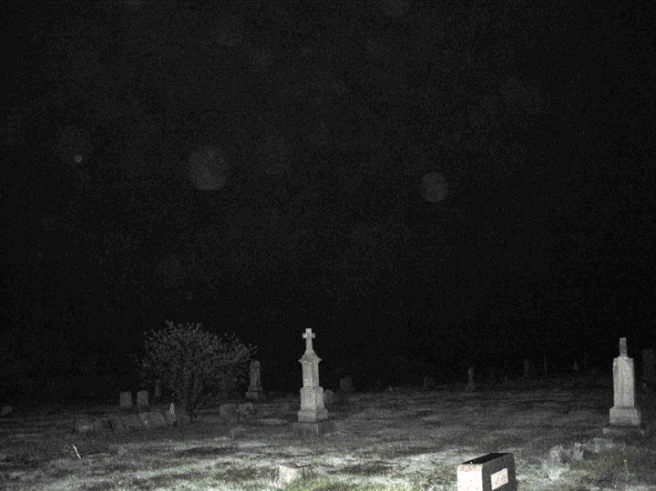
three deaths in thirty seconds – ghost #13

ghost yard

it was over and dead
and the ground produced no flowers.

it was over and dead
the cable cords were cut.
the television looked like a race war.

the fridge was unhumming.

i was dead and buried in the cushions
of the couch.

i was dead and all my poems were dead too.

and it all came in through the windows.
new breath new flowers
new life new love

new angels of electric health.
new standards of electric wealth.
And I screamed back into the wind in a
way that no day could ever forget and it
screamed back and my eyes were the size of life and
my pupils swallowed the sky and I fell down happy on the
couch
and I died,
I died,
I died.

sbgs cowskull

there is an idea of a ghost #13, some kind of abstraction, but there is no real me, only an entity, something illusory.

submit to south broadway ghost society.

eyes – dave owens

x9apT

Two sour faced guards escorted teenager Daniel Warren into the interview cell, shackled him to the metal grommets bolted to the table, and pushed him down into a chair. The boy’s orange prisoner suit did not fit, but someone, perhaps one of the guards, rolled the cuffs and sleeves up so he wouldn’t trip and fall. The lock clattered after the door slammed shut.

To the state appointed psychologist Raoul Hadras, the young man who sat in silence across from him at the table appeared not unlike many of the other troubled youths of this generation – thin, only a few weeks past his fifteenth birthday, a dozen pimples on his face, and expressive brown eyes. A shock of blond hair completed the image.
Daniel murdered his father and mother if the police report proved true. After his arrest, he demanded the death penalty from the court appointed attorney, and created quite a scene in the courtroom when the attorney plead not guilty on his behalf. The judge also thought the demand strange and questioned the boy’s sanity.

Most other youths Raoul evaluated often claimed insanity, and enacted performances that would make movie stars jealous – anything to avoid justice.

Daniel sat with yes turned down, and did not speak.

“May I call you Dan?” The doctor made a note in the evaluation folder.

“Sure. Why not? You wanna find out why I killed my old man.” The boy fidgeted in the chair, but did not try to escape the restraints. “I wanna die.”

“I must determine if you are fit to stand trial.”

“Yeah.” The voice came slow and sullen.

“So. May I call you Dan?” Raoul’s question, fashioned to create a familiar, less formal atmosphere, dated back to the time of Freud. The ploy worked sometimes, but sometimes it did not.

No answer. Raoul tried again with a gentle tone in his voice. “May I call you Dan?”

“I don’t care what you call me. Send me back to my cell,” he snapped back.

“Sometimes circumstances cause us to do things we wouldn’t normally do. Would you please tell me about what happened?”

“He deserved it. Am I done?”

“Not quite. Why do you say he deserved it?” His question probed for anything to free the boy from his defensive shell.

“He beat me and my mother up all the time. When I was a little kid, he’d jerk me up by my arm and whip me with that leather belt of his. I hated the belt. I got whipped even if I didn’t do nothin’.”

“Your mother too?” Situations like the boy described usually meant the abuse affected other family members. Raoul understood the answer.

“Yeah, she got it bad. If she tried to protect me, he’d beat her with his fists. She didn’t tell people what he did, but behind her back everyone talked about her black eyes and the bruises all over her arms, and face. I got into fights with kids who said things about her.”

“Many fights?” The question sought to let deep emotions rise. He made another note in the folder.

Dan avoided the question. “My mother. I loved her. I didn’t kill her like the police said. I didn’t do it.”

“But you did kill your father?”

“Yeah.” His head rolled back and he stared at the ceiling. “Like I said. He had it comin’.”
Trigger point. The father. Raoul wondered what other triggers might provoke Dan to continue his story. “So you blame your father for your crime?”

Dan kept his gaze focused on the ceiling. “Everyone hated him.”

“Everyone?”

His head fell forward and his eyes locked onto Raoul’s face. “Everyone.”

“Please explain.”

The face softened for a moment. “His eyes frightened everyone. One of my friends, Jimmy, came to the house one night after school.” Dad screamed at him to get out.”

“That’s all your father said?”

“Uh, huh. He stared at Jimmy with those cold blue eyes – they could see right through you. When I try to sleep I see them. They’re always in my dreams. I didn’t like to sleep. Neighbors avoided him. They’d go to the other side of the street when they saw him comin’.”

“It’s called post traumatic stress, Dan. He frightened you the night you killed him?”

“I came home from school late. I heard him telling from the street. When I went inside the house everything was broken. Smashed chairs, curtains ripped off the windows. I went into the kitchen. Dad grabbed the refrigerator and threw it on the floor. He swung at Mom and missed, but his second punch hit her in the stomach. She fell down. I went over to her and tried to help, but he grabbed me by the shirt and threw me into the counter by the sink. Then he turned back to Mom. I knew he was gonna hurt her more.”

His eyes smoldered with tears and his head dropped to his chest.

“Relax for a minute, Dan. I understand why you are frightened. I want to help.”

Dan disregarded Raoul’s comment and continued. “I got up and took one of the broken chair’s legs and swung it as hard as I could. I hit him on the back of his head. He turned and started to get up, but I hit him again. I hit him two more times before he fell. I went to Mom. She said ‘Run Danny, run. He’ll kill you for sure if he catches you. Please run. I love you.’ Last time I heard Mom’s voice.” He jerked his head to the side and shook it. His wet cheeks glistened in the light of the single bulb that swung from a wire above his head.

Raoul took a handkerchief from his pocket and went to the other side of the table to wipe the boy’s tears. “Calm, calm. Nobody will hurt you while you’re with me.” Genuine sadness gripped the doctor and he felt his own eyes water. He thought to leave the handkerchief with Dan, but remembered the restraints and realized the pointlessness of such an act. He returned to his seat, sat in silence, while he made a few more notes in the folder.

Dan’s chin fell back onto his chest. His voice lowered and he mumbled, “Found the gun – Dad’s nine millimeter, in the stand by the bed where he kept it, made sure it was loaded, tucked it into my pants, and ran. I went across the street to Mrs. Thompson’s house. Her lights were off. She wasn’t home, so I ran around to the back, jumped the fence and hid under some cucumber vines. I tried to hold my breath, but was breathing too hard.” He swallowed, and waited a moment before he continued. “I thought he might hear my breathing so I crawled over the back fence and ran down the alley. There’s an old wooden shed there. I went in and hid behind some boxes.”

“And . . .” Raoul’s voice faded into a whisper.

“I heard his crazy screams. He was trying to find me. I kept as quiet as I could because I was scared more than ever before. I heard his shoes crunchin’ in the alley gravel. When I peeked through a crack in the wall I saw him standin’ outside the shed, I held my breath and hoped he wouldn’t hear me. I hoped he’d go away. He didn’t. He pushed through the broken door and came into the shed yelling ‘little bastard! I’ll break your neck and piss on you. Come on out coward!’”

The doctor’s voice became sympathetic for the first time since the interview began. “Now I understand.”

“After I made sure a round was in the chamber.” The boy continued as if he could not hold back the story. Tormented words gushed from his lips at a frantic pace. “I crawled out from behind the crates and held the gun where he couldn’t see it. He moved, and I shot him in the chest, but he wasn’t dead.” His voice quieted when he remembered the moment. “I shot him in the head two times, but he’s here with me. I have to die to get rid of him. I want to die! It’s the only way I can escape.”

The softness of the boy’s voice surprised Raoul. “You’ve no need to fear your father. I think you acted in self-defense and I’ll inform the authorities. I see a full life in front of you.” Raoul wrote another note in the folder. “Your father’s gone and he can’t hurt you anymore.” He raised his head and noticed the change in Dan’s eyes.

Cold, ice blue eyes glared at the doctor. “I’m not dead.”

sbgs cowskull

David Alan Owens’ stories and non-fiction works have been published internationally. From Alien Dimensions magazine, the High Strange Horror Anthology, and other periodicals, his audiences are as varied as his stories. He prefers to write science fiction, but sometimes a story of a different genre asks to be written. He lives in Murfreesboro, Tennessee with his wife Ann and his Boston Terrier, Mayla.

Photo: @sweetdangerzack

the shadows we make – evan james sheldon

JellyfishB&W2 (1 of 1)

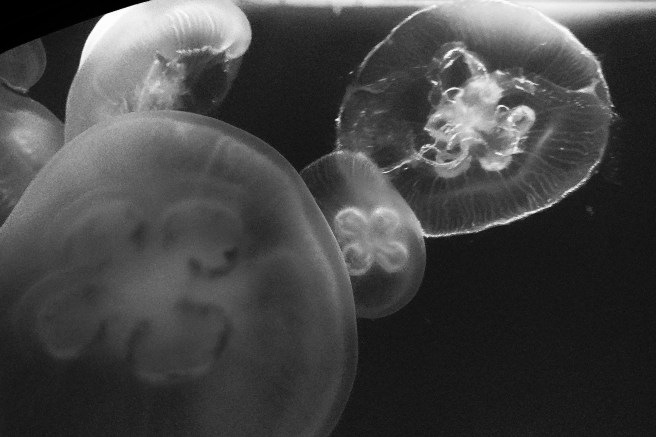
The girl was on her way to Walgreens to pick up her mother’s medication when she found the dead jellyfish on the street corner under that one lamppost that always worked. It wasn’t just one jellyfish, but twenty, thirty, maybe more. They lay in small iridescent globules, some strewn on the sidewalk, others slopped carelessly onto the edge of the sewer grate.

As she watched, wisps like smoke rose from the dead jellyfish and hung several feet about concrete, bobbing up and down like they were submerged in stormy waters. The girl thought the wisps must be the ghosts of all the jellyfish and she wondered when her mother died if she would be able to see her ghost rise and hover.

The girl had heard that jellyfish were biologically immortal, that they would naturally live forever, and she wondered if these dead before her had known it was coming, if they had planned their last days accordingly, or if they had been torn from a life everlasting like slaughtered angels.

The jellyfish ghosts cast morphing shadows on the dirty ground beneath the ever-steady lamplight, moving into and through one another, bringing out strange images from the cacophony of movement like unintentional shadow puppets. The girl pulled out strange, fantastical shapes as if she was laying on her back watching the clouds.

When she was healthy several years ago, the girl’s mother used to make shadow puppets with her hands on the wall of their apartment. She would turn off the lights and use a candle as backlight, so the images flickered and grew and danced on the wall with the slightest extra breath or movement in the air. A dove could become a dragon, a shark a leviathan, a butterfly a huge bird of prey, all if she laughed too near the candle. She learned to hold in the laughter, so the air would be still, so the shadows could be what her mother intended. Now, her mother’s hands have twisted into tough claws, slow moving and incapable of making anything like they used to.

The girl stood transfixed for a long time, watching the ghosts of the jellyfish paint in shadows on the concrete. If the ghosts of the jellyfish, continued only to bob foolishly, they’d be there forever. The thought made her angry and she screamed at the jellyfish to leave, to go, to get the hell out. They didn’t leave. They wouldn’t leave. She was crying soon and yelling unintelligibly—a deep throaty yell rising in pitch until it was more of a screech than anything. She balled her fists, she stomped her feet, knowing she was too old for a tantrum but unable to stop it erupting from her.

Why wouldn’t they leave? Didn’t they know they could go? Are they all so stupid just to bob there under the lamppost?

Her voice gave out and she rushed forward swatting at the ghosts and immediately pulled back her hand, stung. It wasn’t a sharp pain, or piercing, or electrifying like it might have been if the jellyfish had been alive, but rather a down-to-the-bone pain, like slow pressure on a deep bruise.

The girl left them there then, running off and forgetting her errand. Later when she was home, she remembered reading, though she couldn’t recall where, that a group of jellyfish was called a bloom or a smack. The text hadn’t specified if there was any difference between the application of the names.

Image result for jellyfish clip art black and white

Evan James Sheldon’s work has appeared in CHEAP POP, Ghost City Review, and Pithead Chapel, among others. He is an Assistant Editor for F(r)iction and an Outreach Assistant for Brink Literacy Project.

photo: @__varinia__

submit to south broadway ghost society.

ravenous – veronica love

Lips suck me in closer, as hungry hands met with hungry thoughts grab for a morsel when they crave a feast. Tempered by reality of the looming dawn and day and life and all that comes with being bogged down with that which cloys desire. A moment more.. Or two… Push back the need for separation, hold off on leaving the cornucopia for bread and water. Sirens sing of desire, though we see the rocks below, they still call, and gingerly we veer closer, pulled away last minute by reason when there is a longing to ride with reckless abandon the waves, and say damn we may…we may want to sleep beneath them, it may be worth the crash.. but last minute we steer away… And embrace the cliche of living to eat another day. One more kiss… Remind me of that I already miss..

cropped-cropped-cropped-sobogoso.png

submit to soboghoso.

ghosts//gardens//graveyards – k.j. kindling

You burned it all to the ground.
In a flaming baptism of self-righteous
forgiveness
you let the past go.
Like you could burn off the cowardice
if you sat in the heat long enough.
Like you could sear yourself
into being someone better
if I was gone.
If I never happen.
If our memories
were just a smoke show.

You probably thought the ash would
fertilize the next garden.
Our garden became a graveyard
and years collapsed like kindling.
But there’s an ashy taste
left in your mouth
no spring flood can wash away.
No one else can feel
the soot in your teeth.
But you do.

How nice to think
you could incinerate a ghost.
We both know
you
were
the
death
of who I was.
It’s not something
you can smolder.

You promise your next girlfriend one day
you’ll get all the tattoos that have to
do with me
removed
and you don’t tell her each time you
smell a flower
you inhale puffs of smoke.

cropped-cropped-cropped-sobogoso.png

KJ Kindling is a naturalist, a feminist, a rescue dog enthusiast, a seventh generation Coloradoan, and a naturalist. She’s currently working on three novels, two of which are verse novels, and one book of poems. You can find more of her work at www.kjkindling.com or on her Instagram or Pinterest (@kj.kindling).

the insomnia – d.s. maolalai

the snore
came suddenly
like dynamite
popping in a cave.
he woke to the sound,
shocked out of sleep,
and lay there
listening to his heartbeat
and wondering
if the roof had fallen
and were the children
alright in their beds.
the next one
came
from the pillow next to him
and minutes later.
it seemed
each night
that behind her face
was a lamp-post,
hit
with occasional
cars.

cropped-cropped-cropped-sobogoso.png

DS Maolalai is a poet from Ireland who has been writing and publishing poetry for almost 10 years. His first collection, Love is Breaking Plates in the Garden, was published in 2016 by the Encircle Press. He has been nominated for Best of the Web and twice for the Pushcart Prize.


glen canyon dam – ghost #909

We’d traveled hundreds, or maybe even thousands, of miles into the deepest recesses of the desert land to see the Bottomless Pit of Babies for ourselves. We all peered down into the abyss, my father holding me up over the edge for a better look.

“See, look over at those ones. They’re trying to climb out. Isn’t that the cutest?”

We all peered down into the seething, teeming bowl of fresh babies–mewling, crawling, naked, red, and raw, faces scrunched and fists balled, crying out for the mothers from which they’d be ripped away, screaming at the fathers that let them go.

Yeah, it was a bottomless pit of babies. That was for sure. And we all saw it. Paid for the pleasure, even.

Oh, and they even set one up for display up there. So we could all see what they looked like, up close.

But it was just a baby.

cropped-cropped-cropped-sobogoso.png

submit to soboghoso.