We are incredibly excited to announce South Broadway Press‘ 2026 Pushcart Prize nominations! Please join us in celebrating these wonderful poets.
The Pushcart Prize: Best of the Small Presses series, published every year since 1976, is the most honored literary project in America – including Highest Honors from the American Academy of Arts and Letters.
Since 1976, hundreds of presses and thousands of writers of short stories, poetry and essays have been represented in our annual collections. Each year most of the writers and many of the presses are new to the series. Every volume contains an index of past selections, plus lists of outstanding presses with addresses.
The Pushcart Prize has been a labor of love and independent spirits since its founding. It is one of the last surviving literary co-ops from the 60’s and 70’s.
Pushcart Prize Nominees
FROM SOUTH BROADWAY PRESS’ SUMMER & AUTUMN 2025 EDITIONS
We are incredibly excited to announce South Broadway Press‘ 2025 Best of the Net nominations! Please join us in celebrating these wonderful poets.
The Best of the Net is an annual anthology that honors small press literature that was first published online. The anthology is published by Sundress Publications and is open to submissions for poetry, fiction, and nonfiction.
Best of the Net Nominees
FROM SOUTH BROADWAY GHOST SOCIETY // SUMMER 2025 EDITION
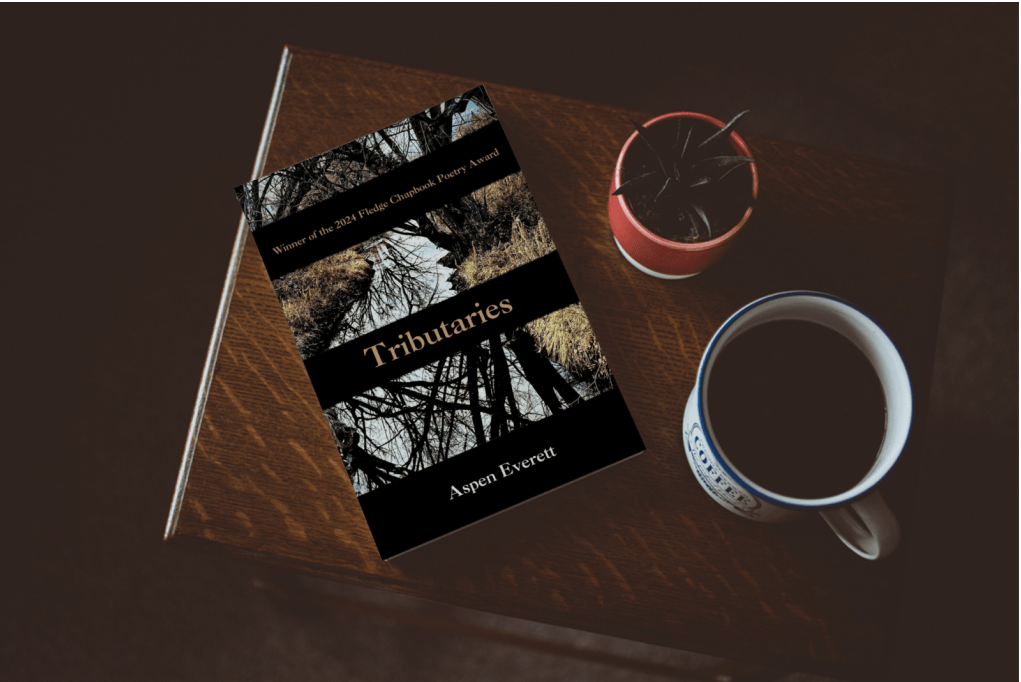
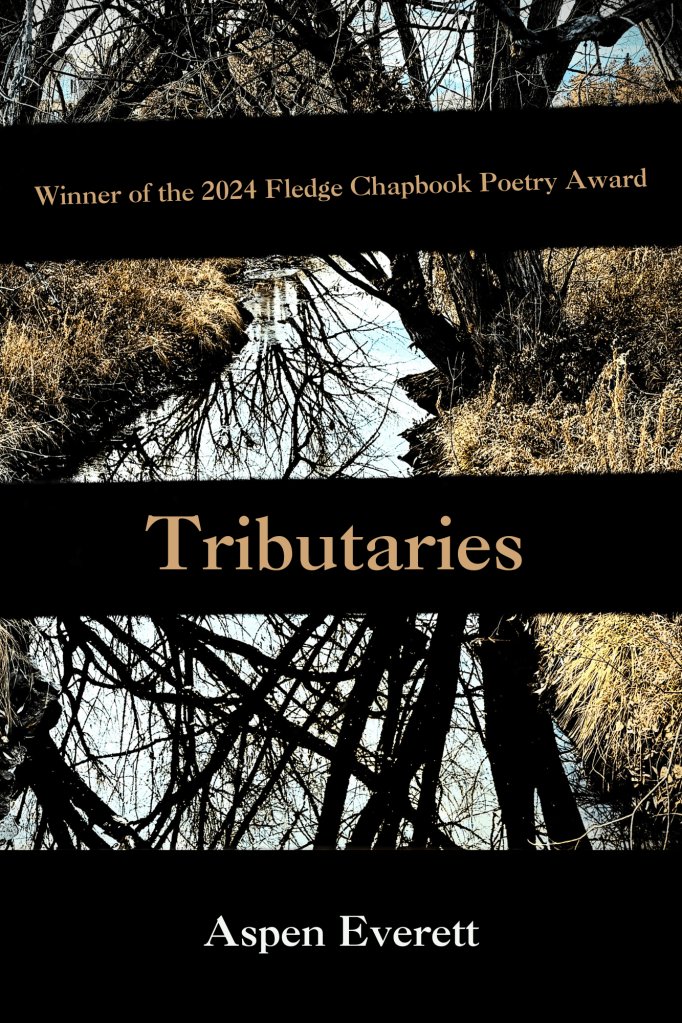
Tributaries: A Beautiful Opportunity to Lose Our Way
BY BRICE MAIURRO
The first thing I heard in these poems was a heartbeat. In his opening poem “All Water Has Perfect Memory”, an allusion to a Toni Morrison line, the rhythm for me was that same rhythm at the start of Dark Side of the Moon. The book begins with the sense of a heartbeat growing louder and louder each moment. Everett’s first collection of poetry, Tributaries, continues to carry that heartbeat, and the sorrow between its beats, throughout this literary confluence of moments. Moments among a greater sense of we, the ecological we.
In his poetry, Everett’s time is the earth’s time. These poems are not contained to the one-hundred-ish years of a human life but zoomed out and slowed down. They connect us to a very clear something greater than our singular journey as a human being on this planet. It is hard to tell where he ends and the rest of Mother Earth begins. He reminds us of this truth for all of us. The poems are in conversation with one another, compounding the complex yet approachable mezclado of this book. The Osage dance with the Cottonwoods dancing with the stream below them, all tributaries feeding into the heart of this poet. Everett is spellcasting here; calling in the healing of the earth and sounding the cautionary canary for its woes.
In addition to spellcaster, Everett serves as field guide, death doula, and eternal student in these poems. These poems are “always hungry” to listen more. In these poems, our fellow living beings, the Great Horned Owl, Coyote, the Bison, are much more teacher than metaphor. There is an admirable equanimity in Everett’s work (and play). He explores the distance between here and home, where home is the same home we find in “eco-”. Everett, as are we, is water, in the words of Toni Morrison, “trying to get back to where it once was”.
“Poets, remember to listen”, says Everett in “Populus deltoides”, “to breathe in the vanilla of resin”. Everett has a knack for imagery (see lines like: “blue hunger”; “cloudless teeth”). He sets scenes magically, and then returns to the reader in a very direct and curious way, as if it were a conversation over a cup of shade grown coffee. I find the agrarian salt-of-the-earth wisdom of these poems reminiscent of Wendell Berry, a fellow poet captivated by the rural. Everett himself is from the “windtossed flatlands of southeast Kansas”, which he visits often in this collection. The poems are biography; confessional poetry of the landscapes and experiences that shaped him and his words.
The poem “Geraniums” in particular stood out to me, with visceral lines like “a blackbird flies backwards from tinted window”. In very intentional moments, Everett captures the core of surrealism: not to immerse the reader in a dream, but to attempt to liberate our colonized minds. Everett has a poetic conviction. When he says “it is better to speak in chrysanthemums”, he speaks from experience. He “plants the seeds in the mouths of everyone” he meets.
Shorter poems like “Pine Trees Covered in Snow” show us that Everett can be potent while being concise. These interludes to longer readings act as heartpunches, steering the collection along.
I often have a hard time with questions posed in poetry, finding them to be navel-gazing or overdramatic shenanigans, however I found myself enamoured of the questions Everett poses. Questions like “Do horses hide in my blonde waves?” where the goal seems not to send you into a philosophical spiral but to invite you into the great curiosity and wonder of this poet. Phrases like “amanita dreams” have me asking my own questions with that same curiosity – what is an amanita dream? What colors would I find there? What shamanic doors can be opened by being more curious about the world of our fungi friends?
In the words of our Colorado Poet Laureate, Andrea Gibson, “it hurts to become”; this collection pushes through the pain of the Anthropocene becoming something more alive, revealing limbs reaching for a better world. The poems in this collection are never so binary to choose to be a meditation on climate grief or to choose to elevate the natural world. They are a both/and, a queering, an honesty. There is a beautiful disobedience that Everett encourages us to join him for, where we too “ignore the no trespassing warnings”, “follow the river” and lose our way.
Brice Maiurro (he/they) is the Editor-in-Chief of South Broadway Press. Hailing from Lakewood, CO., he is the author of four collections of poetry, including Stupid Flowers and The Heart is an Undertaker Bee. His poetry has been published by South Florida Poetry Journal, Denverse, The Denver Post, Boulder Weekly, Suspect Press, and Poets Reading the News. Website: www.maiurro.co
a blackbird flies backwards from tinted window and you are caught in its starling shadow waking cracks climbing the sides of these feeble buildings
the buildings are in a perpetual state of falling only grey skies hold them in place
the grey tone of your voice contemplates weather as if that were the only geranium your throat could grow
it is better to speak in chrysanthemums, lupine, perhaps shooting star
this city led you, little antelope, into a cunning enclosure
you never learned how to jump, never learned Indian Paintbrush but you know how to run
wide open calls you home in a language of blue blue that holds your heart in place, keeps it from killing you
your pillow was covered in blackbird feathers if only it were a sign
winged thing sits on your chest in the night to cry, but not in words
paved over rivers can still drown deer brothers and sisters, if only this were fable
then struggle would be no more than lesson transformation wouldn’t be so fatal curses could be lifted with the correct incantations
you are hooves and ochre, sawdust and iron blessed by coarse calico, be they ropes or binding
this city called to you three times and three times you answered with lips like milkweed
your geraniums are malnourished monotone grey where is the wild thing you once knew? was domestic chosen for you?
remember to run when the wind calls remember the buildings will fall do not let them take you when they topple
you are so much more than this Underland and ash you are flowers and flight you are the generation of beginning
plant your seeds in the mouths of everyone you meet may it be brighter when they speak to sew gardens over civilizations
a place without shadows or fences where antelope run and run, and run
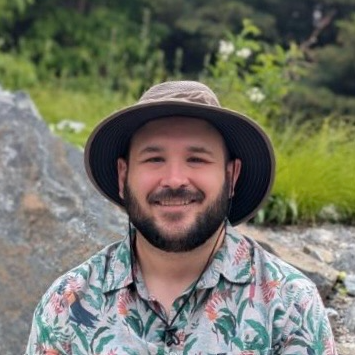
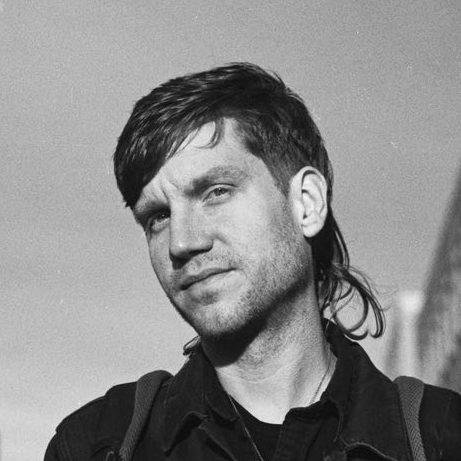
Aspen Everett is a full-time parent first and a writer as often as life allows. Hailing from the wide open plains of Kansas, Aspen writes with wind in their lungs and muddy rivers in their blood. Aspen is the author of Tributaries from Middle Creek Publishing, Instructor with Lighthouse Writers, and chair of Geopoetics with Beyond Academia Free Skool. They live in Boulder with their teenager and stubborn house plants.











 south broadway press