Book Review: compost your despair by hayden dansky

Book Review: compost your despair by hayden dansky

A BOOK REVIEW BY LIZA SPARKS

Compost Your Despair is Hayden Dansky’s love letter to Palestine, community organizers, to the “queer and weird and trans and disabled,” to the “dark and indigenous,” to “those of us who live in liminal spaces, or are kin to it,” to their past self, to anyone who feels empathy, anyone with a heartbeat.

The speaker in these poems writes with a fierce urgency that begs us to pay attention and asks us to move our bodies towards action.

In “Now That I Have a Voice,” the speaker defiantly asserts:

So let them
Burn me
with the rest of them
Burn me like they did
my ancestors before time and place
made me white
Burn me like the heathen they call
me for my love, desire, joy
Burn me with the rest because
now that I have a voice
I will never close
my mouth

These poems tumble down the page like spoken word and it does feel like Dansky is speaking just to us. They capture our attention. They invite us in to the prayer. This poetry is a communal act—a protest poetry spoken on the street.

They write in, “Until They Hear Us:”

What else can we do
besides scream from every corner

There is not a lot of excess in these poems; there is not flowery language, sentimentality, romanticization of struggle. They write with a conversational language that seeks to be understood. In “Climate” they write:

it really, really matters how we treat
each other

There is the examination of complexity and Dansky struggles with their own positionality of privilege and oppression. They write:

Peace is a process of
relationship to self
just as much as
relationship to other.

They write, in regards to the ongoing genocide in Gaza,

I will scream that this is not
my Judaism.

These poems demand a megaphone.

There is not the promise of peace or justice, but an impulse towards it. In “Until They Hear Us,” the speaker repeats, “I will try” and “I can try.” It is a vulnerable and humble sentiment. In times like these, what else is there to do but try? Trying is the first step towards action.

There is a force in these poems that is driven by the musicality of repetition, like the drumbeat of “Burn me” in the final stanza of “Now That I Have a Voice.” The speaker is not afraid to write in defiance of powers that will oppress them and the people they love, and they will say it again.

In the poem, “Climate” the speaker struggles with the power of words. What can words actually do in “a burning world.” They write, “How can I trust these words.” Yet, Dansky is driven to speak, to write, and to share. There is a deep desire to be heard. There is a fierce drive to express.

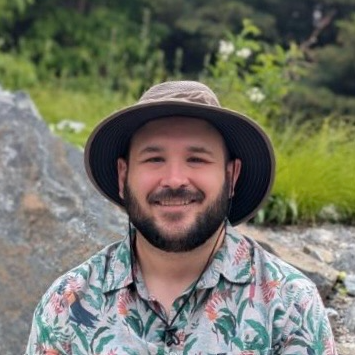
Author Hayden Dansky

These poems bring to mind the Audre Lorde quote: “I have come to believe over and over again that what is most important to me must be spoken, made verbal and shared, even at the risk of having it bruised or misunderstood.” With that same sentiment—Dansky must speak, must write, must share.

There’s a hunger in the speaker to understand the past and the present, to make sense of the trauma and their position and responsibility.

In “Nex” there is a firm defiance against the powers of hate:

Our bodies are resistance.
Our love is survival.
Our identities are our anchors,
always in transition.

“Nex” is addressed to Nex Benedict, a 16-year-old non-binary student, youth, and precious soul who died as the result of anti-LGBQTIA+ policies. Dansky’s poems do not exist merely on the page, but are in deep conversation with the world around them.

And although the world around them is apocalyptic, there is hope in these poems. In “A Pandemic Note to the Creative Organizers,” the speaker writes:

You are not alone.
When you listen
you will remember
you never have been.

and in “A Pandemic Note to Self,” the speaker asserts:

Fall into the earth like it’s your home
It has always been.

Dansky’s impulse towards social justice is driven by a deep love for their fellow humans and for the world. In “Gaza” they write:

called by a deep love
of all humanity
of a belief
that nobody will be free
until we all are.

Compost Your Despair asks the reader to look at their own privilege and positionality—What drives you? What moves you? What do you love?

In “Pride,” Dansky reminds us that

Pride is not complacency

our lives are choices
and we are choosing to stay

Dansky’s poetry asks the reader: What are you choosing to do with your life? What are you choosing to do with your voice?
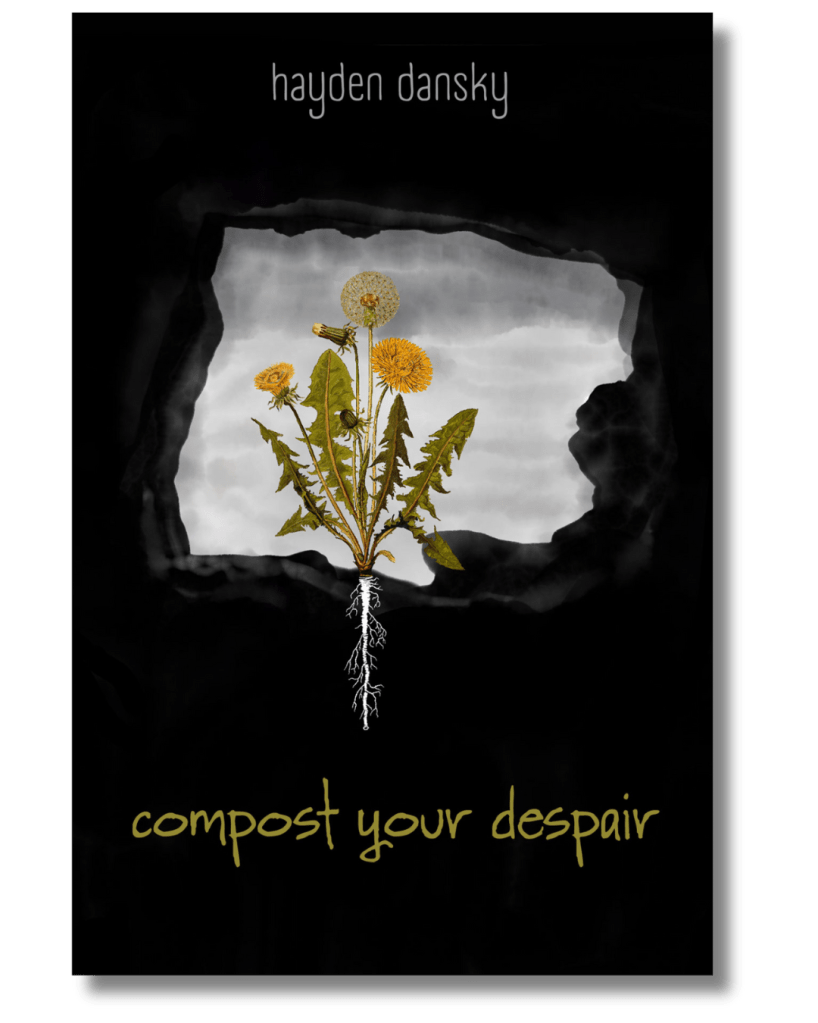
compost your despair

BY HAYDEN DANSKY

AVAILABLE NOW!

Liza Sparks (she/her) is a student in the 2025-2026 Poetry Collective at The Lighthouse Writers Workshop in Denver, Colorado. Liza follows her literary obsessions and collects books the way toddlers collect rocks and pinecones (beloved friends, sacred treasures). She is a Pushcart Prize and a Best of the Net nominee.

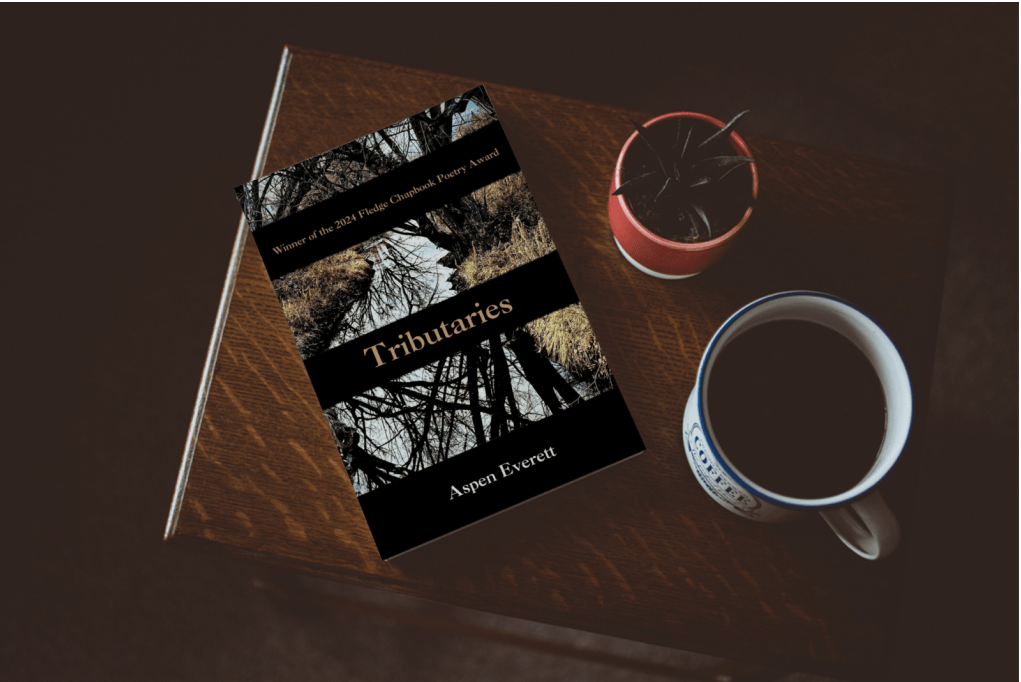
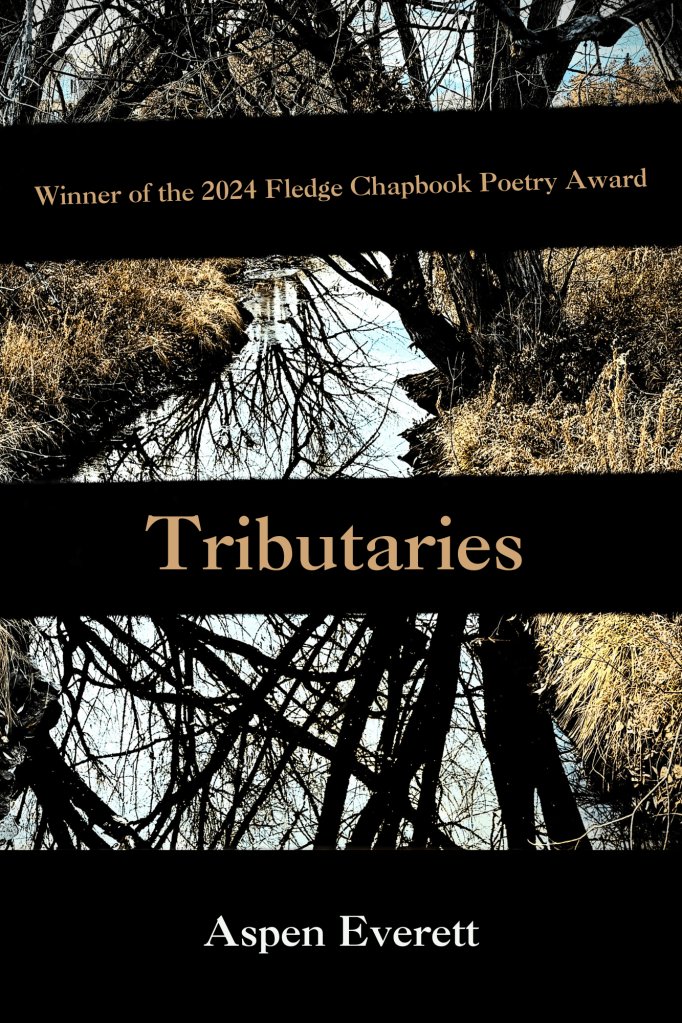
Book Review: “Tributaries” by Aspen Everett

Image C/O Middle Creek Publishing

Tributaries: A Beautiful Opportunity to Lose Our Way

BY BRICE MAIURRO

The first thing I heard in these poems was a heartbeat. In his opening poem “All Water Has Perfect Memory”, an allusion to a Toni Morrison line, the rhythm for me was that same rhythm at the start of Dark Side of the Moon. The book begins with the sense of a heartbeat growing louder and louder each moment. Everett’s first collection of poetry, Tributaries, continues to carry that heartbeat, and the sorrow between its beats, throughout this literary confluence of moments. Moments among a greater sense of we, the ecological we.

In his poetry, Everett’s time is the earth’s time. These poems are not contained to the one-hundred-ish years of a human life but zoomed out and slowed down. They connect us to a very clear something greater than our singular journey as a human being on this planet. It is hard to tell where he ends and the rest of Mother Earth begins. He reminds us of this truth for all of us. The poems are in conversation with one another, compounding the complex yet approachable mezclado of this book. The Osage dance with the Cottonwoods dancing with the stream below them, all tributaries feeding into the heart of this poet. Everett is spellcasting here; calling in the healing of the earth and sounding the cautionary canary for its woes. 

In addition to spellcaster, Everett serves as field guide, death doula, and eternal student in these poems. These poems are “always hungry” to listen more. In these poems, our fellow living beings, the Great Horned Owl, Coyote, the Bison, are much more teacher than metaphor. There is an admirable equanimity in Everett’s work (and play). He explores the distance between here and home, where home is the same home we find in “eco-”. Everett, as are we, is water, in the words of Toni Morrison, “trying to get back to where it once was”.

“Poets, remember to listen”, says Everett in “Populus deltoides”, “to breathe in the vanilla of resin”. Everett has a knack for imagery (see lines like: “blue hunger”; “cloudless teeth”). He sets scenes magically, and then returns to the reader in a very direct and curious way, as if it were a conversation over a cup of shade grown coffee. I find the agrarian salt-of-the-earth wisdom of these poems reminiscent of Wendell Berry, a fellow poet captivated by the rural. Everett himself is from the “windtossed flatlands of southeast Kansas”, which he visits often in this collection. The poems are biography; confessional poetry of the landscapes and experiences that shaped him and his words. 

The poem “Geraniums” in particular stood out to me, with visceral lines like “a blackbird flies backwards from tinted window”. In very intentional moments, Everett captures the core of surrealism: not to immerse the reader in a dream, but to attempt to liberate our colonized minds. Everett has a poetic conviction. When he says “it is better to speak in chrysanthemums”, he speaks from experience. He “plants the seeds in the mouths of everyone” he meets.

Shorter poems like “Pine Trees Covered in Snow” show us that Everett can be potent while being concise. These interludes to longer readings act as heartpunches, steering the collection along.

I often have a hard time with questions posed in poetry, finding them to be navel-gazing or overdramatic shenanigans, however I found myself enamoured of the questions Everett poses. Questions like “Do horses hide in my blonde waves?” where the goal seems not to send you into a philosophical spiral but to invite you into the great curiosity and wonder of this poet. Phrases like “amanita dreams” have me asking my own questions with that same curiosity – what is an amanita dream? What colors would I find there? What shamanic doors can be opened by being more curious about the world of our fungi friends?

In the words of our Colorado Poet Laureate, Andrea Gibson, “it hurts to become”; this collection pushes through the pain of the Anthropocene becoming something more alive, revealing limbs reaching for a better world. The poems in this collection are never so binary to choose to be a meditation on climate grief or to choose to elevate the natural world. They are a both/and, a queering, an honesty. There is a beautiful disobedience that Everett encourages us to join him for, where we too “ignore the no trespassing warnings”, “follow the river” and lose our way.

Purchase “Tributaries” by Aspen Everett

Brice Maiurro (he/they) is the Editor-in-Chief of South Broadway Press. Hailing from Lakewood, CO., he is the author of four collections of poetry, including Stupid Flowers and The Heart is an Undertaker Bee. His poetry has been published by South Florida Poetry Journal, Denverse, The Denver Post, Boulder Weekly, Suspect Press, and Poets Reading the News. Website: www.maiurro.co