
BOOK REVIEW:
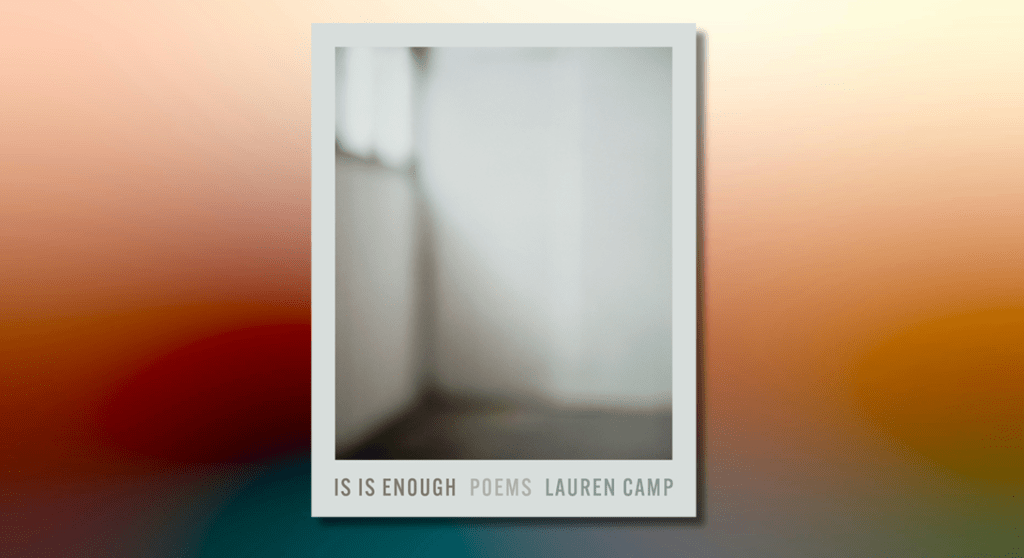
IS IS ENOUGH
BY LAUREN CAMP
WHEN QUESTIONING OUR FATHERS:
A BOOK REVIEW BY SHELLI ROTTSCHAFER
Lauren Camp begins her collection with an epigraph by Anne Carson:
Let us be gentle when we question our fathers.
And this, Camp reminds herself throughout these pages as she grapples with her father, who years ago as a Jewish-Iraqi immigrant to the United States, has now been diagnosed with senile dementia.
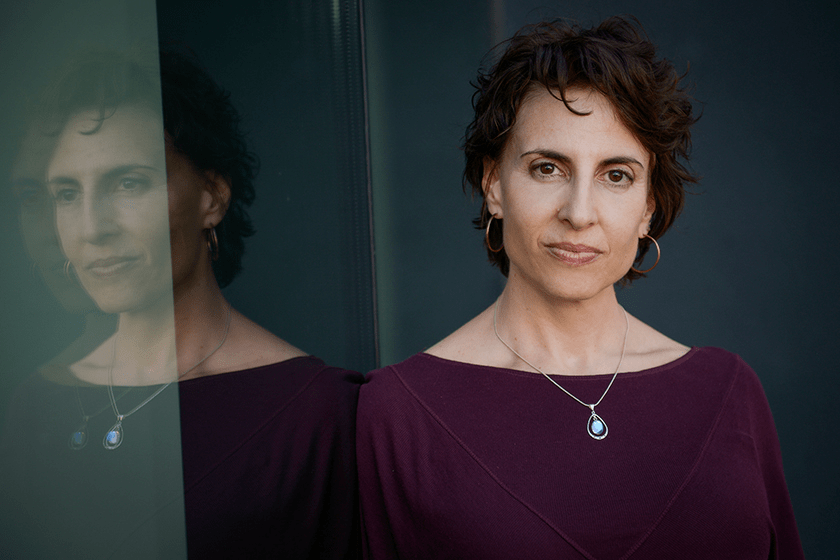
Is Is Enough is Camp’s ninth book of poems. She has many accolades because of her craft having been Astronomer-in-Residence at Grand Canyon National Park (2024), Poet Laureate of New Mexico for a three year term (2022-2025), and the winner of the Dorset Prize.
In her poem, “Sanctuary” Camp begins her recollections (5).
I collect another phrase
for safekeeping….
Now he learns the equation
for why I tell him this beginning.
Lauren seems to focus with her own “apple-sized eyes” as she exhales out her father’s “black of day” losses. He reals with his new life within the diaspora. It is supposed to be his sanctuary. Meanwhile, he remembers his origin, exiled from the village he called home and can’t quite seem to embrace this new homeland.
All the while Lauren’s father’s condition reveals itself. The living between two dimensions, no longer a place of origin verses a place of being, but now the dimension of reality verses the imagined past. “Prognosis” details this realization, not necessarily for her father, but for her family members (36-37).
My father reminds me
of my father….
For something
to do, we name…
Name hope
as a pleasantry….
We are not
doing nothing. We are planning
the task of letting go
Lauren and her family contend with their own memories of their father. The colossal figure he once was, juxtaposed to a man whose body is intact but whose mind falters. Past collides with the present and “what just happened” transcends “the future.”
This intermixing of time as to reality, perspective as to interpretation is reiterated in, “Given” (40).
Endlessly governed by the endless.
Tangled lines, private pause. Invaluable hours. This is allWorth repeating: the rise and collapse. It is still enough for today,
and what will come next will come next.
The same threshing.
Once again “Given” could be taken in a variety of contexts. The tangled lines of immigration gateways, visas, green cards, passports stamped. The hours spent determining one’s value in order to be allowed to enter. The decisions will be made, and what comes next is out of one’s hands. This too can parallel her father’s dementia which is governed by an endless decline. His private pauses turn his ability to use words into silence. Memories are worth repeating so as to prolong them from being forgotten. Yet, those struggles of reminder tire his body, which has had enough for the day.
In, “So Much to Reduce” (48-49), Camp and her husband go through the contents of her father’s apartment. So many things gathered representing her father’s total lifespan, now to be condense into a few bags of junk, to be dispersed amongst the family, to be donated, to be thrown in the trash.
We’ve got three rooms and three days to garbage
or fondle the traces… [of her father’s]
panoramic past.
…. The messages he’d written
in margins….
with every vision he had of himself
These versions of her father are a mystery to Lauren and her family members. They only reveal themselves once he is not there to impose his presence upon them. Rather, they peel back like a layer of onion, a sting to the eyes.
As Lauren goes through his things, she knows:
I’ll never mention any
of this to my father, or I’ll lie, or half-lie,
or pretend
She does not want to make him more vulnerable than he already is within his own dementia. It would be a killing of the father before his body truly gives up.
All the while Lauren stands,
At his bedroom door between mercy
and endurance and wish again for this once
boisterous man: his conflict, his rampant
substantial regret.
How does one parent turn to child and grown child now becomes the adult in the room? These kinds of questions are unanswerable, they just come to conclusions of their own.
The last section of this collection proceeds through Lauren’s morning. Her father is in hospice, he has only days to live. She plans for funeral arrangements as he still breaths, dressed in a bright orange shirt. When it happens, she writes his obituary – given this job because she is the poet of the family. She knows she will miss the many details that built him into legend. In her grief, she seeks solace and goes to a garden, whether this is physical space or mental is not the matter (64). Rather she went there:
to hear the running
of a small bird…
that single gibbering prayer…
the light against pine bark.
Because in so doing, she witnesses “all the plurals,” and “listened to the ordinary” and came to overflowing emotion, knowing she was at least there in the testimony of her father’s life.
Is Is Enough seems to be a question: is being, is existing enough to make a mark upon the world and in our community’s reach? What will our legacy be? Is it unfolding for us or are we active participants within it? Perhaps as we are in the midst of it, we will never know. Only in the aftermath and other’s contemplation of it can those questions be rendered.
READ: AN INTERVIEW WITH LAUREN CAMP
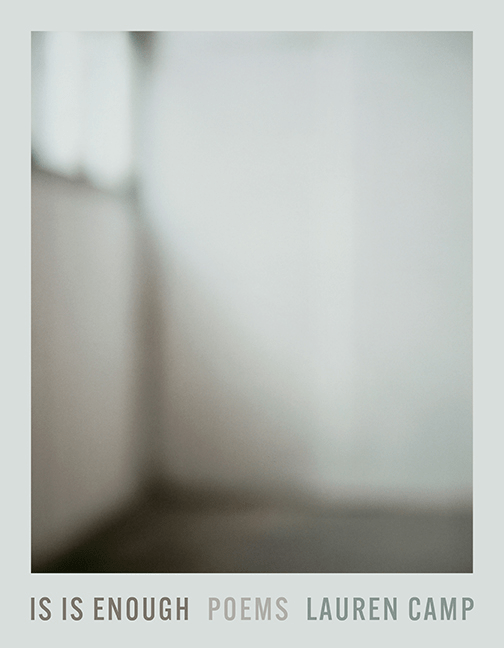
IS IS ENOUGH
BY LAUREN CAMP
AVAILABLE THROUGH TEXAS REVIEW PRESS
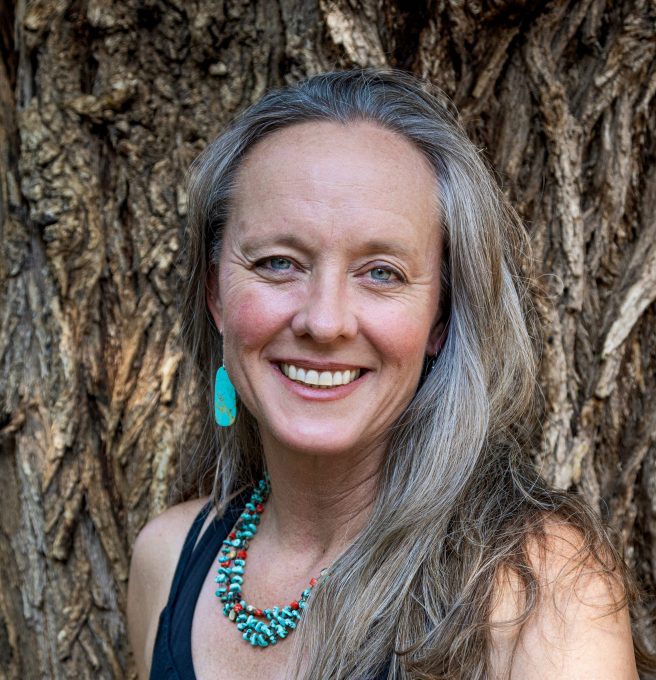
Shelli Rottschafer (she / her / ella) completed her doctorate from the University of New Mexico, Albuquerque (2005) in Latin American Contemporary Literature. From 2006 until 2023 Rottschafer taught at a small liberal arts college in Grand Rapids, Michigan as a Professor of Spanish. She also holds an MFA in Creative Writing with a concentration in Poetry and coursework in Nature Writing from Western Colorado University (2025).
Shelli’s home state is Michigan, yet her wanderlust turns her gaze toward her new querencia within the Mountain West where she lives, loves, and writes in Louisville, Colorado and El Prado, Nuevo México with her partner, photographer Daniel Combs and their Pyrenees-Border Collie Rescue.
Discover more of Shelli’s work at: www.shellirottschaferauthor.com









 south broadway press