Magic Lessons (Meditations from an afternoon stroll)
The car that passed thumped a Fleetwood Mac bassline and deep inside my cranium I am still five years old afraid of spaces that contain only me; no guardian to hold. I catch a whiff of vinegar, and I think of my lover. His naturally upturned mouth, and his eyes soft like soil after the storm has passed. I look at the wildflowers, and think of all the graveyards I would like to contain me. Heart no longer beating, just a garden my grandmother used to tend to, once teeming with fuchsia and dandelion. In my dreams that night, I tell auntie Ayreen about she, who looked like lavender skies. Her head haloed with stray blonde strands, iridescent under the setting sun. There is magic in this earth. It lives in pinecones, in the sound of the TV from the next room, and in fields overrun with weeds; in the sea that roars itself a drumroll, perpetually announcing its undulating waves. The magic is the quiet victory of knowing the guarantees of the earth. The sun will rise and it will set, grief will endure and so will love. We’ve come so far that we can see it all coming. And yet – miraculously, tenderly, this special pocket of the universe surprises us anyway.
The mold, the spoil, the mushrooms rising from damp wood. All around us the house caves in; fading rays of sun illuminate the decay, and we breathe deep the rot. Our bodies grow twice their size before we start to disappear, before the fungi take root and all that’s left is life.
Cailey Johanna Thiessen (she/her) grew up between Mexico and the United States. She writes in English and Spanish and sometimes a mix of the two. In addition to writing poems, she works as a translator and is an editor and founder of Last Leaves Magazine. She released her debut chapbookWilder this year, and her poems have been published in 8 Poems, Willard and Maple, Cecile’s Writers, Hispanecdotes, and more. When she’s not working with poetry, you might find her doing embroidery, walking her Frenchie Earl, or eating really good food with her husband.
Through the Looking Glass

Land-starved and stubborn we pile
windows on top of windows and climb
so high everything looks small and distant.

Birds leap into the sky wide-eyed and unbound
and rocket themselves into cloud and blue-
stained glass stunned like butterflies

in freefall spinning and spiraling through
the wind. I heard the thick thump against
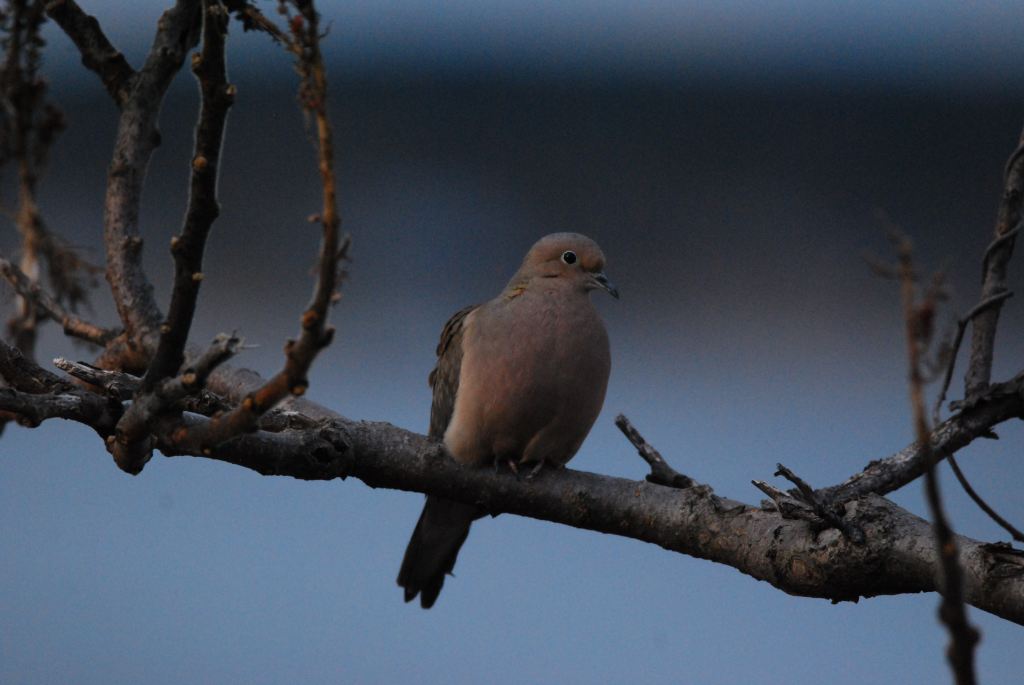
the double-pane and caught a mourning dove

as it fell solid as a blood-warm stone in my hands.
Its feathered imprint a chalk outline of wings
and beak left stamped against the looking glass.

Too often we see what we want to see until
it’s too late. I stick vinyl bird-shaped silhouettes
on the reflective surface like dusted ghosts

and recite them as I rub them flat with a card
     sparrow,     dove,     cardinal,    blue jay,
finch,     mockingbird,     grackle,     wren.
All I Know of Heaven

The magnet holding our photo to the fridge lost its grip
sometime today or yesterday or tomorrow.

In it we are gap-toothed and barefoot, and I can see it in my face
grinning up at you from beneath my kitchen-knifed bangs:

you light the sky above my small world, you are the star
our entire family orbits – all of us reeling through black

since being sucked into the gravity of your supernova
and spat out the other side in the time it took to blink

away the blind spot that camera flash left mirage-ing
in front of my eye. But we were those kids once –

shoulder to shoulder, immortalized in film.
No matter the endless space between us now.

I have been stumbling upon breadcrumbs like these
more and more often, keeping them in my pocket:

a Stealie sticker on the napkin dispenser at my table
in some nowhere-town bar. The brooch I wore at your funeral

popping off my purse strap, the rubber back rolling across the floor
and into oblivion so now its sharp point bites my finger

whenever I reach for my wallet. I call them signs.
Faith, after all, is a choice when the answers to all the questions

that matter are written in code I cannot cipher
at least from this side of the veil. So yes, the dead

hear our thoughts and they send us buttons and pebbles
and spools of thread like little raven’s gifts through a hollow

in the universe’s infinity-ringed trunk
because that is what I choose to believe. The truth?

When I speak your name into the ether there is no answer.
Just a burning in my chest, which could be a symptom of smoking

since I picked it up again. Or the particles still floating around in an outline
of you left behind in this world like a footprint in ash.

Collecting like champagne bubbles around my heart
bobbing in Grief’s chipped crystal flute like a bruised strawberry.

All I know of heaven is there better be one.
Because you have to be there.

You have to be somewhere.
Madison Gill (she/her) is a poet from Montrose, Colorado. She received her BA in English from Colorado State University-Pueblo. She is the author of chapbook, Casualties of Honey(Middle Creek Publishing 2023), and winner of the 2021 Cantor Prize awarded by the Telluride Talking Gourds Poetry Program. Her work appears online or in print with Tinderbox Poetry Journal, Twenty Bellows, Beyond the Veil Press, Anti-Heroin Chic, and Sledgehammer Lit among others. Madison lives with her fiance and their cat in a tiny home in the Uncompahgre Valley of the San Juan Mountains. Find her on instagram @sweetmint_poet
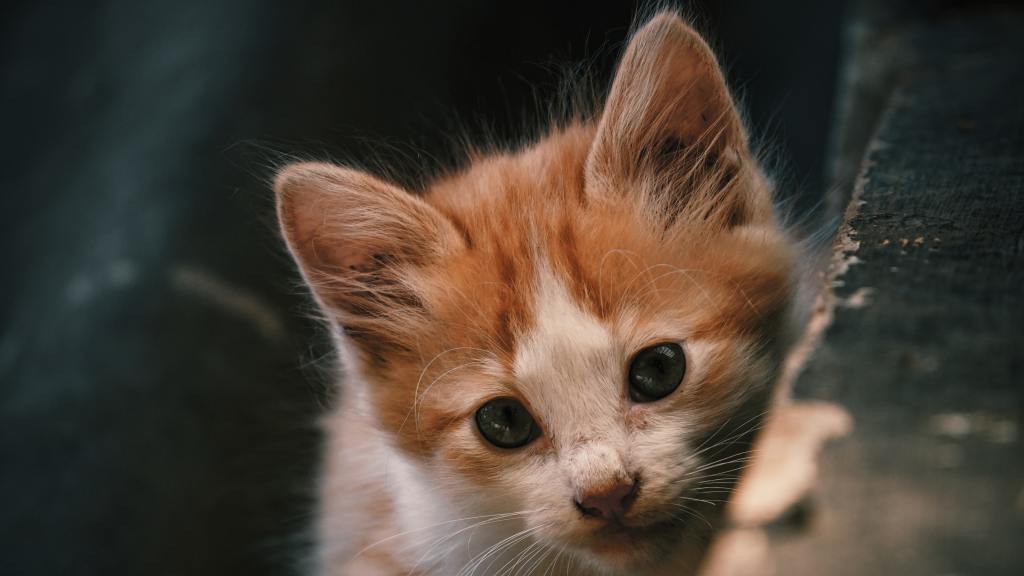
Four new kittens periscope heads from the old gym bag pile molding in my cupboard awhile
I disentangle blind and slimy mice-sized pouches, bags of skin with wet ears flattened back on scalps their mother mews confused desperate to return them to the dark and cozy canvass den
Three are destined to find homes but the little ginger is a Viking who weeks old turns to fighting clawing at the built-in mirrors stalking up the avocado tree a ruler and a hunter preying past the front door till I find him one day by the roadside stilled but dignified
the neighbor’s children ignorant of Viking custom dig a backyard grave say little prayers, teary, terse for a cross of sticks in bone dry earth
One day our bodies
won’t work this way—
won’t fit together
coaster on tracks,
wild
ride rise fall plummet
                                         into
                                                         oblivion.
exhilarate
tummy turned
knotted nausea
panting
fingers clenching,
holding onto,
pushing into,
leaning back to

              There might be

bedpans.
diapers.
A neat row of teeth
soaking in solution.
Bones so arthritic
they can’t bend
towards each other.
              or unbend,
and still
I will reach
for you.
Talya Jankovits’ work has appeared in a number of literary journals. Her short story “Undone” in Lunch Ticket was nominated for a Pushcart Prize and her poem, My Father Is A Psychologist in BigCityLit, was nominated for both a Pushcart prize and The Best of the Net. Her micro piece, “Bus Stop in Morning” is a winner of one of Beyond Words Magazine’s, 250-word challenges. Her Poem, “Guf” was the recipient of the Editor’s Choice Award in Arkana Magazine and nominated for the Best of Net. Her poem, A Woman of Valor, was featured in the 2019/2020 Eshet Hayil exhibit at Hebrew Union College Los Angeles. She holds her MFA in Creative Writing from Antioch University and resides in Chicago with her husband and four daughters. To read more of her work you can visit www.talyajankovits.com, or follow her on twitter or Instagram @talyajankovits
Yellow suits April, with her tiny porcelain doll face, wispy blonde hair, and raspy voice. She looks so pretty in yellow. It’s a warm late summer afternoon. April’s yellow sundress flutters as we walk along the stone path through her mother’s vegetable garden. She’s wearing red plastic sandals that slap the path stones. Muscular tomato vines grow along the weathered privacy fence, with cracking red fists of tomatoes. Big zucchinis hang from a bamboo pergola like the legs of green giants. Things fly about, small dark birds and glinting insects; big blue flies knock into us; everything smells of tomato stalks and rotting tomatoes and snails.
Come, April says. Come with me. At the end of the path stands the peeling white garage with the broken door and its red roof softening like crayon in the sun. It’s cool in there, April says and takes my hand in her hand, waxy and warm. It is cool in the garage, but not that cool. It smells of gasoline and mown lawn. But there is no car. She shows me a red iron pump her father uses to pump air into the tires of his red bicycle. He rides the bicycle to his job at the steel mill about a mile down the road. My father used to work there. He worked there before the fire. We lived in a different house before the fire. I only remember it a bit, in little bits.
April and I play checkers. She beats me. She says that she never beats her daddy. I don’t say anything, but I think her father must be mean not to let her beat him now and then. What about your daddy? she asks. He died, I say, in a fire. That’s sad, she says.
She unfastens her right sandal, removes it from her foot, and shakes out a stone. Her foot is small and white and delicate. Her baby toe has no toenail. I smile at her. She puts her sandal back on, tightens the strap. We play checkers again. She beats me again. I don’t like losing, but I don’t mind losing to her. Winning makes her so happy. Do you miss your daddy? she asks. I tell her I don’t remember much of him; I was small when he died. I hope my daddy never dies, she says. We play checkers again. This time I win.
Her mother brings us lemonade. Her mother all bright and wearing white with red polka dots, red lipstick, white sandals, and toenails painted red. How you kids doing? she brightly asks. We’re fine, April says. That’s terrif, says her mom. That’s just dandy.
Mommy, April says, you know what I want? I want daddy to live forever. Aw, her mother says, that’s so sweet. I’ll tell daddy what you said, hon. Okay, now, you kids be good. I’ll bring snacks in a bit. Does your friend like peanut butter and jelly sandwiches? Do you like peanut butter and jelly sandwiches, little man? she asks me. I nod. I like them. I’m not hungry, but I like them.
Later, I tell April that her daddy will die one day. She stares at me with her small blue doll eyes; they look like little marbles. After a long moment she asks, Why would you say that? Well, everybody’s going to die one day, I say — but now I know I’ve made a mistake. The vibration between us has changed. I should not have said that about her father dying, no matter how true. I try to apologize, but she lowers her head and curls a hand to her mouth. Big tears drop from her eyes.
April, I say softly, I’m really sorry I said that about your father. But my words only make her cry harder. I’m afraid that if her mother comes out she will think I hit her daughter or hurt her somehow. I’m so sorry, I say again, but April makes a sound in her chest and points to the garage door. Out, she says. I want you out. Without another word I leave.
A week goes by and I don’t see April. I don’t try to call 0n her. I feel bad for what I said. I feel like a bad kid. I am a bad kid. I try hard to be good, but I am bad. My grandmother used to say I was born that way. She died. Now she says nothing. Then Mr. Ward next door tells me a dump truck hit April’s father while he rode his bicycle to work. He died immediately, Mr. Ward says. Poor bugger.
My mother goes to the funeral, but I don’t. She tells me it was very sad, almost as sad as my father’s funeral. Poor bugger.
I don’t see April for the rest of the year. Every day I think about her. I miss her. I miss her little face, her button nose, her small white feet, her blue doll eyes. I hear she’s gone to stay at her grandmother’s place for now because her mother is having problems. When I see her mother standing on her front porch she looks sad, so sad. Her eyes are dark; she’s lost a lot of weight. She doesn’t say hello to me. She doesn’t even see me. April must have told her what I said in the garage. Maybe she blames me for her husband’s death. I should have never said anything.
Angry with me once for talking back to her, my mother told me that I had started the fire that caused my father’s death. She said that I’d been playing with matches in the basement — after she had told me more than once to never do this — near a can of kerosene, and set everything on fire. Later she said it wasn’t true. But I believed her the first time.
Sal Difalco is a Sicilian-Canadian satirist and writer currently living in Toronto.
Visual Credit: Gitumoni Talukdar, Copyright of image belongs to Chitra Gopalakrishnan
Neelesh lies motionless in a dusty, dark brown ground hollow, in a sand-silt-clay combined earth bowl, his soft, spongy body muddied, bloodied. His extended metallic blue-green plumage with its sea-foam undertone, and its multitude of eyespots, is all askew, spun-out. And, a portion of his exposed, bulging, flesh fizzes with insects, the bug sounds blurring into a long, whirring noise. A white noise almost.
Beside him, that is half of him, bright, yellow, mustard flowers, with their pale green arrow-shaped leaves, and tall, slim stalks sway, even as they release little clouds of nitrate. Pungent whiffs that sting the nose, and the eyes.
Neelesh’s head, and legs are missing.
From over the hollow he lies in, and from the slits in the mustard stalks, you can still see the zigzagged portion of his savagely-cut, bulbous jugular, made light with the loss of head, and blood. As his underside. Made bereft of its support, with his understory completely gone.
It is hard to believe at this moment that his neck, once rich with iridescent blue, swung like a snake in dalliance or in quest for food. Or just like that. Just because he felt like. Or that his even-toed gait, and agile mating dance was admired by everyone who chanced on it.
It is the cool month of February in 2021, at our farm, in Mehrauli, on the outskirts of New Delhi. It is the time when the sun cannot decide whether to dim its light with shadow play behind clouds or shine with a light impishness so as to reflect a mere suggestion of heat. This unlike its avatar in summer where it brazenly flays the skin of the earth, and certainly of people, plants, and animals.
It is also the time when the land is vibrant with water-air-earth scents, with whistling birds who cannot contain their joy, with scurrying squirrels and chameleons, as with buzzing insects.
And, it is most certainly the time when our manicured greens are plump with unruly flowers, gaudy-red poppies, pink petunias, white lilies, mustard marigolds, mauve roses, yellow zinnias, and indigo shoe-flowers, all of who grow in wild abandon.
Ironically, Neelesh, our peacock, loses his life when the earth around us, here at our farm, on the capital of the country, moves uncomplainingly to the rhythms of a diverse life, to the interplay with the world around it. When everything around is so full of promise. When everything is lush with the covenant of growing.
For us, Neelesh’s death is a grand absurdity.
Over the month of January, we see Neelesh, our favorite and regular peacock visitor, ail with what we believe to be some kind of pox in his left eye. He barely sees with it, yet he tries to keep this eye-slit parallel to the grass. This for a prey-eye vision in the world he feeds from. Be it berries, flower seeds or the wiggly mass of worms that squirm in the soil. Ants, millipedes, crickets, termites, centipedes, and flying locust.
Neelesh comes more often than ever that month, every day and evening, his extended plumage and all, to demand his share of grain from our bird feeder.
“I believe he is asking to be fed rather than be allowed to seek his feed because of his condition,” my cook, Reba, asserts.
She is the one who has named this peacock Neelesh, which translates in Hindi as blue, and is the one who feeds him grain on demand, as assiduously as one would feed a brawling baby on demand. She makes small balls of mashed up rice, and leaves it lying if ever he wants “a change of taste”. And, the large cement water bowl that he drinks off is always full, “in case he is wary of bending too low, and is scared of being caught unawares by marauding monkeys or menacing cats,” she says.
By the end of January, Neelesh finds it hard to fly to and fro from his perch on the tall silver oak tree, one among the many that lines our boundary wall. So mostly during the day, he plinks and puckers around our greens, gathers himself together into a ball to rest in sunny patches, frightened by everything other than us, and in the evening, when he eventually decides to rest atop the tree, he emits cries. We believe his screeches to be hollers of alarm, conveying to us his fear of being eaten up by stealthy predators who use the night to subterfuge their intent, and his sleep to complete their kill.
It was one of the many cats that slink around at night on the farm that got Neelesh. At least, we at the farm believe this to be so. We have our suspicions on a tom cat we have named Bagadbilla because he is wild, grumpy, and smelly.
In this month of March, we are still trying to deal with the aftershocks of our experience as we are struggling to pull peacock Neelesh’s story in. It is a fluid feeling. We still grieve for his smell, and fear of death before succumbing to its abyss. For his loss of dignity and privacy in death, that, maybe, we denied by becoming spectators to it. And, for our inability to respond effectively to his beseech for help, for our failure to save his life.
My ex-colleague from a green organisation I worked for, Shoma Arun, who rushes to comfort us, says this, to us, and to Reba in particular, “There is no world in which humanity exists apart from the natural world. It is clearer than ever that our fates are intertwined, that our world should be a circumambient one, one that sees and accommodates the inter-connectedness and inter-dependence of living species. So take comfort in the fact that you have tried to cherish, and help a creature as much as you could, and as long as he lived. That you have played a role in nature’s orchestra, not that of an imperious conductor who believes he can control fates or nature’s design, but that of a contributor.”
“Why does the earth pull in a creature’s story thus? Why are we all just mud-marrowed bones in the end? Why do all our stories, human, plant or animal, end in dust-covered death?” asks an insistent, tear-stained, sixteen-year-old, Kunal, our gardener Nandlal’s son, who draws and writes verses in his spare time.
He does not understand Shoma’s words. Or believes that his question is different. I know he also asks because he has just recently lost his grandmother. His mother says to me that morning, “His tears still feel as if they come all the way from his toes.”
None of us have answers for him.
What we do know is that Neelesh’s brutal, abrupt death makes us confront ours. It makes us face up to the fact that death is part of our living. It makes us confront the truth that death, and its aftermath, is frightening. And, that the idea of the oblivion at death being like nonexistence before birth is too scary to think of. To understand.
Days later, our psychologist friend, Leela Singh, brings some instinctive wisdom with her. “While we live in the present, with our brains that shield us from our eventual death with crafty ingenuity, we ingrain ourselves in biology, one that helps us live. We shut down predictions of death, believing that it happens to others, not us. It is called the escape treadmill. Yet death is a leveller. It will happen to every one of us,” she says.
“How does one handle this eventuality, the finality of death, especially if one has no belief in the afterlife? If there is no belief in being absorbed by God or a higher power, realm or consciousness? That at this point we lose the journey’s map altogether? This even as I am a Hindu living in India?” I wish to know.
“You need to cultivate the capacity, and responsiveness to this eventuality across your lifespan. In essence, having a good death is about how you live a good life,” she says reflectively.
Is this our answer then?
That death will come no matter what. In any way that it will. Like the rain that will fall. Like the sun that will shine. Like the wind that will blow. And that what we make of death, and how we react to contact with it will depend on us. It can be terrible, satisfying or seemingly merciful. It can be what we choose it to be. Just as we can choose what we make of our life.
Is it up to us then to decide on how to confront death? To still the fear of dying, as rigor mortis waits to creep in, and before the pronouncement, “Pupils fixed and dilated. No heart sounds. No breath sounds. No pulse” is made?
There is no denying that despite these arguments, and answers, the mystery, and fear of death remains.
I would say, for me, personally, though I have realized that true sorrow is the loss of life, not the state of death or the act of dying.
More importantly, I have come to the realization that there is time to understand the afterlife. Who knows, if I do understand it, and gain faith in it, my fears of death may just fall away? The earth, land, water, and sky may turn alive with possibilities. Of our energies returning in altered forms and states.
Chitra Gopalakrishnan uses her ardor for writing, wing to wing, to break firewalls between nonfiction and fiction, narratology and psychoanalysis, marginalia and manuscript and tree-ism and capitalism. Author profile: www.chitragopalakrishnan.com
Before I went, loving you was the best part of my life. There you are, emerald eyes, in each memory when I reflect upon my life. You couldn’t see me as I hovered near you while you wept on the couch, thumbing through the box of photos that represents but a fraction of my life. I tried to speak your name and was amazed when the sound was a bird’s chirp. You stood up, went to the window, and momentarily forgot my life. In this realm of transparency and emptiness, we cling to fleeting moments. We dance throughout history, for time is not linear in the afterlife. I wanted to see your birth; I wanted, regrettably, to see your death. I wanted to drift through the detritus that creates a composite of your life: New York. Florida. Australia. California. Coordinates that, on the other side, do not exist. In the city of angels, and through your eyes, emerald, I can see the best parts of my life. In circumnavigating the remainder of your days without me, I’ve come to understand the art of moving on and letting go, even though I could not master this art during my life. And this is why I must now transcend. Evaporate. Disintegrate at the sound of you whispering, “Nathan, my love, I will see you when I go, but until then I must live my life.”
Nathan Elias is a finalist for The Saturday Evening Post’s 2020 Great American Fiction Contest. He is the author of the chapbooks Glass City Blues: Poems and A Myriad of Roads That Lead to Here: A Novelette. He holds an MFA in Creative Writing from Antioch University Los Angeles, where he served as editor on the literary journal Lunch Ticket. More of Nathan’s writing can be found in Entropy, PANK, Hobart, and many other publications. www.Nathan-Elias.com | @_NathanElias
I am a fourth generation Piscean, on my mother’s side. My grandmother’s eldest and youngest of four were both Pisces, and my mother’s eldest and youngest of four were both Pisces. My Grandma Buffalo, my Granny, and my Mom: all storytellers. And so it was passed down to me, the awkward sort of storytelling that has so much truth to it that it must be fiction.
Most of the stories I heard as a child came orally, but some were only told in dainty, precise cursive on yellowed pages because they were too dreadful to be told out loud. One such came from my great grandmother, known to me as Vida, who married a John E Byrd and after him a John E Buffalo. She had a type. It was she that wrote down the story of her sister’s death.
They were six and four, and it was tasked to her to keep watch over the young girl. It was the winter of 1907 or 1908, in a rural town in southwest Missouri, and the pond was almost as frozen as the ground. Almost. They travelled out onto the pond, Vida coaxing her small sister farther and farther out. By the time she was able to get back up to the house and drag her parents to the pond her sister had already begun to freeze under the shattered ice.
With the ground being too far gone to allow for a proper burial, they had placed her into a coffin made of stone and situated it into a corner of the north barn. Alone. There it sat until the warmth of spring began to melt away the protective layer over the hill Vida’s mother wanted her daughter to sleep. They had briefly opened the coffin to place into it items that the girl had loved, and that’s when they learned the truth. Vida’s sister had only been in a coma. When she awoke to find herself trapped in stone she had done everything in her power to claw her way out. Only it hadn’t worked, and she perished seemingly a second time, worse for wear.
A great horror settled over me the first time reading these words. Granny could not confirm that Vida had a sister by that name, the old family Bible did not appear to list the child’s name in the genealogy of the family during that time. Was it simply a story she had written, though a great deal different than the poems about her children and grandchildren and her hymns to the Lord?
I try not to think about it, afraid that I too will write stories wishing my sister dead.
When you feel homesick for the colors you don’t have words for, that you saw once in a dream, that’s miss jody. She has two cats in her home, named Alfredrick “Alfie” Boris Karloff the Sea Captain, and another named Nereus “Nereus” The First Mate. Her favorite goddess is Freya, and her favorite place to live is in her home in Centennial, CO. Find her on Facebook, Instagram, Twitter.
Art: Hiding The Ghost of My Favorite Lover From The Others by Miss Jody








 When you feel homesick for the colors you don’t have words for, that you saw once in a dream, that’s miss jody. She has two cats in her home, named Alfredrick “Alfie” Boris Karloff the Sea Captain, and another named Nereus “Nereus” The First Mate. Her favorite goddess is Freya, and her favorite place to live is in her home in Centennial, CO. Find her on
  south broadway press