tighter than his own hands,
a familial hive claws his throat

prepped by tender olive
juice varnishes

the wood vinegar
against august trauma
now prepared for pickling

our railing indents the melancholy
splinters rise once again
and plead

to trace his face
connect the dots
of our generational trauma

born of the Mediterranean
feral freckles cut like diamonds

seeped in displacement and addiction

deep strawberry hair, darker in sea’s salt
feet like talons                  gripping sand
Leor Feldman (they/he) is a Jewish disabled writer who explores themes of culture, placemaking and the connection between our natural world and the chronically ill, genderqueer body. You can find their work in Humble Pie Lit Journal, South Broadway Press, Hey Alma and The Colorado Sun. Leor currently resides in Conifer, Colorado, yet is often found at community events in Denver.
The liquor in an oyster is the brine of the water-body held at harvest. This river drains the Blue Ridge, meets the Chesapeake with a sigh, leaves a sweetness in the locals, but on the new planks of Wellfleet Harbor, I tasted your salt. Beloved, that one word in the day’s chalk floods the room with light. Could I ever choose another having known your waiting nacre, your shucked, gleam-soft interior along my tongue?
Jennifer Browne falls in love easily with other people’s dogs. She is the author of American Crow (Beltway Editions) and the poetry chapbooks Before: After; In a Period of Absence, a Lake; whisper song; and The Salt of the Geologic World. Find more of her work at linktr.ee/jenniferabrowne.
juggling the priorities of
my life, to an endless cycle of
              t r y i n g
to catch each element and make it
do tricks. to impress, to prove i am
doing it (life) right, an example. the
eldest daughter inside
of me dictates my
ritualistic hunger to
succeed,
to mean something.
each all fall and splatter
on the ground, one by one
like spoiled plums, purple
ooze staining the earth below
me

fruit flies circling to devour
my potential as i lap up any
remnants of the spoiled, moldy
fruits of my wasted labor. dirt on
my tongue, seeds between my
teeth. fists clenched, knuckles
bruised from grasping onto the
flesh of my life until it seeps into

the concrete and i am just left
with the pit, the center. me. at the
core, i am stripped bare, an echo
in a hollow body.
leta iris (she/they) is a bisexual, midwestern poet studying english, with a concentration in creative nonfiction and a minor in creative writing. she is the author of two poetry collections, when summer fades to fall and the fruits of her bittersweet sadness, left to rot. her piece, “animals,” was previously featured in the Experiences of Femininity exhibit at the University of Nebraska at Omaha, as well as several other small literary magazines. she enjoys caffeine, thrifting trinkets and collecting purses. you can usually find her beneath a fuzzy blanket, book in hand while cuddled up with her lifelong partner, cody, and her blue-heeler beagle mix, buffy. you can find more of her work on instagram, @tangledflxwers
These poems are from an as-of-yet unpublished collection entitled “Buffalo Elegies”. “Buffalo Elegies,” is a collection of twenty-three poems that reflect on the devastating impact of the near extinction of the American Buffalo during the brutal colonization of the American West. This chapbook is a series of 23 poems elegizing the sixty million buffalo who were massacred and honoring the 23 buffalo who remained. This work explores the historical slaughter of these animals, emphasizing their significance in shaping the Western landscape. The poems vividly contrast the once-thriving buffalo herds with the current empty and haunted environment, highlighting the profound loss and ongoing silence left in their wake. Ultimately, the collection serves as an elegy, mourning the buffalo and the indigenous cultures connected to them.
BUFFALO ELEGY #4
BY ALEXANDER SHALOM JOSEPH
to the west are the rockies those granite tombstones catching clouds memorializing that storm of brown fur and short horns the fallen nation of hooves there used to be so many buffalo there are none left here we killed them all on purpose haven’t you seen the pictures of their skulls stacked stories high?
right here there was once a breathing snorting stomping tidal wave trampling this dirt into soil but the mountains are so quiet now and so are the plains
we think they are peaceful but they are not peaceful they are dead this mountain range is just a marker on the largest mass grave the world has ever seen and has so quickly tried to forget
BUFFALO ELEGY #9
BY ALEXANDER SHALOM JOSEPH
standing in the midst of a sold out stadium show I look out at forty thousand bodies it is more people than I have ever seen at once I do some quick math and realize that the number of lives held in this expanse of concrete and heat is nothing compared to the massacre known as western expansion that intentional near extinction of the buffalo it would take one thousand five hundred full up stadiums to equal the population of the herd that were exterminated sixty million reduced to twenty three
this is when my mind begins to swim this is when my I begin to drown this is when I start to sink into how much is really gone
and I look out over the city from the bleacher seating not seeing the sunset not seeing the crowd not seeing the show seeing only what is not there but is only thing that should be
BUFFALO ELEGY #12
BY ALEXANDER SHALOM JOSEPH
I drive these highways which mirror past migrations and for brief flashes I swear I can hear their feral drum through this valley I swear I see the dusty cloud ghost of their stampede on the horizon line at dusk but I know what I am seeing is just hopeful daydreams for the fact is we live in a cemetery above their unmarked countless graves I look out at these gorgeous vistas the places people come to take pictures of on vacation and I see beauty but I also see what isn’t there it’s like a painting without a foreground just a sprawling landscape with the subject erased from the grasslands from the back of coal trains this is a small attempt to fill in the emptiness it is an attempt to scream “there was so much else here” there was once a living storm a rush like fresh blood that came to give life to this dried up dirt this is a reminder that we are not living in a mere landscape painting of the rocky mountain range there was once a subject and it was not us
Alexander Shalom Joseph is an award winning author of seven published books, most recently The Clearing (Middle Creek Publishing, forthcoming October 2025) and Living Amends (Galileo Press, forthcoming 2025). He has an MFA in Creative Writing and an MA in English Education. Alexander lives in Colorado, writes a weekly poetry column on Substack and teaches writing workshops in libraries, schools and prisons across the Colorado Front Range.
Caught a glimpse of you last week in the manikin room, tip-toed past a group gathered around the body that wears your face, a protection circle, as if the light they shone in your eyes some kind of candle magic to manifest the real of you from the past, from the river, from the floating, from the dead, to the today, into this rubber corpse, mechanical breath catching, as a reignited heartbeat scratches itself into the screen of their smartphone.
They never asked Are you okay? Never whispered Do you mind? Never wondered Can we make a mask? Never implored could they Copy it? Make you famous? Make you most-missed, most kissed? Your unclaimed body, claimed, controlled, sold.
You are everywhere: your face on walls, CPR dolls, written in literature, cross-stitched, encased in poetry, sold on Etsy, and I dream your no,
your eyes closed and finally they hear your no, your no in death smirk opening wide, your no as purchased faces melt into waters your no, your river Seine bursting in no rushing no through art galleries and Red Cross classrooms, your scream no, flooding the world in no, in your no bursting from doorways, in the churn of dark water pushing no into your death mask, your no into the sunshine, into fire and flame into ash into no into goodbye into reclamation.
BECAUSE EVERY GIRL HAS A POMEGRANATE POEM IN HER
BY MONICA FUGLEI
I remember last summer: three or four
fruit lined up,
how the French call them grenades,
their brilliant speckled red,
these tiny bombs.

I remember how I’d pull out the meal prep plastic –
quart-sized, like a restaurant kitchen,

then how, to music, I’d drag the knife
lightly along the skin trying not to draw
juice from the aril, how carefully I pulled
the fruit apart, catching any seed
that fell.

And here is where a poet would park metaphor or simile –
              this fruit is knowledge,
              harvest like murder,
              fruit blood red and bleeding,
              fruit ripe like a thought,
              fruit as fertility,
              fruit as fecundity,

fruit complex as the woman’s mind and
it’s always a woman isn’t it? With the cutting
and the work and the pulling and the intricate
web of hanging on,
her hands – my hands –
around delicate skin
barely holding this juice
to seed, and then my
crushing and
pulping and

drinking, and I would harvest the work
to pass on to my children, would pause in the dripping,
in the wasting, hands a deep crimson,
this harvest collected moment by moment,

this quiet time in the kitchen, where
I ran a finger through yellow pith and packed each
ruby seed in small food storage gently, thinking about death.
Monica Fuglei currently teaches in the Department of Composition, Creative Writing and Journalism at Arapahoe Community College in Littleton, Colorado. A 2019 Pushcart Prize nominee, her work has recently appeared in Progenitor and Mason Street. When she’s not writing or teaching, she’s usually knitting or tweeting on #AcademicTwitter.
They tell me his momma doesn’t pick up my calls because the cell bills are stacked high, hiding under the foldout table tilting in the muddy field along Blosser.
They tell me his momma doesn’t pick up my calls because the translator on the three-way call wouldn’t know the Mixtec word for the kind of tears she weeps,
Somewhere between He’s such a sweet boy believe me, and All this just for fucking cheaper cilantro, and Howling wheels appear each night, Rolls forth a monster of oil and rubber, Lashes out at him whenever my prayers to La Virgen make their way from my lips,
Its red hand closer ‘gainst his eyelash curves and cerebral grooves as he grows up, and as silence sizzles down where I cannot go, where do I go, Profe? Where do we go from here?
They tell me he won’t bring a knife into my class again, because the voices won’t stop but his enrollment here will before anything makes the news.
They tell me graduation is big here, to get a good spot along Hidden Pines as all the semis packed with cilantro bunches, broccoli heads, hearts expectant, generational joys, fists full of wonder, palms opened by the psalms of broken mothers’ broken dreams, will honk, as they cruise past our school.
They tell me the best lowriders in Northwest
will be bouncin’ high,
kids and mommas and a few abuelitas buckled in tight, smiles brimming, laughter floating freely,
mixing with subwoofers and applause
and the boy for whom I can do nothing,
somewhere beyond our line of sight, beyond these Sherwin-Williams green and iron oxide brown fields, these salt-washed cheeks, these grey cement cul-de-sac circuits, where hydraulics creak and squeak as they bounce higher and higher and higher and…
air horns, wooden ratchets, hoots, hollers, applause.
Did the ‘84 cutlass, with the pearl blue and pink trim, with the shimmering spinning hubcaps– that one,
yeah, the one bouncing the highest.
Did it launch him high enough?
Can he hear what we hear, a mile high?
Kevin Foote (he/him) is a writer, teacher, and explorer. He was born and raised on The Central Coast of California, but now calls Green Mountain his home. When he’s not in class with his students, he loves investigating restaurants in the Denver region, trail running, and inviting friends and followers into the writing process online and in poetry slams. Kevin’s first collection, Cabin Pressure, is a work full of the woe and wonder of teaching, the unsung moments of victory in mental health struggles, and the unabashed joy of experiencing the natural world along The Front Range. You can see his published poems and works in progress on @feastsonfoote
The tree of life rises above the pocito, wherein the earth—tunneled with strange injury. I pin a heart to your holy name and feed my blood, my bandage, to the green roots of the mountain. A miracle appendaged— vision in the cure of wilderness, its profound herb, grown solitary.
Sonya Wohletz is a writer and poet living in the Pacific Northwest. Her first book of poetry, Bir Sıra Sonra/One Row After, was published by First Matter Press in 2022. Her second book is forthcoming with South Broadway Press.
we will see it all she whispers as she pushes into my side pressing flesh between fingers and wand everything looks great
your femur appears from the watery ink
Pause click
prints an image for us to hold
how’s the pressure I can’t decide if she means on my belly or in my heart as the air I breathe moves to your blood you emerge sideways ghostlike from my bloody shore
here’s the aortic arch she speaks to her student who I have allowed in the room to view all that I hold inside
look at those ovaries, beautiful I see only shadows sunken faces then your profile:, elf-like, angelic sagittal view split in half
like when you arrived like every moment since split between two selves
the wand moves again and you sink into black water
Ashley Howell Bunn (she/they) completed her MFA in poetry through Regis University and holds a MA in Literature from Northwestern University. Their work has appeared in many places both in print and online. Their first chapbook, in coming light, was published in 2022 by Middle Creek Publishing and their second chapbook, Living Amends—coauthored with Alexander Shalom Joseph, is forthcoming through Galileo Press . Their work has been supported by Bread Loaf Writers’ Conference and Sundress Publications. She is an adjunct instructor of English at the Community College of Denver and the Youth Program Coordinator at Lighthouse Writers Workshop. She is a certified somatic coach and yoga guide, and she offers somatic writing workshops in-person and virtually. When she isn’t writing, she is practicing yoga, running in the sunshine, playing with her kids, or daydreaming and staring off into space.
We are incredibly excited to announce South Broadway Press‘ 2025 Best of the Net nominations! Please join us in celebrating these wonderful poets.
The Best of the Net is an annual anthology that honors small press literature that was first published online. The anthology is published by Sundress Publications and is open to submissions for poetry, fiction, and nonfiction.
Best of the Net Nominees
FROM SOUTH BROADWAY GHOST SOCIETY // SUMMER 2025 EDITION
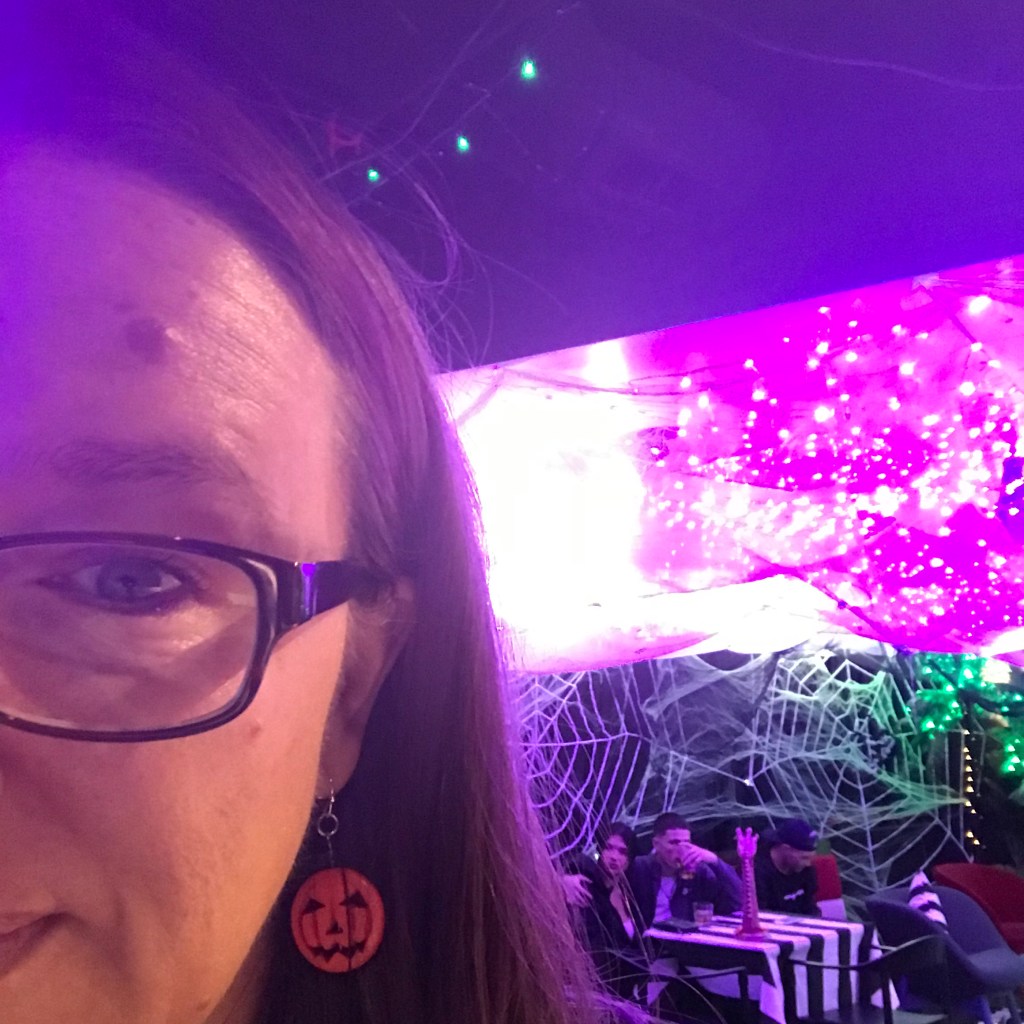
Tyler Hurula (she/they) is the pinkest poet in Denver, Colorado. She strives to be the most queer and polyamorous person they can be. You’ll likely find her parading around in a tiara with hot pink lipstick going to an art walk or discussing the intricacies of the latest horror movie she’s watched with anyone who will listen. Author of chapbook Love Me Louder (Querencia Press) and Too Pretty for Plain Coffee (Wayfarer Books). They have been nominated for Best of the Net and Pushcart Prizes, and were a finalist for the Write Bloody 2024 Jack McCarthy Book Prize Contest.
If you are going to be anything in the world tonight, you better be lightning. You better find something in you honest enough to strike them.
Andrea Gibson
WHAT DOES THIS QUOTE MEAN TO YOU?
This quote is from a poem by Andrea Gibson called What Love Is and I think love is connection, and anything we do is ultimately about connection and love, and the way to do that is by being honest and vulnerable. When you show up in that way, all you can do is hope it resonates with the people you were meant to find.
WHAT BOOKS HAVE MADE AN IMPORTANT IMPACT ON YOU AND WHY?
On Earth We’re Briefly Gorgeous by Ocean Vuong
This book is gorgeous. Vuong finds all of these beautiful truths in what it means to be human in the middle of so many things that are not beautiful. He gives himself the freedom to say what he needs to say and to be completely vulnerable by writing it for a mother who will never read it.
The Cabin at the End of the World by Paul Tremblay
I love all things horror, and this was the first book I read by Tremblay. It is absolutely devastating and hopeful, and the only horror novel I’ve ever sobbed at the end of.
My Friends by Fredrick Backman
I am still in the middle of this book, but knew after the first page it would be one of my favorites. Backman is one of the most emotionally intelligent authors, and is able to encapsulate at the root what it means to be human, and how we all connect and relate to each other, even when we have completely different experiences.
WHAT IS THE VALUE OF WRITING AND ART IN THE CURRENT STATE OF THE WORLD?
I took a workshop with Patricia Smith awhile ago and she repeated a quote by someone and I can’t remember the exact quote or who it was originally from, but essentially it was something about when you’re looking for facts, go to the news, but when you’re looking for the truth of something, look to the poets. We have to create and connect with people. Art is how we navigate and contextualize the world. It is how we highlight the truths around us, how we find our human-ness in others, and how we are able to see the human-ness in others as reflected in their art—in how and what they create. In My Friends by Fredrick Backman, he says “art is what we leave of ourselves in other people” and in On Earth We’re Briefly Gorgeous, Ocean Vuong says “Is that what art is? To be touched thinking what we feel is ours when, in the end, it was someone else, in longing, who finds us?” I like to think that all of my poems are just asking “do you see me?” Art is one of the purest forms of connection, and without it, we have nothing.
HOW HAS WRITING AND ART HELPED TO FORM THE PERSON YOU ARE TODAY?
I grew up in an environment where there were so many secrets I was expected to keep, which led to a very lonely and isolating childhood and young adulthood. Through writing, I’ve been able to share those truths and surround myself with a community and people dedicated to practicing vulnerability and authenticity. I have grown into myself, and have learned to love the whole of myself through writing and art. It’s given me permission to feel all of the things, and be open to experiencing a multitude of truths from a multitude of people.
WHAT IS SOMETHING THAT MATTERS TO YOU?
Building community is so important to me. We simply cannot do this life on our own, and the more people and perspectives we surround ourselves with, the more capable we are to grow together and care for each other.








 south broadway press