It is 6AM on a Monday
and I am standing in the kitchen preparing breakfast.
On any other Monday I would have recognized this obscurity
as the manic episode it is, pop a hydroxyzine
to ease the crushing anxiety of false optimism
washing over me like the covers I’d pull back
over my body until the doctor could see me again.
I’ve learned my emotions are like Mondays,
tidal waves that roll over me with a force I cannot control,
and I don’t know if its these smoker’s lungs
or a lifetime of coping mechanisms that never keep me afloat,
but swimming is an exercise
that has always resulted in drowning.
But on this particular Monday,
Love slinks out of the bedroom.
Love slinks out of the bedroom with the audacity to be perfect,
with tousled hair and sleep clinging to his eyes
that makes me fear perhaps I grasped too tightly in the night,
clasped on to his body like a buoy in the harbor
former sailors have mistaken for their sanctuary,
intending to restore their masts on the days when sunshine implores me
to be the band-aid on the world’s sails, only to hoist them up
in the gale of my storm ridden seas in search of calmer waters.
I am worried that if I share these things with Love
my words will flash like beams of light permeating
from some rocky outpost, imploring him to heed the warning
of ships drowned by waves that rose with no warning.
But Love’s smile breaks the shivering dawn
and he plants a weary kiss on my lips as if to say,
“Let’s be castaways together.”
I think that maybe, on this particular Monday,
it’s very possible Love and mania are the same.
I think that maybe, instead of medicating Love,
I want to cook him breakfast.
I think so what if I rarely have the resolve
to care for my own body, so what
if my queer is not culinary inclined?
I remember how it struck me suddenly
that he was a sunflower suspended
on an endless seascape horizon,
and what is a poet’s lot in life
save to nurture flowers?
Somewhere between the rich soil of black coffee beans
and the scramble of whipping eggs
I manage to burn the bacon.
The lighthouse is now a smoke alarm.
The ocean an iron skillet.
Monday is a Monday.
It is 6AM.
But Love,
Love eats the bacon anyway
Caleb Ferganchick is a queer slam poet residing in Grand Junction, CO. He is the self-published author of “Poetry Heels.” His work gravitates toward gender and sexuality expression, LGBTQI+ liberation, trauma, and mental health, though he is currently exploring nature writing inspired by rural Western Colorado through a children’s book series. Ferganchick hosts an annual poetry slam competition in Grand Junction, “Slamming Bricks,” during Colorado West Pride’s Festival in honor of the 1969 Stonewall Riots. When he is not writing, Ferganchick works for a non-profit organization dedicated to ending youth homelessness, and as a high school speech and debate coach.
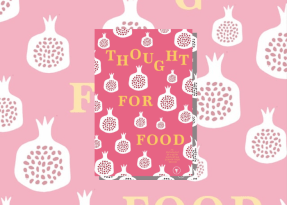
This poem is from our first print collection
of poetry, “Thought For Food”, an anthology
benefiting Denver Food Rescue. To support
our fundraiser, please visit this link.
When we were young
we didn’t appreciate our mother’s cooking.
We would stare at the plate
willing broccoli to GO AWAY.
But today is different.
I remember hearing Cindy Lawrie
ask for the recipe of her favorite dish
& my mother explained
that she could not duplicate this.
This was my mother’s bread of sorrows.
I remember it.
She said,
“when makin’ sweet bread
we need a bowl the size of Birmingham.
Make sure it’s not segregated
I want everyone to feast.”
She would say,
“My butter was churned by hand.
Milked from my motherland.
Takin’ the same milk of my history,
diluting my people to livestock,
skimming off the backs of blacks
to build Antebellum houses
that made the South
want to rise again like cornbread.”
She wasn’t just a cook in that kitchen.
Full time doctor-alchemist-magician.
She could make that cream
cook, cleanse, & cure.
When friends asked her about margarine,
She laughed, said
“Margarine is made of pretty things”
40 acres & a mule,
equality, reparations,
straight hair, & freedom.
Things that just were not real.
So no!
She did not use margarine
She used butter
thick, unrelenting,
get-all-over-everything butter.
the kind you have to strain to bind.
Like sitting in the back of balconies & buses.
“Churn it”
Like having dry ice thrown at her
because she was a different type of sugar.
“Churn it more”
Sometimes she would have to take over for me.
Because I didn’t understand that she was erasing the past with
Every. Single. Agitation.
Wondering why she would tear up.
“You have to churn it, boy!”
‘Till the south is too suppressed to rise.
‘Till it’s white & entitled
like Bull Connor’s tank in an all-black neighborhood.
Like them shepherds k9’s sinking into our skin.
“Beat it!
So they can’t see the darkness in this meal.
Beat it!
Like a white hood just appeared in this room.
Let me show you how painful this is.”
& she refuses to forget,
because going through restaurant drive-thru windows
still feels like you’re going around the back.
& you wonder why you need water to wash this down.
Because if you didn’t, you would feel the countless
Butter-worth Jemimas climbing your esophagus
with wooden spoons & spatulas.
Wash it down
until your gut feels like a hull.
Bet you didn’t know that in the belly of your ship
there were grunts paddling your digestion
no wonder it’s called the Middle Passage.
To this day I wonder what kept her
cooking for friends like Cindy Lawrie.
What kept her from back handing them every time
they asked her “Alfreda what did you put in this?”
or “Mrs. McHenry” can I get that recipe?”
She would always say,
“Give thanks to God for all things”
The good & the bad.
Martin Luther King Jr. & James Earl Ray.
John Brown & Jim Crow.
Shining steeples & burnt crosses.
THIS
makes her flour.
It’s forgiveness.
Forgiveness isn’t big on measuring.
Forgiveness isn’t big on accuracy.
Just like my momma.
A pinch of salt here.
Like her father waiting
at Sears and Roebucks until
closing before whites would
let him buy clothes.
A sprinkle of sugar there.
Her remembering the day
she was allowed to enter a library
alongside white people.
In the spirit of Nat Turner, Emmet Till, 4 little girls.
Momma is whisking together gender & race.
Hopes & dreams.
The past to the present.
& the secret, she told us was,
“Son, just keep tasting
‘till you get the flavor you want.
Until, there are no more tears.
Just keep tasting
until the anger becomes harmonious.
Just keep tasting
until the sadness becomes savory.
Just. Keep. Tasting.”
But this isn’t store bought processed white bread.
THIS IS MY MOTHER’S BREAD OF SORROWS
& now Cindy Lawrie you can have this recipe.
But you still can’t make this dish
Mallary McHenry Jr. (Poet Without Apology) and Jovan Mays were members of Denver’s Slam Nuba, a nationally ranked poetry slam team. Both have a mutual passion for poetry and helping those in need. “My Mother’s Recipe” is a poem dedicated to Mrs. McHenry and all the women who grew up feeling the weight of Jim Crow. Their life experiences cooked into every meal and their recipes cannot be duplicated without understanding the struggles that made them
Buried corn spilt milk
What good is a food system
when it doesn’t feed?
Can you believe it? We’re actually throwing away tens of millions of pounds of fresh vegetables, fruits? We’re doing it because “it can’t be moved” and “nothing is EVER free.” But couldn’t we make some Alphabet Soup? Job the jobless, move the food, set a new goal that if we have so much that we’d trash it we’d be smarter and kinder and truer to Greatness by finding every open mouth and grumbling gut and filling them with sustenance—if rarely meaning, here—because there’d be at least one bold checkmark in the WIN column? Think of the Ratings! MILLIONS RE-EMPLOYED TO DO SOMETHING PURPOSEFUL, MILLIONS MORE NOT STARVING IN THE CORNERS AND NOOKS OF OUR PREPOSTEROUS OPULENCE.
NateRagolia is Co-Founder of Spaceboy Books LLC., a Denver-based indie sci-fi press. He’s also Editor-in-Chief of BONED: A Collection of Skeletal Writings. His two books, There You Feel Free and The Retroactivist express his ongoing frustrations with economic systems designed to leave people behind. And he’s hopeful that things can still be changed for the better in his lifetime.
This poem is from our first print collection
of poetry, “Thought For Food”, an anthology
benefiting Denver Food Rescue. To support
our fundraiser, please visit this link.
Fortifying her core, she sips a poverty of water,
muting the fresh-corn brilliance of her body
with white curtains. She awaits a joy bobbin
to hover at her concentric breast. She knows
a scarred Saturday implies renewal.
Instincts tell her: wait, respire, listen.
Turning her face skyward, she takes
her mother’s gifts: rain, the hum of bees.
Maria S. Picone has an MFA from Goddard College. She’s interested in cultural issues, identity, and memory. As a Korean adoptee in an Italian American family and a New Englander, her obsessions with noodles, seafood, and the ocean are hardly her fault. Her poetry appears in Homestead Review, Ariel Chart, Headline Poetry, Mineral Lit Mag, and Route 7 Review. Her Twitter is @mspicone, and her website is mariaspicone.com.
This poem is from our first print collection
of poetry, “Thought For Food”, an anthology
benefiting Denver Food Rescue. To support
our fundraiser, please visit this link.
As giant ants march ahead in nightly arrays
Demonstrating against the ruling humans
Along the main street of every major city
Hordes of hordes of vampires flood in, screaming
Aloud, riding on hyenas and
Octopuses, waving skeletons
In their hairy hands, whipping at old werewolves
Or all-eyed aliens standing by
With their blood-dripping tails
Gathering behind the masses are ghosts and spirits
Of all the dead, victims of fatal diseases
Murders, rapes, tortures, wars, starvation, plagues
Led by deformed devils and demons
As if in an uprising, to seek revenge
On every living victor in the human shape
Some smashing walls and fences, others
Barbecuing human hearts like inflated frogs
Still others biting at each other’s soul around black fires
All in a universal storm of ashes and blood
Up above in the sky is a red dragon flying by
With a heart infected by the human virus
Yuan Changming edits Poetry Pacific with Allen Yuan in Vancouver. Credits include ten Pushcart nominations, Jodi Stutz Award in Poetry (2020) & publications in Best of the Best Canadian Poetry (2008-17) & BestNewPoemsOnline, among others across 45 countries.
This poem is from our first print collection
of poetry, “Thought For Food”, an anthology
benefiting Denver Food Rescue. To support
our fundraiser, please visit this link.
They gather in an alley, at midnight, under the full moon,
To read dirty haiku and make a ruckus in the streets.
Rebels!
But they are caring rebels.
Tonight, I found the alley poets
And took a dose of love.
How are you feeling? they ask.
Good, I say.
(Good is always the right answer, the work answer.)
No, tell us how you really feel.
Depressed.
That’s better, because it’s honest. Now come here:
“Every day, we’ll show you a moment so golden you must close your eyes to see it.”
I must stick around for that day.
Why is death such a theme in poetry?
Why does the depressed mind latch onto it,
Instead of the beauty in the words, the rhymes, the repetition?
Why is it so easy for pain to enter,
For negative feelings to take root like weeds,
For the analytical mind to try and rationalize the irrational?
The alley poets tell me a ghost story:
About the monster “that which follows”!
Stalking the cities, the towns, the towers
For those souls whose hearts have turned to stone.
It is insatiable, all-consuming, leaving destruction in its wake.
But they also tell me:
“That which follows” hates fire, warmth, light, love.
So, the alley poets light a campfire.
We sing and dance and read,
Keeping the darkness at bay.
Not to sound cliché
But the poems they recite,
Are the stars between the clouds at night.
They hug me tightly as I take my leave,
Encouraging: I must carry the ember until the next time
The community comes together.
The upbeat music starts to play,
Because…”that which follows” has no chance
Against the alley poets!
ChelseaCook grew up on the coast of Virginia, but now calls the mountains of Colorado home. She has been writing poetry since high school, and has been active in the Boulder open mic scene. She is currently finishing the draft of her first novel.
This poem is from our first print collection
of poetry, “Thought For Food”, an anthology
benefiting Denver Food Rescue. To support
our fundraiser, please visit this link.
to a woman who has just lost her finger climbing over a chain-link fence crossing the border into Texas.
to the dusty rubble, and everything beneath, moments after a bomb has incinerated a home.
to a sun-washed bedroom where a seven year old child has just died of cancer in his mother & father’s arms.
Poetry is not just metaphor and meter, allegory and alliteration.
Poetry is access:
to the secret hobbies of protozoans.
to the color of chlorophyll.
to the lover you secretly yearn for but know will destroy you.
to enough magic to bring your cat back from a velvet bag of ashes embroidered with his name.
A poem can only be
what it can access.
Cortney Collins is a poet living in Longmont, CO. A four-time winner of Fort Collins’ First Friday Poetry Slam at The Bean Cycle, her work has been published by South Broadway Ghost Society, Amethyst Review, Devil’s Party Press, Back Patio Press, 24hr Neon Mag, The Naropa Vagina Monologues Zine, and is forthcoming in Tiny Spoon Lit Mag. During these strange and surreal times, she hosts a weekly poetry virtual open mic, Zoem. She shares a home with her beloved cat, Pablo, and tries to eat just the right amount of kale.
This poem is from our first print collection of poetry, “Thought For Food”, an anthology benefiting Denver Food Rescue. To support our fundraiser, please visit this link.
morbid savior born
on the doorstep of a corporation
the poor, voracious, gorge the forfeited thorns of corrupt senators opportunistic authoritarians they savor disproportionate offshore fortunes worship incorruptible corpses while gormandizing landlords orbit our torn world
i am the disorder in my aborted
forty fourth form
orthodox corpus
my torso deteriorates at the crematorium
or by ordinary worms
elaborate airport territories
vacant expanses for corona
dictatorial
not for foreign territories or shores
commemorate our glorious world
commemorate our glorious world
André O. Hoilette is a Jamaican born poet living in Denver. He is a Cave Canem alum and former editor of ambulant: A Journal of Poetry & Art and Nexus magazine. Hoilette is currently pursuing MFAs in Fiction and Poetry from Regis University. His work has been published in Stand Our Ground: Poems for Trayvon Martin and Marissa Alexander (A global anthology of social justice poetry) , Role Call, Bum Rush the Page: A Def Poetry Jam, Cave Canem 10th anniversary reader, milk magazine and other publications.
Our grandchildren are in the vanguard
of human evolution, autism possibly
the latest mutation, since change
has one leg up on adaptation.
Trouble is, the microbes
mutate faster than we do
and have had more practice.
In the matter of intelligence they
have outguessed us more than once.
It will require our best to see this through.
The past two Halloweens
my autistic grandson has gone
trick-or-treating as a hazmat zombie,
as if he owned a crystal ball
for the coronavirus.
Maybe we should turn our welfare
over to children, who might be
more adaptable than
millionaires over seventy
masquerading as world leaders.
Gerry Sloan is a poet and musician living in Fayetteville, Arkansas. He has two poetry collections: Paper Lanterns (2011) and Crossings: A Memoir in Verse (2017), recent work appearing in Elder Mountain, Cave Region Review, Xavier Review, and Slant. He often defaults to hot tea and old movies for solace.
How to Survive a Pandemic Like Sigourney Weaver: A Meditation on Aliens // Blake Edward Hamilton
BY BLAKE EDWARD HAMILTON
My initial discovery of the movie Aliens did not happen during a pandemic. I was a mere 8 years old when I first glimpsed the bold advertisement glaring up from an open newspaper in my living room. There it was: A single black rectangle with the thin letters of the title promising something so mysterious and horrifying (This Time It’s War), it was a certainty I’d be processing the shock of it for years to come. It didn’t take much convincing (or begging) to get my mother to take me to see it, but when it was over, I left as changed as I’d predicted; yet I had no way of integrating what happened in that theater, or what I’d actually seen.
I cannot count the amount of times I’ve seen the film, but I’m pretty confident I have it memorized. An upsurge of these viewings took place during my adolescent years where, growing up in punishingly conservative Oklahoma, I was attacked often. The more I was attacked by those with virulent religious goals, the more I watched the film. And something else occurred that would lead me to a few other conclusions. On a thoroughly subconscious level, I was experiencing a form of absolute catharsis, a direct line of it on perpetual repeat.
I was also learning how to survive.
Sigourney Weaver might not be aware of it, but her performance accomplished a lot of things that go far beyond the realm of simple entertainment. It became a kind of template for me early on for how to deal with isolation, loneliness, and hyper-vigilance, the never ending product of trauma. I was watching someone process her own trauma, repeatedly, and like a lesson, I was doing the same.
Ripely isn’t greeted with sympathy when she’s found drifting in space after 57 years; she’s greeted with hostility and skepticism. This insult to injury is seldom discussed when the issue of trauma shows up; what you discover as a trauma survivor is that no one has the ability to truly empathize, unless they experience the trauma themselves. And in Aliens, this is exactly what happens. A type of revenge, or inadvertent poetic justice for Ripley, takes place once they all agree to go back to the planet, LV-426. She’s warned them (a form of compassion they don’t really deserve), but they go anyway, and for reasons that extend beyond just checking to make sure everything is all right (ulterior motives typically go hand-in-hand with trauma and betrayal). The company man, Burke, would see to that, and Ripley would eventually confront him: “Do you really think you can get a dangerous organism like that past ICC Quarantine?”
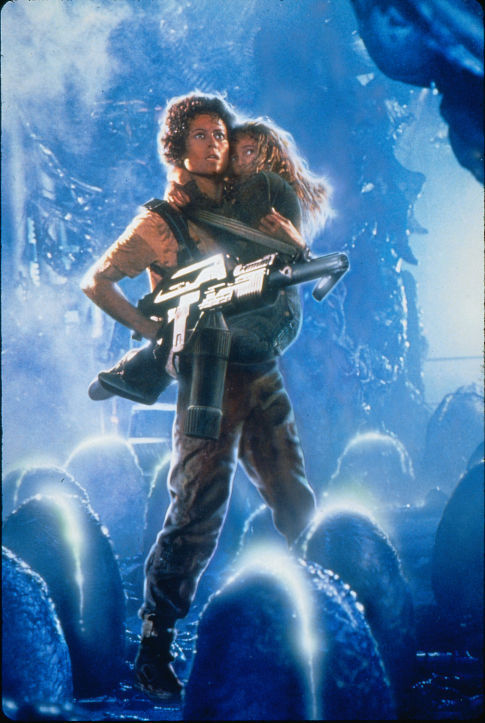
In the 1990s, as a teen watching Aliens on VHS, I took from it that survival of anything is essentially possible; after all, look at Ripley. Look at her betrayals, the incessant and unnecessary obstacles she must overcome simply to attempt a normal life, something that she is consistently denied. If anything, the real alien is Ripley, and any gay man who grows up under the regime of punishing conservatism will tell you, life is much the same. Yet, we survive. Even Ripley acknowledges this when she spotlights Newt’s almost truly unbelievable feat: “This little girl survived … with no weapons, and no training …”
I’m isolated again, but this time it’s in my apartment, and it’s due to a pandemic. If it has given anyone anything, it is time, and I’ve been afforded the opportunity to revisit Sigourney’s iconic performance (an Oscar nominated one at that), and like all timeless mythologies, new things start to surface.
It’s perhaps clearer than it ever was that isolation is something all of these characters experience, albeit in very different ways from Lt. Ripley; Hicks with his quiet, furtive glances, and his reticence to give away much about himself to anyone; Newt with her overt suppression and stark abandonment, including her makeshift hideaway that resembles a ramshackle cave beneath a rotating fan. There is a distinct form of estrangement underneath the camaraderie, too; the marines are just doing a job. They don’t want to believe what the messenger / Cassandra has to say; that something is coming, and it’s not good. Only Newt is privy to this, and knows things even Ripley isn’t prepared for. Early in the film, Ripley faces an unsympathetic boardroom of corrupt, corporate assholes who want to blame her for the destruction of their ship, while simultaneously choosing to ignore the very cause of it (the scene is symbolic; unsurprisingly, money is more important than human life to the corporate politicians), and she responds to them with deserved incredulousness, followed by their attempt to silence her:
“Did IQs just drop sharply while I was away… I can tell where this is going, but I’m telling you that those things exist…”
“Thank you, that will be all.”
“God damn it, that’s not all! Because if one of those things gets down here then that will be all! Then all this — this bullshit that you think is so important — you can just kiss all that goodbye!”
Here is the warning. The people staring her down are in denial; they don’t want to admit that what she’s saying is, in fact, true, and it’s a fair bet someone in that room knows she’s right; and, if they do know, they want to keep it hushed-up. Watching this, it became apparent just how much it reflects our own pandemic, right now. How in some states, people simply choose to look the other way, or get angry when they see someone wearing a mask in public, or shout at them that, “It’s just a flu!” All while the seriousness of it is downplayed. As Ripley tries to emphasize the critical reality of the organism that obliterated her entire crew, the very people who should be listening, write her off as insane, and then denounce her credibility. The way some politicians treat scientists now.
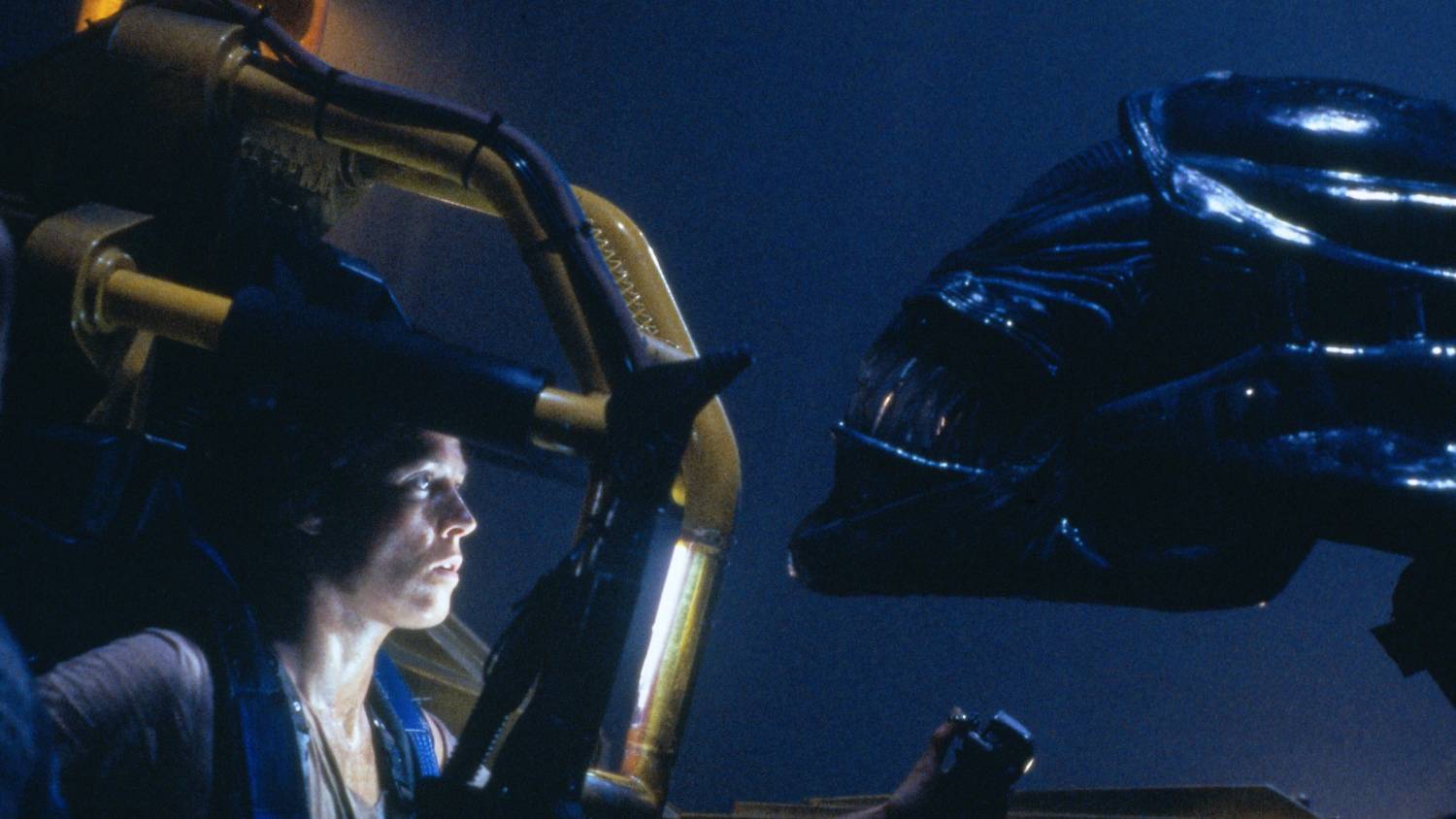
Later, when the marines trudge through a tunnel of alien goop filled with dead bodies and empty eggs (evidence enough, perhaps), the creatures wake up, and denial is no longer possible. Those who doubted Ripley are under attack, and it’s happening fast. She tries to stop it, and her vigilant proactivity is immediately muzzled by those in charge. She resists, however: “Get them out of there! Do it! Now! Hicks, whoever’s left…” And when the headset gets jerked away from her — the only connection to those under assault — she takes matters into her own hands, and speeds off in a tank to save them, crashing, literally, through a wall. It’s in the aftermath that the remaining marines suddenly want to return inside for their comrades, abandoned in the alien nest, to which Ripley replies, with clinical certainty, that, “You can’t help them. Right now they’re being cocooned just like the others.” Again, it’s too late. The damage is done. And we see that they hadn’t really listened to her, not like they could have. It’s only a mark of her character that she doesn’t gloat in the evident, ‘You were right, we were wrong,’ moment of it all. She’s just as involved as the rest of them. Her goal, now, is only to survive whatever comes next, and so she locks firmly into what that requires, step-by-step.
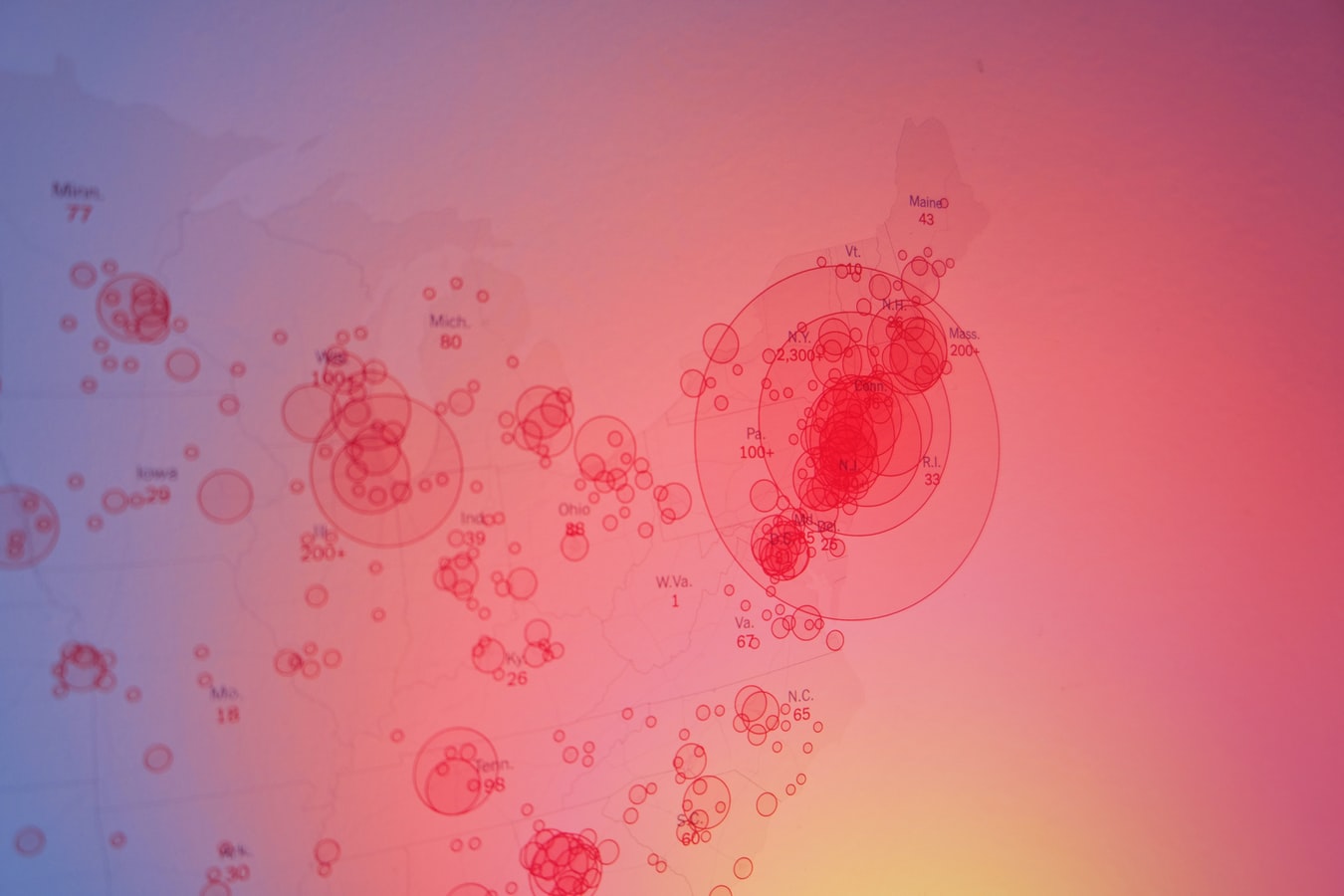
As I absorbed the film, tossed somewhere between nostalgia and a reawakening of sorts, I noticed how strongly it seemed to match the backdrop of the current ensuing chaos. The organism that attacks us is not an 8 foot creature that bleeds acid, but it attacks just the same. It’s showing us our vulnerabilities, but also our strengths, simultaneously. It generates questions: How strong are we? Who’s really listening? Are we paying enough attention? As reports on the pandemic increase, it is disheartening and disturbing to observe the incessant news cycles sharing conflicting information on the seriousness of this organism, of what it does to people, and how, in response, some people (country-wide) shrug at it, but the pandemic is here, full-force. It is something I hear people my mother’s age often say is “unlike anything” they’ve experienced. So many like her are in agreement where that’s concerned because the collective trauma is accruing, and it typically leaves a trail of itself.
Hospitals are beginning to become overwhelmed in places; there aren’t enough respirators or protective equipment for medical professionals in certain locations; grocery stores are being ransacked by people motivated by panic and selfishness; people are dying; people are afraid to touch anything, or go anywhere. Pretty soon, people will want to point fingers, to place all kinds of blame because, yes, in America at this time, the pandemic is unprecedented, and people are angry. Some feel betrayed; some feel unheard. Yet we’re all doing what we can to slow the spread of the organism, and some more than others. Like Ripley.
So what happens to Ripley? What does she do? How does she continue despite the terrifying odds; how does she maintain?
The simple answer is that she just does.
She continues despite confrontations with the willfully ignorant. No one supports her in this; she is alone and isolated in her endeavor, and she has to fight to be heard, but she continues anyway. The difference in making it through a pandemic, however, is that our isolation is now a shared experience, whereas Ripley experiences hers in a type of vacuum, and not just the one that makes up literal space. We have complained of our alienation from one another for years due to the advent of things like smartphones and, of course, social media, but now we’re experiencing our isolation so totally, that we’re starting to see what actually connects us. We’re forced to ask ourselves if, when this is all over, this is how we want to keep living.
Watching the barren streets in front of my apartment (an occasional car slips by, red tail lights disappearing around the corner, then nothing), an overwhelming sense of gratitude forms in me for the film that Aliens has evolved into, for the narrative that it is, and for Sigourney Weaver’s choices in that movie. 34 years later, and it has confidently transcended its place as an action, sci-fi film to the level of ubiquitous art. It tells us about ourselves, now, speaking to our own ability to survive. That’s what this film is; it’s a reminder of the ways we continue. Films that provide us with this type of crucial mythos the way Aliens does, is a rare occurrence, if at all, but the mythos Weaver has given us through all three performances (all the way up to Ripley’s self-sacrifice in the underrated third film), is still present, and perhaps more integral to this need than it was in prior decades.
People have shifted. They are creating their own myths in order to live, perhaps similar to Ripley’s (Do we have the capacity to make fire? Most humans have enjoyed that privilege since the Stone Age.) Which might offer us more important questions: How do we adapt?
How do we move on from here?
###
References
Aliens. Dir. James Cameron, performance by Sigourney Weaver, 20th Century Fox, 1986.
Alien 3. Dir. David Fincher, performance by Sigourney Weaver, 20th Century Fox, 1992.
Blake Edward Hamilton holds an MFA in Creative Writing from Naropa University, and currently teaches college English. His work has appeared in World Literature Today Magazine: Windmill, NPR, Bombay Gin Literary Journal, The Guerrilla Lit Mag., South Broadway Press, and Punch Drunk Press, among others. His first full-length collection of poetry, All Through Your Multiple Selves (Spartan / Luchador Press) was published this spring.











 south broadway press