
Book Review: Muscle Memories of Love and Disaster by Tim Mayo

BOOK REVIEW:
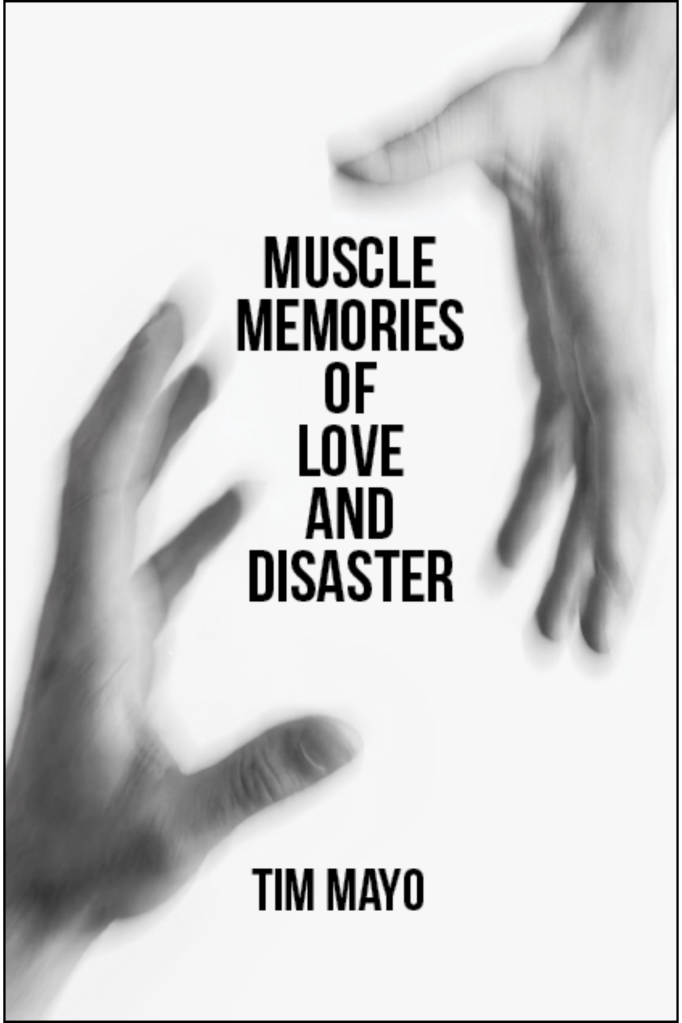
MUSCLE MEMORIES OF LOVE AND DISASTER
BY TIM MAYO

A BOOK REVIEW BY EDEN HEFFRON-HANSON

This is how I feel: I don’t turn to poetry when things are good. The refuge of poetry lies where the world has deserted, where I have failed to make way under the direction of prose. The first poems I fell in love with were “I Go Back to May 1937,” “History of a Tough Motherfucker,” “Vera, From My Childhood,”. These are poems that are close to you, that sound like things people might tell you over a cigarette, testaments to the fact that whether we choose life, life has chosen us. This is a similar poetics to Tim Mayo, who in his book Muscle Memories of Love and Disaster writes “the business of poetry is not po-biz”. 

Mayo writes, to misuse his words, “from the very bottom/ of the old wishing well.” Set in hospital beds and rehab centers, from the bare-faced grief of losing a daughter to the “Anthropology of Old Age”, it is poetry that feels dragged from the ends of the earth to keep its reader and writer warm. Despite the poet’s remark in “The Sunshine” that “It’s not like I had one of those episodes,” (a near death experience), “and I suddenly feel warm and fuzzy,” the poetry feels decidedly Orphic, from an underworld where death is always resting nearby. 

Mayo’s narrators write alongside a chorus of ghosts collected from a lifetime. The poet writes they are not “a soft touch poet with a heart of gold,” but I can’t help feeling the counselor from the book’s latter half bleeding through. In “The Why Answers”, a narrator, fading in and out of consciousness on “medicine mixing meant to keep me alive,” remarks, “suddenly I want to love in a way/I never knew.” The book is populated with elegies orbiting the realization of death, where the approaching end forces us to appreciate the mess of living. To me, there is a basic desire in these poems to provide fuel to the fire, to discover reasons to live.

The book is split into three sections concerned with the ends of consciousness. The first, a collection of elegies and portraits, imagines the “heightened state/slackened to a palatable point,” the place where the living mind can’t follow the dead. In the second, collections of direct addresses after a near death experience, prove that “memory is life.” The third takes place within the society of a psychiatric hospital, where the poet is Cassandra, trading with figures to “advise…how to thwart the tragedies and mishaps…already lived.” The poetry in this book is largely past-tense, trading on the preparation for a tragedy that has already struck. 

Author Tim Mayo

Though, of course, this is a simplification. The book is interspersed with landscapes and portraits set apart from the rest, operating as introductions and footnotes. A heron insists on reality despite our attempts to resurrect the dead, a hurricane floods unseen, elms grow despite their apparent extinction, and an eagle rests outside the window of a complicated psychiatric hospital society. The interjected poems speak to nature’s seeming indifference, either to human despair or human fantasizing, or perhaps to gifts to which we are oblivious of in our groping for safety, a “bouquet of storm-fed jetsam/the jumbled world must have offered us.” All of them struggle to make sense of disaster and recomplicate the human griefs at the book’s center. 

The book finds some formal variation. Poems like “A Game of Cards,” where a character conceit emitted from wisdom and memory becomes “a higher force from a not so ancient past,” then secretes back into an off-kilter reality, feels playfully loose and winding. Other poems, such as “Self-Portrait with Trache,” with its “Grief is a black parrot in my throat,” find itself downstream from Dickinson in a more pruned lineage. It’s hard to notice at first the way the collection is sculpted, with memories seeming to wind in an out of their own accord, but Muscle Memories gives itself over to second and third readings, where the relationship to death throughout the book is repeatedly complicated, welcomed, mused about, and feared. 

Modern poetry seems obsessed with space, with stanzas blown to pieces, erased and abstracted, or left to secrete on the page. Entering Muscle Memories I was nearly overwhelmed by the welcoming received from the writing. It’s a collection, again, not interested in “po-biz”, that I feel is all business. The collection has no time to waste between the reader and the portraits of loved ones in the book, the proximity to death in the collection requires immediacy, making sense of days when “you just lived./Each day must have been the same.” It is a book, in some ways of twilights, and any reader interested in survival after survival, in “Muscle Memories of Disaster”, will find refuge here. 
MUSCLE MEMORIES OF LOVE AND DISASTER

BY TIM MAYO

AVAILABLE THROUGH BAINBRIDGE ISLAND PRESS
Eden Heffron-Hanson is a writer and poet living in Queens, New York. She traditionally writes love poems but in her down time would looooove to review your work (edenheffha@gmail.com or @edenheffha on Instagram). She has been published in Beyond the Veil PressSouth Broadway Press, and Trans Mag.
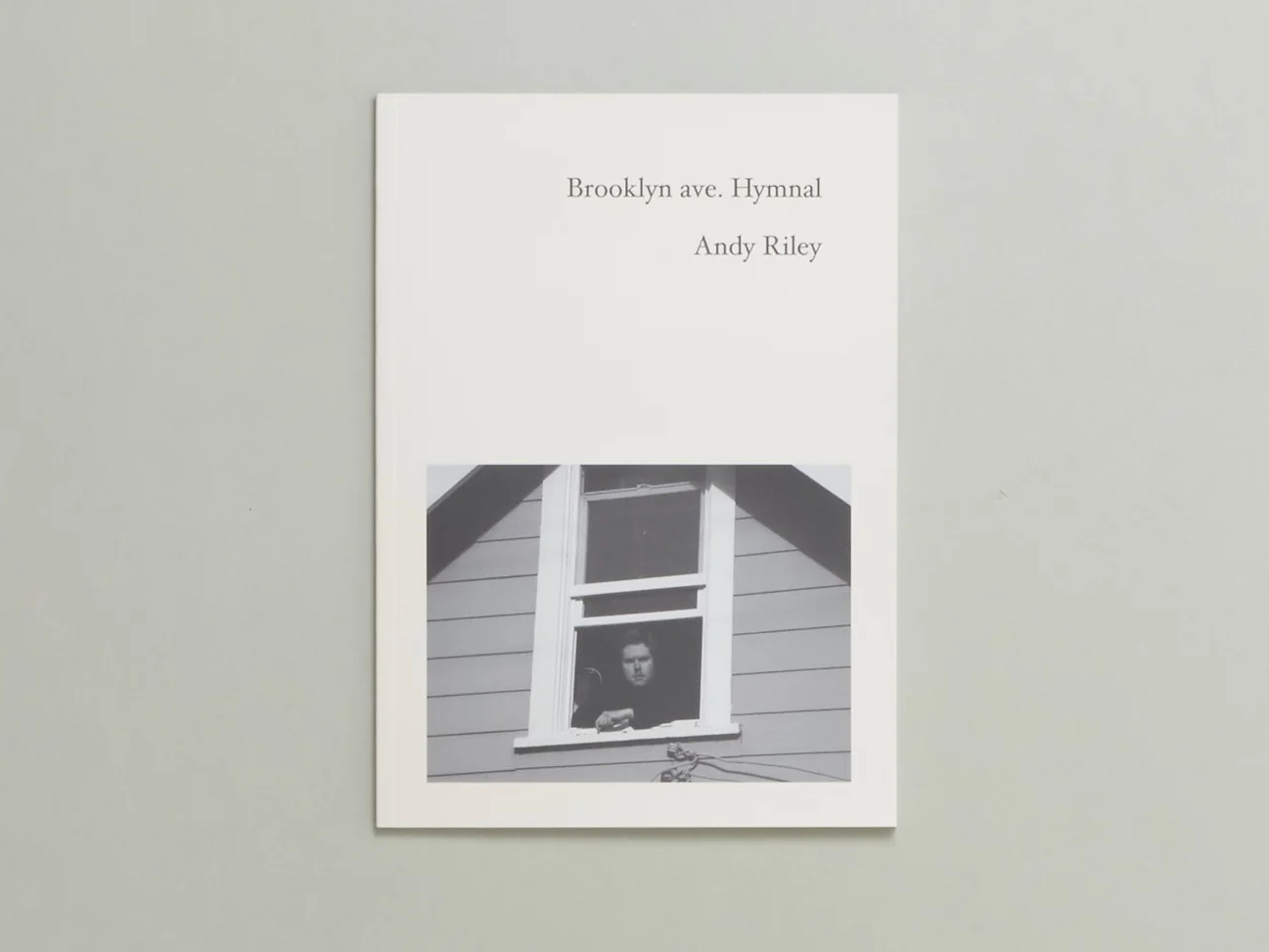
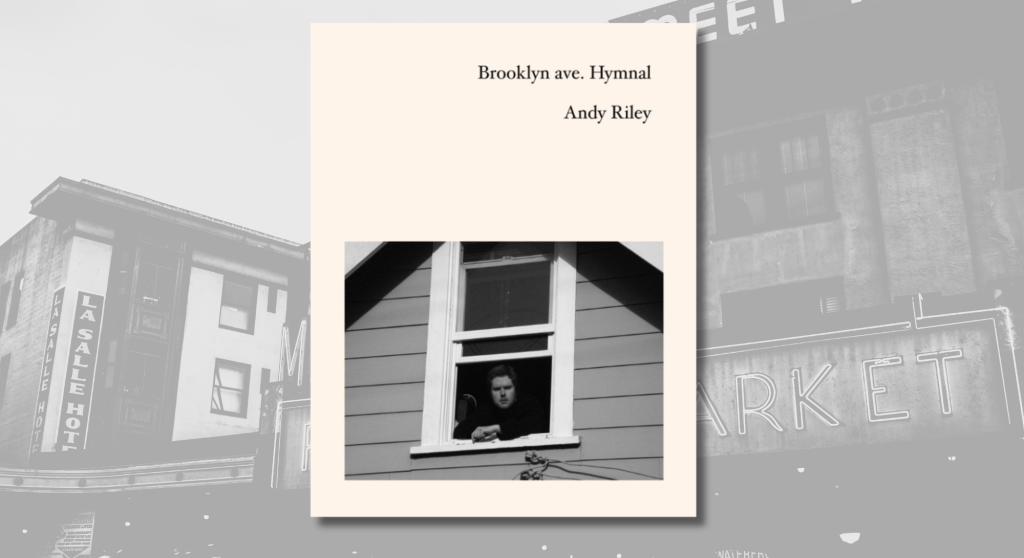
Book Review: Brooklyn ave. Hymnal by Andy Riley

BOOK REVIEW:
BROOKLYN AVE. HYMNAL BY ANDY RILEY

A BOOK REVIEW BY EDEN HEFFRON-HANSON

One of my main impressions of Andy has always been that he prints chapbooks like other poets print rejection slips. The first time I met him, at Wolverine Publick House in Fort Collins, he was carrying a bundle of self-printed books for the reading. Later, when he invited me over for homemade absinthe, he had more from the past year for me, from the “early years”. While I have long delighted in his exciting cacophonic phrasing and interesting imagery, what I have most admired from him was the nonstop DIY ethic which kept him writing and printing instead of waiting for approval. 

Thus, it is with great pleasure I am reviewing Andy Riley’s debut 87-page serial poem Brooklyn ave. Hymnal. A book about moving to Seattle that is so rife with character observations and daily ennui, chronic pain and stunted sex drives, that truly it will leave you searching for an answer to the question, why would you move to Seattle? 

 Maybe it’s so Riley could “get out to see Red Pine” from Seattle or live on the street of the “high school where sir mix a lot went”, perhaps it’s so he could live a ten-minute walk from “three old growth trees”. Or maybe Riley moved to Seattle for the same reason anyone moves anywhere, to see something new and make sense of it, to turn around and produce a work of art grounded deeply in a place and time that hadn’t grown dull from repetition. What we receive is a poem facing down the alienation and loneliness of being literally ungrounded. We receive addresses to the dead and separated, to long distance friends, and the ever-aloof state of Colorado. 

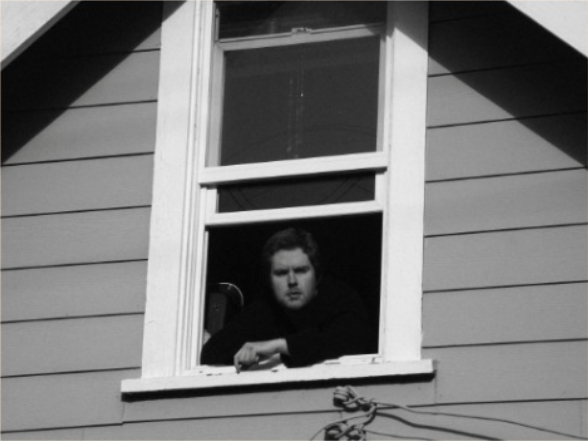
Author Andy Riley

We are introduced to a poet navigating public space and the struggle for connection between strangers. I delighted in the man in camo pants trying to train surf, the howler under the tunnel on the light rail, and the couple who waves back at the narrator from under the bridge. The poem builds us a world of characters vying for attention, a series of exhibitionists mirroring the short, showy writing of the poetry itself. 

Having read shorter renditions of Riley’s writing, the sometimes-eclectic chapbooks he described as his “EPs”, I was excited to see how his style would take to a book-length poem. The use of short sequences allows for concentrated bursts of energy sympathetic to his style, while the relationality allows for an opening up into moments of satori. One of my favorite sections in the poem is election day which both contains the rapid fire “bodily steam footfalls mirage/ like climbing a ladder” and the wide-open couplet “hate of the unknown is traditional/what of this hate of the known”.  The book also shares my love of nouns you can grind your teeth on. Brooklyn ave. uses to full effect the regional “noggins”, the scientific yet punk “oxytocin boot black”, and a whole quatrain about “priapism”. More space allows Riley more exploration in word choice and sound, and it’s lovely to see him opt for a yummy and timely dialect.

The building blocks of short poems translate into a feeling of discovery throughout each that Riley deftly sustains through the book.

Riley’s adjective phrasing, which delights in novel syntax while also bending the grammar of sentences, help him create metaphors from bite sized lines of language. Lines like “no flower columbine”, “smack gridlock/migraine-iacal car-ships” or even the simple “ATM smoke shop” recreate adjectives from modifiers into carriers of essential natures for each of the nouns. The building blocks of short poems translate into a feeling of discovery throughout each that Riley deftly sustains through the book. 

The only places of the book that confused me were moments of rhyme where the poet slips into a register more reminiscent of Shelly and Dickinson than Weiners or Spicer. Compared to the breakneck speed at which the poetry generally moves the section “the dawn nay dies/it flies.” or “ah/T-shaped wisteria” felt lethargic. However, the register never seems to be employed without irony or self-awareness and there are plenty of moments where rhyme or abstraction is seasoned to taste in the poem. There are also brilliant sections subverting form such as the telegram-like “when I speak” section. Overall, the spots that stick out and interrupt the flow of the poem are done with subtlety and creativity that brings the larger project in balance with itself. 

We may never know why one moves to Seattle. However, we do know what one does with the experience. Riley gives us an istoria making sense of public space and loneliness in a large explorative sequence. Brooklyn ave. Hymnal is an assertive ennui filled poem making sense of the daily mess that we each navigate to produce art. The creativity and power of his style is on full force here while his craft remains a love letter to poets like John Weiners and Frank O’Hara that have long informed his work. It’s a delight to have such a strong showing from such a young western poet.

BROOKLYN AVE. HYMNAL

BY ANDY RILEY

AVAILABLE THROUGH PILOT PRESS

Eden Heffron-Hanson is a writer and poet living in Brooklyn, New York. She traditionally writes love poems but in her down time would looooove to review your work (edenheffha@gmail.com or @edenheffha on Instagram). She has been published in Beyond the Veil PressSouth Broadway Press, and Mountain Bluebird Magazine.