Editor Interviews // Tyler Hurula


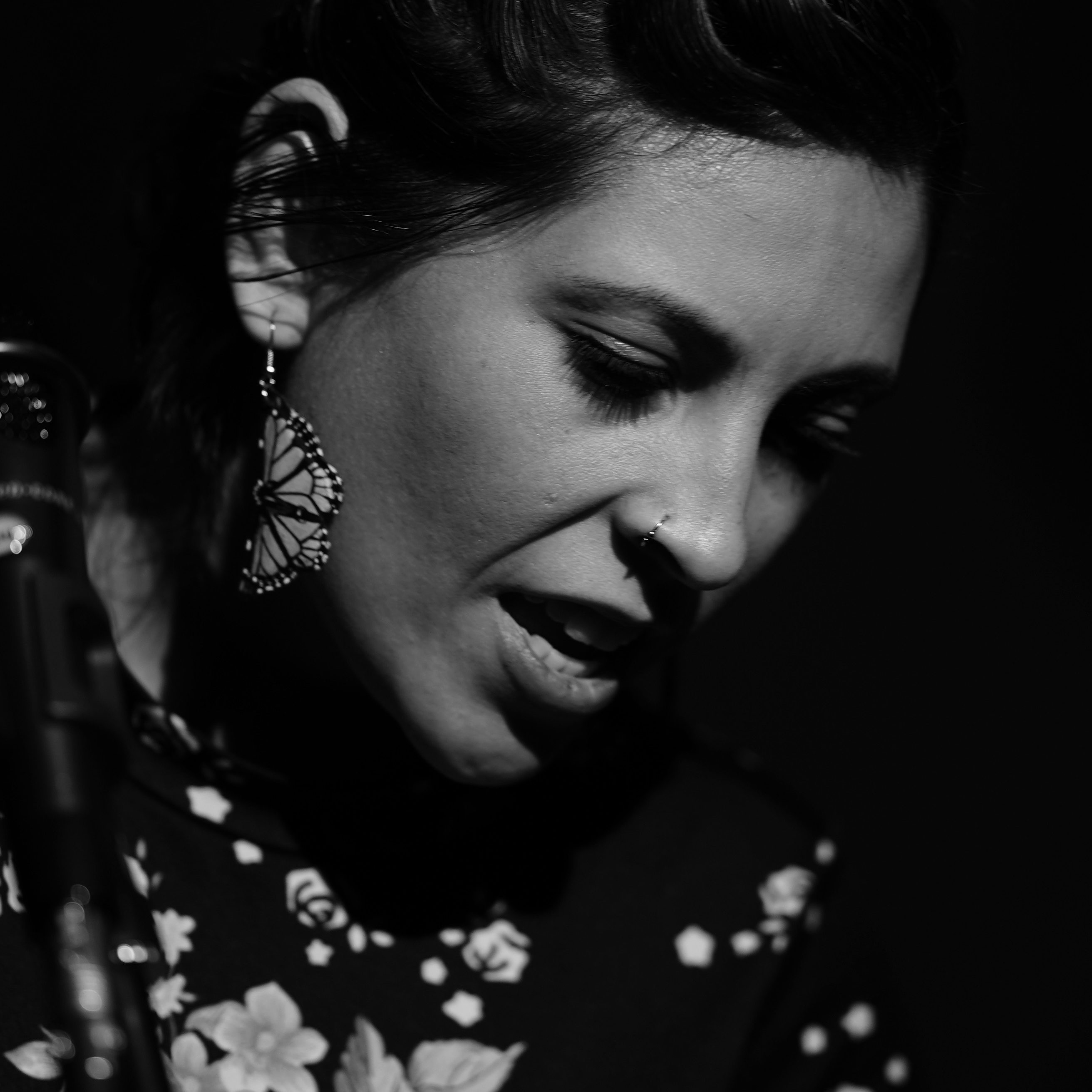
Tyler Hurula (she/they) is the pinkest poet in Denver, Colorado. She strives to be the most queer and polyamorous person they can be. You’ll likely find her parading around in a tiara with hot pink lipstick going to an art walk or discussing the intricacies of the latest horror movie she’s watched with anyone who will listen. Author of chapbook Love Me Louder (Querencia Press) and Too Pretty for Plain Coffee (Wayfarer Books). They have been nominated for Best of the Net and Pushcart Prizes, and were a finalist for the Write Bloody 2024 Jack McCarthy Book Prize Contest.

If you are going to be anything in the world tonight, you better be lightning. You better find something in you honest enough to strike them.

Andrea Gibson
WHAT DOES THIS QUOTE MEAN TO YOU?

This quote is from a poem by Andrea Gibson called What Love Is and I think love is connection, and anything we do is ultimately about connection and love, and the way to do that is by being honest and vulnerable. When you show up in that way, all you can do is hope it resonates with the people you were meant to find.

WHAT BOOKS HAVE MADE AN IMPORTANT IMPACT ON YOU AND WHY?

On Earth We’re Briefly Gorgeous by Ocean Vuong

This book is gorgeous. Vuong finds all of these beautiful truths in what it means to be human in the middle of so many things that are not beautiful. He gives himself the freedom to say what he needs to say and to be completely vulnerable by writing it for a mother who will never read it. 

The Cabin at the End of the World by Paul Tremblay

I love all things horror, and this was the first book I read by Tremblay. It is absolutely devastating and hopeful, and the only horror novel I’ve ever sobbed at the end of. 

My Friends by Fredrick Backman

I am still in the middle of this book, but knew after the first page it would be one of my favorites. Backman is one of the most emotionally intelligent authors, and is able to encapsulate at the root what it means to be human, and how we all connect and relate to each other, even when we have completely different experiences.

WHAT IS THE VALUE OF WRITING AND ART IN THE CURRENT STATE OF THE WORLD?

I took a workshop with Patricia Smith awhile ago and she repeated a quote by someone and I can’t remember the exact quote or who it was originally from, but essentially it was something about when you’re looking for facts, go to the news, but when you’re looking for the truth of something, look to the poets. We have to create and connect with people. Art is how we navigate and contextualize the world. It is how we highlight the truths around us, how we find our human-ness in others, and how we are able to see the human-ness in others as reflected in their art—in how and what they create. In My Friends by Fredrick Backman, he says “art is what we leave of ourselves in other people” and in On Earth We’re Briefly Gorgeous, Ocean Vuong says “Is that what art is? To be touched thinking what we feel is ours when, in the end, it was someone else, in longing, who finds us?”  I like to think that all of my poems are just asking “do you see me?” Art is one of the purest forms of connection, and without it, we have nothing.

HOW HAS WRITING AND ART HELPED TO FORM THE PERSON YOU ARE TODAY?

I grew up in an environment where there were so many secrets I was expected to keep, which led to a very lonely and isolating childhood and young adulthood. Through writing, I’ve been able to share those truths and surround myself with a community and people dedicated to practicing vulnerability and authenticity. I have grown into myself, and have learned to love the whole of myself through writing and art. It’s given me permission to feel all of the things, and be open to experiencing a multitude of truths from a multitude of people.

WHAT IS SOMETHING THAT MATTERS TO YOU?

Building community is so important to me. We simply cannot do this life on our own, and the more people and perspectives we surround ourselves with, the more capable we are to grow together and care for each other.

Cherry Picking in Washington D.C. | Amy Wray Irish

Image: Lika Yer

Cherry Picking in Washington D.C.

BY AMY WRAY IRISH


First, the cherry trees blossom, bursting open into
skirted ballerinas filling the boulevard and the White
House and the whole nation with pink and white
petals (aren’t they pretty?) until their frills fall away
and they begin to swell, to reveal their pollination sin,
forcing them to bear fruit

far too soon.
Young wombs chock full of false promises, bellies sick
on syrupy cherry-flavored stories poured down throats,
forgetting the choke and force feeding of suffragettes
by funnel and pretending to forget the funneling of dollars
away from pre-natal planning and post-natal everything,
easier to just shut up and take

whatever gets shoved in.
The options are a) poison or b) bitter dregs so they swallow
and say that it’s sweet but how would they know a good taste
in their mouth the truth on their lips

if they’ve only been fed lies.
They don’t know someone cherry picked their words
and their world. They unknowingly devoured each unripe
soundbite and even ate the pit believing they were blessed
and precious and special, told they were so pretty and so
holy, not knowing it was only so they would pick right
at the polls

then be easily pushed aside.
Drooping and forgotten, the poor little flowers are falling
from the pedestal, dropping from labor and lactation and loss
of blood, wilted from so much “women’s work” squeezed
from their failing bodies, bound now to the bed
they made, unable to pick up their broken pieces
to start over or escape

but hey,
remember how they were pretty, once?

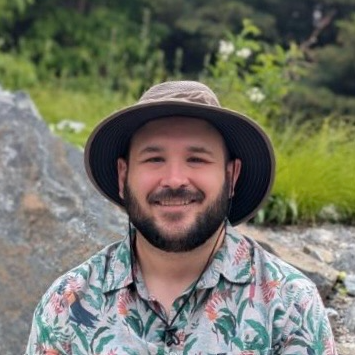
Amy Wray Irish (she/her) believes poetry’s job is to be both brutally honest and eternally hopeful. Irish has two contest-winning chapbooks (Down to the Bone and Breathing Fire) and numerous other publications. Her work is forthcoming in the 40West Anthology, and the 2026 We’Moon Daily Calendar. Read more of her work at www.amywrayirish.com.

Three Poems / Tres Poemas | Guillermo Lazo

Image: Laurent Perren

Night Train to Chicago

BY GUILLERMO LAZO

Let’s get off at Osceola
And grab our coonskin caps, boys.
Forgetting the farmer’s fields
And head for the wild patch of land
In the corner of yon field
And flatten our bodies
Against the ground
Filling our nostrils with
The smell of black Iowa dirt
Near the Des Moines River.

Let’s shoot an azimuth of 270 degrees
Due west and head westward
Past the lank, slank
Cowboy towns of Durango
Or what’s left of Neal’s
Larimer Street.
Let’s even taste that black
Dirt ‘til it feeds
The red bones in us and
We’re moving like Natty Bumpo
As coyotes at the edge of town.

La Otra

BY GUILLERMO LAZO

Tú eres la tranquilidad
En mi cerebro ruidoso
Y por tú cara
Puedo ver el rostro del universo
El universo es el cosmos
Es lo que hace nuestro mundo posible
Qué hace tú posible
Hoy es muy intempestivo
de integrar nuestra materia
en una canción de existencia
como la lluvia en la arena
qué hace tú posible

Kynthos

BY GUILLERMO LAZO

On a gravelly road in Germany
In the early morning light
I write the name of my beloved
In the dirt
With the toe of my combat boot
As I pull guard
Her perfumed card
Calls me
From the Rocky Mountains westward
Half a world away
As I stand guard
Over 37 years of topsoil
In the early morning light

She is the Greeks to me
She is Kynthos – Diana
Protectress of the wild young
Purveyor of knowledge
And she is America
With real wilderness
And rawboned hands and puritanical ethic
And miles and miles of endless onset.

Guillermo Lazo was born and raised in Chicago. Univ of Illinois BA Ed 1974. Univ of Colorado BA Literature 1986. Editor and Publisher of the Rocky Mountain Arsenal of the Arts (Poetry Magazine 1978-1984). Author of Surround Me As Burlap (Pueblo Poetry Project 1980 Pueblo, CO), Ching Poems (March Abrazo Press, Carlos Cumpian ed.), Bathers of the Med Sea (1989 Baculite Publishing – Canadian Printing). Articles: Confessions of a Marrano (Halapid Magazine Anousim Society of Crypto Jews 2001).

Three Poems | Joseph Wilcox

Image: Azka Rayhansyah

Assimilation

BY JOSEPH WILCOX

i destroy myself
with a slow grind
pressing my body against
the bitter wheel at any sign
of sharp success
polishing away the burrs
of hope and joy until
i am pebble
forgotten
in the crush of boots

Passion

BY JOSEPH WILCOX

at easter brunch
as we douse the bulge
of egg casserole
and sweetbread
in our stomachs
with fresh hot coffee
like a post-coital cigarette
my brother
extolls the virtues
of the stock market
how he cheers
the ups and downs
as he buys
low
and his millions
grow
he pauses
righteousness rising
to rail
at the cross
of his tax burden
the unconstitutional waste
of government taking
his money
and the onus
of minimum wage
that shrouds his body corporate
to my sister
who earns $15
an hour
retail

Factious

BY JOSEPH WILCOX

don’t you see?
if we are fighting each other
we are not fighting them
if we are fighting each other
we won’t go to the shed
to find our pitchforks

would you like to borrow
one of mine, friend?

Joseph Wilcox studied at the Jack Kerouac School, started a theater company, and raised a family in Colorado. He lives in Aurora where he writes science fiction and fantasy, and poetry in the sleepless hours of the night.

Kneading Dough | Mimi Khoso

Image: James Wainscoat

Kneading Dough

BY MIMI KHOSO

We’re gathered here in this sacred place
Darting looks of judgement and envy
You still manage to pull a sour face
As the imam gives the khutba about how to love thy neighbor
I look down at their feet, calloused but not withered
It’s as if I can read their lives from their feet

Every untrimmed nail and hard blue vein
Running after children
No time to thrive, only maintain
Resilient, despite the shock of motherhood
Dressed in burnt orange Salwar Kameez and glass gold bangles
The baby coos and gurgles until the azan comes
Then its shrill cries and a burst of tears
How dare their mother do something for herself?
Religious commitments don’t end
Such tribulations only make them more clear

Babies, an extension of their mother until around age four
Then one day their need for cuddles suddenly ends
And the only remembrance is saggy pillows and stretch marks
Designed like directions on a map

Despite the sleepless nights and loss of time
Soon the baby discovers their own independence
He sits nicely as his mother prays sunnah
He fixes his own hat when it falls
Like kneading dough, she forms to the chapter of her life
Her tests become her triumphs, her loss is what she gained

I make a dua after Jummah, thanking God for His preference
The little things I cherish, take the good with the bad
How can you appreciate God’s gifts?
If it’s honey all the time
Sometimes we have to feel the sting

Mimi Khoso is not great at short biographies, and the pressure it causes to make an appealing impression in short summary. She does understand the need for it however; she was born in Georgia in 2002, and has moved all over Georgia and Texas during her childhood. She doesn’t have any professional credentials for writing poetry.  She believes that once you discover your passion it gives meaning to your life. Her favorite book is The Beguiled by Thomas P. Cullinan and her favorite song is Saanson Ki Maala, based on the 16th-century poem by Mirabai then popularized by sufi singer, Nusrat Fateh Ali Khan. She has realized what makes celebrated films and timeless music profound is in its words. One of the great pleasures in her life is reading and writing and she is not fully able to explain why. When she converted to Islam over four years ago, she read of its deniers claiming the Quran to merely be a great work of poetry. To that, God responded to produce a verse similar to His if you can.

Grief As An Orange | Lydia Ford

Image: Simon L

Grief As An Orange

BY LYDIA FORD

An orange rind peeled
in one swift ribbon,

white veins of pith
snaked around

ripened grief offering.
Glinting, a little sun

in the center of the bowl,
a still life for a still life,

reflecting sweet and sour gem,
blinding, squinting at the fruit of it,

glistens a warm memory,
juice weeping between the fingers

A pucker, confetti of pulp in the belly.
Bloated with remedial fullness.

Lydia Ford is a poet based in Colorado, where she lives with her boyfriend and two cats, Melon and Zuko. Her work has been published in Words Dance Magazine, Ink & Marrow, boats against the current, Beyond Words Magazine and wildscape lit. You can often find her in her local coffee shop, probably telling someone about the music playing overhead or her love of nostalgia. More of her work lives on Instagram @lydfordwrites

Book Review: “Tributaries” by Aspen Everett

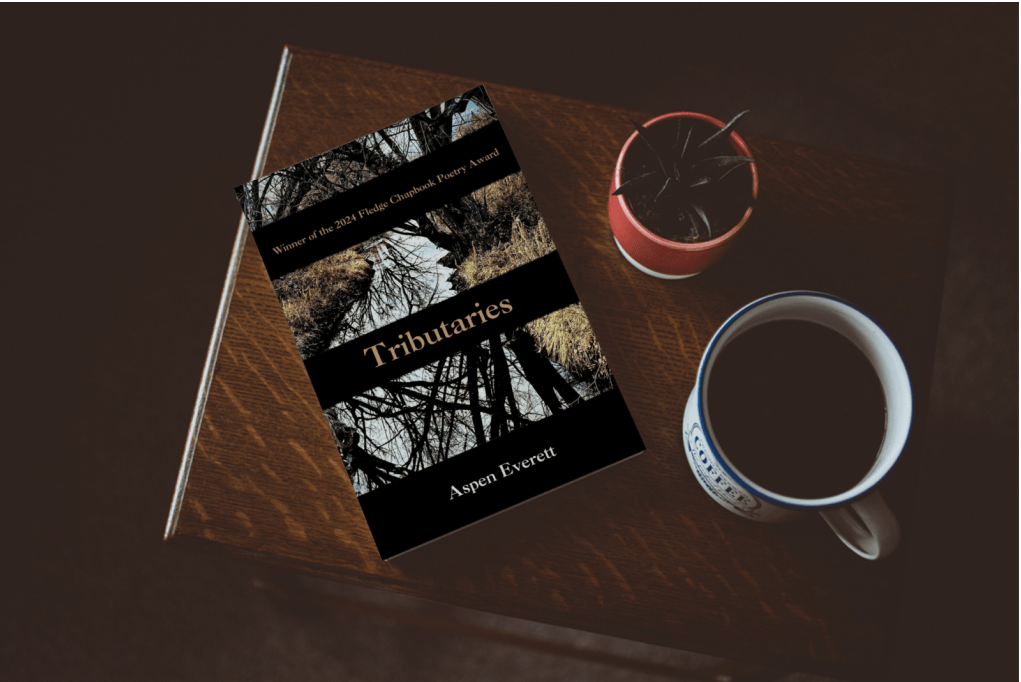
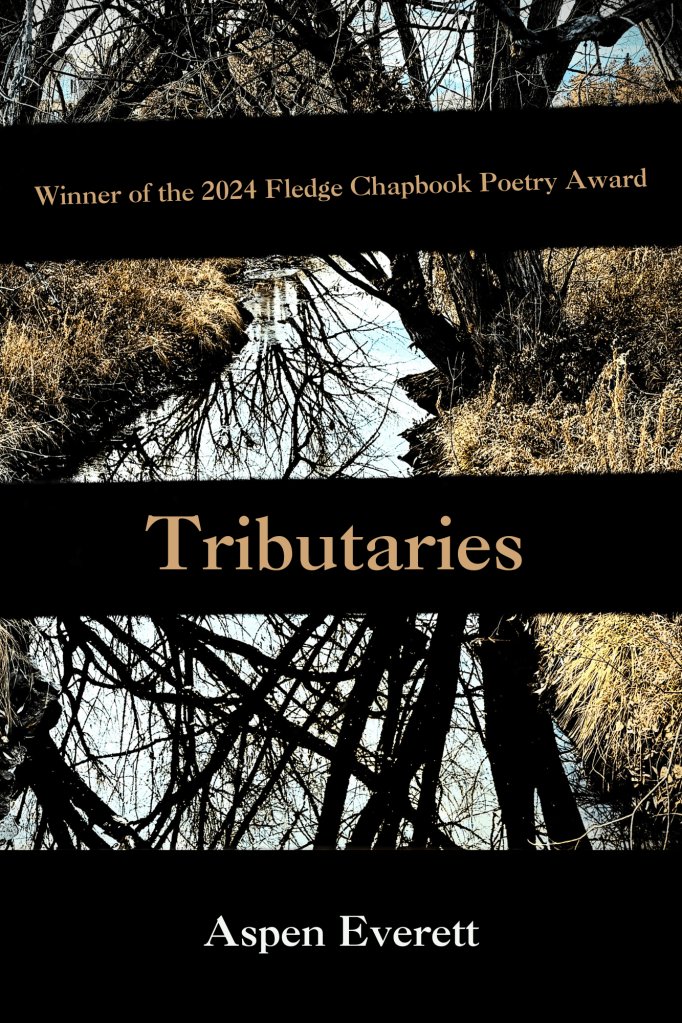
Image C/O Middle Creek Publishing

Tributaries: A Beautiful Opportunity to Lose Our Way

BY BRICE MAIURRO

The first thing I heard in these poems was a heartbeat. In his opening poem “All Water Has Perfect Memory”, an allusion to a Toni Morrison line, the rhythm for me was that same rhythm at the start of Dark Side of the Moon. The book begins with the sense of a heartbeat growing louder and louder each moment. Everett’s first collection of poetry, Tributaries, continues to carry that heartbeat, and the sorrow between its beats, throughout this literary confluence of moments. Moments among a greater sense of we, the ecological we.

In his poetry, Everett’s time is the earth’s time. These poems are not contained to the one-hundred-ish years of a human life but zoomed out and slowed down. They connect us to a very clear something greater than our singular journey as a human being on this planet. It is hard to tell where he ends and the rest of Mother Earth begins. He reminds us of this truth for all of us. The poems are in conversation with one another, compounding the complex yet approachable mezclado of this book. The Osage dance with the Cottonwoods dancing with the stream below them, all tributaries feeding into the heart of this poet. Everett is spellcasting here; calling in the healing of the earth and sounding the cautionary canary for its woes. 

In addition to spellcaster, Everett serves as field guide, death doula, and eternal student in these poems. These poems are “always hungry” to listen more. In these poems, our fellow living beings, the Great Horned Owl, Coyote, the Bison, are much more teacher than metaphor. There is an admirable equanimity in Everett’s work (and play). He explores the distance between here and home, where home is the same home we find in “eco-”. Everett, as are we, is water, in the words of Toni Morrison, “trying to get back to where it once was”.

“Poets, remember to listen”, says Everett in “Populus deltoides”, “to breathe in the vanilla of resin”. Everett has a knack for imagery (see lines like: “blue hunger”; “cloudless teeth”). He sets scenes magically, and then returns to the reader in a very direct and curious way, as if it were a conversation over a cup of shade grown coffee. I find the agrarian salt-of-the-earth wisdom of these poems reminiscent of Wendell Berry, a fellow poet captivated by the rural. Everett himself is from the “windtossed flatlands of southeast Kansas”, which he visits often in this collection. The poems are biography; confessional poetry of the landscapes and experiences that shaped him and his words. 

The poem “Geraniums” in particular stood out to me, with visceral lines like “a blackbird flies backwards from tinted window”. In very intentional moments, Everett captures the core of surrealism: not to immerse the reader in a dream, but to attempt to liberate our colonized minds. Everett has a poetic conviction. When he says “it is better to speak in chrysanthemums”, he speaks from experience. He “plants the seeds in the mouths of everyone” he meets.

Shorter poems like “Pine Trees Covered in Snow” show us that Everett can be potent while being concise. These interludes to longer readings act as heartpunches, steering the collection along.

I often have a hard time with questions posed in poetry, finding them to be navel-gazing or overdramatic shenanigans, however I found myself enamoured of the questions Everett poses. Questions like “Do horses hide in my blonde waves?” where the goal seems not to send you into a philosophical spiral but to invite you into the great curiosity and wonder of this poet. Phrases like “amanita dreams” have me asking my own questions with that same curiosity – what is an amanita dream? What colors would I find there? What shamanic doors can be opened by being more curious about the world of our fungi friends?

In the words of our Colorado Poet Laureate, Andrea Gibson, “it hurts to become”; this collection pushes through the pain of the Anthropocene becoming something more alive, revealing limbs reaching for a better world. The poems in this collection are never so binary to choose to be a meditation on climate grief or to choose to elevate the natural world. They are a both/and, a queering, an honesty. There is a beautiful disobedience that Everett encourages us to join him for, where we too “ignore the no trespassing warnings”, “follow the river” and lose our way.

Purchase “Tributaries” by Aspen Everett

Brice Maiurro (he/they) is the Editor-in-Chief of South Broadway Press. Hailing from Lakewood, CO., he is the author of four collections of poetry, including Stupid Flowers and The Heart is an Undertaker Bee. His poetry has been published by South Florida Poetry Journal, Denverse, The Denver Post, Boulder Weekly, Suspect Press, and Poets Reading the News. Website: www.maiurro.co

they say the rice won’t grow without blood // Sreeja Naskar

Image: Abishek Kushwaha

they say the rice won’t grow without blood

BY SREEJA NASKAR

      a man opens his mouth & a border spills out.  
      a grandmother unspools her tongue like thread,
      stitching her children into the fabric of a country  
      that never wanted them.  

         they say this is progress. 

                   (they mean:)  
                   the skin thinned to paper —  
                   the hands blistered, still reaching —  
                   the lungs filled with air thick enough to swallow.  
                             (they mean:)  
                            look how well you have learned to survive.  
                            how your bones folded neatly into history. 
                                                                                            but we know.  
                we know what it means to be asked for our papers.  
                to be split between two alphabets & never whole.  
                to carve out our own faces with the sharpest vowels  
                until we are palatable. marketable. safe. 

                                                       (they say we are lucky to be here.)
               
                                                                                            lucky.  

                                                                    
                         lucky like my mother learning  

              the price of shame at the grocery store.  
               (the clerk’s mouth curling around her accent  
                another thing she must swallow whole.)   

                         lucky like my father with his hands 
              roughened by the steel of a land he could never own.  
               (the factory hums. the sweat dries.  
                the paycheck arrives. the hunger stays.)  
        (somewhere) they are building monuments  
       from the bones of the silenced.   

       (somewhere)  the land forgets the sound of its own name.  
       concrete buries it whole.   

         this is history, they say.  
                                  (they mean:)  
                                the textbooks that forget us —  
                                 the flags stitched with the tongues we lost —  
                                 the songs we were too tired to sing.   

                    (they say we should be grateful.)   
                                                                            (they mean we should be quiet.)

       but i remember.  
       i remember the rice fields & the rivers thick with ghosts.  
       the prayers my grandmother whispered to the soil.  
       the stories that split her open & stayed.   

           they say the rice won’t grow without blood.            (and still, we eat.)

Sreeja Naskar is a high school poet based in India. Her work has appeared or is forthcoming in Poems India, Crowstep Journal, The Chakkar, ONE ART, Frigg Magazine, The Little Journal, and Cordite Poetry Review, among others. She believes in the quiet power of language to unearth what lingers beneath silence.

ode to my belly button | Liza Sparks

Source: Vackground

ode to my belly button

BY LIZA SPARKS

You remind me that I am hungry. That I hunger. That I am meant to be fed. That this is a natural state of being. I should not be ashamed to want. You remind me that I need connection. You remind me that it is natural to be tethered—to other people, to a person, to an idea, to a thing. You remind me that I have grown from something small, small, small. You remind me that all of us were once small, small, small. You remind me that I have experienced loss before / a severing and survived.

Liza Sparks (she/her) has work published in The Pinch Journal (online), Allium, Timber, CALYX, Split This Rock, and many others. She was nominated for two Pushcart Prizes and a Best of the Net in 2022. Her work is informed by her intersecting identities as a brown-multiracial-neurodivergent-pansexual-woman.

Headshot: @nvthepix

Endless Tomorrows | Scott Noonkester

Image: Varinia Rodriguez

Endless Tomorrows

BY SCOTT NOONKESTER

Endless Tomorrows,
Where have you gone?

Let’s keep dancing like you promised would never be done.

I have awoken,
You’re no longer there.

Endless Tomorrows
I miss you,
I grieve for you so.

You helped me ignore my fears
because you said tomorrow will always be near.

I have awoken from the illusion
and I grieve for your return,
but no,
you were never really here.

Endless Tomorrows
you let me go.

I see my fears now that you helped me get through,
because
Endless Tomorrows,
you were always true.

Endless Tomorrows,
I loved you so.

The pain of today replaces my fears,
because
Endless Tomorrows
you’re all I’ve ever known.

Endless Tomorrows
I danced with you,
but it was only
Ego & Fear
wearing your mask
in my belief that it was actually you.

I have danced with Ego & Fear
I didn’t know they cut in.

Endless Tomorrows
you were always there
to hide my fears
with the illusion
of the never-ending dance.

Fear & Ego
you cut in to dance,
sneaking in.
Never did you ask,

then I finally hear you say,

“Masquerade”

as you both finally remove
your
Endless Tomorrows
masks.

Scott Nookester is a kind man relearning how to be in the present. He is a hard worker, who is learning to be soft with his edges. He is a man learning to dance with the new.