
A Specific Kind of Hell: Writing and Survival in America’s South
By
Blake Edward Hamilton

Rites
I once had my right eyelid slit open by a neighborhood boy. A gang of them was intent on taking down our yard fence using the full weight of their bodies, shaking and pulling at it with everything they had. My younger sister, while trying militantly to defend our property, didn’t see one of these neighborhood boys grab our hose and then, with a lasso whip of his arm, launch its copper end across the smooth surface of my eyelid. It split open pretty easily. My face was a bright red leak. The fence demolition stopped just for a moment at the sound of my eleven year-old screech, and my sister’s shouts. But then it continued with the same amount of vehemence after I abandoned the chaos, cupping my right eye, and running inside; refuge and salvaged sight had won, momentarily, over the defense of our temporarily vulnerable backyard.
When I write this I catch myself attempting to document the minutia of the cutting, a step-by-step or frame-by-frame, because I wonder if there’s some detail about it that can be discovered, a detail that could speak about what that moment actually meant. Why were they attacking our fence, exactly? While I knew the general cause had to do with my reputation among these boys as a “faggot,” I cannot recall why it began. It was, after all, just one of many moments like it during those years: sessions of trauma repeated on a kind of blurred loop. I hadn’t even stepped outside that day, the mere action of which was usually enough to provoke them.
My mother had just divorced my father and moved us to Edmond, Oklahoma, where most of this would take place; an empty, flat stretch of beige land, underdeveloped except for suburban sites marred by W.M. Levitt housing additions named after creeks, stones, birds, and trees, or sometimes a combination. The houses often invoke the image of innocuous families having just left a church potluck to sit clustered in plastic chairs in a placid, unremarkable backyard while their children played with a Wiffle ball. It is the only place where the 1950s never died: sons still call for Pop out of truck windows and talk big of dating Suzie at the formal; somewhere a poodle skirt is crushed into an armoire, waiting for its release. In Oklahoma, heterosexuality is a bag of golf clubs in dad’s trunk; bleach blond hair in an SUV, chicken-fried steak, and three-two beer. Homosexuality, on the other hand, is The Elephant Man, fried tarantula, Carrie at the prom.
It would be here that I would first hear the word “faggot,” and it would be said to me by a girl in a red shirt sitting in the middle of a school bus on my first day of fifth grade in this new land not far from the city. I chose to sit next to her because she initially appeared friendly, smiling with great welcome, in fact. Only a few minutes after joining her, and nervously staring at the back of the seat, she said to me plainly and coldly, but still smiling, “You’ve seen one faggot, you’ve seen ‘em all.” I don’t know what provoked this, even now, and had wondered what she meant because I did not yet know the word (nor that she was right: I was in fact attracted to men), and I didn’t ask for an explanation. I remained quiet instead. I smiled back, hoping for a return of her original expression, but nothing happened. She’d gone silent. I had already been labeled a “faggot,” so something had shifted, and the fifth grade school day had not yet begun.
Over the years this word would become familiar to the point of numbness. I almost ceased to hear it. But at times I would jump when I heard it shouted. This almost always meant I was about to suffer something more at the hands of a group of girls and guys; all of them from different ethnicities and backgrounds, and teachers of all ages. One teacher, for an entire year, mocked the way I spoke and walked, both in private and in front of other students. She would throw her arms out, drape her hands femininely from the wrist, and say, “Have I got ya down, Blake? Have I got ya down?” I saw her recently at a café and wanted to say something about the way her humiliations made me feel as a seventh grader, but I kept going, and left her there.
Over the years, since I graduated and left Edmond and moved on to many other cities, I have come and gone from Oklahoma, not because I wanted to but because, for different and unexpected reasons, I had no choice. I think we are irresolutely drawn back to places of trauma because they have a kind of inexplicable hold on us that we have to work to get away from. This is even truer if you’re a writer.
Oklahoma has always thought of itself as friendly; that it’s accepting and forgiving; that it’s Christ-like. People like me get in the way of that idea, forcing Oklahomans to become unfriendly, unaccepting, and not Christ-like because this is how the majority of Oklahomans have been taught to treat people who are not hetero-normative. Like many states in the South, Oklahoma often has to confront its idea of itself (a recent, stark example would be when President Obama was welcomed in Oklahoma City by people waving confederate flags at his downtown arrival).
It wants so badly to be the thing it believes it is. At its core, its true nature is not friendly, forgiving and accepting, or anything near Christ-like. The philistine is at home there, a cultural vacuum populated by individuals who have tirelessly worked to create a culture of exclusion in its place based almost solely on religious belief systems. They are likewise oddly defensive of this, as if some amount of indignity percolates right around the edges: we know we’re wrong, but we do it anyway. The maniacal need to be right at any cost is behind much of this kind of religious shaming, to the extent that the Bible Belt chokes on this need regularly.
When I found writing, I was supplied with a way to survive life in the South and what it asked of me – what it asks of anyone not of it.

The Locale: I
I came to writing through reading. It showed up first through the covers of books on the racks inside grocery stores. Many I collected just for this purpose; their covers were whole mysteries to me. I loved attempting to solve their meanings, their representations – the kind of story I held in my hands. The more symbolic and lurid the covers, the more fascinated I was. The book-object itself quickly became comforting, like a citadel, a friend, unmoved, asking nothing of me, but prepared to give me a world. Stephen King often gets a bad rap as a popular fiction author, but his books were of the first I collected, and some of the most protective.
Life in Oklahoma requires a shield of some kind. Boundaries between people are rare, and if you’re a “person of difference,” (I define this here as an individual not actively contributing to the extenuation of the vacuum – the space in which Oklahomans who are not “of difference,” work to fill with sameness, hoping to make stringent conformity luxuriant) – the shield is the division between dissolution through irrevocable trauma in an environment bereft of empathy, and staying present, alive.
I did not read King’s books until much later. But I would carry them to school, between forearm and chest, author or title proudly displayed. King’s books provided an unambiguous type of shield that I discovered worked better than other books that just made me appear too intellectual, or snobbish. King’s books simply terrified the other students. Smothered in cliques of young, elitist, small-town Christians who had selected me as their resident “homo,” “Faggot,” or “gay-wad,” I now had the power of King’s name. The Stand, Misery, and Night Shift stood as a barrier, a makeshift boundary. Gossip and stares in the hall magically turned inward, and the groups kept a fair distance from me because I was ostensibly reading the stuff their parents had vociferously deemed “demonic,” and it made me a threat on a different, more esoteric level. My alienation had become my own in some ways, and I could claim it. King’s books also made me privileged – the others didn’t get to read “adult material” in the banal halls of middle school.
Only one teacher attempted to undermine this, to take away what she had clearly picked up on, which was my growing sense of insulation, a subtle relief, and a type of confidence, when she said smugly to my fully attuned class, “Don’t you think you could find something more interesting to read, Mr. Hamilton?” This appeared to answer the unspoken concern among my classmates of the “inappropriateness” inherent in my reading material; kids who, too passive to say anything (or too scared of my demonic books), complained to the teacher, an early introduction to mysteries of bureaucracy in action. I brought my books anyway.
Eventually parents learned of the “gay” middle school boy who reads Stephen King sharing space with their children in groups, in teams, in contests. One such parent came charging up to the classroom on a quiet afternoon, shouting that she would not have her child next to “a gay AIDS kid,” a phrase I heard leak through the cracked door as I waited for my teacher’s decision as she tried to calm this woman’s rising hysteria, reaffirming for her that I did not, in fact, have AIDS. My teacher, however, didn’t attempt to argue on behalf of my presumed sexual orientation. The woman’s son was moved to another group, and I was also placed on a different team. I remember feeling as though I had been heaped upon them, and their silence was one of thick discomfort. I was an accidental refugee mixed in with those who already had a dynamic, and they did not want me. This they made clear many times over. I would remain this refugee for years afterward.
When I chose to finally open one of the books I carried around, warped from my sweaty palms, I found humiliation rendered in ways that eclipsed my own for a while.
Pain
Brett Easton Ellis in a 2012 Art of Fiction interview with The Paris Review revealed that he writes to deal with pain; that this is the principle reason that he writes. He says, “There’s no mark to hit when you’re writing a book. I write books to relieve myself of pain. That’s the prime motivator to write. Period” (Ellis). Mitigation of pain is necessary and rooted at the center of survival; how we choose to cope with its onset, or its infliction, forms the base of this. There are always those who would inflict it, not just individuals, but entities, bureaucracies, formal institutions. Stagnant or suppressed communication also amasses a heavy percentage of this pain center – the inability to assert a voice. Oppressed states and countries know this and have known it throughout history. Our current study and understanding of the Holocaust, for example, and of its absorption of those crimes and horrors, has been a perpetual investigation into just such a state. The greatest pain arrives from the denial of one’s own existence, selfhood taken away by institutions via unjust policy; fascist zealots working to erode the threat of speech, ideas, stories. Human pain is forever ineradicable. It can only be rendered, and thereby trapped in some way. For a writer, it is encapsulated in story. If Kierkegaard was correct, and anxiety is the space between the thing of anticipation and the occurrence of that thing, left for us on ancestral cave walls is anxiety made manifest; the anxious distances between man and the animals and individuals he witnessed, those he chose to represent. They are offerings to us through time, seeking understanding, while also seeking to mitigate old pain through the precision of articulation; this is the nature of all storytelling. For the writer, it is absolution, turning to another who sees, and asking, “Did you see that, too? Or, is it just me?” Another way of looking at this is through the question: am I alone in my sight? Do I see – do I witness – alone?
Orhan Pamuk in his book, The Naïve and the Sentimental Novelist, is very clear about the purposes of why we read, why we write. He says, “Gradually I began to see the fundamental knowledge that the center of the novel presented – knowledge about what kind of place the world was, and about the nature of life, not only in the center but everywhere in the novel…a good novel evokes in us a sense of the profound, essential knowledge of what it means to exist in this world, and the nature of that sense” (28). Orhan Pamuk is no stranger to struggle, to the agonies of attempting to communicate through story.
Living and writing in the South is to learn about what it means to live in a kind of abyss, although nothing is reflected back at you when you are “of difference,” except your own difference. Eventually you come to understand, like I did, that staying in it is folly, death. If you want to survive so that you can write about what it means to exist, to struggle through it, you have to leave.
Pamuk goes on to say, “We know from our own experience that our desire to understand the world has a political aspect…” (175). This is happening now. In America, polarization goes far beyond simple policy – it is chronic, inveterate: some states want to make it legal to refuse service to gay men and women; this is to “protect” the religious beliefs of others, not gay men and women’s human rights. Oklahoma is one of these states. It is also a state that wants to assure conversion therapy is a cemented option; something that calls to memory the Americanization of Native Americans, stripped of their cultural identities in favor of a more “acceptable,” or more “palatable/ less savage” identity. This originally comes from Sally Kern, an Oklahoma representative who was once quoted as saying that gays are more of a threat than terrorists. Mary Fallin, the current governor, had this to say when the Federal Government struck down the unconstitutional marriage ban in Oklahoma:
In 2004, voters had an opportunity to decide whether or not to allow same-sex marriage in Oklahoma. Seventy-six percent voted not to, and to instead define marriage as the union between one man and one woman. I was one of the many voters who cast my ballot in favor of traditional marriage. Today’s ruling is another instance of federal courts ignoring the will of the people and trampling on the right of states to govern themselves. In this case, two judges have acted to overturn a law supported Oklahomans. Their decision will be appealed and, I hope, overturned… (Dillon, Fox 25)
What is important about Fallin’s unapologetic response isn’t how indicative it is of unyielding, American polarization, or the unabashed discrimination showing the inherent, fascistic nature of the “state,” but the phrase: the will of the people.
The Locale: II
My teenage nephew who, at the time of this writing, is now in high school in Oklahoma City, tells me that it’s “getting better here.” He says this because many teenagers in his class are “out,” and as he puts it, no one seems to care. There might be other reasons to look at how this phrase applies, or fails to apply, to the territory, not the least of which is the current mass exodus of underpaid teachers from the state, its 49th percentile ranking in education, or the vast budget deficit and the record amount of anti-LGBTQ bills created in 2016 alone. Data on Oklahoma’s educational environment is enough to question the assumption of marked improvement:
Findings from the GLSEN 2015 National School Climate Survey demonstrate that Oklahoma schools were not safe for most lesbian, gay, bisexual, transgender, and queer (LGBTQ) secondary school students. In addition, many LGBTQ students in Oklahoma did not have access to important school resources, such as having Gay-Straight Alliances and similar student clubs and were not protected by comprehensive anti-bullying/ harassment school policies. (1)
The ongoing catchphrase that “it’s getting better” has been found in the last couple of decades across social media and in the general zeitgeist. I find it alarming that seemingly few have spoken of how this phrase is indicative, especially if we return to the discussion of how a place comes to think of itself; that it (whatever “it” is: a time, a mindset, a life?), even needs to “get better” speaks so much to the illness at the center of our current social narrative, and our denial of it. This would encapsulate the stories that communities tell themselves about how they behave towards others. Nevertheless, we all want to believe it’s true: that things are indeed getting better. And maybe they are, but how honest can we be?
According to Mr. Pamuk, there is something sentimental about the novelist. Perhaps, as a writer, I am sentimental for a time that did not exist, and a place that I imagine was once real. This might form the basis for America’s recent overt attraction to literature that explores utopias and dystopias (one and the same, really), because some part of us misses or sentimentalizes a compassionate place that was never there, a place of responsiveness; or a place that reflects its opposite, and therefore aspires to some form of jagged truth.
When I write, it is an attempt to understand where empathy goes; why families place inimical ideologies before their own children, often abandoning these children – someone they raised from the womb to adulthood, someone they held when crying and fed when hungry; I write to generate an explanation for the unresponsive void, the great abyss, places like Oklahoma; I write for those who can’t find a voice, who seek to be heard; like Ellis, I also write to deal with pain, and I write because I refuse to digest the naïve notion that it “gets better” – improvement is, after all, contingent upon the will of the people, and people often remain indisputable products of their environment.
Artifact
“We didn’t know”: the response of German citizens living near concentration camps when shown starved bodies in mass graves.
Now
If I’m haunted by anything it’s what we choose to forget, to not witness. Writers wrestle with the idea that not all places are entirely bad or entirely good; contemplative writers try to avoid the absurdity of a binary altogether, even when populations try so hard to excuse behavior with statements such as, “Well, there are people like that everywhere. Well, that happens everywhere. Well, you will find that in all places.” The problem with this kind of thinking, especially when explored via narratives, is that the closeness of the characters creates the environment. It is not incorrect to say that a place is what it is because of who populates it. If we return to Pamuk, he tells us, “It is proximity that lends the art of the novel its irresistible power. Yet the primary focus is not the personality and morality of the leading characters, but the nature of their world. The life of the protagonists, their place in the world, the way they feel, see, and engage with their world – this is the subject of the literary novel” (60). The closer we become to fictional characters, the more we hope to understand, even as we rage against the tired, post-modern simulacra found in so many novels today, where characters often dissolve into self-reflexivity and well-worn caricature.
Hell
Stephen King made his career writing about a place called Castle Rock. Horrible things happen there; horrible people made some of those things happen. Hell is the paramount place of suffering and punishment, a horror show of endless shame and misery, a place bankrupt of empathy or compassion. Dante’s Hell is cold, frozen by the Devil himself flapping his wings. There are ubiquitous versions of Hades seen through the viewpoint of various ideologies. Some threaten the consumption of souls, torture, mutilation, perpetual humiliation. Dante did the best job envisioning it for us, giving us levels, rendering atrocities and castigations as potently and graphically as he could. It was done so well, one starts to ask if anyone is truly deserving of any of these eternal penances (unless, of course, it is a Betrayer, those furthest down in Dante’s Hell, those closest to Satan.)
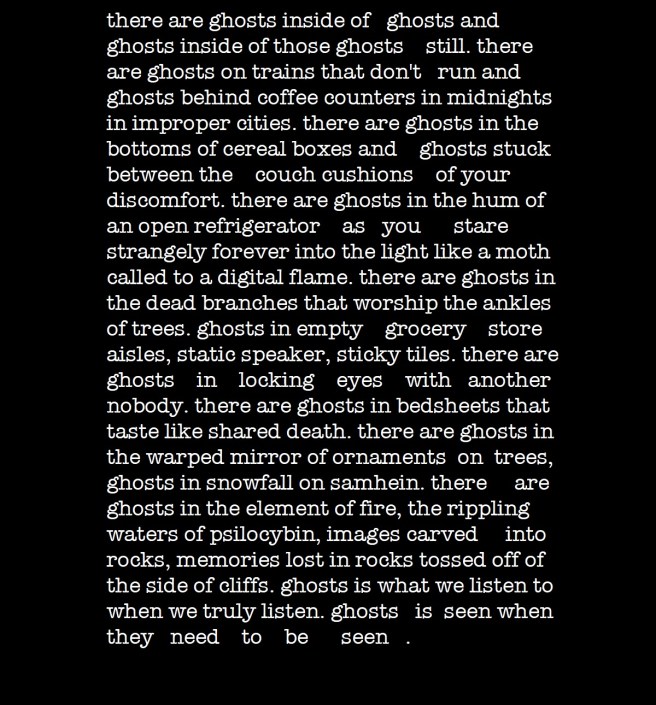
How do we betray ourselves? Does it happen when the rights of others are betrayed? Does it occur most often when shaming is the premium modus operandi of a single locale? Stephen King has been trying to tell us that Hell exists; that it’s on earth, and it is mostly other people. Look at us; we do this to ourselves, he says, through his stories of petulant small town violence, bigotry, and monsters both political and ghostly. It is a very specific type of Hell, yet people still live in it. They still inhabit his fictional Maine town, and they always will, begging the clear question of why? Why do we inhabit Hell if we don’t have to? Why do we create Hell for ourselves and others? Why do we stay and burn? A writer often travels a crooked path, for better or worse, but I no longer return to find out.
References
Dillon, Jay. “Govenor Mary Fallin’s Statement on Same-Sex Marriage Ruling.” July 18th, 2014: Fox 25. http://okcfox.com/archive/governor-mary-fallins-statement-on-same-sex-marriage-ruling. Accessed March 9, 2017.
Ellis, Brett Easton. Interview by Jon-Jon Goulian. The Paris Review, Issue 200, Spring 2012.
https://www.theparisreview.org/interviews/6127/bret-easton-ellis-the-art-of-fiction-no-216-bret.easton-ellis. Accessed March 9, 2017.
GLSEN. “Oklahoma State Snapshot – NSCS.pdf. School Climate in Oklahoma.” https://www.glsen.org/content/oklahoma-state-snapshot-2015-nscs. Accessed April 24, 2017.
Pamuk, Orhan. Translated by Nazim Dikbas. The Naïve and the Sentimental Novelist: The Charles Eliot Norton Lectures, 2009. Faber and Faber, 2010.

Blake Edward Hamilton holds an MFA in Creative Writing from Naropa University, and currently teaches college English. His work has appeared in World Literature Today Magazine: Windmill, NPR, Bombay Gin Literary Journal, The Guerrilla Lit Mag., and Punch Drunk Press, among others.
Photo: neonbrand



 south broadway press