How to Survive a Pandemic Like Sigourney Weaver: A Meditation on Aliens // Blake Edward Hamilton

image 4

How to Survive a Pandemic Like Sigourney Weaver: A Meditation on Aliens // Blake Edward Hamilton

BY BLAKE EDWARD HAMILTON

My initial discovery of the movie Aliens did not happen during a pandemic. I was a mere 8 years old when I first glimpsed the bold advertisement glaring up from an open newspaper in my living room. There it was: A single black rectangle with the thin letters of the title promising something so mysterious and horrifying (This Time It’s War), it was a certainty I’d be processing the shock of it for years to come. It didn’t take much convincing (or begging) to get my mother to take me to see it, but when it was over, I left as changed as I’d predicted; yet I had no way of integrating what happened in that theater, or what I’d actually seen.

I cannot count the amount of times I’ve seen the film, but I’m pretty confident I have it memorized. An upsurge of these viewings took place during my adolescent years where, growing up in punishingly conservative Oklahoma, I was attacked often. The more I was attacked by those with virulent religious goals, the more I watched the film. And something else occurred that would lead me to a few other conclusions. On a thoroughly subconscious level, I was experiencing a form of absolute catharsis, a direct line of it on perpetual repeat. 

I was also learning how to survive. 

Sigourney Weaver might not be aware of it, but her performance accomplished a lot of things that go far beyond the realm of simple entertainment. It became a kind of template for me early on for how to deal with isolation, loneliness, and hyper-vigilance, the never ending product of trauma. I was watching someone process her own trauma, repeatedly, and like a lesson, I was doing the same. 

Ripely isn’t greeted with sympathy when she’s found drifting in space after 57 years; she’s greeted with hostility and skepticism. This insult to injury is seldom discussed when the issue of trauma shows up; what you discover as a trauma survivor is that no one has the ability to truly empathize, unless they experience the trauma themselves. And in Aliens, this is exactly what happens. A type of revenge, or inadvertent poetic justice for Ripley, takes place once they all agree to go back to the planet, LV-426. She’s warned them (a form of compassion they don’t really deserve), but they go anyway, and for reasons that extend beyond just checking to make sure everything is all right (ulterior motives typically go hand-in-hand with trauma and betrayal). The company man, Burke, would see to that, and Ripley would eventually confront him: “Do you really think you can get a dangerous organism like that past ICC Quarantine?”

In the 1990s, as a teen watching Aliens on VHS, I took from it that survival of anything is essentially possible; after all, look at Ripley. Look at her betrayals, the incessant and unnecessary obstacles she must overcome simply to attempt a normal life, something that she is consistently denied. If anything, the real alien is Ripley, and any gay man who grows up under the regime of punishing conservatism will tell you, life is much the same. Yet, we survive. Even Ripley acknowledges this when she spotlights Newt’s almost truly unbelievable feat: “This little girl survived … with no weapons, and no training …”

I’m isolated again, but this time it’s in my apartment, and it’s due to a pandemic. If it has given anyone anything, it is time, and I’ve been afforded the opportunity to revisit Sigourney’s iconic performance (an Oscar nominated one at that), and like all timeless mythologies, new things start to surface.

It’s perhaps clearer than it ever was that isolation is something all of these characters experience, albeit in very different ways from Lt. Ripley; Hicks with his quiet, furtive glances, and his reticence to give away much about himself to anyone; Newt with her overt suppression and stark abandonment, including her makeshift hideaway that resembles a ramshackle cave beneath a rotating fan. There is a distinct form of estrangement underneath the camaraderie, too; the marines are just doing a job. They don’t want to believe what the messenger / Cassandra has to say; that something is coming, and it’s not good. Only Newt is privy to this, and knows things even Ripley isn’t prepared for. Early in the film, Ripley faces an unsympathetic boardroom of corrupt, corporate assholes who want to blame her for the destruction of their ship, while simultaneously choosing to ignore the very cause of it (the scene is symbolic; unsurprisingly, money is more important than human life to the corporate politicians), and she responds to them with deserved incredulousness, followed by their attempt to silence her: 

“Did IQs just drop sharply while I was away… I can tell where this is going, but I’m telling you that those things exist…”

“Thank you, that will be all.”

“God damn it, that’s not all! Because if one of those things gets down here then that will be all! Then all this — this bullshit that you think is so important — you can just kiss all that goodbye!”

Here is the warning. The people staring her down are in denial; they don’t want to admit that what she’s saying is, in fact, true, and it’s a fair bet someone in that room knows she’s right; and, if they do know, they want to keep it hushed-up. Watching this, it became apparent just how much it reflects our own pandemic, right now. How in some states, people simply choose to look the other way, or get angry when they see someone wearing a mask in public, or shout at them that, “It’s just a flu!”  All while the seriousness of it is downplayed. As Ripley tries to emphasize the critical reality of the organism that obliterated her entire crew, the very people who should be listening, write her off as insane, and then denounce her credibility. The way some politicians treat scientists now. 

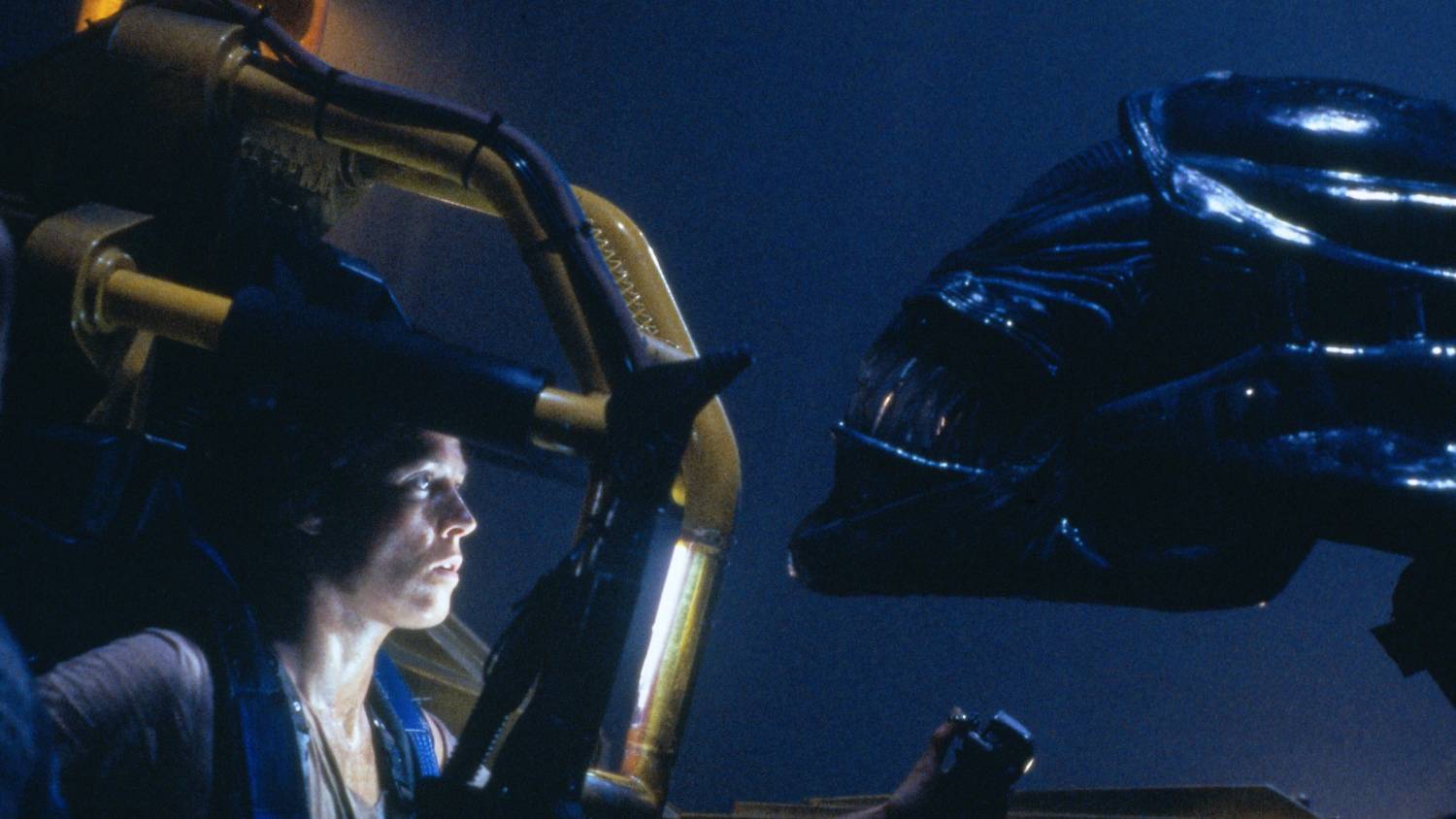
Later, when the marines trudge through a tunnel of alien goop filled with dead bodies and empty eggs (evidence enough, perhaps), the creatures wake up, and denial is no longer possible. Those who doubted Ripley are under attack, and it’s happening fast. She tries to stop it, and her vigilant proactivity is immediately muzzled by those in charge. She resists, however: “Get them out of there! Do it! Now! Hicks, whoever’s left…” And when the headset gets jerked away from her — the only connection to those under assault — she takes matters into her own hands, and speeds off in a tank to save them, crashing, literally, through a wall. It’s in the aftermath that the remaining marines suddenly want to return inside for their comrades, abandoned in the alien nest, to which Ripley replies, with clinical certainty, that, “You can’t help them. Right now they’re being cocooned just like the others.” Again, it’s too late. The damage is done. And we see that they hadn’t really listened to her, not like they could have. It’s only a mark of her character that she doesn’t gloat in the evident, ‘You were right, we were wrong,’ moment of it all. She’s just as involved as the rest of them. Her goal, now, is only to survive whatever comes next, and so she locks firmly into what that requires, step-by-step.
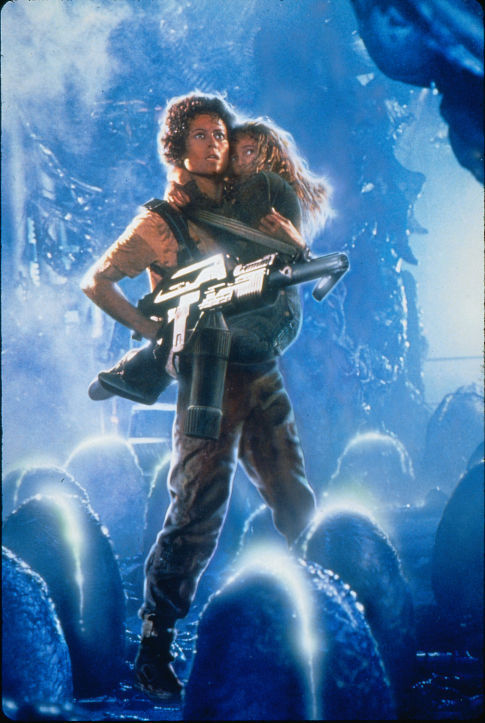
Sigourney Weaver and Carrie Henn in Aliens (1986)

As I absorbed the film, tossed somewhere between nostalgia and a reawakening of sorts, I noticed how strongly it seemed to match the backdrop of the current ensuing chaos. The organism that attacks us is not an 8 foot creature that bleeds acid, but it attacks just the same. It’s showing us our vulnerabilities, but also our strengths, simultaneously. It generates questions: How strong are we? Who’s really listening? Are we paying enough attention? As reports on the pandemic increase, it is disheartening and disturbing to observe the incessant news cycles sharing conflicting information on the seriousness of this organism, of what it does to people, and how, in response, some people (country-wide) shrug at it, but the pandemic is here, full-force. It is something I hear people my mother’s age often say is “unlike anything” they’ve experienced. So many like her are in agreement where that’s concerned because the collective trauma is accruing, and it typically leaves a trail of itself. 

Hospitals are beginning to become overwhelmed in places; there aren’t enough respirators or protective equipment for medical professionals in certain locations; grocery stores are being ransacked by people motivated by panic and selfishness; people are dying; people are afraid to touch anything, or go anywhere. Pretty soon, people will want to point fingers, to place all kinds of blame because, yes, in America at this time, the pandemic is unprecedented, and people are angry. Some feel betrayed; some feel unheard. Yet we’re all doing what we can to slow the spread of the organism, and some more than others. Like Ripley.

So what happens to Ripley? What does she do? How does she continue despite the terrifying odds; how does she maintain?

The simple answer is that she just does. 

She continues despite confrontations with the willfully ignorant. No one supports her in this; she is alone and isolated in her endeavor, and she has to fight to be heard, but she continues anyway. The difference in making it through a pandemic, however, is that our isolation is now a shared experience, whereas Ripley experiences hers in a type of vacuum, and not just the one that makes up literal space. We have complained of our alienation from one another for years due to the advent of things like smartphones and, of course, social media, but now we’re experiencing our isolation so totally, that we’re starting to see what actually connects us. We’re forced to ask ourselves if, when this is all over, this is how we want to keep living. 

Watching the barren streets in front of my apartment (an occasional car slips by, red tail lights disappearing around the corner, then nothing), an overwhelming sense of gratitude forms in me for the film that Aliens has evolved into, for the narrative that it is, and for Sigourney Weaver’s choices in that movie. 34 years later, and it has confidently transcended its place as an action, sci-fi film to the level of ubiquitous art. It tells us about ourselves, now, speaking to our own ability to survive. That’s what this film is; it’s a reminder of the ways we continue. Films that provide us with this type of crucial mythos the way Aliens does, is a rare occurrence, if at all, but the mythos Weaver has given us through all three performances (all the way up to Ripley’s self-sacrifice in the underrated third film), is still present, and perhaps more integral to this need than it was in prior decades.

People have shifted. They are creating their own myths in order to live, perhaps similar to Ripley’s (Do we have the capacity to make fire? Most humans have enjoyed that privilege since the Stone Age.) Which might offer us more important questions: How do we adapt? 

How do we move on from here? 

cropped-imageedit_3_3022794780.png

###

References

Aliens. Dir. James Cameron, performance by Sigourney Weaver, 20th Century Fox, 1986.

Alien 3. Dir. David Fincher, performance by Sigourney Weaver, 20th Century Fox, 1992. 

DEB2

Blake Edward Hamilton holds an MFA in Creative Writing from Naropa University, and currently teaches college English. His work has appeared in World Literature Today Magazine: Windmill, NPR, Bombay Gin Literary Journal, The Guerrilla Lit Mag., South Broadway Press, and Punch Drunk Press, among others. His first full-length collection of poetry, All Through Your Multiple Selves (Spartan / Luchador Press) was published this spring. 

Pomegranate Blues // Brett Randell

DEB2
Image: Steve Johnson

Pomegranate Blues

BY BRETT RANDELL

grape grape
apple apple
pomegranate blues
smokin’ in the alleyway
moonlit dancin’ shoes

mint mint
lemon lemon
garlic ginger waltz
old man in the dining hall
says it’s not his fault

citrus citrus
honey honey
echinacea poem
cursed if you go out to play
blessed if you stay home

lime lime
dandelion
stingin’ nettle song
bright eyed baby lookin’ up
wonderin’ what went wrong

Pomegranates | ClipArt ETC


Open Dialogue _ Bri Headshot 2

Brett Randell is a writer and musician who loves to play in regular venues, on rooftops, at yoga festivals, in bars, living rooms, and beyond. He is currently working on a novel while part of The Book Project at The Lighthouse Writer’s Workshop. Brett’s writing has appeared in Stain’d Magazine, Interkors, and The Blue Lake Review.

This poem is from our first print collection
of poetry, “Thought For Food”, an anthology
benefiting Denver Food Rescue. To support
our fundraiser, please visit this link.

Thought For Food Promotional 1

THIS IS A STORY ABOUT SETTING FIRE TO A GRAVEYARD | Patricia McCrystal

fall
Image: Paweł Czerwiński

Someone set fire to the graveyard this morning. It wasn’t like anything you’ve ever seen. I didn’t get emotional when I saw it, unlike the blue hairs who stopped their Buicks on the side of 44th, genuflecting and crying and clutching the crosses around their necks. I pulled my truck over and got out just as sirens started up out east. I expected it to smell bad, like maybe the bodies and coffins would start burning too, but it just smelled like a campfire. I loved that smell. Especially with ribbons of raw venison skewered over top, blood and fat dripping into the heart of the pit. A thermos of whiskey in one hand and your old man leaning back in the chair adjacent, rolling smokes slow and careful like he’s got all the time in the world.

The fire felt right. Like cleansing the clutter that’s grown so slowly you don’t even notice until you can see it in the corners of your eyes when you try to relax. I’m not saying I did it, or that I even know who did. I’m just saying it didn’t strike me as an evil deed. I wish it could have been that easy when we gutted dad’s house and piled everything on the lawn for the estate sale. Just haul out that saggy blue couch and old tube TV and rip up the baby puke carpet and douse it all with a healthy dose of Boy Scout water and light it up. Howdy, Mrs. Johnson! Come on out from behind those curtains and bring some marshmallows! Dad would have wanted it that way, I bet. 

Maybe an angel started the fire as a favor to the overused land. Fire brings up fresh grass and stronger trees. Maybe Michael the Archangel snuck down here with a can of lighter fluid. Maybe he knows that graveyards are a vanity that were never God’s wanting. Boy was that fire something. 

Whoever did it knew what they were doing. When firemen started spraying water all over, I considered how much gasoline it would have taken to make sure those flames burned as fast and hot as they did. We’ve had a wet spring, so it wouldn’t have been easy. Then again, whoever did it could have gotten creative and sided with the three S’s — sodium chlorate crystals, sugar, and sulfuric acid. I sniffed the air. It was hard to say.

An old woman put her hand on my shoulder and asked if I had a relative in the graveyard on account of me watching for so long. Yes, I told her. She waited for more. Then her wrinkled face puckered up like a dog’s asshole and she went back to crying and saying over and over again Lord have mercy. I wanted to tell her, he does. Look straight ahead.

cropped-imageedit_3_3022794780.png


DEB2

Patricia McCrystal is the recent recipient of the Slippery Elm Prose Prize and the founder of VIRAGO, a womxn’s writing circle. Her work can be found on PBS and in Heavy Feather Review, South Broadway Ghost Society, Birdy Magazine, and more. She’s pursuing her MFA in Fiction at Regis University.

Mo(u)rning Run – Ashley Bunn

blue bricks
Image: Jr Korpa

The squirrel’s insides were draining out of its mouth
again as the day before.
Expansion: slipping away its squirrel-ness,
the thick and red of it,
jelly from a donut.

As pavement moves beneath me,
my closed eyes reveal
my mother leaving our family dog to die alone.

My mother only saw one being die.
Her mother’s breath stumbling
death yellow in the
muted light.
The harsh rhythm of the monitor
beginning to flatten into a continuous scream.
She watched her brother crawl on top of the body,
seeing her brother’s tears for the first time.

In the shower the next day,
through salt and hard water,
she saw her mother with her.
Her naked body, whole,
uncut.
My mother told me
that her mother’s breasts were
large and heavy and beautiful.
My mother is not usually so poetic.

Her brother would also die alone,
squatting on the damp concrete of
his father’s basement
or in
the fluorescent cave of the hospital.
My mind searches darkness
for details I’ve forgotten, or was
never told.
Sores for skin and holes for teeth.
The colorful toothbrush
I delivered to him
struggled against the
deep gray of his surroundings,
his broken-plate smile,
his voice thick with
gruff southern-ness.
I never saw his body
whole and complete
after he left.

Maybe his son saw him.

Air escapes
in fresh, burning bursts.
My body and mind turn
the corner.

My cousin,
born one day before me,
our baby hair matching,
fine and translucent.
His young body would
twist, and shake
knees kissing during late nights
of golden, childhood laughter.
The poster hanging on his
wall, beginning to fade.
Elvis’s slick black
hair almost white in places.

My cousin named his newborn
daughter Elena, and only knew
her a few short weeks
before he left.
Years of drowning led to
years of sobriety.
A girlfriend, stepdaughters.
What he called happiness,
through the digital blue of the screen.
Reaching out over miles
and years.
He wanted to
tell me about his life.
His baby.

The blood in my ears grows
louder as I near the end of my route.
Mind searching for a place
to hang my sadness.

No one ever confirmed
how or why he left.
Such a watery light.
Pale skin and summer freckles.
Pisces, double.
The end of the Zodiac
straddles the edge of the veil.
He was never here completely.

Two weeks after he left,
his daughter left too.
The light of the screen
again bringing its obituary,
its haunting.
The words,
“goodbye my angel”
all lowercase
raced toward me.
No capital letters
of devastation.
No place to hold greif.

The tightness in my chest twists
on each inhale.
Again, my closed eyes reveal
a picture of my cousin,
holding his newborn daughter.
Anxious curve of a smile,
a small bundle of pink.

Rubber presses the dark pavement in repetition.
The squirrel continues to shed its form.
When the flesh is gone, I am considering adding its bones to a shrine.
Small, white.
Solid and hard enough
to hold something.
This is the closest I have been to the process,
what happens after they leave.
I want to stay for the whole thing.


fall

Ashley Howell Bunn is pursuing her MFA in poetry through Regis University where she is also a graduate writing consultant. She reads and helps develop community engagement for the literary journal Inverted Syntax. Her work has previously appeared in The Colorado Sun, the series Head Room Sessions, and more. When she isn’t writing, she teaches and practices yoga and runs a small personal business centered around healing. She lives in Denver, CO with her partner and child. Instagram: @howellandheal

The Corner of 24th and San Gabriel – Robin Lanehurst

DEB2
Photo: Aaron Meacham

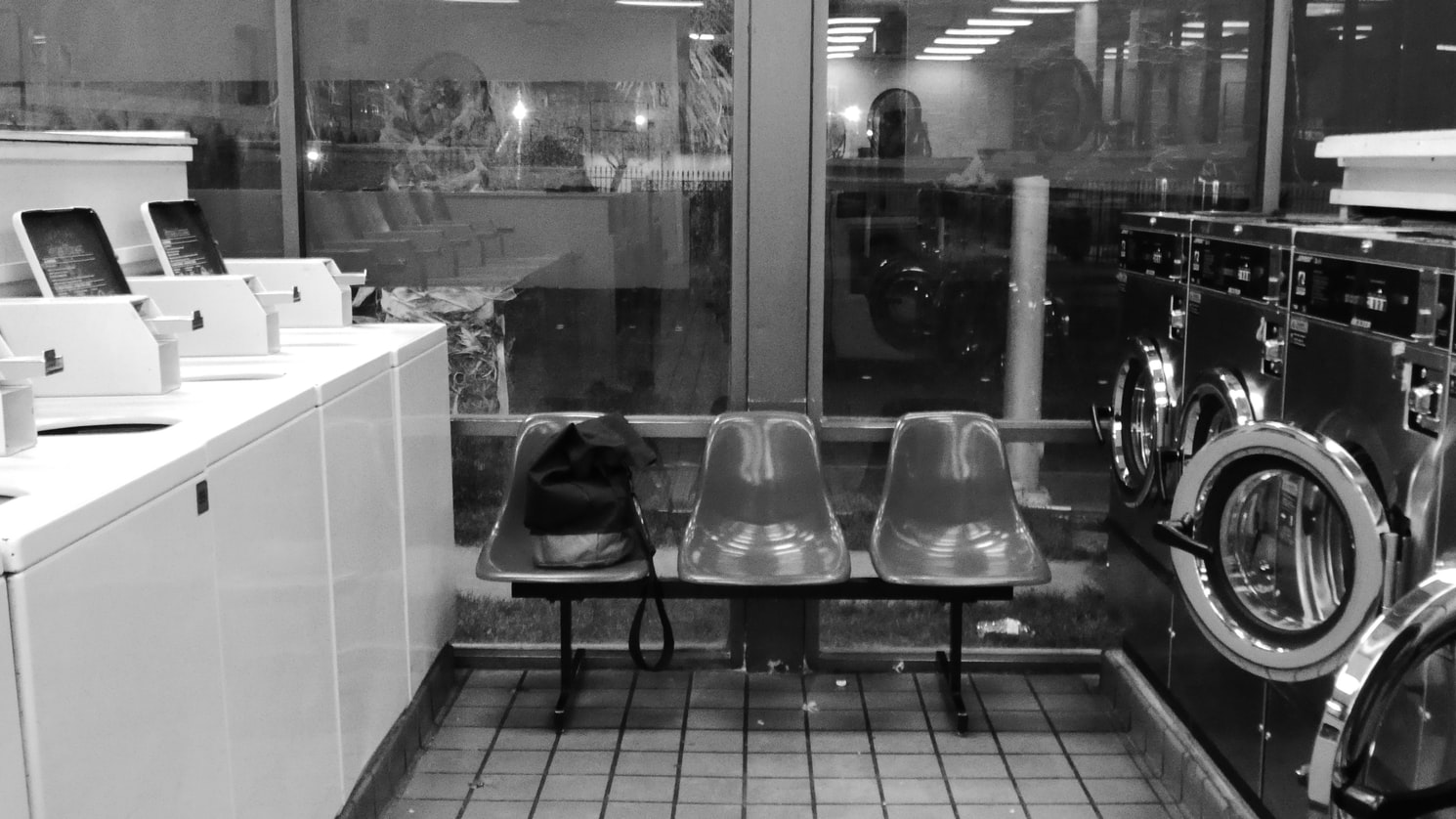
I sat on the curb of the laundromat, squishing ants between my fingers, checking my phone every few minutes. Heat simmered in the asphalt parking lot, tangible and sticky, rose through the curb and my cut-offs, and the still air gave no relief – but at least the air and sky made me imagine I could be free, instead of sticking to the plastic chairs inside the laundromat, the heavy air perfumed with detergent, weighing me down like Dorothy in the field just outside of the Emerald City, bewitched. The trail of ants, immune like most non-humans to human tribulations, continued to wind through the grubby building, little specks of black on the gritty tile, occasionally detoured by a hairband gathering dust, by a crumb of detergent.

Before I moved to this neighborhood, to West Campus, I had a washer and dryer in my house, on the second floor. A shelf for the detergent. White bottles of bleach and periwinkle bottles of fabric softener. I would fold my boyfriend’s underwear neatly, into a Kon-Mari square, then crinkle it into a ball and shove it into his underwear drawer. I wasted a lot of time that way.

People began to leave the church across San Gabriel, tossing themselves through the thin wooden doors. It wasn’t a real church; it wasn’t a building that was built to be a church. Groups rented it out for swing-dancing or student group meetings or birthday parties. A mom and dad holding a baby in a mauve outfit and an older couple, white-haired, holding onto each other, picked across the uneven sidewalk to wait at the crosswalk.

In the other direction, crossing 24th, just one block away from Lamar, from the hill that rolls down to kiss it on both sides, from the no-left-turn sign ignored by students and state workers and bikers in their tight rubber uniforms, in this direction was a corner store. It had tried to fashion itself after the corner taquerias you could find off of Rundberg or North Lamar or Stassney, but this particular iteration felt tidier and less real. Its clientele consisted of students, mostly, who lived in the new high rise building that stood over the store like a bully with his knees on your shoulders, pinning you down, making you feel like nothing and like the most important thing. I always thought college students seemed to like that feeling.

Then the light changed and the traffic on 24th slowed to a stop and the students crossed from the corner store and the churchgoers crossed from the building-that-wasn’t-a-church, and a woman on a bike in a Jimmy John’s uniform flew through the intersection, platinum-haired, bright-haired, hair wispy at the edges but thick in the middle, the kind of hair you’d like to pull, the kind of hair you’d like to wrap around your wrists, tie into knots, and she stuck her tongue out, radical, loud, unapologetic, and she cut through the laundromat parking lot to avoid the light. She never once stopped moving. She rolled through the steaming asphalt and cut back across San Gabriel, and then probably to MLK and Nueces to pick up her next delivery.

She is an anarchist, marches with Antifa, covers her face during rallies. Some of them have automatic rifles slung across their shoulders, bobbing next to their heads like scorpion tails, but she holds the pole which lifts the Trump piñata above the crowd, throws matches. I can see is her hands, soft and brown, I want to feel the tips of her manicured nails dig into my wrists, pointy and orange. She has stuffed her hair into a skullcap, but I can see it spraying out against the nape of her neck like mist from a wave, crashing on a rock.

We live in a house, one of those wild houses with five bedrooms and six roommates, the guy who sleeps on the couch and pays fifty dollars in rent, the feral cats coming to the back door to drink water and catch spiders, the fundraiser parties for top surgeries, for bail, for car repairs. Her favorite drink is gin, an angry drink. Harsh. Leaves you with a burn, a headache. Painful and sweet, going down. She wipes her wet hands on her black jeans.

My phone alarm went off and I checked my laundry: wet. I hadn’t done the wash in months. It had been too hot. I had been too tired. I had collected piles of t-shirts and bras, the black pants I had to wear to work, the polo shirts stained with spaghetti sauce and wine. The smell of the laundromat unsteadied me, the room went dizzy.

Our room in the house is the smallest one. Small – but we don’t have to share. The central air isn’t connected to this room, so we leave the fan on, we rent a window unit from the Rent-a-Center next to the HEB on Springdale. Keep the door closed, so when we come home after our shifts, peel the red and black polyester away from our wet skin, we lay naked on our bed, right in the line of fire from the air blast, and I kiss the cold, hard tips of her toes like peanuts.

I like the delivery job, more than the waitressing I used to do. I like the bike, the heat, the sunshine. I like speeding through intersections, like puzzles, my body the missing piece. I like the hill down Windsor, where it crashes into Lamar and then recoils back into a different road, into 24th, where the students start buzzing out of apartments and corner stores and pubs, I like to imagine what they must look like from the sky. Ants, crawling toward an agreed-upon ending.

There weren’t ants in my apartment, but roaches, tiny roaches creeping up through the carpet, crawling through electric sockets. I lived in a furnished apartment around the corner, down San Gabriel. I cleaned the dingy windows, but no sunlight ever came in.


IMG_0039

Robin Lanehurst grew up in St. Louis, MO and is currently writing from Houston, Texas where they live with their wife and a small menagerie of pets. They am white, neurodiverse, and identify as queer and gender non-binary. Their work has appeared or is forthcoming in The Coe Review, Apricity Magazine, The Scarlet Leaf Review, Re:Fiction, and More Queer Families. 

Notes Toward an Essay on the Evolution from Postmodernism to Metamodernism as Tracked Through Popular Comedic Forms. – Wesley Hunt

DEB2
Image: Paweł Czerwiński

seed-of-life

Track the progression of comedic methodologies from the 1990s through the early and late 2000s, as demonstrated in the different stages of The Simpsons (from satire—early ‘90s—to sitcom—mid ‘90s—to absurdist comedy—late ‘90s—to deconstructionist meta-parody—early 2000s—to randomized pop cultural overload—current)—as a show that persisted while changing to align with the comedic zeitgeist, to demonstrate the shift from postmodernism to metamodernism. Do this and don’t look out your window—one of many belonging to the tenement building you and your father have lived in all your life—and, whatever you do, definitely don’t go out the door and catch a cab to the hospice, at least not until you’re finished.

seed-of-life

Connect these Simpson-stage-shifts to the shifts orchestrated by other popular comedies.

seed-of-life

Anchor Man (which you and Dad would quote), in tandem with Family Guy (which only you would quote) popularized the absurdist non-sequitur pop cultural references and self-referential allusions to the pop cultural references (the ones they make). Anchorman as the shift toward absurdity and Family Guy toward non-sequitur meta-referential pop culture—FG commenting on the humor of Will Ferrell, and eventually even on itself (deconstruction). Simpsons had to change to keep up.

seed-of-life

Remember the hinder-sounds of the door opening and closing around 8pm every night—after the two of you ate dinner, where he helped you with your homework, and if you finished quick enough he’d watch the first fifteen minutes of a rerun with you while getting ready (this happened less and less as you both grew older)—and how you’d strike out all the lights, after he’d said love you as the door shut, so the room danced with the shadows of the movement on the screen, and remained there in the dancing light until the door opened and closed again, around 6am (this time without a love you but instead a soft groan), and until the dancing shadows drowned in the sunlight streaming through the window you rarely looked out then, back when he could work, and even more rarely now.

seed-of-life

Connect to Frederic Jameson’s diagnoses of postmodern culture, and thereby late capitalism, as schizophrenic—i.e. extends the symptoms of the psychoanalytic qualifications of Schizophrenia (unable to accede into the realm of language, thereby unable to form a solid identity—no “I”=no ego) to the masses in the form of pop cultural overload of disconnected webs of signifiers (e.g. MTV rapid fire television) that confuse the subject and make critical thinking near impossible—let alone clear thinking, let alone human connection outside the network of pop-cultural reference. Argue that pop culture has only increased its rapid fire pace.

seed-of-life

Connect to escaping into the naked glow in the dark of the living/dining room (first from the television, then the computer, now both), and to the way the nature of that escape changed as plot and image changed, and how the shouting and the crying and the laughing from the other apartments, and out the window, first made the quiet of yours feel loud but eventually became indistinguishable from the shouting and crying and laughing from the screen and from your body, as did the hinder-sounds of the door opening and closing and the love you’s and soft groans (which became first a light cough and then a violent hack and then a quiet but constant groan that you barely hear anymore because you don’t visit the hospice).

seed-of-life

In postmodern pop culture the rapid fire imagery was slow enough to still allow for some forms of critique—thus the satire, sitcom, and abusurdist stages of the Simpsons. He wasn’t sick during these stages, though the coughing began toward the end of the third.

seed-of-life

Anchorman as the justification for the type of absurd humor that makes the pop references of Family Guy a valid form—i.e. it executed absurdity in such a way that the masses could embrace. This is the limit of postmodernism and thereby late capitalism. The overload of the convoluted webs of interwoven signifying chains as only made possible by the existence of the internet. This shift is the movement toward meta-modernism: e.g. Youtube culture. You remember this shift because he bought a computer, despite the voicemails from the medical billing agencies, and he gave it to you for homework and said Stay classy San Diego, and instead of saying thank you, you said I feel like a talking baby punching Ferrell in the face for making Bewitched—in a good way, and he might have laughed were it not for the coughing and for not getting the reference.

seed-of-life

Family Guy and Simpsons picked up on this shift, and the rapid-fire webs of signifiers became more convoluted, randomized, and meaningless outside of its own network of reference. He thought the Simpsons had fallen off. You disagreed.

seed-of-life

Argue that postmodernism was less insidious than metamodernism because the speed and volume of despotic webs of signifiers has exploded with the development of the internet. The overload of self-referential nonsense make subversive critique near-impossible in that it is sucked into the meta-ironic whirlwind. When Dad said love you, you used to say it back, but then you just started to quote shows, and he knew what you meant; then you started to quote YouTube videos of clips from shows, and he didn’t.

seed-of-life

Finish this soon so he can read it before he dies.

seed-of-life


0bfc32_df25c1dbede16027881ccbb8731bcd98.jpg

Wesley Hunt hails from Baltimore, Maryland, and is a writer, experimental filmmaker, musician, and connoisseur of fine Salisbury steak. He is a former editor at the literary magazine The Welter, and graduate of University of Baltimore. His words have appeared in publications such as Horror Sleaze Trash and The Fine Print. Listen to his music at treeforts.bandcamp.com. Or don’t. This is a democracy, after all.

Three Poems // Kevin Rabas

DEB2
Image: Nad X

[Dying Favor]

BY KEVIN RABAS

I ask you
..to take this cup
from me. I don’t want
..to die alone
in a white room
..some Monday,
my lungs
..full, but
without
..a breath left.

[TV]

BY KEVIN RABAS

…….I.
…….You can stop the TV,
…….get off your phone, and write.
…….It may hurt
…….to think, but you can.

…….II.
…….If you don’t write
……….or make songs
…….or paint, you have
……….to go and live in some
…….other person’s dream.

[unintended birthday gift]

BY KEVIN RABAS

The neighbors have it,
the pastor and his 6 kids,
held a bday party
the night before
the lockdown started,
and now they’ve got it,
every single one.

Rabas Author Photo

Past Poet Laureate of Kansas (2017-2019) Kevin Rabas teaches at Emporia State University, where he leads the poetry and playwriting tracks and chairs the Department of English, Modern Languages, and Journalism. He has thirteen books, including Lisa’s Flying Electric Piano, a Kansas Notable Book and Nelson Poetry Book Award winner. He is the recipient of the Emporia State President’s and Liberal Arts & Sciences Awards for Research and Creativity, and he is the winner of the Langston Hughes Award for Poetry.

At the Bottom of Everything (Bright Eyes) – Rebecca Hannigan


image

Rebecca Hannigan is a fiction writing in Denver who also plays music every. now and then. She studied environmental science, but enjoys social science and general social interactions. You can find her serving food at the vegan hotspot in town, or at https://rebeccahannigan.wordpress.com/. She’s always happy to make friends, or to just talk about anything worth talking about. Feel free to follow her on various platforms @rwehappyigan

Election Day – Susan Zeni

DEB1
Photo: Pamela Calloway

First, election day, and then
not so strange being close in bed
but first being strange
but not being in bed
being in body kind;
being slow, being not hurried for pleasure
being not at all the fantasie in men’s eyes;
being two, but not us, we
being lips, being breasts,
being you, being me, the bed being round,
plunging line of winter being one,
careful we, cutting away what is death.

Not even necessary, love
but there is love
and earlier there was my sadness for summer again
and the black dog chewed a squirrel
winter people crawled into tin holes.

Election day, I choose you, choose me, choose you
and earlier, the old woman wheeled to the polling place by her son,
a great book in her lap
fat boy in a green jacket, sparrow on a black roof
orange room very dry
but not dry, very lonely
but not lonely
only the blue jay
only the blue jay pecking on the window
not flying but then flying
from the black roof
not hearing my own voice loving for a long time
and then not even necessary, love,
not so strange being close in bed
but first being strange
being in body kind
careful we
falling through the fruits of winter
cutting away what is death


F5C804D246DA434EBFEB4222260D96B5

Susan Zeni wants her poems to tell the stories of people living on the margins of society. She lived in Manhattan on Avenue A, in Chinatown and in Harlem for five years, Seattle for ten, and is now ensconced back in the Midwest after years of teaching community college.  Publications and honors include a Lucille Medwick Award for a poem with an humanitarian theme, “Black Angel,” published in the New York Quarterly, danced by the Erick Hawkins dance troupe, and read up on stage with Gwendolyn Brooks; a Seattle Weekly portrait of Ralph and Mary moved out of their Second Avenue Hotel digs by the Seattle Art Museum; and “The Street Walker’s Guide to Wealth,”recently published by the Minneapolis StarTribune.

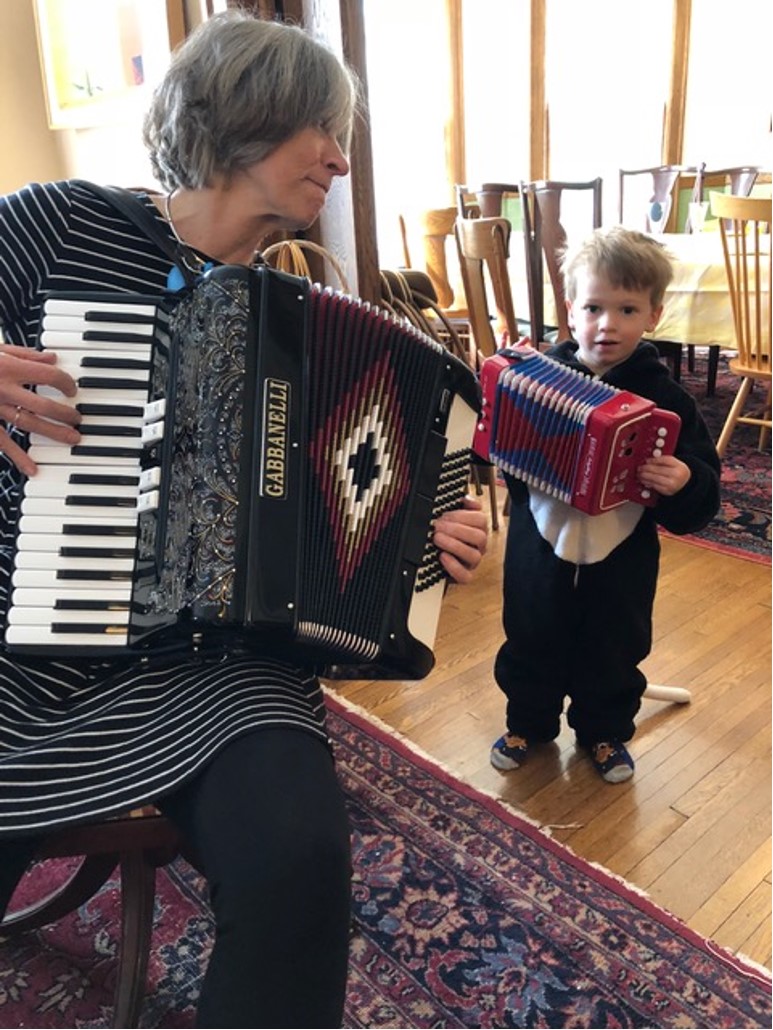
Susan gets her kicks playing accordion, having been in a number of bands, including the Polkastra and the all grrrl klezmer band, the Tsatskelehs, as well as performing solo at local art openings, Quaker events, and farmers’ markets.

Body Sculpt: Suffer for Beauty – Addison Herron-Wheeler

DEB1
Photo: Viktor Talashuk

She went in wanting the standard procedure, about 50 percent less body fat, no more skin on the eyelids, just lashes fluttering from the skull, and a sculpting procedure to get rid of every wrinkle, dimple, cellulite ridge, and blemish.

The red on her cheeks was washed clean, the red spots on her breasts and thighs erased. Her hairlines was brought forward so her blond bangs dangled close to the long lashes.

She also opted for the stakes driven into her heels to improve her posture and keep her spine straight. The gossamer gown they had given her, which at first clung to her every crevice and curve like a hug, now hung loose over a stick-like frame. She thought she could feel her ribs growing.

Her blood was thinned, her saliva replaced with perfume. Her ears were made smaller; her nose was removed. They cut off the tips of her fingers to make them proportional to her feet.

When it was all done, she put on a black, velvet robe and looked in the mirror. “You have to suffer for beauty” she mouthed, her thin lips pursed, her skin glowing neon blue.

She felt her ribs heaving as though they wanted to escape her body. She smiled, batting her eyelids, feeling the velvet on her tight skin. “You have to suffer.”


80274606_10157658038907593_776344535939678208_o

Addison Herron-Wheeler is editor of OUT FRONT Magazine, web editor of New Noise Magazine, and an avid sci-fi and metal nerd. Her first collection of fiction, Respirator, will be out in 2020 on Spaceboy Books