self-portrait as ghost with dementia – nathan elias

elias ghost

elias


Nathan Elias is the author of the chapbooks A Myriad of Roads That Lead to Here: A Novelette and Glass City Blues: Poems. He holds an MFA in Creative Writing (Fiction) from Antioch University Los Angeles, and he has served as editor on the literary journal Lunch Ticket. His work has appeared in Entropy, PANK, Hobart, Barnstorm, and elsewhere. His films and screenplays have been official selections or finalists in festivals such as Cannes Court Métrage, Glass City Film Festival, Canadian Film Centre, Texas Independent Film Festival, and both Hollywood and New York Screenplay Contests. He has taught a variety of creative writing classes, including fiction, poetry, and screenwriting. | www.Nathan-Elias.com | @_NathanElias

Photo: Meriç Tuna

cropped-eye-of-providence.jpg

1632 (the witch) – december lace

tuna

After Claire C. Holland’s “Thomasin”

Dead roots from an infertile farmland
wither all around her

She is the only sprouting thing for miles
in this muted abandoned wood

Her ripening lips wish for stained glass,
butter, and a pretty dress

She left her heart in an established
country across the sea, unwilling

pilgrim bound by a parent’s faith
She shivers as an outcast, unsnared traps

leave her stomach broken, the whisper of
the dark side growing louder. Kill the roots,

they say. Kill the roots.


December Lace is a former professional wrestler and pinup model from Chicago. She has appeared in The Chicago Tribune, The Molotov Cocktail, Pussy Magic Lit, The Cabinet of Heed, Awkward Mermaid, Vamp Cat, and Rhythm & Bones YANYR Anthology, among others. She loves Batman, burlesque, cats, and horror movies.

Photo: Meriç Tuna

cropped-eye-of-providence.jpg

i run into wolves running – ghost #13

ruslan

i run into wolves running
into me into mirrors into
switchbacks into endless
forests along endless rivers

i run into wolves running
into walls into hiding into
rebirth into fires in rooms
that they may not ever find

i run into wolves running
into death into memory
into the precision of a
scalpel into the western west

and therein i die and i die
and i run and i die and i
see it there on the shelves
the dust attracted to the

light like moths attracted
to fire like wolves attracted
to movement to packs to
new mentality until they too

die. and i too die. and if
not now then when and
if not now then when?
then when?

 we are ghosts. then when?


ghost #13 is something something something. they are from somewhere, sometime. this one is dedicated to someone someone, another ghost, i’m sure.

Photo: Ruslan Bardash

cropped-eye-of-providence.jpg

genesis – cassidy scanlon

genesis 2

he pressed seed to soil,
convinced that force could yield to growth.
the earth does not spit out
the beginning of your becoming.
for this, she is a true mother.
nurturing despite herself,
a sacrifice you are indebted to.

you know
the burden of a seedling
in tough soil. of plants
born in desert sand.

you know
what it’s like to grow
in a hostile womb,
suspicious of all things
padded for protection.

you are born
when the sun is at its height
cruel and unforgiving in exposure
of the elements.
your mother
tries to shade you,
casting shadows
you conjure when evoking
your father, an abandoned wind
lining the crowns of trees.
he speaks in metaphors
and you respond with poetry.
but language eludes you,
a longing lingers between
tongue and desire.

you search for roots
the potential of recognition
ravages
your family’s vines
concealing
the conception
of the first rejection.
the initial fortification
of want without resolve.

teetering on
a petrified foundation,
the past is porous
and swelling with decay.
but instead of dying takes
another form. molded
in stone, a fossil
imbued with traces
of recorded history.

hourglass

Cassidy Scanlon is a queer writer, Capricorn, and astrologer who received her BFA in Creative Writing from Chapman University. Her work has been featured in L’Éphémère Review, Loaf Mag, and WITCH. She writes about astrology on her blog Mercurial Musings and is a regular contributor to rose quartz magazine. You can follow her on Twitter @sassidysucklon. 

Photo: Brent Cox

acheron – robert boucheron

acheron.jpg

At five o’clock, Arthur Lothbury put on a gray felt fedora, inserted a fresh white handkerchief in the breast pocket of his jacket, and stepped out the front door for his daily stroll.

The town was a cluster of brick and frame dwellings of the 1800s. Located in a hollow, on a railroad line that was no longer active, it had three churches, a dozen shops, a post office, a school repurposed as a senior center, and a white-columned filling station with a porte cochère. At the center, where two main streets crossed, the town hall boasted a mansard roof and a clock tower. The tallest structure in town, with a face on all four sides, the clock tower rose above the trees like a sentinel.

Arthur kept the clock tower in view, though he was unlikely to get lost in the town where he was born. He generally walked for exercise, but this afternoon he dawdled. His gaze wandered left and right. It was early spring, still bleak but mild. Buds swelled on the trees. Cold weather had delayed them. Slanting rays of the sun lit the quiet streets. No one else was about, which was odd for the end of a weekday.

He stopped to examine a flowering shrub that overhung a picket fence, as though eager to escape. The yard was unkempt, in a town that was proud of its gardens. How could such a thing happen? Who lived in this house? He knew many neighbors, but not all. In retirement, he was losing track of changes in the population.

This house must have a tenant, someone who did not care for the place. A deflated ball and a broken toy lay on the weedy lawn. Rolled newspapers littered the porch, dusty and yellowed. Maybe no one lived here.

Arthur moved on. It was an effort to put one foot in front of the other. Yet the day had passed in idleness—light housekeeping, some reading, an hour at his desk paying bills, a letter to a relative. What had he done to be worn out?

A single man with many friends and few responsibilities, he ought to enjoy this stage of life, an endless stretch of leisure. But contentment was elusive. He urged himself to walk faster. Chin up and eyes peeled! At any moment, a friend or stranger was likely to cross his path. He would need to say something cheerful, a word of greeting. But the town was deserted, as if Arthur had missed an order to evacuate. He looked straight ahead and spurred his flank. But his feet dragged.

Coming to an alley, he stopped to peer down its length. He seldom walked in this part of town. He knew it like the back of his hand but not this alley. It bordered the railroad track—that was the trouble. The sun trembled on the horizon. The alley was already in shade. Lined by sheds and fences, it promised things of interest—an old wagon, a gnarled tree, a forgotten bicycle like a sketch of lines and circles.

Arthur strolled down the middle, over gravel and grass. The alley was long—he could not see the end—and growing dark. He tried not to scuff his shoes. He hoped he would not step in a puddle. Not a living creature met his eye, not so much as a sparrow. Then a small shape shifted. A cat crouched a few feet ahead.

Cats lurked all over town. Some allowed him to pet them, some rolled at his feet, and some fled. This one stared coldly. Whoever said that cats were curious? Another step, and the cat disappeared, perhaps through a hole in a fence.

Dusk came on. Was it so late? Arthur looked around and did not see the clock tower. How long had he been walking? He had left his watch at home. Was this a blind alley? To turn around would be an admission of defeat. Despite fatigue, he pressed on.

The alley ended at last in a building with a passage through its ground floor. It was now night. At the far end of the unlit passage was a gate, with open space visible through the bars. Should he enter? What if the gate was locked? He was too tired to retrace his steps. Go forward and hope for the best.

The passage was empty. Beyond the gate was a street. He grasped the gate and pulled. In the hollow space of the vaulted passage, the rusty hinges groaned. Arthur flinched at what sounded like a voice, the drawn-out syllable “woe.” Arthur stepped through the arch, and the gate clicked shut. On impulse, he tried it. Locked.

The street was built up on one side. The other was open to the railroad. Arthur had not been here for years. Shops were closed or boarded up. The pavement was cracked and littered. He wanted to sit, but where? A short distance away stood the old train station, abandoned. A light burned inside, the only light in this gloomy wasteland. He trudged toward it.

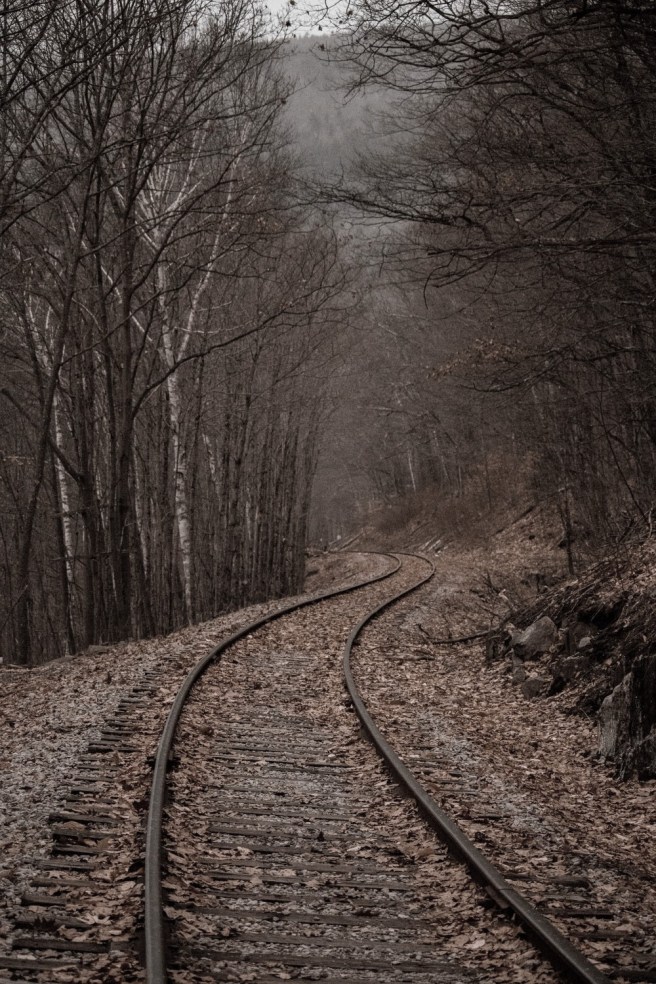
A low rumble made itself known. The earth shook. The rumble grew and grew to a roar, until it was unmistakable. A train! Arthur reached the platform as the train arrived. In a stupor of exhaustion, he watched it slow. It looked like an excursion train from the century before, an antique restored to service for a single run. It screeched to a stop, a door opened, and a stair dropped at his feet. Where was the conductor? The side of the coach bore a name: “Acheron.”

Was that the destination? Arthur grasped the metal railing and climbed aboard.

hourglass

Robert Boucheron grew up in Syracuse and Schenectady, New York. He worked as an architect in New York and Charlottesville, Virginia, where he has lived since 1987. His short stories and essays appear in Bellingham Review, Fiction International, London Journal of Fiction, Porridge Magazine, Saturday Evening Post, and other magazines.

Photo: Adam Bixby

when the time period referred to has not finished – jesica carson davis

rory bjorkman

*
Remnants from the before

……………………………………what does this represent for you

object permanence                                       versus illusion

……………..we are all just visiting

*
This is how we let things go

……..by saying them and then waiting

……………..for their echoes                     for their ghosts

……………………….to fade until no longer recognizable

*
……………….Always coming home or going someplace

not an absolute decision

………………………………….two opposites simultaneously true

hold it close but with enough                            loose

………………………………….to slip away              if it needs to

……..if it               must

*
There are many names

…….a pool from which to choose

……………………………..the separation of bodies

…………..the difference of space between

this container we are all just                                borrowing

hourglass

Jesica Carson Davis is a poet and technical writer originally from Chicago, now living in Denver after several decades of travel. Her work has appeared in The Laurel Review, Zone 3, Columbia Poetry Review, Stoneboat, Storm Cellar, and other places. Jesica is an Associate Editor for Inverted Syntax literary journal, studied poetry at the University of Illinois (as well as The New School, NYU, and Poets House), was the final Alice Maxine Bowie Fellow at Lighthouse Writers Workshop (2016-2017), and won the Tarantula Prize for Poetry (Pilgrimage Press, 2018). Currently, she’s working on several poetry manuscripts and an ongoing project making poemboxes, which sculpturally interpret her words.


where the color gets out – ghost #4

where the color

That person is a tight furrowing.
We are doctors of light, cauterizing
the wounds where the color gets out.
There are people who want to eat
your color. My last partner said,
half-eaten is eaten, & she was disbarred.

Having your color eaten by night wolves
is a subsequent inevitability: a sentient
outpouring of colorlessness. Everything wants
to eat. It’s gone before I look around.

cropped-ghost-january.jpg

Photo: Nick Sarro

south broadway ghost society – raising funds for first print journal

00 ghosts

Friends,

I am starting a gofundme to raise money for the first ever print journal to be distributed by the literary and arts collective I run, South Broadway Ghost Society, and I am asking your help by pledging anything you can to help, big or small.

In the last four months since inception, South Broadway Ghost Society has grown immensely. We’ve already featured hundreds of writers, poets, artists and photographers, many of which right of of Denver, on our online journal, our curated Instagram and on social media at large. We’ve hosted four very eclectic events thus far: a reading at Mutiny Information Cafe, an open mic for letters at the Corner Beet, an intimate poetry/music mashup at Green Lady Gardens and most recently, an art gallery/live music/poetry event out of Thought/Forms Gallery near the Arts District on Santa Fe.

Ghost Society has 100% of my heart in it. I’ve made a commitment to myself to dedicate at least ten years to this project, wherein I intend to continue hosting events and I am very excited to announce, start an annual print journal which I aim to have distributed as largely as possible. Outside of obvious avenues of distribution like local and chain bookstores, I also want to get the journal into metaphysical stores and would love to have tables at events such as the Denver Zine Fest, DiNK and the Curiosities & Oddities Expo. The magazine will be fully illustrated with art and photography featured against works of writing from every genre; poetry, non-fiction, essays, fiction, recipes, spells, whatever finds its way to us.

I am asking for your help to make that happen. Our goal of $999 would make it possible to have the foundation to build up from there, to pay artists who are accepted into the print journal and get going on distribution this October. Thank you for considering investing in this project which means the world to me.

Even if you can’t donate, you can help a lot just by sharing the gofundme page. You can find that page HERE.

Much Love,

Brice Maiurro
Founder/Editor-In-Chief, South Broadway Ghost Society

*Anyone who contributes $50 or more will receive a numbered first printing copy of the journal when it is available in October of 2019 mailed to you, or available for pickup at any of our events. Please include your address in the comments or email your physical address with the subject “Print Journal 50” to soboghosts@gmail.com.

Thank you.

two poems – D.o.t.B.

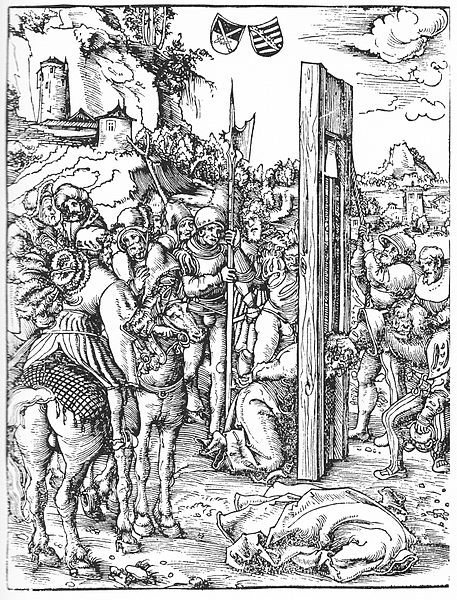
guillotine

Guillotine

Revolution cut so bloody
chopping heads eyes wide
make that bourgeois die
what beauty to hear children cry
this rage broke your calm lie
you stabbed your neighbor in the eye
kill or be killed
church bell screaming
our holy great blade watches
forevermore


Hunger

Teeth gnashing spit splashing
desperation crashing
breaking brittle bones
sucking on stones.

they work hard to remove
the Great Feast from their minds
leave that horror story behind
but it happens again the same time
next year.

The ground too cold frozen
more solid than a shovel
no food left in the hubble
stomach screams no more grumble.

They eye the outsiders
light bright their fires
slash their tires
and make dinner.
try and pray away their inner sinner
the meat is good
the wine salt speckled
no evidence to hide
when it’s wrapped along your inside.

Next year there are no new neighbors
no one on the outside…
so they find babies flesh
tears tastes
softest and sweetest.

SBGS December

D.o.t.B. is a Godde that currently lives in the body of K.V. Dionne. Boulder artist, poet, and photographer, they are one of the founders behind Writer’s Block and are current editor in chief of Writer’s Block zines. You can read some of their work in Spit Poet and can look forward to a collaborative poetry book coming out soon. They have many Hawk friends and Crow songs to share!