they say the rice won’t grow without blood // Sreeja Naskar

Image: Abishek Kushwaha

they say the rice won’t grow without blood

BY SREEJA NASKAR

      a man opens his mouth & a border spills out.  
      a grandmother unspools her tongue like thread,
      stitching her children into the fabric of a country  
      that never wanted them.  

         they say this is progress. 

                   (they mean:)  
                   the skin thinned to paper —  
                   the hands blistered, still reaching —  
                   the lungs filled with air thick enough to swallow.  
                             (they mean:)  
                            look how well you have learned to survive.  
                            how your bones folded neatly into history. 
                                                                                            but we know.  
                we know what it means to be asked for our papers.  
                to be split between two alphabets & never whole.  
                to carve out our own faces with the sharpest vowels  
                until we are palatable. marketable. safe. 

                                                       (they say we are lucky to be here.)
               
                                                                                            lucky.  

                                                                    
                         lucky like my mother learning  

              the price of shame at the grocery store.  
               (the clerk’s mouth curling around her accent  
                another thing she must swallow whole.)   

                         lucky like my father with his hands 
              roughened by the steel of a land he could never own.  
               (the factory hums. the sweat dries.  
                the paycheck arrives. the hunger stays.)  
        (somewhere) they are building monuments  
       from the bones of the silenced.   

       (somewhere)  the land forgets the sound of its own name.  
       concrete buries it whole.   

         this is history, they say.  
                                  (they mean:)  
                                the textbooks that forget us —  
                                 the flags stitched with the tongues we lost —  
                                 the songs we were too tired to sing.   

                    (they say we should be grateful.)   
                                                                            (they mean we should be quiet.)

       but i remember.  
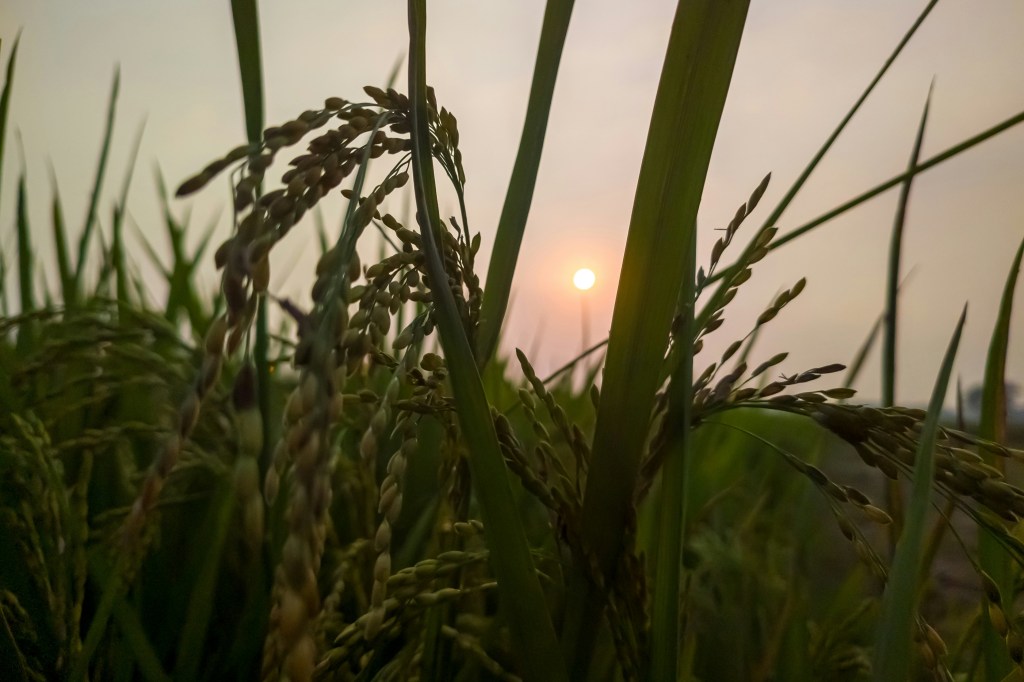
       i remember the rice fields & the rivers thick with ghosts.  
       the prayers my grandmother whispered to the soil.  
       the stories that split her open & stayed.   

           they say the rice won’t grow without blood.            (and still, we eat.)

Sreeja Naskar is a high school poet based in India. Her work has appeared or is forthcoming in Poems India, Crowstep Journal, The Chakkar, ONE ART, Frigg Magazine, The Little Journal, and Cordite Poetry Review, among others. She believes in the quiet power of language to unearth what lingers beneath silence.

Naked | Abhishek Todmal

Image: Steve Johnson

Naked

I finally stood, happy at disrobement
Brought about by some principalities
Some fundamental truths not escaped
Alone, free, tied to each being
Nakedness in the forming.
I tried to put a stop to it
Afraid once, though only once
Allowing layer upon layer to melt
Slither away into better forms –
Serve better suited seekers
And quickly I latched on to the fact of my emblazoned bare
Such a funny patch; so many distinct markings – though all in all a large converging pink Naked, as naked as one may be.

Abhishek Todmal is a writer based in Pune, India. He is currently working on his first novel – a piece of comedic fiction.  His poetry has most recently been featured in an issue of DASH Literary Journal. Amongst other things, he enjoys keeping active and loitering aimlessly under the sun.

Delayed Homecoming | Jayati Das

Image: Philip Myrtorp

Delayed Homecoming

For Tina and Ra

There are quite a few miles that crevice you from home,

Like the zip of your suitcase that flies between hope and not-hope.

I can only imagine how the fridge door must be slamming, unlike the one back here—

Extended supplies shunting faster than Turner’s baby,

The one that cries but never comes.

Do you wake each day to a finite line

And trace back the rhino’s trail 

You had smiled about the other day?

Does Bishop speak clearer now

And blur your vocabulary?

I am afraid I will forget your smiling hair

And the exact shade of your red lipstick

(The traces are already starting to drift).

Lie to me when I ask about happiness

Or perhaps halt the track of my question

(‘Are you home yet?’)

With a whistle or a red flag,

For then I can at least begin to unmemorise

Your face greeting me in some departure lounge.

Jayati Das is a research scholar from Tezpur University, India, and holds a Master’s degrees in English Literature frotm the University of Delhi. Her areas of research include representations of the Vietnam War, masculinity studies, and queer cinema. She has won over a dozen prizes in creative writing at the college and university levels. Several of her poems and stories have been published in The Assam Tribune, The Sentinel, and e-magazines like The Golden Line, including a story in an anthology titled DU Love. Her published research includes essays on the Mizo poet, Mona Zote, race in Othello, and on Pedro Almodóvar’s cinema.

This poem is from South Broadway Press’ new anthology, 
Dwell: Poems About Home. Purchase here.

The Idukki Dam | Anu Lal

Image: Tobias Keller

The Idukki Dam

The British built it, upon our home,
In Idukki, amidst the feral mountains Of Western Ghats*,
This structure—a leviathan of construction,
Which they said was
The symbol of modernity,
An accomplishment of human effort,
This sterile, dark, tearing off the heart,
Of the Western Ghats,
The dam with which they also ruled,
Nature with alacrity.
For two hundred years, the empire governed
Our desires and hopes, destinies and dreams.
Our home enchained,
Under the hoof of the emperor’s horse,
Dying, rising, dying again, rising again,
Like an old creature heaving for its last breath.
But the old and spent
Doesn’t impress the empire,
And it left this land, its nature,
And the people, with a tale
Of condescending kindness,
Letting the “young” nation self-govern,
With warnings of possible schisms.
But with general consolations
At the possible victories gained:
Like the railways, the dams, the roads,
And the democratic spirit.
The siren of the train is bearable,
And so is the sluggishness
Of the democratic system,
And bureaucracy, but the dam—
A silent monstrosity of Idukki,
Governing the Ghats with its grey bosom,
Serving mostly electric power-supplies.
It’s old, with dark lines of age growing
On the ramparts of the reservoirs,
Mossy, slippery wall, waiting—
For its final fall, every Monsoon,
Drowning our dwelling places
Underneath the dammed up spirit
Of the wild and tortured river,
Surpassing human alacrity.
So when the rains ravage,
We hear the echoes, of death—
Riding the horse of the old emperor,
Upon the ramparts of the old walls,
With the fear of death,
Still governing us.

[1] Idukki is one of the southern restrictions in Kerala state,
India, which is situated in the Western Ghats.

[2] Western Ghats is a chain of mountains bordering
Kerala’s western side, which is known as ecologically fragile.

Anu Lal is a writer from India. He has written extensively about his homeland, the South Indian State named Kerala. His works include poetry, short stories, novella, novel, and nonfiction. His major works include: The Notions of Living, The Notions of Healing (anthologies), Stories We Live, Thalassery Biryani (Short story collections) and Life After the Floods (nonfiction). Instagram: @authorlal

This poem is from South Broadway Press’ new anthology, 
Dwell: Poems About Home. Purchase here.