Editor Interviews // Chris Bullock

CHRIS BULLOCK

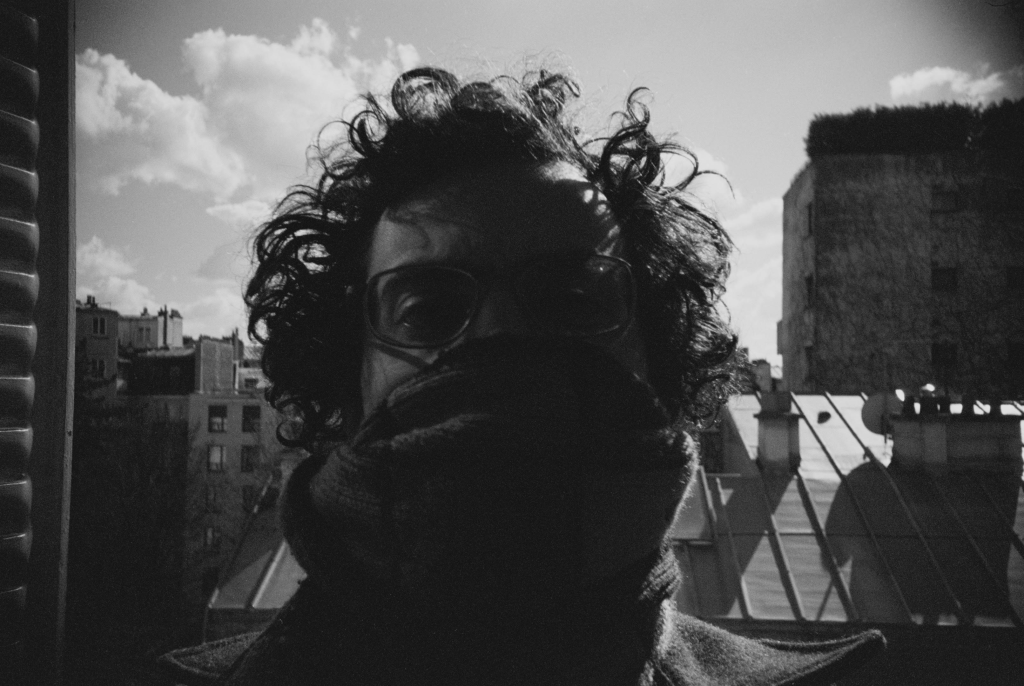
Chris Bullock, otherwise known as Tall City, has self published a few volumes of his work, and has been presenting his poetry at open mics and showcases for quite some time now, even reading for audiences with a rudimentary grasp of English. He has written and been published by South Broadway Press, has displayed art and curated exhibitions at The Lab on Santa Fe, has toured the country a few times with The Nicotine Fits, has sung his poetry inspired lyrics along his autoharp at venues and open mics, has spun original beats for freestyle rappers in Colorado and New Mexico, has studied in China on scholarship from community college, among other activities, and has recently decided to get a little more serious and diligent about something.

Writing is a way to formulate an ideal thought that is fluid and perfect from beginning to end. Some readers find life and emotion in it, others find some kind of death and a doubt of self.

Chris Bullock
SBP: WHAT IS FUELING YOUR CREATIVITY RIGHT NOW? WHERE DO YOU FEEL THE MOST CREATIVE?

CB: I feel the most creative when I am bored and my thoughts start playing around.

SBP: WHAT MADE YOU FALL IN LOVE WITH POETRY?

CB: Failing at almost everything else I have tried.

SBP: WHO DO YOU HOPE FINDS YOUR POETRY? WHO IS YOUR ART FOR?

CB: I am not sure people will find my poetry and I usually write it to get it out of my head, and if I think it’s pretty cool, then I leave the apartment and go share it with someone, and I am not too concerned with whether they like it or not.

SBP: IF YOUR WRITING WERE A KEY, WHAT DOOR WOULD IT UNLOCK, AND WHAT WOULD YOUR READERS FIND ON THE OTHER SIDE?

CB: Writing is a way to formulate an ideal thought that is fluid and perfect from beginning to end. Some readers find life and emotion in it, others find some kind of death and a doubt of self.

SBP: WHAT POEM THAT YOU’VE WRITTEN RECENTLY WENT TO A PLACE YOU WEREN’T EXPECTING, OR WHICH WAS THE MOST/LEAST CHALLENGING TO WRITE?

CB: A poem about the many elements of my diverse background, which felt like a rant, but the outcome was that it was praised as one of my best.

SBP: WHAT HAS BROUGHT YOU JOY THIS LAST YEAR?

CB: Sleeping really well, I forget when it was.

SBP: WHAT IS YOUR CURRENT OBSESSION?

CB: Accumulating enough money to afford Denver rent and stay off the street. Otherwise, Colombian style salsa dancing, boleros, reading books in languages I don’t fully understand, and eavesdropping on strangers on public transit.

SBP: WHAT MAKES SOMETHING HARD TO WRITE OR CREATE?

CB: Reluctance and avoidance.

SBP: WHAT IS THE VALUE OF WRITING AND ART IN THE CURRENT STATE OF THE WORLD?

CB: Fairly low but as George Wallace, poet laureate of Suffolk County confided to me, “Poetry is a vow of poverty.”

Editor Interviews // Debra Keane


DEBRA KEANE

Debra Keane (she/her) is a Denver poet, artist, advocate, social worker, facilitator, and identical twin. She’s written over 1,000 daily poems and simultaneously squirms at and strives for creative vulnerability in her everyday. Her work has been published by Twenty BellowsBeyond the VeilLast LeavesSouth Broadway Press, 40West, and ALA Editions.

I don’t know that writing, art, ​or poetry will save us​, but it can save its individual creators and receivers for a little while. It gives us a way to lean in, to make sense of, to understand what it means to be alive​ in our particular moment, and in all the moments past and in whatever’s coming.

Debra Keane
SBP: WHAT IS FUELING YOUR CREATIVITY RIGHT NOW? WHERE DO YOU FEEL THE MOST CREATIVE?

DK: I am relishing this particular moment in my own brain, heart, and spirit. I have structured my day-to-day to be filled with creative practices and deadlines, so my creativity is fueled by the routine of my commitment to meeting the page/paper/canvas at intervals. It’s such a dang treat to encounter myself over and over again against our backdrop of global and individual pain and joy and grief and knowing and not knowing.

SBP: WHAT MADE YOU FALL IN LOVE WITH POETRY?

DK: Poetry came along in my childhood and broke all the rules of language I was learning in this beautiful, strange, abstracted, and queer way. I’ve always been a listener and observer; poetry gave me a lens to search for the beauty of the world – the poetry of everyday conversation, sound, literature, trees, emotion, thought – all of it. Poetry also has such an efficient impact-to-word ratio! ​G​iving voice to the unmentionable with such brevity. What’s not to love?

SBP: WHO DO YOU HOPE FINDS YOUR POETRY? WHO IS YOUR ART FOR?

DK: I want my poetry to be found by anyone who could read or hear it and go, “huh” in some way. ‘Huh’ could be for a spark of recognition, a moment of delight, a confusion, a reckoning. I love the idea that one of my poems could save my own life and then simply go kiss someone else on the cheek as it passes them by. My art is absolutely for me first: it lets me know if it wants to be shared outside of my audience of one, and then usually won’t shut up until I get it to the right person or people in my life.

SBP: IF YOUR WRITING WERE A KEY, WHAT DOOR WOULD IT UNLOCK, AND WHAT WOULD YOUR READERS FIND ON THE OTHER SIDE?

​DK: My writing is the key to my own existence! By training or happenstance or personality, I have not always paid attention to what my brain/body/spirit is communicating, and so meeting the page every day is the way that I can re-/discover that I do in fact exist and am having a deep human experience that is simultaneously unique and universal. Behind that door, readers would find me and my host of speakers waving at them and shrugging and pointing at everyone and everything with awe.

SBP: WHAT POEM THAT YOU’VE WRITTEN RECENTLY WENT TO A PLACE YOU WEREN’T EXPECTING, OR WHICH WAS THE MOST/LEAST CHALLENGING TO WRITE?

DK: ​My poems have been walloping me with their grief surprises at the bottom of the bag. And then there’s a weird burnt french fry of anger that keeps butting in every few weeks as I write daily. I don’t mind them, though. People perceive me as a really joyful person, and I absolutely am, though I think only because I let grief and The Anger Fry speak in my work.

SBP: WHAT HAS BROUGHT YOU JOY THIS LAST YEAR?

DK: ​Meeting myself again in a really sweet, unrestrained way and embodying a sense of spaciousness. Trees, flowers, my nephews.

SBP: WHAT IS YOUR CURRENT OBSESSION?

​DK: I love my houseplants dearly. They all have names and enjoy visitors.

SBP: WHAT MAKES SOMETHING HARD TO WRITE OR CREATE?

DK: It’s hard to write or create when I have too specific a vision for a project and don’t leave space for the unfolding of what’s underneath what I think I’m trying to say. Or when I’m trying to be clever — oh my gosh, watch out. 

SBP: WHAT IS THE VALUE OF WRITING AND ART IN THE CURRENT STATE OF THE WORLD?

​DK: I don’t know that writing, art, ​or poetry will save us​, but it can save its individual creators and receivers for a little while. It gives us a way to lean in, to make sense of, to understand what it means to be alive​ in our particular moment, and in all the moments past and in whatever’s coming. I love that we can look back and recognize ourselves in the work of the ancients and our contemporaries. What a treat that things have both always sucked and always been amazing — writing and art is the record of that truth.

Editor Interviews // Tyler Hurula


Tyler Hurula (she/they) is the pinkest poet in Denver, Colorado. She strives to be the most queer and polyamorous person they can be. You’ll likely find her parading around in a tiara with hot pink lipstick going to an art walk or discussing the intricacies of the latest horror movie she’s watched with anyone who will listen. Author of chapbook Love Me Louder (Querencia Press) and Too Pretty for Plain Coffee (Wayfarer Books). They have been nominated for Best of the Net and Pushcart Prizes, and were a finalist for the Write Bloody 2024 Jack McCarthy Book Prize Contest.

If you are going to be anything in the world tonight, you better be lightning. You better find something in you honest enough to strike them.

Andrea Gibson
WHAT DOES THIS QUOTE MEAN TO YOU?

This quote is from a poem by Andrea Gibson called What Love Is and I think love is connection, and anything we do is ultimately about connection and love, and the way to do that is by being honest and vulnerable. When you show up in that way, all you can do is hope it resonates with the people you were meant to find.

WHAT BOOKS HAVE MADE AN IMPORTANT IMPACT ON YOU AND WHY?

On Earth We’re Briefly Gorgeous by Ocean Vuong

This book is gorgeous. Vuong finds all of these beautiful truths in what it means to be human in the middle of so many things that are not beautiful. He gives himself the freedom to say what he needs to say and to be completely vulnerable by writing it for a mother who will never read it. 

The Cabin at the End of the World by Paul Tremblay

I love all things horror, and this was the first book I read by Tremblay. It is absolutely devastating and hopeful, and the only horror novel I’ve ever sobbed at the end of. 

My Friends by Fredrick Backman

I am still in the middle of this book, but knew after the first page it would be one of my favorites. Backman is one of the most emotionally intelligent authors, and is able to encapsulate at the root what it means to be human, and how we all connect and relate to each other, even when we have completely different experiences.

WHAT IS THE VALUE OF WRITING AND ART IN THE CURRENT STATE OF THE WORLD?

I took a workshop with Patricia Smith awhile ago and she repeated a quote by someone and I can’t remember the exact quote or who it was originally from, but essentially it was something about when you’re looking for facts, go to the news, but when you’re looking for the truth of something, look to the poets. We have to create and connect with people. Art is how we navigate and contextualize the world. It is how we highlight the truths around us, how we find our human-ness in others, and how we are able to see the human-ness in others as reflected in their art—in how and what they create. In My Friends by Fredrick Backman, he says “art is what we leave of ourselves in other people” and in On Earth We’re Briefly Gorgeous, Ocean Vuong says “Is that what art is? To be touched thinking what we feel is ours when, in the end, it was someone else, in longing, who finds us?”  I like to think that all of my poems are just asking “do you see me?” Art is one of the purest forms of connection, and without it, we have nothing.

HOW HAS WRITING AND ART HELPED TO FORM THE PERSON YOU ARE TODAY?

I grew up in an environment where there were so many secrets I was expected to keep, which led to a very lonely and isolating childhood and young adulthood. Through writing, I’ve been able to share those truths and surround myself with a community and people dedicated to practicing vulnerability and authenticity. I have grown into myself, and have learned to love the whole of myself through writing and art. It’s given me permission to feel all of the things, and be open to experiencing a multitude of truths from a multitude of people.

WHAT IS SOMETHING THAT MATTERS TO YOU?

Building community is so important to me. We simply cannot do this life on our own, and the more people and perspectives we surround ourselves with, the more capable we are to grow together and care for each other.

Editor Interviews | Josh Gaydos


Josh Gaydos (he/him/his) is a self-taught poet that currently resides in Colorado. He has been published in Barren Magazine, Door Is A Jar Magazine, The Lettered Olive and The City Quill. For 2023, he is releasing a poem a week on his free substack at https://joshgaydos.substack.com/ Instagram Twitter

Someday, somewhere – anywhere, unfailingly, you’ll find yourself, and that, and only that, can be the happiest or bitterest hour of your life.

Pablo Neruda

What does this quote mean to you?

Trite but true with some flowers is this Neruda quote to me. It’s stuck around since I read it and though I am finding that finding of self a great deal less static than this quote implies, it keeps me aware that I could wake up in a decade’s time and find what I’d been running for or running from had made me into something I despised. Sorry for rhyming so much.

What books have made an important impact on you and why?

Too many so I’ll pull the first five that come to mind. East of Eden by John Steinbeck, captures human nature and our interconnectedness, the fact he addressed it to his young sons and was saying “here it is, everything” and delivers. frank: sonnets by Diane Suess, for the “isness”, not answering the Sirens call on a happy feeling or ending, the ability to paint a landscape as big as a coast and also write a poem about the grout around a brick (I’m being figurative here). What Work Is by Phillip Levine, for laying out that blue-collar / American working condition with romanticism and disdain, to put himself in it, distance himself from it, and paint individuals like they were in the room with you. Voyage of the Sable Venus and Other Poems, the ‘other poems’  in that just drop you somewhere and you’re immersed, it could be India and you feel the dense downpour with a herd of water buffalo walking by or New Orleans, or Compton. Robin puts you there in a way I haven’t been transported before or since. Another big one for me is The Artist’s Way by Julia Cameron. My mom had given me that when I really went headfirst into this writing thing. That book helped me to make a point to find art and make space for art wherever I was. Watch a movie, read a book, spin some vinyl and pull feeling or a scene from everything.  

What is the value of writing and art in the current state of the world?

Sanity. Gelling and coming to terms with the cracks.

How has writing and art helped to form the person you are today?

I wouldn’t be here without it, and I don’t just mean serving a guest editing stint for this press. I’d be dead, or fishing with my hands and a line in the Gulf, or possibly I’d be a merchant marine. Most likely dead though.

What is something that matters to you?

Time.