And Then, Gone

When we decided to end it, I was stuck thinking of the night
---------with fried rice and blue calcite and all the orange
 light over rosé in the only restaurant open in town so late.
-- - ------ - -  -- It is the middle of winter in Marfa, and you watch me
- - - - - - - - ---  run through downtown in the width of the blue moon
to the car so we can drive to the lookout off Highway 90
- - - ----and watch the Marfa lights flare, bounce
and fall back down beside twitching desert grass.
---------------- - - ------  There’s a couple next to us who has been camping out here,
---------------------------documenting this phenomenon every night for a week.
- - - - -They tell us each light has its own behaviors, own patterns.
---------------- They speak about aliens and energy. The army and angels. You’re not
-----------------convinced by any of them. You whisper human possibilities
-----------------in my ear: maybe they’re cars moving on the highway
------- over the mountain, truck lights, fast food signs…
--------I point to one yellow light pulsating so faint far
------- out in the field, I must convince myself it even exists:
pulsing and fading, fading, and pulsing, and then,
gone. There is a moment when all the lights go,
--------and it is simply dark. Why do we keep watching?
----------------  Goddammit,
--------------------------if we want to know what this is
--------------------------why don’t we just run out and grab them?
But we don’t.
--------------------------The lights reappear again and bounce off each other
---------------- in silence. Melting and glowing.
---------------- We don’t want to know what they are.
The joy is the obsession, the pondering, the pulsing.
And the total darkness. Yes.
---------------- It is also that.
Elaina Edwards (she/her) is a poet from the Texas Hill Country. She has her MFA from Texas State University. She is an ecofeminist poet that loves to dabble in the supernatural. When not reading or writing, she watches way too much X files with her partner, Stephen.
Ecclesiastical

There is a time to think and a time to do
and a time to observe the purple-orange sun
as it introduces itself to the gold-laced clouds of morning

There is a time to lose and a time to find
and a time to sputter away like a balloon struck by a pin
returning to its first flaccid form, only now stuck in a tree

There is a time for victory and a time for forfeit
and a time to wrap yourself in gray matter
as caustic water fills the buckets yoked upon your shoulders

There is a time for peace and a time for war
and a time to set fire to the playing-card kings
who spew bile between bites of pork and cake

There is a time to sing and a time to scream
and a time to conversate in whispers with her
cars and trains crying as they labor outside your window

There is a time to keep and a time to release
and a time to meld with the river rocks
as the frigidity nibbles at your toes

There is a time for all and a time for none
and a time for every time as we waltz and collide
through our kaleidoscope universe
Cole Henson (he/him) is a poet, playwright, and humorist currently residing in Denver, Colorado. He has received numerous accolades for his work, namely from his mother, fiancée, and dog. He can be found on Instagram @cyranowhere
All I Know of Heaven

The magnet holding our photo to the fridge lost its grip
sometime today or yesterday or tomorrow.

In it we are gap-toothed and barefoot, and I can see it in my face
grinning up at you from beneath my kitchen-knifed bangs:

you light the sky above my small world, you are the star
our entire family orbits – all of us reeling through black

since being sucked into the gravity of your supernova
and spat out the other side in the time it took to blink

away the blind spot that camera flash left mirage-ing
in front of my eye. But we were those kids once –

shoulder to shoulder, immortalized in film.
No matter the endless space between us now.

I have been stumbling upon breadcrumbs like these
more and more often, keeping them in my pocket:

a Stealie sticker on the napkin dispenser at my table
in some nowhere-town bar. The brooch I wore at your funeral

popping off my purse strap, the rubber back rolling across the floor
and into oblivion so now its sharp point bites my finger

whenever I reach for my wallet. I call them signs.
Faith, after all, is a choice when the answers to all the questions

that matter are written in code I cannot cipher
at least from this side of the veil. So yes, the dead

hear our thoughts and they send us buttons and pebbles
and spools of thread like little raven’s gifts through a hollow

in the universe’s infinity-ringed trunk
because that is what I choose to believe. The truth?

When I speak your name into the ether there is no answer.
Just a burning in my chest, which could be a symptom of smoking

since I picked it up again. Or the particles still floating around in an outline
of you left behind in this world like a footprint in ash.

Collecting like champagne bubbles around my heart
bobbing in Grief’s chipped crystal flute like a bruised strawberry.

All I know of heaven is there better be one.
Because you have to be there.

You have to be somewhere.
Madison Gill (she/her) is a poet from Montrose, Colorado. She received her BA in English from Colorado State University-Pueblo. She is the author of chapbook, Casualties of Honey(Middle Creek Publishing 2023), and winner of the 2021 Cantor Prize awarded by the Telluride Talking Gourds Poetry Program. Her work appears online or in print with Tinderbox Poetry Journal, Twenty Bellows, Beyond the Veil Press, Anti-Heroin Chic, and Sledgehammer Lit among others. Madison lives with her fiance and their cat in a tiny home in the Uncompahgre Valley of the San Juan Mountains. Find her on instagram @sweetmint_poet
Hoarse chimes of the clock		- - Stars float in slower time
All needs of the day, immediate	--  The moon a pensive sliver
My blood is a to-do list, circling	 -- Crepuscular stir and watch
My bones a calendar, days creaking The cold is a single clear note
Paper, then screens, these walls	- - The ridge gleams amid the dark
Anxious shoulder, spine’s regret	- - Light and cold regard one another
What is time but lines and curves -  And Earth awaits her warmth
What is time but a moving whip	-   The sun breaks, a silent promise
Work, a twitch at the mouth		-- A billion tiny eyes await
Work for whom? Forever whom	- -A million tiny bodies, wrapped against cold
Where is my soul in all of this?	-- They emerge, they trod, they watch the sky
One meeting, five meetings, 		-- A dawning world of hawk and rabbit
Will there be a real meeting?		-- Deer tails wait to hie, among their quiet steps
I know the world is wrong–		-- Foxes keep silence like antique monks
Then what can I do right?		-- The creek is dauntless, indefatigable
Let me throw one starfish		-- Water cares not for freezing, for warmth nor cold
Grace of graces, let me know it	-- A day of walking, watching, eating, killing, giving
Let me live someway here		-- Always parents for their children
Where they took away the paths	-- Always under a glowing, constant sky.
Jackson Culpepper (he/they) grew up in Georgia and has since lived in Southern Appalachia, the mountain west, and the desert southwest. His debut short story collection, Songs on the Water, is forthcoming in August from Homebound Publications, where he won the Landmark Prize for fiction. He lives and teaches first-year English in the Denver area. You can find him on Instagram @JCCulpepper and online at jacksonculpepper.wordpress.com.
I.
Dress the table while I’m out
with the cloth stitched in
sideways sliced strawberries
lay the sharpened swords
whisking wands and Florida water
for the wrists
for the three gallons of rain
required to make one tomato as red
and ready as this

II.
Mince each morsel of carrot
into a carrier pigeon
to the heart
bearing blessings from
your childhood table
the one with the wobbly
leg and Sunday paper stains

III.
Pick and sniff the peach peel
under your fingernails
like perfume and drain the
French press slow

IV.
Notice how a split open
blood orange looks both
like a pair of lungs and
a pussy and recall
there is more than one way
to breathe

V.
Look at our life according
to jars in cabinets
emptied and stuffed
with hours of ourselves
homemade hand-pickled
in a city where you see
the seasons change not
so much in the trees
as in the coconut oil
on our shelf

VI.
Open your skull like a pomegranate
and rub your thumbs inside
the ruby rind to remember
you are not Persephone no
you are only pleasure seeker
with a mother

VII.
Stuff your sharp tongue
down in your lip like
dip and let loose the licker
that thrusts hungrily into
the night sky like honey
so sweet we rub it on
our tongues on
our wounds on
the names of our lovers

VIII.
Breathe and let 500 butterflies
fall out with wet wings beating
against your molars and let your
belly hang out and your bowls
overflow and whisk me away
whatever you do
whisk me away
with you
Jordan Stanley (she/they) is a queer poet and content writer who loves to perform at open mics across Los Angeles where she now lives. She has pieced together her heart and found home in Boulder, CO; Brooklyn, NY; Boston, MA; Elon, NC; and Suffield, CT over the last 10 years. Follow her on Instagram @jaystanz for writing, sewing, cooking and baking enthusiasm.
—This time,—————————– as a lullaby.— I do not dare open my eyes— as I kiss———————————- you though who am I——– if I take not this opportunity —————- to see– when there are only ——— so many moments left to look? Four months ago ————— on the air mattress —– wedged with my back—————————— to your sister— Whom I love——————— so well ———- I still fear the power of will —————– who could understand the power of will ————————- we grow ——- in distance as you grow taller?———————– I want you to get —— everything you want—————————— to know what would have happened if I had never met you———————————————– would I still be a metaphor———————- of space? Had I been a girl for nothing but delusions that can allude —————————– to me you do not cry but say – “the way you portray the human ——————- body is beautiful” no, I am no longer artwork only——– a self-portrait.– ————————————- I am the ghost——————– to whom you gave a body of mist I paint a picture of mythic mornings ——————— when water smokes with fog———— I could melt into ———————————– gentle as my eyes ————— are tired when———– you grow taller will you still be able to ———— hear me when I weep?– I do not know—————————– if I want you to I do ————- not know how to ask you —————— to listen——– To the day that is new —————— with future———————- days are new and mornings———— are warmer when I find myself waking with you safe —————————— inside my stomach.–
Basil Crane (They/He) is a trans, Jewish poet born in Los Angeles and raised not far outside Philadelphia in a house in the woods. They are currently focusing on surviving their last years of high school and hope to study writing in higher education. This is their first publication.
— When I was little my Da was still in the Navy. I would often miss him and sit on my mum’s lap and cry, “When is he coming home?” She would tell me gently, trying to ease my heart, “soon”. I would always ask how long “soon” was, but was always told: “It is soon”. —-In my mind the word “soon” sounded like the sun as it was setting, orange and yellow mixing in the sky and extinguished on the horizon. It seemed like “soon” would only be a day.As I grew older I realized “soon” was much longer. I learned that “soon” is what adults say when they do not have an answer. I began to believe that “soon” did not exist. Now that I am older I realize “soon” is so much longer. “Soon” can be months. It can be years, but it never feels “soon”.”Soon” is always an uncertainty, never a promise. —-“Soon” can be a lifetime.
Quinn Ponds‘ education and career are in psychology, but she has always held a passion for writing short stories and poetry. There is certainly something to be noted about using psychology in writing fiction! One of her humorous poems about tacos has been published in The PHiX- Phoenix Magazine, and a short fiction piece titled “The Humid Hours” can be found in The Dark Sire Literary Journal. Her cat-themed flash fiction “Baby’s Breath” is in Literally Stories, July 27th, 2022 and her latest published story, “Gather the Darkness” can be enjoyed at Everyday Fiction, December 21st, 2022.
I have been enamored lately by the concept of messy, bloody, cathartic, altering the fundamentals of our societal responses to the constant bile-rising of glamorization and the need to perform sexuality, nonchalance, purity, a gold standard picture of a horrid, mangled creature draped in her own characters, choking on forced importance. She screams as everyone captures her slow death on video. Her sisters look on with pity and smugness and a bit of simmering jealousy, as though this will save them from a similar fate; if they escape visibly unscathed they still have not won. These women have become masters of compartmentalisation, as all women must be, slipping into routine numbness to block out the binging and purging on every false escape that appears in sterile media giving us new idols. She is broken down and sobbing hysterically on the floor. It is the greatest performance of her life because she only gets to have one before she is shoved behind biting remarks, cursing that her emotions seem to envelop her rather than cursing that she must carry these burdens at all. She is scratching and clawing at her skin as if to dredge herself out of the euphoric manipulation that is false womanhood. Her sisters are mourning the loss. She dies, finally, not with a guttural scream, but with a deep breath and quiet resignation. Her sisters exchange calm looks before descending upon her corpse with vulturous frenzy, dressing themselves in her memory to be her activist and champion, while she has already been sold and forgotten to make way for the next performance, to be a sacrifice satisfying the screeching ache of defeat we’ve felt since we were girls. Her red lipstick is smeared but in the way that makes her look thoroughly kissed, not the way that lipstick actually smudges, and her mascara is running down her face in her tears like she put them there to drop on cue. She screams and cries and her sisters applaud, her sisters are paralyzed as they fantasize about being in her position. Her perfect curls are held in her hands as she rips them out of her head. We continue to cheer and she lets her lungs fill with her own spit as her moaning is swallowed by the awe of her beauty as she falls apart. We clap and laugh and make knowing eyes at each other. We are so proud of being able to stay afloat. This, unfortunately, does not save us from the same fate. We sit, and feel, until we too are screaming.
Haven Nasif (she/her) is a queer poet native to Boulder, Colorado, currently living in Eugene and studying both English and Women’s, Gender, and Sexuality Studies at the University of Oregon. She has had work published in Portland’s Spit Poet Zine and often shares her writing through her Instagram, haven.nasif.
…Okay, here’s one for you: I’m retiring my last name Gomez for the one my ancestor Eladio brought over to Mexico City from a village in Portugal as a teenage immigrant: Games. Spoken aloud, the names sound similar, but I want my children’s last name to be spelled G-A-M-E-S. Maybe they can sneak past getting mail in Spanish only, and other things that come along with being presumed Latino. Which we don’t really feel.
…Eladio married a girl in New Mexico named Sparrow. She was reportedly often distracted and melancholy. Eladio was by accounts a young man of enterprising character and found work right away using the identity of a man named Oscar Gomez, recently deceased. Mysterious to me in that Eladio took not only Oscar’s name, but his job and woman as well.
…Eladio had six children with Sparrow, one of whom was my grandfather: Casimiro Gomez. He was the second son. Sparrow loved him dearly, and sometimes she called him Oscar.
…Eladio volunteered to fight in France during the Great War. It’s said he came home shell shocked. He got into the liquor trade when Prohibition kicked off, and moved his family to Los Angeles during the Great Depression for work when Prohibition was canceled. His experience as a war veteran found him a job as a cop and over time he hustled his way to being a vice detective.
…Casimiro eventually moved to Napa to work as a vineyard farmhand and then off to France to fight Germans because that’s what he was drafted to do. He returned battle fatigued to California, to Oakland, where he started his own family and became a smuggler through Eladio’s connections. He relocated his mother and two sisters to join him. He became the father of seven children himself.
…Sparrow remains in my memory an old woman in a wheelchair on my Aunt Gloria’s porch, distracted and melancholy, the ashes of her Virginia Slims always several inches long. She never learned to speak English and outlived Eladio by decades. Everyone called her Sparrow.
…The required public announcement for legally changing Gomez to Games was published yesterday for the first time in a local paper, I think. I paid for it. Not cheap. I hope my car doesn’t know. Publishing today and tomorrow will satisfy the terms of the law. I’ll get an affidavit in paper mail stating I satisfied that part of the process and then it’s back to the judge who already approved the change. It should be a done deal soon.
…I don’t believe my grandfather would think worse of me for it. Sitting at his kitchen table listening to horse races on the radio with his own Pall Mall ashes so long it made me nervous. Sometimes he talked to my father and I about how our family name had once been Games, and that we weren’t Mexican. We were Colombian and Portuguese. His mother Sparrow had been born in Medellín. I’m not sure what my own father would think of the name change, though he does live in Medellín now.
…Eladio’s name is coming back on the board. I did it for my boy and my girl, and not for the kind of ancestral return I claimed on the application. I know there has been name based prejudice in my life and if I can buy my children’s way out of it, I’ll take the surreal identity shift. Is it a little conformist? And do I think about how my son might someday choose to pronounce G-A-M-E-S in a way that sounds considerably different than Gomez? Yes. Maybe learning the shape of my environment and trying to live in it has been one of survival’s lessons, and that’s part of what I am going through.
I remain, Sparrow’s great grandson.
Paul Games loves silk ties, sometimes pop music, and identifies as a Rocker. He is an MFA graduate of the Jack Kerouac School of Disembodied Poetics in Boulder and has been an Adjunct Professor of First Year Writing at Metro in Denver since 2018. His son loves tennis and his daughter loves her friends. His wife tolerates him. His parents are alive. He likes to read thrillers and enjoys long sessions in remarkably hot sauna settings, though not at the same time. He is a Triple Virgo. He is from Oakland, CA.
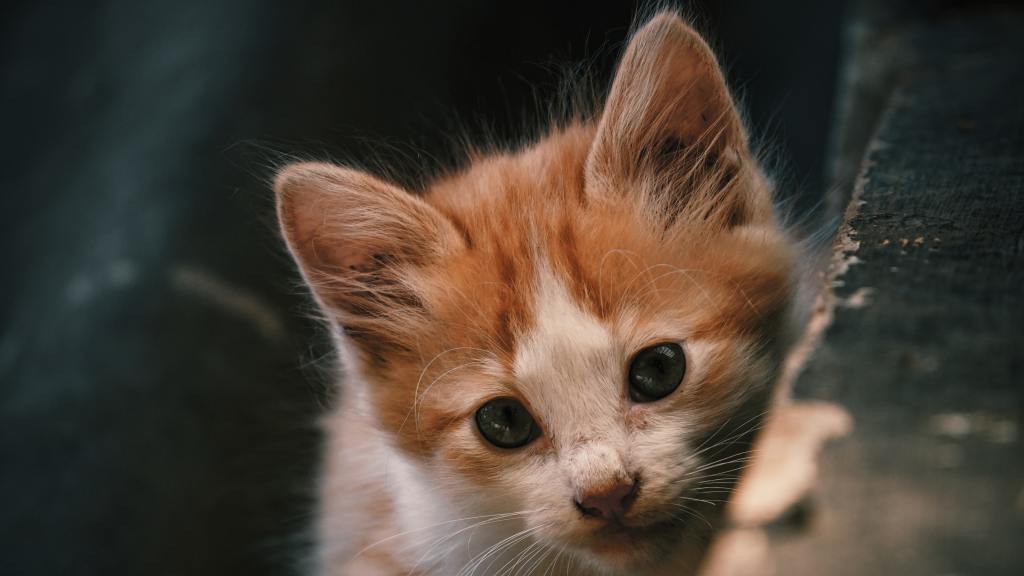
Four new kittens periscope heads from the old gym bag pile molding in my cupboard awhile
I disentangle blind and slimy mice-sized pouches, bags of skin with wet ears flattened back on scalps their mother mews confused desperate to return them to the dark and cozy canvass den
Three are destined to find homes but the little ginger is a Viking who weeks old turns to fighting clawing at the built-in mirrors stalking up the avocado tree a ruler and a hunter preying past the front door till I find him one day by the roadside stilled but dignified
the neighbor’s children ignorant of Viking custom dig a backyard grave say little prayers, teary, terse for a cross of sticks in bone dry earth














 south broadway press