in the center of the bowl, a still life for a still life,
reflecting sweet and sour gem, blinding, squinting at the fruit of it,
glistens a warm memory, juice weeping between the fingers
A pucker, confetti of pulp in the belly. Bloated with remedial fullness.
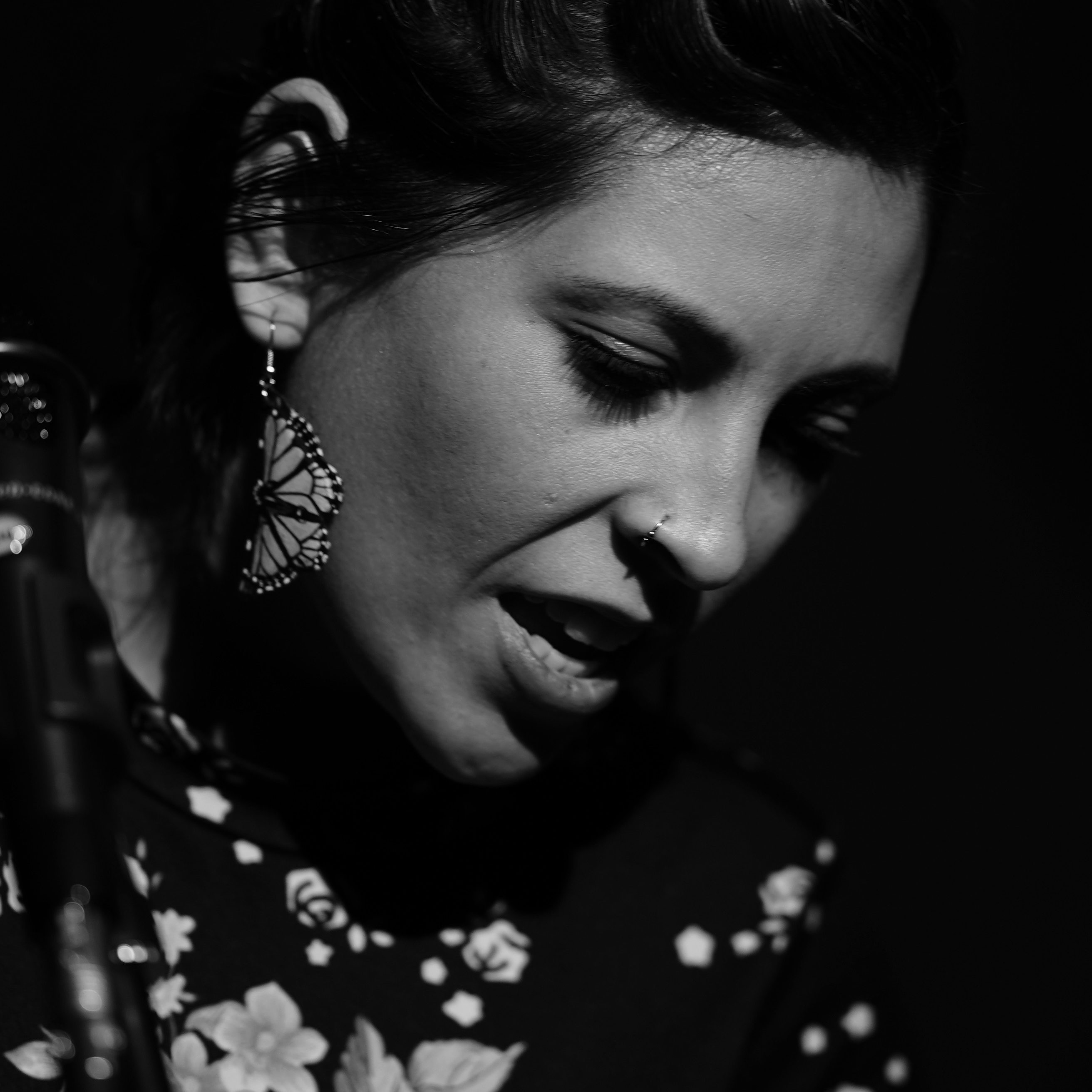
Lydia Ford is a poet based in Colorado, where she lives with her boyfriend and two cats, Melon and Zuko. Her work has been published in Words Dance Magazine, Ink & Marrow, boats against the current, Beyond Words Magazine and wildscape lit. You can often find her in her local coffee shop, probably telling someone about the music playing overhead or her love of nostalgia. More of her work lives on Instagram @lydfordwrites
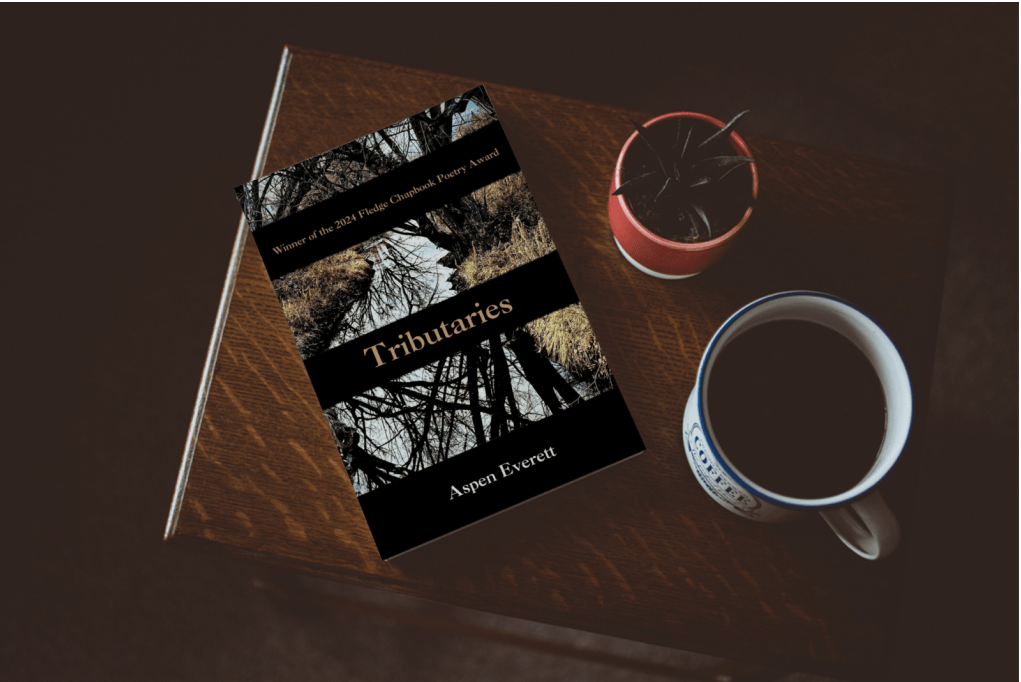
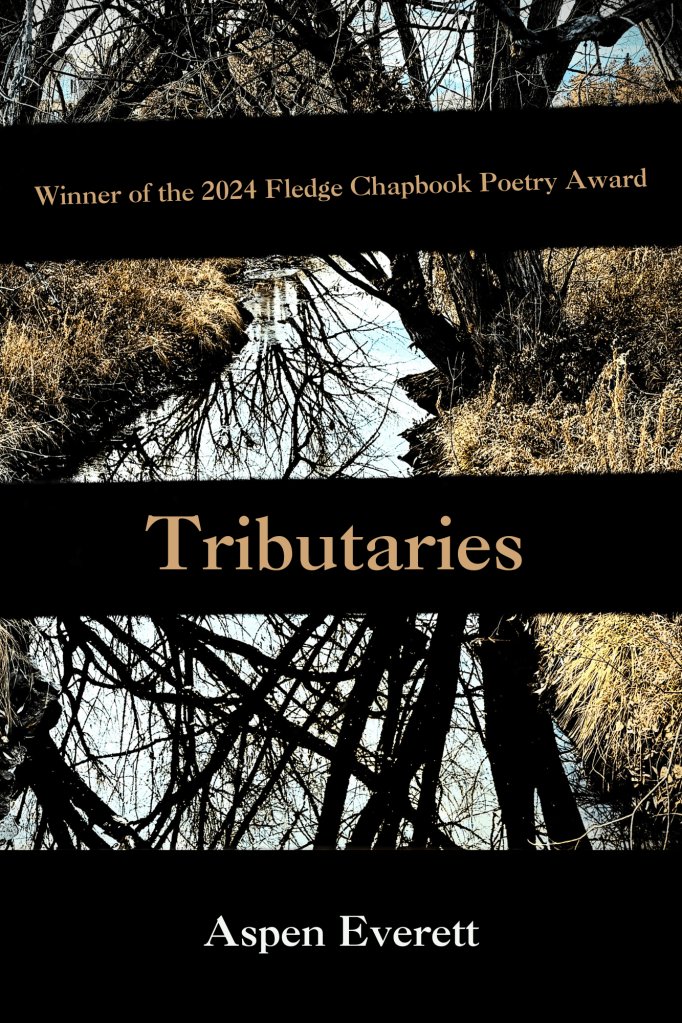
Tributaries: A Beautiful Opportunity to Lose Our Way
BY BRICE MAIURRO
The first thing I heard in these poems was a heartbeat. In his opening poem “All Water Has Perfect Memory”, an allusion to a Toni Morrison line, the rhythm for me was that same rhythm at the start of Dark Side of the Moon. The book begins with the sense of a heartbeat growing louder and louder each moment. Everett’s first collection of poetry, Tributaries, continues to carry that heartbeat, and the sorrow between its beats, throughout this literary confluence of moments. Moments among a greater sense of we, the ecological we.
In his poetry, Everett’s time is the earth’s time. These poems are not contained to the one-hundred-ish years of a human life but zoomed out and slowed down. They connect us to a very clear something greater than our singular journey as a human being on this planet. It is hard to tell where he ends and the rest of Mother Earth begins. He reminds us of this truth for all of us. The poems are in conversation with one another, compounding the complex yet approachable mezclado of this book. The Osage dance with the Cottonwoods dancing with the stream below them, all tributaries feeding into the heart of this poet. Everett is spellcasting here; calling in the healing of the earth and sounding the cautionary canary for its woes.
In addition to spellcaster, Everett serves as field guide, death doula, and eternal student in these poems. These poems are “always hungry” to listen more. In these poems, our fellow living beings, the Great Horned Owl, Coyote, the Bison, are much more teacher than metaphor. There is an admirable equanimity in Everett’s work (and play). He explores the distance between here and home, where home is the same home we find in “eco-”. Everett, as are we, is water, in the words of Toni Morrison, “trying to get back to where it once was”.
“Poets, remember to listen”, says Everett in “Populus deltoides”, “to breathe in the vanilla of resin”. Everett has a knack for imagery (see lines like: “blue hunger”; “cloudless teeth”). He sets scenes magically, and then returns to the reader in a very direct and curious way, as if it were a conversation over a cup of shade grown coffee. I find the agrarian salt-of-the-earth wisdom of these poems reminiscent of Wendell Berry, a fellow poet captivated by the rural. Everett himself is from the “windtossed flatlands of southeast Kansas”, which he visits often in this collection. The poems are biography; confessional poetry of the landscapes and experiences that shaped him and his words.
The poem “Geraniums” in particular stood out to me, with visceral lines like “a blackbird flies backwards from tinted window”. In very intentional moments, Everett captures the core of surrealism: not to immerse the reader in a dream, but to attempt to liberate our colonized minds. Everett has a poetic conviction. When he says “it is better to speak in chrysanthemums”, he speaks from experience. He “plants the seeds in the mouths of everyone” he meets.
Shorter poems like “Pine Trees Covered in Snow” show us that Everett can be potent while being concise. These interludes to longer readings act as heartpunches, steering the collection along.
I often have a hard time with questions posed in poetry, finding them to be navel-gazing or overdramatic shenanigans, however I found myself enamoured of the questions Everett poses. Questions like “Do horses hide in my blonde waves?” where the goal seems not to send you into a philosophical spiral but to invite you into the great curiosity and wonder of this poet. Phrases like “amanita dreams” have me asking my own questions with that same curiosity – what is an amanita dream? What colors would I find there? What shamanic doors can be opened by being more curious about the world of our fungi friends?
In the words of our Colorado Poet Laureate, Andrea Gibson, “it hurts to become”; this collection pushes through the pain of the Anthropocene becoming something more alive, revealing limbs reaching for a better world. The poems in this collection are never so binary to choose to be a meditation on climate grief or to choose to elevate the natural world. They are a both/and, a queering, an honesty. There is a beautiful disobedience that Everett encourages us to join him for, where we too “ignore the no trespassing warnings”, “follow the river” and lose our way.
Brice Maiurro (he/they) is the Editor-in-Chief of South Broadway Press. Hailing from Lakewood, CO., he is the author of four collections of poetry, including Stupid Flowers and The Heart is an Undertaker Bee. His poetry has been published by South Florida Poetry Journal, Denverse, The Denver Post, Boulder Weekly, Suspect Press, and Poets Reading the News. Website: www.maiurro.co
a man opens his mouth & a border spills out. a grandmother unspools her tongue like thread, stitching her children into the fabric of a country that never wanted them.
they say this is progress.
(they mean:) the skin thinned to paper — the hands blistered, still reaching — the lungs filled with air thick enough to swallow. (they mean:) look how well you have learned to survive. how your bones folded neatly into history. but we know. we know what it means to be asked for our papers. to be split between two alphabets & never whole. to carve out our own faces with the sharpest vowels until we are palatable. marketable. safe.
(they say we are lucky to be here.) lucky.
lucky like my mother learning
the price of shame at the grocery store. (the clerk’s mouth curling around her accent another thing she must swallow whole.)
lucky like my father with his hands roughened by the steel of a land he could never own. (the factory hums. the sweat dries. the paycheck arrives. the hunger stays.) (somewhere) they are building monuments from the bones of the silenced.
(somewhere) the land forgets the sound of its own name. concrete buries it whole.
this is history, they say. (they mean:) the textbooks that forget us — the flags stitched with the tongues we lost — the songs we were too tired to sing.
(they say we should be grateful.) (they mean we should be quiet.)
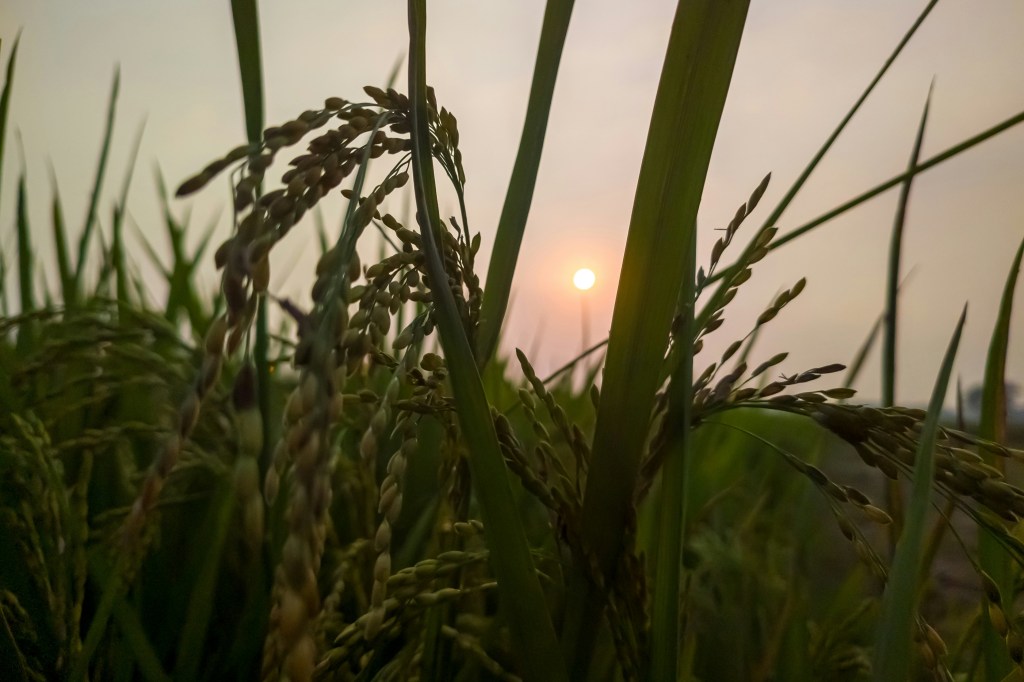
but i remember. i remember the rice fields & the rivers thick with ghosts. the prayers my grandmother whispered to the soil. the stories that split her open & stayed.
they say the rice won’t grow without blood. (and still, we eat.)
Sreeja Naskar is a high school poet based in India. Her work has appeared or is forthcoming in Poems India, Crowstep Journal, The Chakkar, ONE ART, Frigg Magazine, The Little Journal, and Cordite Poetry Review, among others. She believes in the quiet power of language to unearth what lingers beneath silence.
You remind me that I am hungry. That I hunger. That I am meant to be fed. That this is a natural state of being. I should not be ashamed to want. You remind me that I need connection. You remind me that it is natural to be tethered—to other people, to a person, to an idea, to a thing. You remind me that I have grown from something small, small, small. You remind me that all of us were once small, small, small. You remind me that I have experienced loss before / a severing and survived.
Liza Sparks (she/her) has work published in The Pinch Journal (online), Allium, Timber, CALYX, Split This Rock, and many others. She was nominated for two Pushcart Prizes and a Best of the Net in 2022. Her work is informed by her intersecting identities as a brown-multiracial-neurodivergent-pansexual-woman.
Let’s keep dancing like you promised would never be done.
I have awoken, You’re no longer there.
Endless Tomorrows I miss you, I grieve for you so.
You helped me ignore my fears because you said tomorrow will always be near.
I have awoken from the illusion and I grieve for your return, but no, you were never really here.
Endless Tomorrows you let me go.
I see my fears now that you helped me get through, because Endless Tomorrows, you were always true.
Endless Tomorrows, I loved you so.
The pain of today replaces my fears, because Endless Tomorrows you’re all I’ve ever known.
Endless Tomorrows I danced with you, but it was only Ego & Fear wearing your mask in my belief that it was actually you.
I have danced with Ego & Fear I didn’t know they cut in.
Endless Tomorrows you were always there to hide my fears with the illusion of the never-ending dance.
Fear & Ego you cut in to dance, sneaking in. Never did you ask,
then I finally hear you say,
“Masquerade”
as you both finally remove your Endless Tomorrows masks.
Scott Nookester is a kind man relearning how to be in the present. He is a hard worker, who is learning to be soft with his edges. He is a man learning to dance with the new.
Crepuscular, adj., the behavior of animals most active at twilight
For Ash
BY NEAL ALLEN SHIPLEY
It’s cold but the sky is clear, cleaved: bright pink sits on blue and there are no clouds, but a stripe of white would be poetic. This administration will ban the sky if they can, executives ordering it to stop changing color – trying to administer a world where there is only day and night.
Imagine, refusing to believe in twilight while the sun seeps into the gums of the horizon – denying nightfall on a summer evening when you savor sunset, still warm and purple on your tongue. Hunting is restricted between sunset and dusk when these animals are most active – to feed, to court – at the height of their power:
*
Odocoileus hemionus, mule deer feed selectively at dusk, choosing the parts of sagebrush that are most nutritious. Site-faithful, they return only to the safest, most bountiful grounds, pawing the soft loam of your back yard so close we could hand-feed them if we weren’t so loud.
You call me but you’re worried about other things – the dog I pretend to hate is sick and it’s probably just normal shit, but still. I forget to tell you that I know twilight is real, that it’s the most beautiful time of day, the mountains’ silhouette like thick walls of a bowl thrown up by practiced hands to protect us in this conservative city.
*
Vulpes vulpes pick-pocket their predators in the gloaming, stealing yesterday’s prime rib for tomorrow’s supper. The red fox knows to keep away from traffic – has learned to scent the carbon steel of their hunter’s rifle on the wind, stow their stolen goods deep beneath the snow where it will keep until leaner times.
This administration has convinced themselves there is only high noon, masculine sun scorching the earth shadowless, baking them where they stand without reprieve – the delicate frills of dawn too dangerous for them, nighttime dragging her slow fingers down their chests, the cold dew of Spring fresh in the corners of their mouths.
*
Canis latrans call to their young with soft woofs when the sun sinks almost completely, a nightlight deep within the mountains – small howls that make you lower your joint. I tell you about the time a coyote invaded my cul de sac growing up, our neighbors shepherding their dogs inside to avoid a slaughter.
You tell me the coyote is a mean bitch, but you’re meaner. If they’re a threat, we’ll bring the girls inside and I’ll fight this administration tooth and claw with you until it’s just another neighborhood dog, one we’ve seen before, docile; we stay outside with the joint, the soft glow of dusk around us.
Neal Allen Shipley (he/him) is a behavior analyst living in Colorado with a modest collection of pets and an unhinged collection of plants. His work has been nominated for the Pushcart Prize and appears in Creation Magazine, The Talon Review, and SCAB Magazine, among others. Despite the horrors, he loves a fancy hot dog. You can find him on Instagram @nealio9
To the reggae rhythms on his radio, a man pushes his coconut cart up the street, the juice sloshing in its clear bin, the coconut sweets & his dark skin gleam in this morning’s hesitant sun.
Poet-translator Lorraine Caputo’s works appear internationally in over 500 journals and 24 collections of poetry – including In the Jaguar Valley (dancing girl press, 2023). She is a Best of the Net and Pushcart Prize nominee. She journeys through Latin America, listening to the voices of the pueblos and Earth.
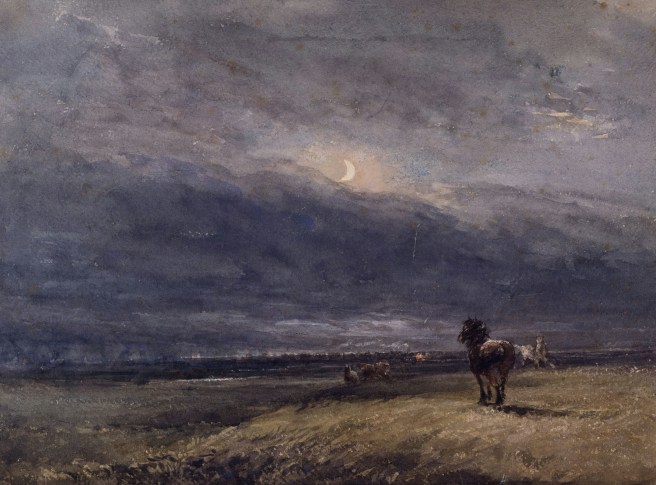
In my dreams psalms of rain echo and echo around a cabin my parents rented one summer.
I stand invisible beside my nine- year-old self as he gazes beyond the window overlooking twilight.
Rain slants past the poplars, and this fog, thick as a noose, winds itself around the heart
of the woods, where a lake, pale-faced, mirrors lightning. My younger self sees no danger,
only the innocence of boyhood. My younger self rests his head against the pane as if to dream,
too, of the mud, worm-wrung, that will wriggle between his toes when he stomps and laughs
in the grass after the thunderstorm. But as he closes his eyes, I turn around, hoping to catch
a glimpse of my parents laughing in the kitchenette’s stovelight. Before I awake each time, I find
their silence staggering shadow- like across the wooden floor, reaching out to touch my heart.
How foolish of my younger self to assume life is merely stitched in rainsong. How foolish of him
to mistake each hum of thunder for lullabies, to mistake our parents’ silence for anything but silence.
Jacob Butlett (he/him/his) is a gay poet from Iowa. Jacob’s creative works have been published in many journals, including South Broadway Ghost Society, Colorado Review, Lunch Ticket, and Into the Void. In December 2024, Kelsay Books published Jacob’s debut book of poems, Stars Burning Night’s Quiet Rhapsody.
No One Follows You Home After the 4th of July Orgy
BY DANIEL BRENNAN
Bone bent out of shape by the bombs against your back. You shuffle down the shadowed boardwalk, still ringing with a body high, the sea-reeds stalking in formation about you. The moon talks back, scolding you, your skin riddled with cartographer’s notes; men’s hands leave a mark on whatever they can. You’re alone again. Lonely again. It’s always again. Can you ever make these hungers more than just ghosts? In the back of your throat are the words you keeping humming to yourself in the dark: this is what I wanted. Anyone could find you here, their fishbowl eyes pooled with longing for more than the whiplash, the burn, the coming and going in dark rooms where you can be anyone or no one at all. Fireworks in chorus against your back. Siren song almost done.
Keepsakes
BY DANIEL BRENNAN
The stretch of their soft tissue unimaginable, as all the best myths are. Our friend describes their faces, the salt & pepper stubble of one man, the jaw made uneven by surgery of another, eyes and lips and the pained expressions as his fist slides inside them. He has them all ranked and filed, these men, these men with their immense hungers which I, patron saint of squeamish doubt, cannot fathom. Like a promise, or a lie, even, it is all about the delivery; the coning shape your hand must take as, bathed in its appropriate lubricants, it enters another body like parishioners entering their house of worship. My friend fists all kinds of men; daddies with 2-bedroom bungalows in the Pines and young finance professionals he’s cruised at the gym and off-Broadway understudies alike. I am jealous of my friend, and of these men; not that I trust my body enough to harbor such a kink, but I envy that they know what they want, know how to give it a name, to ask and most assuredly (to our shock) receive. His face takes on a fevered veil as he tells us how it feels: to be so close to the center of heat, pressing into a body’s dire vulnerabilities, to feel your own hand wrapped in wet warmth like a newborn wrapped in a towel. He is sole proprietor of this vice, the tight lip of flesh surrendering; the names of these men held in the back of his throat like a keepsake When we laugh, it is because we are cowards; we know that our bodies lack the faith required to wield such palaces within us, cathedrals welcoming the wound fist of a God. My friend, he discovers new pleasure each night, and what has my disbelief provided? Pained smile, stifled laugh, soft well of an empty bed.
Daniel Brennan (he/him) is a queer writer and coffee devotee from New York. Sometimes he’s in love, just as often he’s not. His poetry has been nominated for the Pushcart Prize/Best of the Net, and has appeared in numerous publications, including The Penn Review, Sho Poetry Journal, and Trampset. He can be found on Twitter @DanielJBrennan_