drowning those on the surface
underneath it’s downpour

you are very much
as the spring
this year

we can only pray
        hope is real
practice deep breaths
	plan in positive accord

as in what may grow

closer

perhaps the squirrels
will not eat the strawberries
but better
to put a barrier between
them and the fruit

I’m sure the weeds
and wild grass will
stay a few weeks
more green before
the summer sizzle

maybe we may
take advantage of
both the growing tumble
and the withering

to pull from the rain
and the land the best
we can

to add to the home
we share within us

set the table
prepare the meal
and may neither one
of us be cut
the cosmic within and without
BY TED VACA
YOU MIGHT WANT


to think deeply
about where you
come from

To Think Deeply About Where You Come From

TO
THINK		DEEPLY
ABOUT	       WHERE
YOU		COME

FROM

to think
deeply
about

to open the eternal
gold-fringe lined
burgundy curtain
on the stage manager's signal

let the show begin
step upon the stage
stomach in turmoil
mind electric
your eyes
             wide wild
             and excited

to accept what is
within
                            is without

to accept what is
                                            without is within

the universe  s
                 s            p
               l                  i
                      a   r


out and in
unfolds engulfs
consistently for a manufactured
lineage of time

the universe
                              doesn’t care about
                                                                     TIME

time manmade	           time the cursor
from birth to death	   and how much
                                           can you accomplish

time the accomplishment

                                            measure of worth and meaning

time the killer the waste of

                                           the sought after for proof of
                                           deeds and diplomas

the microscopic
                                            is 	C O S M I C
the cosmic is
                                                      microscopic

the embryo in their sack

utero evolving galaxies

spinning and star beings
born in a chemical-chance
at becoming only to be seen
in awe by the dark matter
that surrounds
Incomprehensible!
our eternal selfs
witnessed
mirrored not above
not below
but all around

breaking the novelty of direction
the compass explodes and the earthly mind
is set free of dimensions then intuned with the way
then again becoming unknown
as a dream
separated
from the expansion

we’ve not far to go
to reach & realize
Ted Vaca, Denver poet father lover crime fighter / semi holy somewhat sweet can be bitter / published here and there / Founder of The Mercury Cafe poetry slam / Coach of the 2006 Championship Denver Slam Team / Member of 1995 Championship slam team from Asheville NC / Intergalactic Provocateur
Incantation
to my Wisdom Teeth

I imagine you being lifted up and out
	easily
		not by the touch
of an object or an instrument
	or a hand
		but by way
of your own command.

I see you floating out
	as if you simply
		wanted to leave–
no force, no ache, no blood.

After,
	you are not gone from me
		but returned

to the Earth, to the Air.
	You are less bone
		than soil
less soil than sky.
You are four moons

in the soft night
	so there is no part of me
		that needs to be healed

only these glowing orbs
	that I have known.
		And now, they have
relinquished me.
Ode to the Barn Swallow

I love a beautiful bird
that cracks open the daybreak
and re-configures the setting

              of the sun. I take her into me.
              Everything I know of touch
              has been learned from the gloss
              of her feathers
              and the swallow
              down her orange throat.

                            When I am to finally live,
                            it will be with the arrival
                            of hope. The hope
                            that she will surrender
                            the whole sky
                            that was once under
                            her wings so that she

                            might return to me.
On Prince Edward Island

                a corridor opens
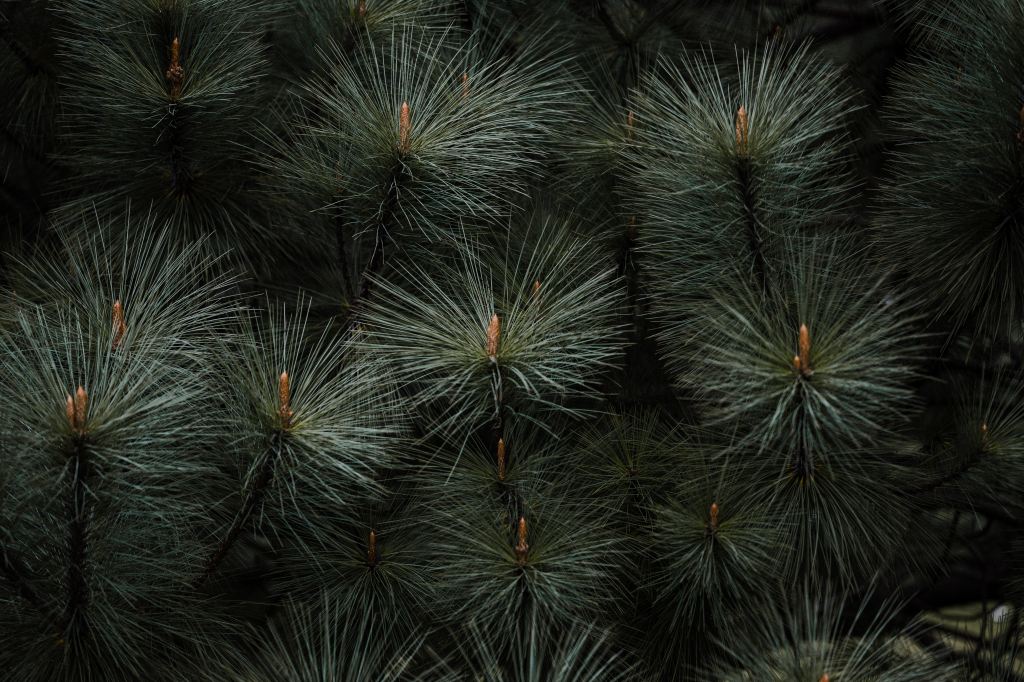
along a path of red pines

long necks
reaching toward a starless
November, dirt like burnt sugar
litters the path		I ache
to taste it
but pine needles lace
in and out, at once sharp,
and when the night settles, soft

I am searching for pieces of broken
              promises, but when I tire
I will turn myself in
Jessica Bagwell is primarily a poet, but also dabbles in creative nonfiction. Her work appears in Needle Poetry, Sorin Oak Review, and New Literati. In her poems, she pays homage to the lyric and explores formal experimentalism. When she is not writing, she enjoys practicing & teaching yoga, taking long walks, and sampling local breweries with her partner.
Sniffling nose, French braids just a little frazzled, mainly the mid left of the twins, Neck crooked down over a phone knook’d away in her lap, as she’s sitting on the barstool, crossed-legged, like the line from a Jason Isbell song, “Elephant”, that doesn’t need to be heard more than once, unless songs with E Minor hammer-ons, men who bang women before cancer takes the last shot and the indignity of death is your kind of driving vibe.
A question as thick and as gentle as a trunk lays on my shoulder, again:What music do you listen to these days, so many years later? You were so young, the world has grown so ol…
I do my best to shrug the weight of it from me, but I hear it’s somber, patient bellowed breath
As my crossed-legged friend and I both sip from our pre-shift pints, We stare at our phones for a while, and the bellows seem almost gone. She washes dishes behind the counter and chides about moving a new mattress in with her boyfriend who thinks he can do it all, and the folks around me chuckle and grin but
The trunk lets out a hot, woeful snort at the word boyfriend and my mind, my heart, since September and all the more in that moment, is pressed over there, wherever you might be
Because I don’t know…The trunk coils kindly…where you are…It coils tighter, I can feel the hundreds of muscle ridges pressing along the lines of my clavicle…I don’t know if you are still…Here…With us. The trunk twists softly, I feel its leathery skin, and thousands of whiskery vibraissie scan my temples as I release seven words that hang on my heart heavier than the 7-ton creature behind me.
I don’t know what happened to you.
My friend and some customers are sharing beer-tender memes and shooting the shit, and they would tell you that I was, I suppose. Words came out mouths and glasses were filled/refilled they say, but I only paid attention to the rumbles of the breathing, vibrating through the massive, right tusk I laid my head against, as I ask: Areyou resigned to the futility of failing to relax between shifts like my frazzled French braided friend beside me, smirking as the freshly tapped pale ales pass from her hands to folks encircled with Pretty Lights playing overhead? What shows have you seen? Which stage lights have passed over that childhood scar from the pit bull on your left and the fence on your right?Whose arms center you tightly at packed festivals, whose voice fills you up and fills up the car rides to concerts? I remember when they told me you jumped out of your father’s truck while he drove. Out, out, out, your mind screamed from its fog, before the morning marine layer even had a chance to blow past our campus. Who is there to hold you kindly, when the world tries to tear you apart?
Oh, oh right—I lift my head from the tusk—bed, beds-and-moving, people laughing by me, sour beer someone put in my hand, lift it up as my friend wipes the counter but its snout thwaps between my shoulder blades, so I swivel in my stool, my hand moving along the left tusk, and I stand and ask Areyou spraying down tables with windex and rolling out the bullshit of life from your shoulders, as you recall its daily dose by declaring that you will lay on that queen sized mattress at the base of the stairs rather than fall down a flight while carrying the couch because this move with your man is…is someone carrying you to bed and wiping your hair off the floor? Like that song?Is the weight of the world bearing down on your smile, the one I remember, as you and the girls stuffed trash bags to the brim, smucker’s brand crustables wrappers, half eaten red apples, milk cartons, symbols of simpler, sweeter times to live.
It’s bellowing breaths are long and woeful, and synced with mine as I walk closer to ask Live…do you live with dignity? More than ‘do you live’ do youlive with, that Latin word I wrote on the white board everyday before the bell, had us repeat in chorus as a class, that class theme, when students still had the pre-covid mental focus to not merely rotely remember but find real rhythm in a theme? That word that inscribed itself on the hearts of the goody two shoes girls who loved you unconditionally and always posed for class pics with you because no matter what y’all were the squad, as different as you were, that word that is burning behind my eyes and along the ridges of my mind, the base of my larynx and the hollow of my voice.
Anima
It’s tail is swish-swishing softly as I declare that word, anima, so I move closer, it’s lengthy eyelashes almost touching the brim of my ballcap, I say it again, Anima! We’d call out with grins before the exit bell. Anima, I’d tell you as I took a knee beside you lowered, on the days you were high as a kite, or elevated in anger from the shouts and screams surrounding home, or falling into exhaustion in the cradle of your plastic flimsy class seat and you’d find your hands loosening their clench around your mascot emblazoned pencil when we’d look at one another and say: “Anima.” A life full of life. That’s how we defined it.
The elephant saunters off, and I am left with you on my heart at the bar, until I let you go too with this benediction: May you rub that word, anima, into the helix and antihelix of your right ear for others to smell when they draw in close to hug you, may you dip your toothbrush in it to keep it on your breath before bed, may it be hummed in the cadence of your morning stroller jogs, with at least one squad mate, the one who wrote to me on my birthday so many years ago, and told me at 15 that you are a
beautiful and hardworking
mom.
Anima. Are you living, are you living with a life full of life, Teresita?
Kevin Foote (he/him) is a writer, teacher, and explorer. He was born and raised on The Central Coast of California, but now calls Green Mountain his home. When he’s not in class with his students, he loves investigating restaurants in the Denver region, trail running, and inviting friends and followers into the writing process online and in poetry slams. Kevin’s first collection, Cabin Pressure, is a work full of the woe and wonder of teaching, the unsung moments of victory in mental health struggles, and the unabashed joy of experiencing the natural world along The Front Range. You can see his published poems and works in progress on @feastsonfoote
a sweet ball, organic and tender, but it’s another to blank and piss and smack real
people around just to see what we can take until we eat us sugared flesh from candied bone this
unspooled ticking wild heart the last last god
As Hunger for Melon
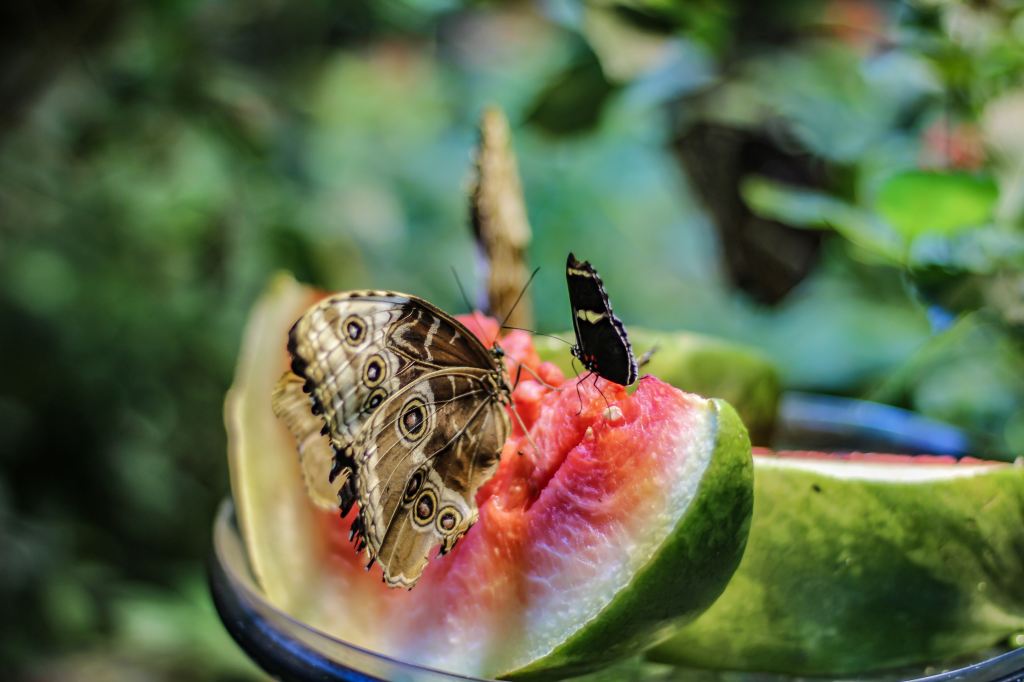
How close sweetness is to rot. Begging and easy to want. Leave the hard-won water of astringent rind. Hold something darker in the mouth, something so close to loss you feel it on the bone. Give honey, give wine. Fill a plate, a belly, a chalice. Let the sick light of midday collapse the tender center; let the bees get drunk and dream through the neon bulldoze of the afternoon. Spit the seeds, or swallow. Cry when swallows slice the sky. Red life, swollen, falls out.
Magic Lessons (Meditations from an afternoon stroll)
The car that passed thumped a Fleetwood Mac bassline and deep inside my cranium I am still five years old afraid of spaces that contain only me; no guardian to hold. I catch a whiff of vinegar, and I think of my lover. His naturally upturned mouth, and his eyes soft like soil after the storm has passed. I look at the wildflowers, and think of all the graveyards I would like to contain me. Heart no longer beating, just a garden my grandmother used to tend to, once teeming with fuchsia and dandelion. In my dreams that night, I tell auntie Ayreen about she, who looked like lavender skies. Her head haloed with stray blonde strands, iridescent under the setting sun. There is magic in this earth. It lives in pinecones, in the sound of the TV from the next room, and in fields overrun with weeds; in the sea that roars itself a drumroll, perpetually announcing its undulating waves. The magic is the quiet victory of knowing the guarantees of the earth. The sun will rise and it will set, grief will endure and so will love. We’ve come so far that we can see it all coming. And yet – miraculously, tenderly, this special pocket of the universe surprises us anyway.
Do not say that you do not see what I see. Do not say that you do not feel the walls closing in on you, that you do not hear the click of the key turning, locking you in a box like a coffin, because
nothing is as simple as it seems.
Beyond the borders of those boxes that sort skin like laundry into darks and lights, coloured or white, telling tales about the danger posed by a single soot black sweater, hood pulled high, or a dress, red as blood, thrown in with crisp white sheets because
it only takes one drop;
at the limits of those labels that reduce people to chemical structures, to nothing but an arrangement of atoms on one side of a double bond — cis, as in same, ordinary, natural, normal — or the other — trans, as in different, unlike in nature, form, or quality,
unintelligible and illusory as such;
in between that fractured love that physicians tried (in vain) to set straight before issuing diagnoses of sexual deviation — sociopathic personality disturbances to be treated and tamed, banished to bathhouses first, then bedrooms, now stashed away in closets and being
dared to come out;
within those colossal cracks that some try to seal with pity, others with prayer, asking God for a miracle, a cure, something to ease the suffering and numb the pain they attribute to being broken because they cannot see the sunlight seeping through the cracks, cannot understand that
there is beauty in breaking;
there, in the spaces beyond and inbetween, at the edges of perception where people are othered and alienated, separated and segregated, where borders are built with walls made of bricks, not straw or sticks because there, a harmonious wind howls at the rising moon and life dances with liminality like
humans with nature.
Leighton Schreyer (he/they): is a queer, trans*, disabled writer and poet based out of Toronto who describes themselves as fundamentally unsatisfied with the status quo. Through their writing, Leighton strives to see the unseen and hear the unheard, to make the invisible visible and tell the untold. They use their writing as a tool for activism and empowerment, challenging readers to reflect on the biases and assumptions that shape worldviews. As a current medical student, Leighton is particularly interested in the intersection of health, arts, and the humanities, and is passionate about using stories, storytelling, writing, and poetry as powerful tools for healing and connection.
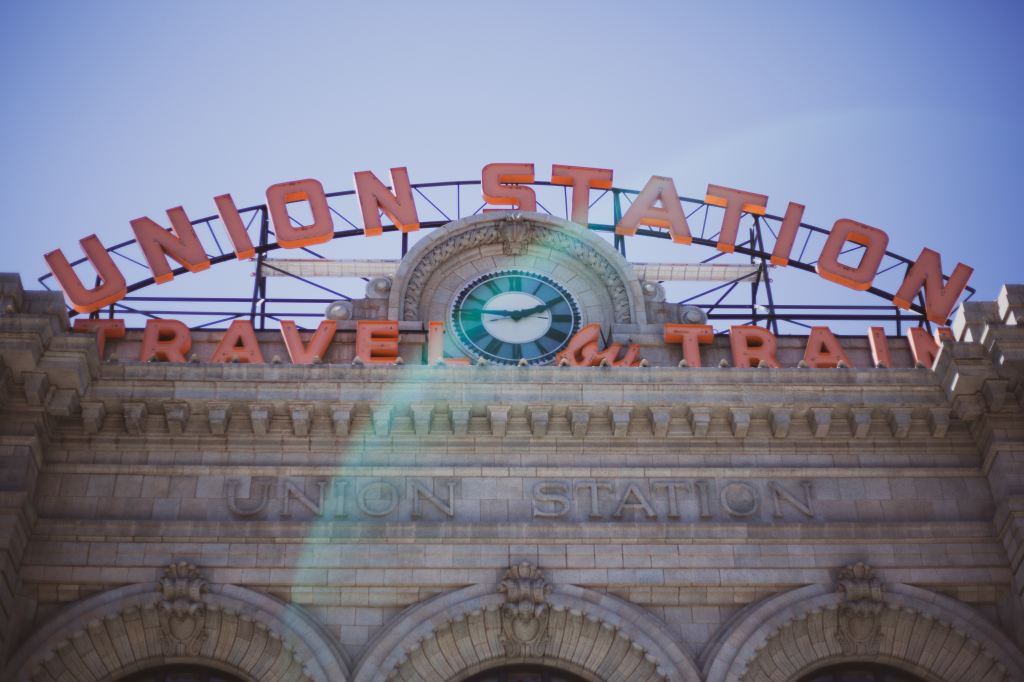
Outside the men’s restroom at Union Station trench coats heaped next to skis.
Inside the pile I am a carpet beetle minding the pockets.
Outside the pile I am the custodian with a side gig selling the larvae to the chocolate-covered- insect food truck, The Smooth Thorax.
Brian Dickson (he/him/his): When not teaching at the Community College of Denver, Brian avoids driving as much as possible to traipse around the front range region by foot, bike, bus or train with kids in tow. Somehow he also serves as an editor for New Feathers Anthology as well.
Your right hand squeezes, hoping to milk blood from the stones of our body.
In its grip, you resurrect an age of tailfins and lunar discovery, but you also manifest the unholiest of sins, a generation of blind eyes and cancerous banks.
Consider how many of us descend to take communion at your altar rail.
Offer us your compassionate bread and a chalice of wine fermented from your tears.
With a single snap of your fingers, we will beat our wings to help rebuild your temples.
Cradle us ———— in your left hand.
Joshua Gage (he/him/his) is an ornery curmudgeon from Cleveland. His newest chapbook, blips on a screen, is available on Cuttlefish Books. He is a graduate of the Low Residency MFA Program in Creative Writing at Naropa University. He has a penchant for Pendleton shirts, Ethiopian coffee, and any poem strong enough to yank the breath out of his lungs. Follow him @pottygok.
The mold, the spoil, the mushrooms rising from damp wood. All around us the house caves in; fading rays of sun illuminate the decay, and we breathe deep the rot. Our bodies grow twice their size before we start to disappear, before the fungi take root and all that’s left is life.
Cailey Johanna Thiessen (she/her) grew up between Mexico and the United States. She writes in English and Spanish and sometimes a mix of the two. In addition to writing poems, she works as a translator and is an editor and founder of Last Leaves Magazine. She released her debut chapbookWilder this year, and her poems have been published in 8 Poems, Willard and Maple, Cecile’s Writers, Hispanecdotes, and more. When she’s not working with poetry, you might find her doing embroidery, walking her Frenchie Earl, or eating really good food with her husband.
I have a story to tell, a picture to weave behind your eyes. Blood steamed from the sands. Dinner charred on all sides. Slip into the bath. Sip tea. A lot of hot liquid at once. Night after night we remember what we achieve in dreams. Forgotten in the silence of the morning, the deafening stirring of coffee. We mouth breath into each other’s mouths. We purr and hiss into the abyss. In the west mountains move. A whole tree floats down the river. In my backyard I prod air with a finger and it ripples. Lines of ants spiral out and under front doors. A neighbor sobs. A neighbor chops carrots. A dog barks. A child scolded. Chop chop. And again. Light shines off the azaleas’ white petals that brown as they wilt. What will the weeds cradle, gobble? Today is Sunday. Reset day. Streak of yellow house finch. Buttercup gold dust between my toes. Day of apologies, forgiveness. Ask for it and receive it in an inhale. Exhale. In the east waves wash away footprints where we never walked. Grubs in the garden swallow dirt in the dark. Speak to the dead. Who dares speak for them? Is anxiety just the fear of being afraid? Neighbors point to the sky: A hawk’s arc. A contrail’s swipe. Clouds morph, take on their many shapes. Swine, toaster, werewolf, Ferrari. The breeze whispers into trees’ ears, storm, storm. Where did the birds go? Those first few drops keep their promise. Sections of the city brimming. Dancers in the downpour. Metal screeching out of time with the earth’s humming veins. Then dusk again. Bats spell it out as mosquitoes disappear midair. The stars! There are more the more you look. Pray there is appeasing the powers that never were.
Dustin would always rather be sneaking a bottle of wine into a movie theater. When nothing good is playing, he teaches Spanish and runs a small organization that provides aid to the undocumented community in Richmond, Va. His poems pop up in the Potomac Review, Ligeia, Drunk Monkeys, Sublunary Review, and other spots. His poem “Progress, Mexico” appears in an earlier release of poems from the South Broadway Ghost Society.









 south broadway press