to be human is not an act of desecration | Laura Leigh Cissell

Image: Mohit Tomar
to be human is not an act of desecration
 
to live humanly is not anathema to nature. 
I do not apologize for my humanness.

-----------------------------------------------*

I do not apologize for the flower I picked
and carried in my hand to the mountaintop.
I spoke to the flower like an old friend 
then loosed her on the wind 
watching petals and stamen soar 
across the river rich valley below.
I do not apologize for this.

-----------------------------------------------*

I do not apologize for the shade I stand in
cast by brick and mortar and bitumen.

I do not apologize for the steel faucet I turn
loosing earth-cooled water from buried pipes,

filling my mouth with metallic-tinged life
crystal and blooming, pouring down my chin, 

splashing crisp against my bare feet.
I do not apologize for this seasonal waterfall.

------------------------------------------------*

I do not apologize for trails followed through grass and wood,
for the dent in the forest floor where I sat 
and shared lunch with a kingfisher: 
----------He, a silver-green fish, snared fresh
----------I, clementine, grown far from this alpine stream.

------------------------------------------------*

To be human is not an act of desecration.

I am nature as trees
nature as salmon spawned in rivers far from the sea
nature as lichen on scree
nature as lion, as leopard 
----------as beaver, as bison 
nature as wildfire, as hurricane
as water lifted as mist, as water dropped in flakes
as daisies carpeting desert sands.

I am nature as the curious cat–
slow stalking intrigue
delight of game, of pounce
of crunch, of blood
glutted and full of mouse.

I am humanness.
I am holiness. 
I am a masterpiece.

Laura Leigh Cissell (she/they) is an autistic, queer Texan expat residing in the Colorado foothills. They are the head of data analytics for a tech startup, an MFA candidate at Regis University, a spouse, parent, and occasionally a poet. Laura’s greatest sadness is that all the sea turtles of the world will never know how much she loves them.

My mother spoke in tongue | Deborah Ramos

Image: Cathy Williams

My mother spoke in tongue

to confuse the devil.
She put on her armor, opened the bible,
and pounded the pages flat with her feverish brow.

In the small morning hours,
she called Jesus from the cross,
the sun just rising beyond the orange tree.
She fought Satan all through the night
behind the locked bedroom door.
I heard the dreadful cries.
I begged her to come out, step into the light.

I tempted her with Body of Christ chips.
I offered a goblet of consecrated wine.
But she remained hostage
within the walls of her own madness.
“My refuge and my fortress, my God, in whom I trust”,
she screamed, pounding her head on that fucking bible.

She couldn’t catch hold of reality,
so I tossed a net into the river of no edges, no bottom.
She gave herself to the water,
wings folded against her beaten body.
My bloody hands of rebirth
drew her into the womb of my arms.

Eyes dark in their sockets,
I held a mother’s heart close to mine.
We rocked until her spirit washed clean.
We rocked until she found peace in the end of the world.
We rocked until she saw the face of her weeping daughter.

Deborah Ramos, a San Diego artist and poet, is the author of from the earthen drum of my body. Deborah is a graduate of San Diego State University, where she studied art, textiles, costume design and history of theatre. Deborah writes about the sacred feminine, primal desires, roadkill and her cats. Her poetry has appeared in SageWoman, Rattlesnake Press, Dancing Goddess, National Beat Anthology, Border Voices, Fuck Isolation Anthology, Literary Sexts, San Diego’s Writers Ink, and more. Deborah’s creative life includes traveling, writing, exhibiting her art and photography, as well as hosting Poets at the Grove readings in Balboa Park.

A City Story | Jennifer Maloney

A City Story

Once upon a time, our town owned a story —  William Stafford

This town once told a story.
It was all about our goodness,
our presbyterian Jesus, embodiment
of meek and mild, 
knew just when
to shut his mouth.

We might’ve owned the world,
but we knew we owned this city—
it looked like us, grey-faced, combed-over,
bespectacled,
be-cocked.
Our uniforms—

blue coats,
white coats,
top coats,
coveralls,

badges,
peaked caps,
clipboards
and stethoscopes—

they could have stood up empty,
could have stood up on their own,
so upright were we, so stiff, 
so erect with straightness—
the bleach of it burning 
our eyes, our throats,
our thoughts—our thoughts

were all about this city, 
what it needed,
what we’d give it,
whether it needed it or not:

white-gloved crossing guards
blonde, baton’d majorettes,
a thousand brushcut lunchpails, 
a parade of white bread wonder
fed into the factory daily—
while we kept

the wheels turning,
kept the peace
at the business end of the nightstick,
kept the hysterical sedated
with TV and Black Velvet 
and small pills
for big-mouthed women—

this town once had a story,
a secret underneath its skirt—
the pressure point of the club handshake, 
the sweet grease for the palm-reader—
the future
was ready-to-wear. 
We believed it, believed in it, believed we’d

get
what we wanted, 
the trophies we paid for,
the money, the manna, the mammon—
we’d get everything
we deserved.

It’s not the dogs,
not the fire hoses 
that ended this tale.

It’s the photographs the press took,
how it looked 
on the news. Operations interrupted
for awhile as we smiled, 
shook our heads, said
what a shame,
we must do better…
and we got better.

At the story.
At the inside jokes. Got degrees 
in Women’s Studies, hid
in Diversity Departments.
Learned to murder Black kids,
but phrase it right on resumés,
and get a job as the director
of the Police Accountability Board.

This story keeps on rolling.
This story is a running joke.

This town elects its drug dealers, 
pays its whores with plummy titles,
keeps its finger on the pulse,
says we have no DNR, 

so the ventilator breathes for us,
the psyche meds think
and dream for us,
the generic Viagra fucks for us,
the Trazodone tucks us in.

In fiction, there are endings, 
there is meaning, sometimes lessons, 
but this story,
like this city,
has a life of its own.

And who am I to judge it? 
To defend it? To defund it?
Who am I to count its blessings?
Or to number all its bones?

This city is American.
This city could be anywhere.
This city never pays for guardrails
if it can vote for guns

This city is my hometown.
This city isn’t getting better.
This city has no place for me.
It’s my hometown,
but it’s not
home.

Jennifer Maloney writes poetry, fiction and plays from her home in Rochester, NY. Find her work in Litro Magazine, Panoply Zine, Ghost City Press, and many other literary magazines and journals. Jennifer is the co-editor of Moving Images: Poetry Inspired by Film (Before Your Quiet Eyes Publishing, 2021) and the author of Don’t Let God Know You are Singing, Poems and Stories, forthcoming in winter, 2023, from the same fine press. Jennifer is also a parent, a partner, and a very lucky friend, and she is grateful. For all of it. Every day.

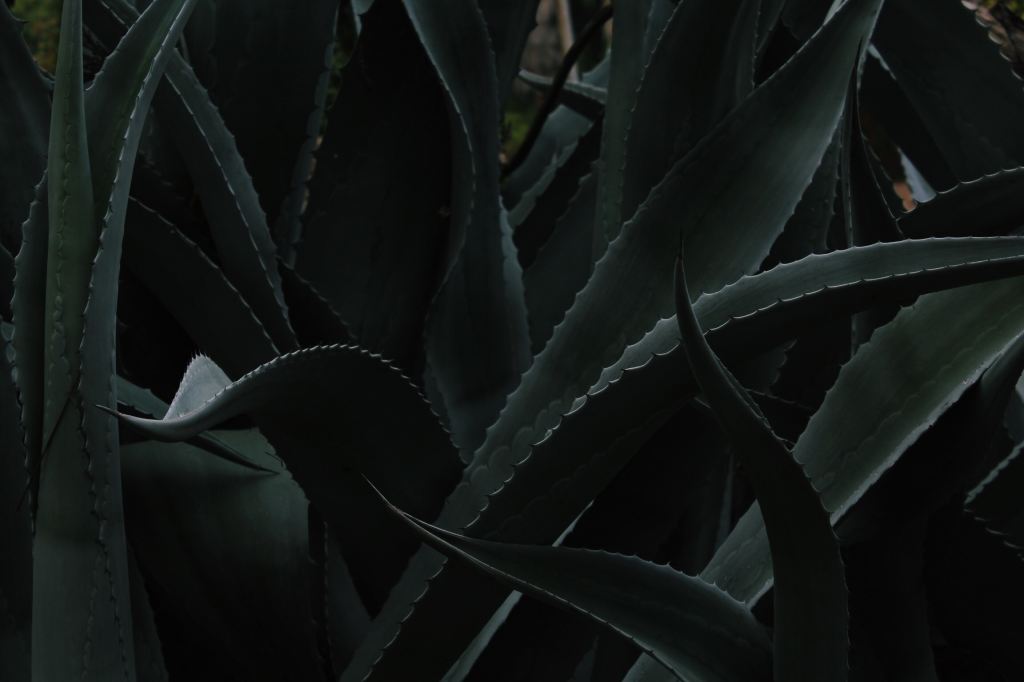
Aloe: Affliction. Grief. Bitterness. // Vanessa R. Bradley

Image: Alli Elder

ALOE: AFFLICTION. GRIEF. BITTERNESS.

BY VANESSA R. BRADLEY
I get a sunburn at your funeral.
My mother slathers me with cheap
aloe, sticky and dyed green.

I bought an aloe plant cause I liked the way
it felt when I pressed leaves
between fingers

and you told me aloe is for grief.

I look it up after in the book you left behind
soothing burnt, aching shoulders
with vermouth from the family fridge.

Page 30: bitterness and grief in floral language
Break off a piece and squeeze until it bursts

It tastes like shower cleaner and acid reflux
the sound of my own voice in a snowstorm
a shot of rubbing alcohol
a still green banana
that time you ate brie and yelled at me when you felt sick—

----------How could you let me
----- do this to myself?

Vanessa R. Bradley (she/her) loves fantasy novels and writes a lot of poetry about dirt, divorce, and discovering queerness. She lives in Epekwitk (PEI) with her wife, where she is working on a collection of poetry about the meaning of flowers. You can find her on Instagram @v.r.bradley and on Twitter @vanessarbradley.

If We Are All Just God in Drag | Carson Elliot

Image: Brian Suh
If We Are All Just God in Drag
After Baba Ram Dass

Then I will paint my lips with your poetry,
batting eyes at the singularity of a millenia–
                                               This shade always looks so good on you.

Pluck stars from the sky and sew into the fabric
of a time when I last felt this beautiful.
                                              You know, it’s breathtaking.

I can hum a tune that will set even the
most doubtful tongue aflame.
                                              Sit trembling in this blessed creation.

I, who speaks truth into life,
who molds the earth within my hands.
			                       No golden idol can outshine this glory.

Our becoming is the most tender act,
watch curve and angle bless the ground you walk.
			                       Remember when everything was beautiful?

Carson Elliot (they/them) is a nonbinary poet and educator living in Nashville, TN after spending many years in the quiet corners of Northeast Ohio. Their work focuses on the intersections of transness, spirituality, the natural world, and questions of becoming. Their work can be found in publications such as Samfiftyfour, Pile Press, Third Iris, Fifth Wheel Press, and New Note Poetry. Carson lives with their cat, Toast. Instagram: @heyitscarsonk

Two Poems | Ivan de Monbrison

Image: Luca Nicoletti

The barrel organist

Your hand is detached from your body and yet you are already holding it upside down there are dancers in the courtyard who are dancing now to the sound of an accordion there is also a singer who sings to the sound of a barrel organ a song that speaks of a river that once flowed to the north of the country silence yet is biting me like the head of a dog that would be biting a single leg there you have no more feet and to the sound of the barrel organ the singer has kept his voice floating in the air has kept his voice trailing in the air and yet he has no more voice and yet you have no more voice neither there are the dancers they’re dancing in the courtyard and the dancers turn and their feet raise the dust veracity can never be put off as they say in a Russian song that you’ve been trying to sing now and then so now you’ve been carrying at arm’s length what’s left of you it means nothing words make no sense at all anymore to you a madman has just eaten a dog and the dog has also eaten the madman so there is no one left around there’s a gentleman who’s been licking the arm of a lady very conscientiously and the lady is so happy that she pisses on herself out of sheer joy there is a madman who’s been keeping his mouth always open for a while and his head always open too so we can see his brain but it is not you neither who’s been dancing in the courtyard to the sound of the accordion it is not a madman who’s been dancing neither there is no more barrel organ there are only madmen who now sing and dance in the empty and barbaric courtyard of my insomnia I’ve raised my head and I’ve seen my father hung on a tree on the back of a scribbled drawing and it’s not you who’s been dancing and it’s not you who’s been singing too and the sound of the barrel organ is not the one we’ve been thinking about at all though oh I love you you my beautiful barbarian singer sing us a song about the war a song about death now a thousand years old and I am only seventeen years old myself and seventeen is a beautiful day to die and I am fifty four years old myself and fifty four is a beautiful day to die too there is a thread that connects these seventeen and fifty four years together this thread is so tenuous and so invisible and so strong that it weaves within space two distinct realities that would never run into each others otherwise but I am fifty four years old but I am seventeen years old there are so many dead people breathing among the rising dust of their moving feet and dancing to the sound of the barrel organ a crow has come to eat my corn so I leave some to it every day on my window sill and also gray mice have invaded my place and want to eat nothing else but peanuts and I watch the mice eat their peanuts and I love the mice and I love the crow and I love the skeletons and I love the barrel organ in fact the only thing I don’t love, is myself.

On all fours

You walk on your hands like a madman like a child or like a headless animal which is the same thing you lick a small green insect crushed on the ground on your way to feed yourself a bit you stop for a moment and scratch your ear with your hind paw you are a little lost this morning because you have nowhere else to go and the sky has become covered with small holes through which the rain passes to fall and the rain is all red like blood and it’s your own blood that covers your face and you lick your blood to wipe your eyes then again you walk on the hands like a child like a madman or like a headless animal which is the same thing you cry sometimes you laugh sometimes too your face covered with blood is still very very red because the rain is really pouring down your face is almost made of rain now you take a short break for a brief instant and you jerk off a little to relax from all your emotions you thus ejaculate out of yourself your sick thoughts then once again here you are walking on your hands you are walking on dead people like a child like a madman or like a headless animal which is the same thing you arrive in a cemetery it’s overflowing with corpses putrefied people who sometimes talk with each other but without using intelligible words you sit in a corner with your back pressed against the tumbstone and you always keep repeating the same things only for you to hear as if to reassure yourself sometimes also with that obsession for staying clean that characterizes you you conscientiously remove your the hair of your ass using only your teeth in front of the mirror of your madness you think of your parents lost a long time ago just before dawn you have painted a picture on a piece of wood and on this same painting you painted a child walking on all fours a child or a madman or a headless animal which is the same thing the animal or the madman has started to devour the child it has been carrying on its back but no no it is not you it can not be you, that he’s devouring like this with full teeth.

Ivan de Monbrison is a schizoid writer from France born in 1969 and affected by various types of mental disorders, he has published some poems in the past, he’s mostly an autodidact. 

Two Poems | Catfish McDaris

Image: Johannes Beiharz

The Mirage

Juanito screamed in the rain
and drank from the sky trying to
figure where he went wrong and
lost his way. He met a beautiful
maiden, they ate rabbit and quail,
soon she led him up a steep trail.

Billy The Kid

We could see the white butts of antelope
across from the Kid’s grave, we’d turn south
to the Pecos River to fish, swim, and party

I almost died twice there, once by drowning,
I dove in and hit a boulder under the surface,
my dad rescued my knocked-out carcass before
the river swallowed me whole; years later in

The back of a pickup partying, parked in yucca,
mesquite, and creosote bush chaparral, a rhumba
of tangled rattlesnakes attacked from the brush

People leaped out and ran like jackrabbits with
coyotes in hot pursuit, now days after so much
graffiti and desecration to Billy the Kid’s tomb-
stone, authorities have put a cage around it

Folks say Billy was so dangerous, even his
ghost might escape, the red caliche dirt roads have
hills of petrified wood, crumbling adobe churches
with faded white crosses and plastic flowers in
the church yard, tumbleweeds blown against graves.

Catfish McDaris has been in many magazines, books, and broadsides. He’s a 30-year small press and 3-year Army artillery veteran, from Albuquerque and Milwaukee. Currently Cat’s selling wigs in a dangerous neighborhood in Milwaukee.

Sparrow’s Blood | Paul Games

Image: João Reguengos

Sparrow’s Blood

…Okay, here’s one for you: I’m retiring my last name Gomez for the one my ancestor Eladio brought over to Mexico City from a village in Portugal as a teenage immigrant: Games. Spoken aloud, the names sound similar, but I want my children’s last name to be spelled G-A-M-E-S. Maybe they can sneak past getting mail in Spanish only, and other things that come along with being presumed Latino. Which we don’t really feel. 

…Eladio married a girl in New Mexico named Sparrow. She was reportedly often distracted and melancholy. Eladio was by accounts a young man of enterprising character and found work right away using the identity of a man named Oscar Gomez, recently deceased. Mysterious to me in that Eladio took not only Oscar’s name, but his job and woman as well.

…Eladio had six children with Sparrow, one of whom was my grandfather: Casimiro Gomez. He was the second son. Sparrow loved him dearly, and sometimes she called him Oscar.

…Eladio volunteered to fight in France during the Great War. It’s said he came home shell shocked. He got into the liquor trade when Prohibition kicked off, and moved his family to Los Angeles during the Great Depression for work when Prohibition was canceled. His experience as a war veteran found him a job as a cop and over time he hustled his way to being a vice detective. 

…Casimiro eventually moved to Napa to work as a vineyard farmhand and then off to France to fight Germans because that’s what he was drafted to do. He returned battle fatigued to California, to Oakland, where he started his own family and became a smuggler through Eladio’s connections. He relocated his mother and two sisters to join him. He became the father of seven children himself.

…Sparrow remains in my memory an old woman in a wheelchair on my Aunt Gloria’s porch, distracted and melancholy, the ashes of her Virginia Slims always several inches long. She never learned to speak English and outlived Eladio by decades. Everyone called her Sparrow. 

…The required public announcement for legally changing Gomez to Games was published yesterday for the first time in a local paper, I think. I paid for it. Not cheap. I hope my car doesn’t know. Publishing today and tomorrow will satisfy the terms of the law. I’ll get an affidavit in paper mail stating I satisfied that part of the process and then it’s back to the judge who already approved the change. It should be a done deal soon. 

…I don’t believe my grandfather would think worse of me for it. Sitting at his kitchen table listening to horse races on the radio with his own Pall Mall ashes so long it made me nervous. Sometimes he talked to my father and I about how our family name had once been Games, and that we weren’t Mexican. We were Colombian and Portuguese. His mother Sparrow had been born in Medellín. I’m not sure what my own father would think of the name change, though he does live in Medellín now. 

…Eladio’s name is coming back on the board. I did it for my boy and my girl, and not for the kind of ancestral return I claimed on the application. I know there has been name based prejudice in my life and if I can buy my children’s way out of it, I’ll take the surreal identity shift. Is it a little conformist? And do I think about how my son might someday choose to pronounce G-A-M-E-S in a way that sounds considerably different than Gomez? Yes. Maybe learning the shape of my environment and trying to live in it has been one of survival’s lessons, and that’s part of what I am going through.

I remain, 
Sparrow’s great grandson.

Paul Games loves silk ties, sometimes pop music, and identifies as a Rocker. He is an MFA graduate of the Jack Kerouac School of Disembodied Poetics in Boulder and has been an Adjunct Professor of First Year Writing at Metro in Denver since 2018. His son loves tennis and his daughter loves her friends. His wife tolerates him. His parents are alive. He likes to read thrillers and enjoys long sessions in remarkably hot sauna settings, though not at the same time. He is a Triple Virgo. He is from Oakland, CA.

In Defense of Early 2000s Pop-punk Songs with Needlessly Long, Self indulgent Titles. | Gage Anderson

Image: Caio Silva

In Defense of Early 2000s Pop-punk Songs with Needlessly Long, Self indulgent Titles.

1.
There is a sound which when
fused to last night’s last light
will scrub the patina away leaving
a palimpsest for your auguries, a place
you will scribble your initials into.

There is a sound that overtakes
the buzzing of headphones. It is a violin
string leashed to the drill bit lodged in the throat. It is
ripped from the larynx, swaying— a pendulum—
an inverted metronome.

2.
They Say All Roads Lead to Rome, but I’ve Been Walking a While and the Roads Have Only Led Me to You
is the actual title of a song I wrote in high school.

3.
There is a sound that waits
in a guitar case
in a room a thousand miles away. This sound is
unburnished, unfinished, waiting for its number;
its number is the chorus. It goes like this:
the mirror that grew out of the mud
looked at the sky and asked “are you so blue
because it is my favorite color, or is it my favorite color
because you are so blue?”

4.
My grandma wears hearing aids and still hears music in everything. That’s why she calls my poems
songs.
is a poem I will probably never finish because how could it ever be good enough?

5.
There is a sound which is a hollywood
promise in monochrome halted
on a film of silver dust.
The daguerreotype recalls
each eyelash, the quiver in the shoulder blade,
the contour of the hip
which is the mercurial vapor— which is the building
across from mine where the indigo weds
the sun-drenched gray panels and vaulted ceiling—
which is the burning iodide amber, a perfect asphalt etching.

6.
There’s a reason Chuck Taylors have been in style for over a century, and it isn’t baseball, basketball, or James Dean.
Is the actual title of a song I wrote in college.

7.
Cassettes rattle when the tape has to be reeled
back into place. The rattle is a sad
song that you’ve quilted to happy
memories. So the minor chords are
anchors, and the anchors are
floating up;

it is a bleak but urgent hope to feel what you’ve felt
before again;
it is a chase;
it is as close as you will ever get
again.

Gage Anderson (he/him) was born in Centennial, Colorado and garnered a love of storytelling from the age of ten. He graduated with a BA in Creative Writing from the University of Washington Seattle. His poems have appeared in Capillaries Journal, Bricolage, AU Speculative Fiction Journal, Twenty Bellows Online Journal and “We Are the West: A Colorado Anthology.” Gage believes that poetry is the closest he has ever come (or ever will come) to performing real magic; still, insists on calling himself a magician.

https://www.instagram.com/ganderson2275/