INTERVIEW: MAYA JEWELL ZELLER

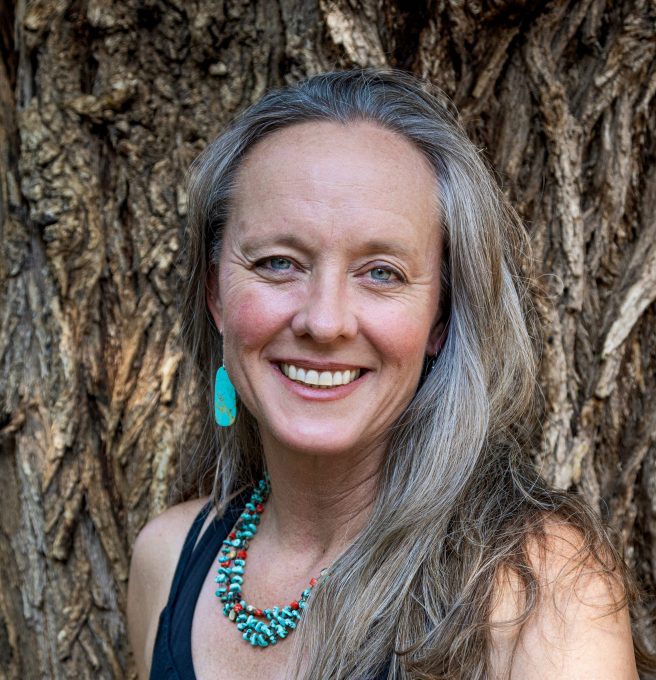
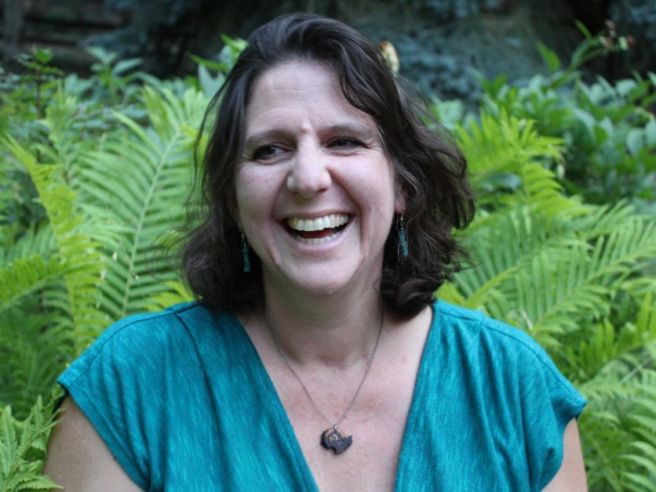
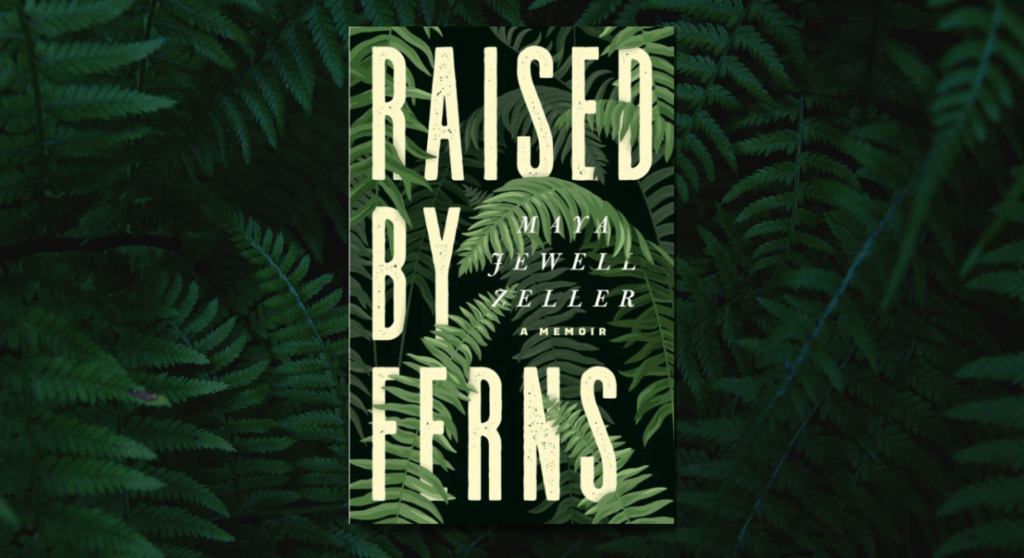
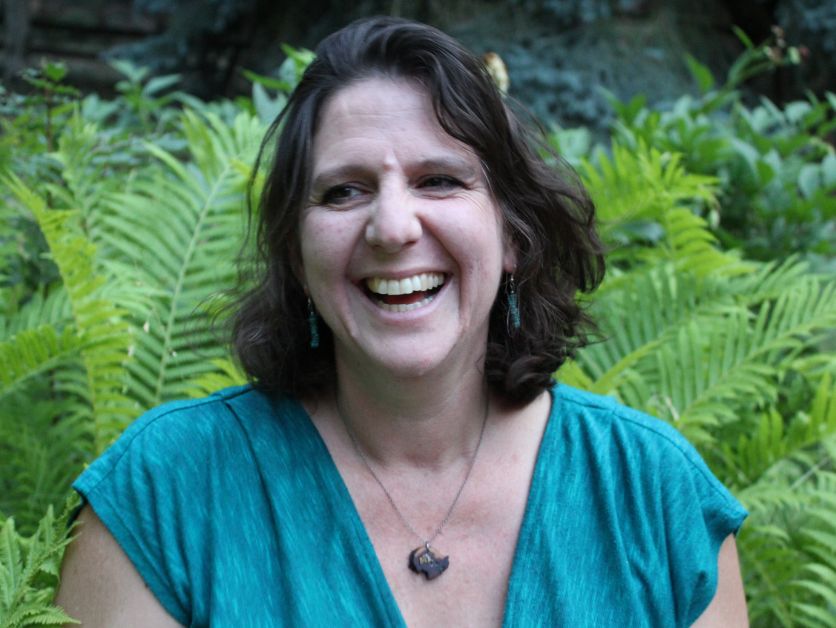
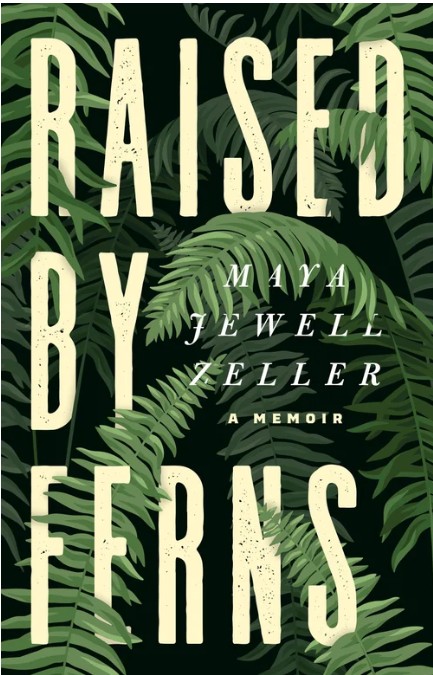
Maya Jewell Zeller’s most recent publication is Raised by Ferns, a memoir-in-essays released by Porphyry Press (March 2026.)  Raised by Ferns details how Maya became a creative, a writer, and an advocate for the wild.  She now lives in Ellensburg and Spokane, Washington with her children.  She teaches English at Central Washington University, and is Faculty of Poetry and Nature Writing within the low-residency MFA Creative Writing Program at Western Colorado University in Gunnison, Colorado.  She can be found wandering huckleberry lined trails, gazing up toward towering ponderosa pine trees, and sniffing roses in city botanical gardens. https://mayajewellzeller.com  

Poet, author, and frequent reviewer for the South Broadway Press journal, Shelli Rottschafer, recently sat down to interview Maya.

SLR: Dear Maya, thank you for this interview.  

I am excited to learn from you about where life has led you and how your path has influenced your writing.  

It seems to be clear you have a keen sense of play, especially in how you teach.  I have seen this in your collaborative academic text written with Kathryn Nuernberger.  At the end of each chapter you both encourage students to experiment, you give “invitations to reflect,” and even provide writing prompts on “remixing nursery rhymes.” 

Can you talk about the importance of play in writing?

MJZ: Thank you for underscoring that, Shelli! I am a huge fan of the pedagogy of play. When I taught high school, I used to introduce Henry David Thoreau’s “Civil Disobedience” by reading aloud the children’s book Henry Climbs a Mountain, by D.B. Johnson; and in my in-person poetry classes at the college level, we often begin study of duende with a campus scavenger hunt (spanning art and science buildings and programs). In both cases, play opens up the brain and body to experiment and adventure—two of the aspects of a healthy curiosity that allows learning and growth. In writing—as we know—playing games and making our own rules can sometimes lead to new discoveries. If we approach ‘received forms’ as play—as in a nursery rhyme remix—we can also discover.

SLR: In that co-edited text – Advanced Poetry: A Writer’s Guide and Anthology. NY: Bloomsbury, 2024 you have a chapter on the “Poetics of Spells.”  You use that practice in your poetry collection, Alchemy for Cells & Other Beasts (2017).  Throughout it you create incantations, you invoke chants, and you weave in textures almost making your words touchable.  

How are repetition and sensory details additives in verse?

MJZ:  I love it when poets interview poets, spellmakers convene with spellmakers! I know that you also practice repetition and sensory details in your work, so you know: spells are poems and poems are spells; they are small powerful incantations, whether we call them charms or not. Poems make something happen, through repetition and invocation—saying something over and over can feel like summoning or conjuring, and the sensory world translated into verse can make us FEEL it viscerally, as if we are experiencing it. A spell-poem is a translation of desire for, or protection from, the tangible world and its beings. 

SLR: Your 2023 collection, Out Takes / Glove Box, which was the winner of the New American Poetry Prize, teaches a unique form of poetry–the Out Take Poem.  

Can you explain this inventive form?  How do you select your “golden lines”?

MJZ:    Yes. Merriam-Webster defines out take as “something that is taken out: such as a : a take that is not used in an edited version of a film or videotape, or b :  a recorded musical selection not included in a record album.” In a craft talk I give on this concept, I define out take three ways, the first of which is:  “the images, narrative, or other materials behind the poem or the final image; those materials which did not make the printed version, and which may be less formal/ polished/ directly narrative/ contributing to a clear and direct discourse, but which may access a layer of the psyche or subconscious hinted at but not explored in the original image” (Jewell Zeller, “Out Takes From the Making: The Story Behind the Image”). Put simply, a poetic out take is simply taking unexplained or mysterious allusions/ images from a parent-poem, and then unfolding what’s behind them—kind of like giving those images an origin story. My “out takes” were invented when I took a poem I’d written, called “Documentary,” and then pulled images to make seven other poems, the “Out Takes From the Making” of the documentary—like cuts from the final film. That series was first published in Juked in 2017, but folks could also pick up the (2023) book and see how the images scatter through other poems. Thanks for asking about it!

SLR:  Both Alchemy for Cells & Other Beasts (2017) and The Wonder of Mushrooms: The Mysterious World of Fungi (2025)—which is a Foreword Indies 2025 Finalist in the Nature Category, are beautifully illustrated. Alchemy pairs each of your poems with visual artist Carrie DeBacker’s nature-based paintings. The Wonder juxtaposes illustrator Jenny deFouw Geuder’s woodland scenes with your descriptive prose.

How does ekphrasis tell a herstory rooted in m(other) nature?

MJZ:    I love that you’re picking up so directly on intersectional feminist undertones, Shelli. So for Alchemy, it was a true collaboration—we sent poems and images back and forth and composed in response to one another’s work. The ekphrastic responses were true makings based from another woman’s work, as well as Lorca’s “deep spirit of the earth” coming up through each other’s art. Then our publisher arranged them for the final draft of the book. 

In The Wonder of Mushrooms, it was less ekphrastic and more of an illustration. Jenny and I were both contracted for the book by AdventureKEEN, who also worked with me to set an outline of topics/ phenomena they wanted covered. While Jenny did wait to get the final copy of the word file from me before painting, it was more about illustrating content than making something up in response. So, it was probably more rooted in the earth than in our creating from it—a kind of mycelial response. 

SLR: Throughout Raised by Ferns your poetic-lines come through the prose.  An example of this is your essay, “Sestina for Foragers” which is a fusion of the haibun with the sestina.

There are other examples of this inventiveness within your writing as well. 

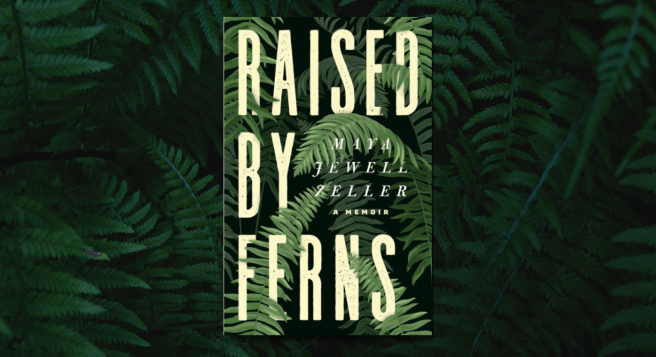
Raised By Ferns, Mayz Jewell Zeller’s new memoir

Why experiment with different forms?

MJZ:  That’s so brilliant. I hadn’t thought of “Sestina for Foragers” as a haibun, but I love that you are making that connection—and of course it is there!— the essay is about place and journey as much as it is about mystery and repetition. I have another essay, that precedes the ones I wrote for this memoir, called “Lower Columbia Watershed Haibun: Field Notes on Going Home Again,” first published in Passages North, that I am sure was a predecessor to “Sestina,” and which didn’t make it into Ferns. So to answer your question, I love it when a received form gives us permission to play in another genre: it’s like a fun puzzle, trying to see what fits and where and how—except that in addition to the already structured edges of the puzzle pieces, you can invent shapes while putting the others together. So there’s a bit of magic in that process. Making a poetic sestina, which repeats six words in a predetermined pattern in six sestets and a final tercet, into six sections and a prose envoi, is like creating that final picture—but with some surprise deviation from the predetermined pattern: like following a map to treasure but remaking the map in the process. It’s another way to discover, to play.

SLR: In the essay “The Privilege Button” in Raised by Ferns, you quote Spanish poet and playwright Federico García Lorca. You both call to break with traditions, and in your narrative you use creative leaps to say what is often left unsaid, that liminal space between the lines. 

Could you share with us why this resonates with you?

MJZ:  Lorca wrote that “In order to live, a metaphor needs two elements: a form, and a radius of action. A central nucleus and the perspective surrounding it. The nucleus opens like the flower that startles us by its strangeness; but within the radius of light we learn the name of the flower, and we get to know its perfume.” In my Advanced Poetry textbook chapter on duende, I wrote: “I think of Lorca’s form as the image or figurative language that carries the concept, and the radius of action as how the metaphor moves in the poem. The startling occurs when we are transformed or transferred through the process so that we are able to experience it synaesthetically and feel its embodiment viscerally—a relationship with image that transports us, as if by magic, what we first felt in art and then spent the rest of our lives attempting to find again and recreate” (Nuernberger and Zeller, Advanced Poetry: A Writer’s Guide and Anthology). In deep image poetics, this arrives as the mysterious image, such as those in Out Takes. In Ferns, there is an echo of this with the rhizomes brought up throughout the book, and coalescing in the various forms, and later footnotes of the title essay. The leaping of Lorca resonates so deeply with me because I am also made of “thistle and terminal stones” like he references in “Theory and Play of the Duende.” 

SLR: Your memoir is a heavy self-gaze.  It’s a chronicling from creative youth to creative adult, a herstory of resilience.

In hindsight, what would you tell young Maya now?

MJZ:   I think I’d tell her she’s going to face a choice in young adulthood, and she’ll think that one path is the way to stability, to security, but that instead, she could be her own anchor. That she is the stabilizing factor she seeks. I’d tell her to choose herself….  [and that] art isn’t a wildness you have to prune or garden in secret between the things other people need; it’s the wildness you should cultivate by going into it. 

SLR: You have relationships with young creatives because you are a mother and an educator.  

In our hard times as we face challenges with international conflict, climate change, and juggling to have and to have not,

what could you advise your audience? 

MJZ:   Shelli, thank you for this beautiful set of scaffolded questions that pay such deep attention to my lineage and canon of work, in our world that pulls us in so many directions. I think my last answer (above), about art and wildness is part of the advice I’d give, but I also think there’s something in advice that is particular to each individual, and to the worlds they inhabit and in which they might create and act to protect others. 

So this is [what I would say in] general: make something that gives you joy, and that probably, in that discovery, will also offer joy to others. Make it out of scraps if you can, but don’t think you only deserve cast-off scraps. 

And of course try not to use up everything: leave some huckleberries for the bears, and leave some for the next people who come to pick. And remember that you don’t own the land you’re walking on, and that if you do take something, you better give something back. If you feel yourself being erased by someone else, don’t imagine they will color you back in later, or that you don’t deserve to be all the shades of yourself that you are. 

SLR: Maya, thank you for reminding us that we all need to make space for others, that we need to pay attention to ourselves, and that all children and animals and plants are sacred. Thank you for gathering upon the page with us here at South Broadway Press.

READ: SHELLI ROTTSCHAFER’S REVIEW OF MAYA JEWELL ZELLER’S RAISED BY FERNS

Shelli Rottschafer (she / her / ella) completed her doctorate from the University of New Mexico, Albuquerque (2005) in Latin American Contemporary Literature. From 2006 until 2023 Rottschafer taught at a small liberal arts college in Grand Rapids, Michigan as a Professor of Spanish. She also holds an MFA in Creative Writing with a concentration in Poetry and coursework in Nature Writing from Western Colorado University (2025).

Shelli’s home state is Michigan, yet her wanderlust turns her gaze toward her new querencia within the Mountain West where she lives, loves, and writes in Louisville, Colorado and El Prado, Nuevo México with her partner, photographer Daniel Combs and their Pyrenees-Border Collie Rescue. 

Discover more of Shelli’s work at: www.shellirottschaferauthor.com

Book Review: Raised By Ferns by Maya Jewell Zeller

BOOK REVIEW:
RAISED BY FERNS
BY MAYA JEWELL ZELLER

A BOOK REVIEW BY SHELLI ROTTSCHAFER

Raised by Ferns begins with an epigraph by Diane Seuss:

I am so hungry

for the song that grows tall like a weed

grows, and grows.

Zeller yearns for her words to grow, and they do.  They dig roots down to briny delta water.  They spindle outward like invasive but naturalized blackberries that are common in the Pacific Northwest.

Maya’s story begins in the myths she has been told, in the wondering of, “What’s Real, What’s True, What’s Worth Retelling” (20).  She was born into the hands of midwives.  She was cradled in Mayan-wool blankets her German-born father imported from Guatemala to the US.  Her rural childhood taught her the necessity to forage, accept the ghosts of worn down farmhouses like additional family members.  She and her family lived itinerantly, a mobile and hybrid lifeway able to call various shelters home.

Zeller’s ability to find home in a variety of ways also informs her writing.  Her prose is fed by her poetry.  Her poetry is nourished in nature.  Her human nature is scribed in stanza, strophes, and verse-filled metaphors.  Her stories are a herstory; a seed that begats its next iteration:

The Himalayan blackberry came to the United States from Eurasia

in 1885, and it spread into the hills….

Cancer spreads not like a military but like a blackberry….

Cancer isn’t militant so much as fruitful – it produces globules of black gold.

The globules of berries are not unlike the beads of sand on my fingers while I eat berries on the beach near where I was born (21-22).

And so, Zeller’s prose is born through her ecopoetics.

Maya recalls her parents as “free spirits” and she and her siblings as semi-feral, but there is more than meets first glance (25).  A father with addiction, a boy-home escapee, a mother stepping out of a Midwest confined in Catholicism; both were determined to do things differently than their previous generation.  Perhaps, this desire to do things differently has rubbed off on Zeller as well.  She vacillates between what Wallace Stevens states as “of two minds” (8).  To have, and to have not.  To choose a lifeway, or to choose another life.  To gain education painstakingly, or to pretend one has always had privilege and access.  As an adult, Maya now knows both painfully well.

Zeller states, “I learned early the advantage of keeping my opinions to myself, and then later to be heard I’d have to yell them…. I learned to search for patterns and shape them to my advantage (27).  Maya’s navigation gives her strategy in her writing, what she reveals and what she weaves.  This she learned through books, the public library often was her teacher.  Libraries gave access to things, worlds, and concepts that otherwise would not have been available.  For young Maya the library was what, “some kids in cities might anticipate the ice cream truck… new flavors.  I could almost taste the books” (28).  Books and the stories they held were her cherry-on-top.

In her writing, Zeller is, “not interested in another pastoral that shows you the honey but not the sting” (33).  She wants the real, “the pus and entrails,” the busted stitches to the finished quilt (33).  Like the squares that are darned together to make a whole, each essay is part of the patchwork that makes her memoir.

Folks often ask Zeller, “how [she] got from there to here” (40); it’s not a vertical trajectory. It’s muscle memory, like water in a flood plain, it remembers.  A fibrous rhizome that spores out in order to survive.  Maya has gotten where she is through hard work, elder knowledge passed onward, and personal tenacity.  What engages her is to find wonder.  Curiosity in the wild, in glancing through fern leaves, in observing her own children – this is what feeds her well.

Author Maya Jewell Zeller

As her reader moves through her various essays, Zeller peals back her pain.  The discovery that her life partner is having an affair, the nudging on her psychosis that the friend is more than a friend.  Her world is up-ended, but she has, “had a lot of practice in overcoming shit” (226).  Yet, the full reveal takes time.  There is more to it all and she asks of herself, “What does the body know that we don’t? (229).  

As a child, she learned to lean on herself and the world she created through storytelling.  As an adult, she, “learned, by unlearning to love… that her mind and blood and babies” half belonged to him (230).  How could she reclaim her stardust, her hours, her life?  She could do so by writing her own herstory.  That is what Raised by Ferns is, a telling, a gathering of all the things she has thus far learned.

In her Epilogue Zeller wonders what is both “Real and Not Real” (231).  What are the myths she has been told, what are the stories she has created, and what is the legacy she hopes to carry forward for herself, her children, and her reader?  

There are times of epiphany, when once something brought pleasure, she realizes a thing she normally loved needs to be left behind.  These are the tough but necessary goodbyes.  Maya explains, “I couldn’t help but note some proximal off-ness,” a layer that must be shed (231).  She knows, “the body holds each fact” and needs to flush itself of dead skin, even one that has been intertwined with her own.

This is the moment, she asks her ex-partner to be honest with her when he is unwilling to be.  To be direct with what he wants when he is only capable of directly being hurtful. It takes more than two and a half years, but Zeller learns to make amends with herself knowing that – most importantly – she needs to be honest and direct with herself rather than accept, “the Numb” (235).  Maya lays it plain, “I’m navigating something psychologically unmooring – something complex and monstrous and technical and ineffable” (239-240).  An unraveling of the stability she was determined to create as a reaction to the “free spirit” and unsteady ground of her own childhood.

Zeller realizes it is difficult and a false equivalency.  She questions, “How can I help my children trust themselves, develop ways to cope and self-regulate in a world that isn’t getting better?” (241).  

Her answer is that she still has hope in a world with snow falls, an ocean replete with sea stars, and summer-time blackberries that stain lips with sweet.

READ: AN INTERVIEW WITH MAYA JEWELL ZELLER

RAISED BY FERNS

BY MAYA JEWELL ZELLER

AVAILABLE THROUGH PORPHYRY

Shelli Rottschafer (she / her / ella) completed her doctorate from the University of New Mexico, Albuquerque (2005) in Latin American Contemporary Literature. From 2006 until 2023 Rottschafer taught at a small liberal arts college in Grand Rapids, Michigan as a Professor of Spanish. She also holds an MFA in Creative Writing with a concentration in Poetry and coursework in Nature Writing from Western Colorado University (2025).

Shelli’s home state is Michigan, yet her wanderlust turns her gaze toward her new querencia within the Mountain West where she lives, loves, and writes in Louisville, Colorado and El Prado, Nuevo México with her partner, photographer Daniel Combs and their Pyrenees-Border Collie Rescue. 

Discover more of Shelli’s work at: www.shellirottschaferauthor.com
Book Review: missed connections with tall girls by Gwen Aube

BOOK REVIEW:
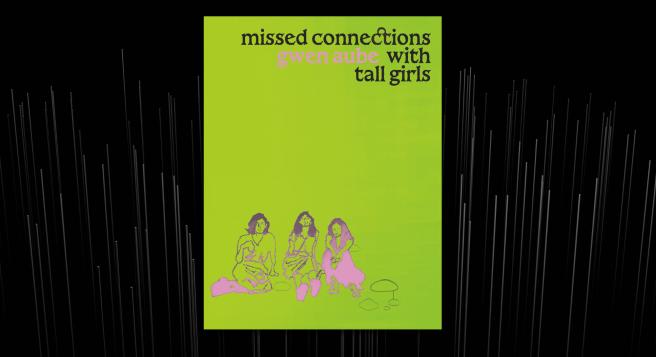
missed connections with tall girls
BY GWEN AUBE

A BOOK REVIEW BY EDEN HEFFRON-HANSON

It’s the poet’s right, according to the Russian Futurists, to use “arbitrary and derivative words”. For Myakovsky, in fact, it was a “social command”, a requirement to translate colloquial speech onto the page following increases in literacy after the Revolution. Similarly, as trans presses do away with the market-oriented eyes of cis editors, beautiful phrases lurch out of Omegle chat rooms in knee-high socks and cat ears. We are blessed with language that is not only geared towards trans audiences, but would hopefully piss off, confuse, and be unintelligible to most cis ones. 

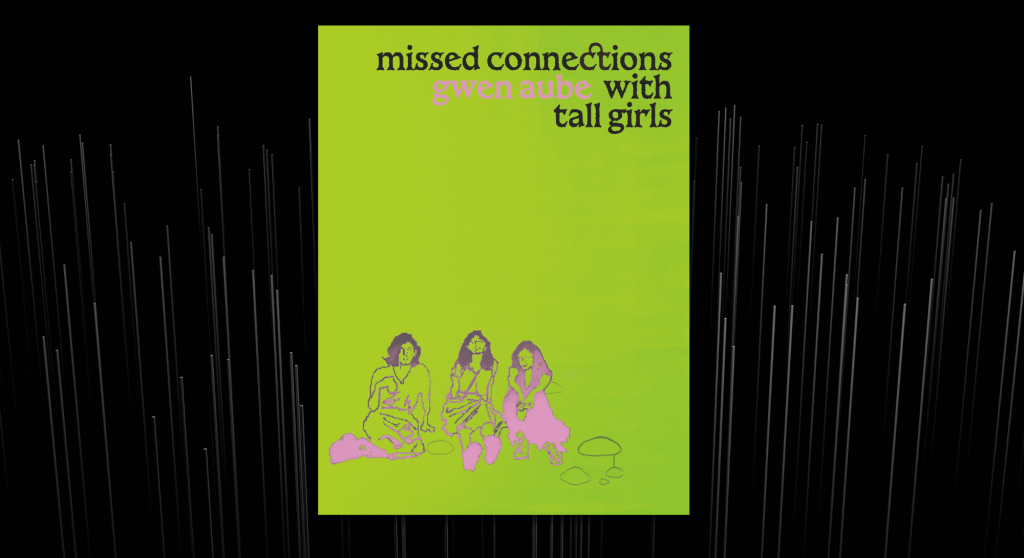
Gwen Aube’s missed connections with tall girls is a book that spoils us with such language. A collection of vignettes of “oddball trannies”, it is filled to the brim with bawdy colloquialisms, manifestos, and general debauchery of every kind. It has “girldick”, HSTS vs AGP kandi, traps, “kkkanada”, and blood pacts. It is the sounds of dolls awkwardly crowding into bars, Montreal train yards, and half-bird girls smuggling away hamburgers. It is a book that is warm, and loud, and will make you cackle so heinously your roommate asks what you are choking on.

The poetry is funny, and carries so much character, that it is hard to realize how earnest it is. Aube brings the poetic voice of a self-identified “flop-house bitch”, yearning after eponymous “missed connections” of a cast of stragglers, vagabonds, and cast-off trans women. The politics of the poetry throughout are a working-class evangelical trannyism, with shade reserved for those that would scorn solidarity for the sake of upward mobility i.e., girls on their snobby stealth or true transexual bullshit.

The first section holds stories of rebuffs and missed connections underscored by class or social anxiety, but transitions to a second interspersed with a chorus of all-caps stanzas laying out the voice of “AN OLD GENDER CRITICAL FRIEND”. Aube’s double ventriloquism satirizes the far-right conspiracy theorist while simultaneously proclaiming the warmth of T4T collectivism:

COME YE NEEDY AND BROKEN
GIRLS—BRAID TOGETHER YE
WEARY BODIES— BATHE IN

THE GIGGLING COVENANT—

Aube explores the part Western transsexuality plays in the imperial project. When a group that relies on solidarity for its survival finds state legitimization, what purpose could it serve? The poet reflects on the infamous but mythological “Lockheed girl”, on the CIA-backed PEN International giving Aube a literary award, and on the fact that western queer claiming of the Greek Galli opens Mount Ida for Canadian mining interests. Among this horror, the poet longs for pre-legitimization, to be declared a “freak unfit for labor” outside the tools of the Western project. Yet, the voice proselytizes this is the place we stand once again, amid an apocalyptic “HETEROGENOUS REJECTION” which leaves “PURSES CUT, OUR TEMPLES DESTROYED, OUR CHILDREN SLAUGHTERED”. But this is rarely a poetry collection settling into despair, and it is here, in this post-Revelations world, that bourgeois trans life rediscovers its fetishized “underground”, reapproaching the place where “LOVE WINS” is more than a bumper sticker.

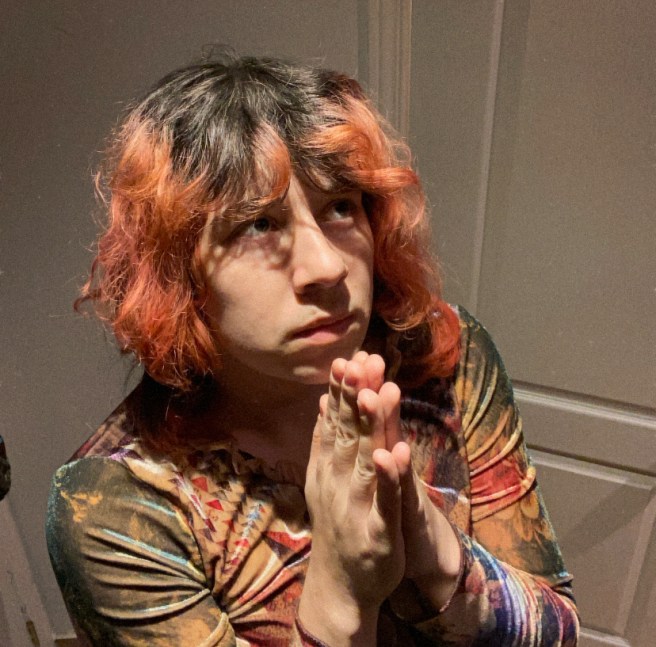
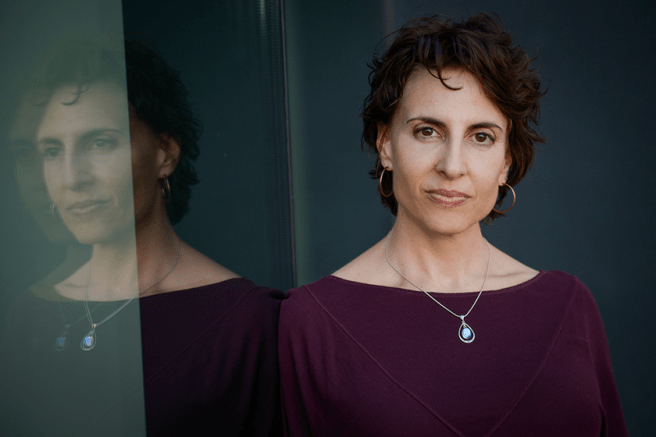
Author Gwen Aube

However, Aube’s poetic voice is too compassionate to assert that a direct confrontation with fascism will be a net positive if it creates class love among trans women. The third section is, among other things, a guide on mogging the welfare office. In the different presentations Aube’s narrator has in the chapter, wearing a fur coat to the welfare office, getting stared at for the holes in her shoes by “the state itself”, or living off arts grants “before I even had a book out”, we see the poet leveraging what is meant to be a static class/caste system. Combined with For Herma, the longer ekphrastic poem making up the last section of the book, it becomes clear that, for the poet, love already overwhelmingly exists in trans life when it is separated from capitalist values. The poet works to reckon with “tranny wiping poopy ass—tranny attending the PTA meeting—tranny pushing the stroller” but is easily able to resolve to “find some boy in an alley and groom him to be my daughter”. For Herma makes connections to family in all its forms, it is the poet’s reckoning with growing into an elder through queer or conventional motherhood. A deep love orbits the vignettes and portraits of the book, for all the girls that she fails to connect with, for Nevada, casey, syb, and for the traps and dolls that populate the book’s pages. It becomes clear that uncoupled from institutional validation, bourgeois aspiration, and the nuclear family love is still intertwined with survival. However, it is a love that is subject to state indifference, if not violence, and generally deserves the downfall of the West to prosper. 

It is an important book for anyone interested in what trans poetics can do. If the goal is to repudiate fishy girls that run away with boys, or the ones that tell you to fuck off in doctor’s offices, if it’s to support the spirit of grooming as a beautiful plot to increase the warmth of the trans project, then it succeeds. It’s a book I felt too bougie, too Statesian, and a little too young to fully get. Aube’s hilarious writing is a layered satire, using joy and irony to explore transness and class at multiple levels. If it stumbles anywhere, it’s that the written poetry can’t match the energy of Aube’s readings, existing between page and voice to demand gathering. It is a book inline with Bambara’s irresistible revolution, proselytizing love in the corners where the state can’t or won’t reach, a collection that dreams pretty, audacious, blasphemous dreams. Dreams that are summed up best in some of the final lines of the book:

“let no woman be without sister…

let rains bless the women

which have made themselves women

for the kingdom of heaven’s sake” 

MISSED CONNECTIONS WITH TALL GIRLS

BY GWEN AUBE

AVAILABLE THROUGH LITTLE PUSS PRESS

Eden Heffron-Hanson is a writer and poet living in Queens, New York. She traditionally writes love poems but in her down time would looooove to review your work (edenheffha@gmail.com or @edenheffha on Instagram). She has been published in Beyond the Veil PressSouth Broadway Press, and Trans Mag.

Book Review: SOFAR by Elizabeth Bradfield

BOOK REVIEW:
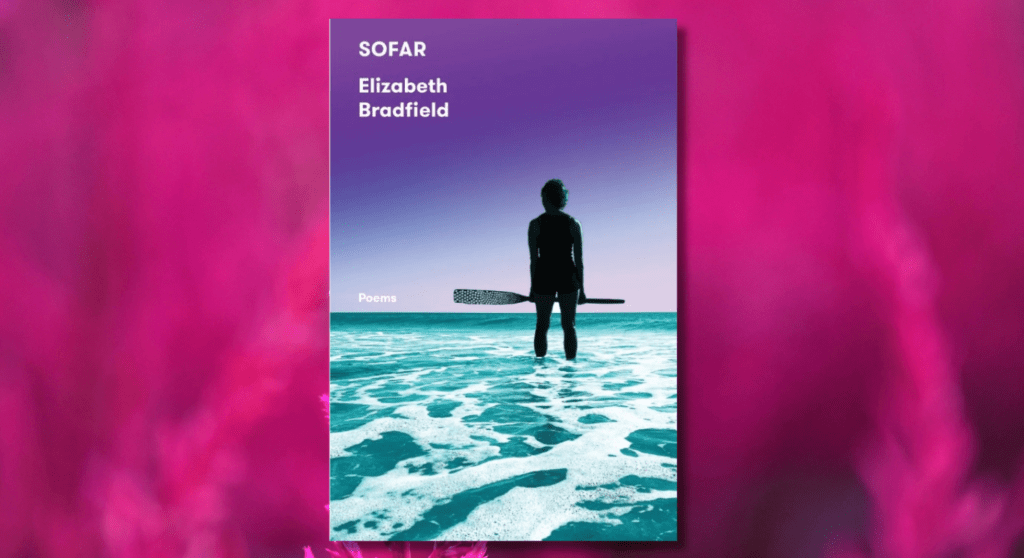
SOFAR BY ELIZABETH BRADFIELD

A BOOK REVIEW BY SHELLI ROTTSCHAFER

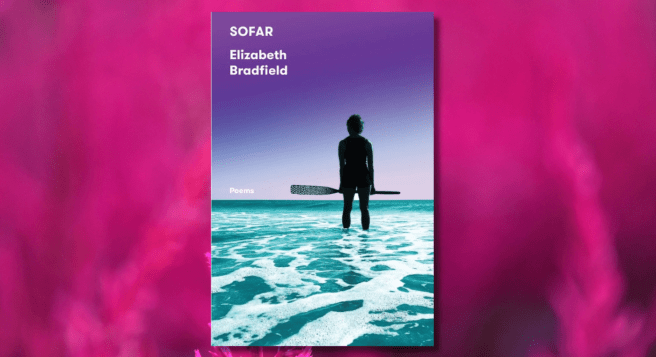
Sofar is Bradfield’s fifth collection of poetry and it demonstrates how her craft has come so far.  In it she intertwines her love of nature, her understanding of ecology, and how the waves off Alaskan shorelines as well as her Cape Cod home have shaped her.  The sea floor, its swells and dimples, peaks and trenches are, “proof/ that what’s hidden can still be sensed” (3).

She comments on her life, how her emotions list like a boat, swaying from one side to the other. Tipping, “At/ the edge of what felt right.  And now, / here we are” – she learns to float, to lean into herself and her being, to selvage after a storm (5).  To pick up the pieces that have been discarded like flotsam.

Bradfield notices seasonal changes and “the change” of her body.  Both are unexpected (6).  She compares this strangeness with the surging emotions of her adolescent self as compared to the retreat that she now is experiencing upon reaching five decades.  Her poems give testimony to her coming out and her understanding as a queer woman in a misogynistic world.  Each tide are transformative and, “as capable / of damage as any / ungiving thing” (6).

In “Marlinspike” she observes herself and the many lives she has had, as boat hand, as naturalist, as poet – “despite the fact [that she] was a girl” (27).  Bradfield is compelled to go forward to keep moving, to follow her bait line so she, “can drift at last / from what holds us tight, what / binds us to such boring normalcy” (27).  And clearly in stating this her life’s path is everything BUT a complacent normal.

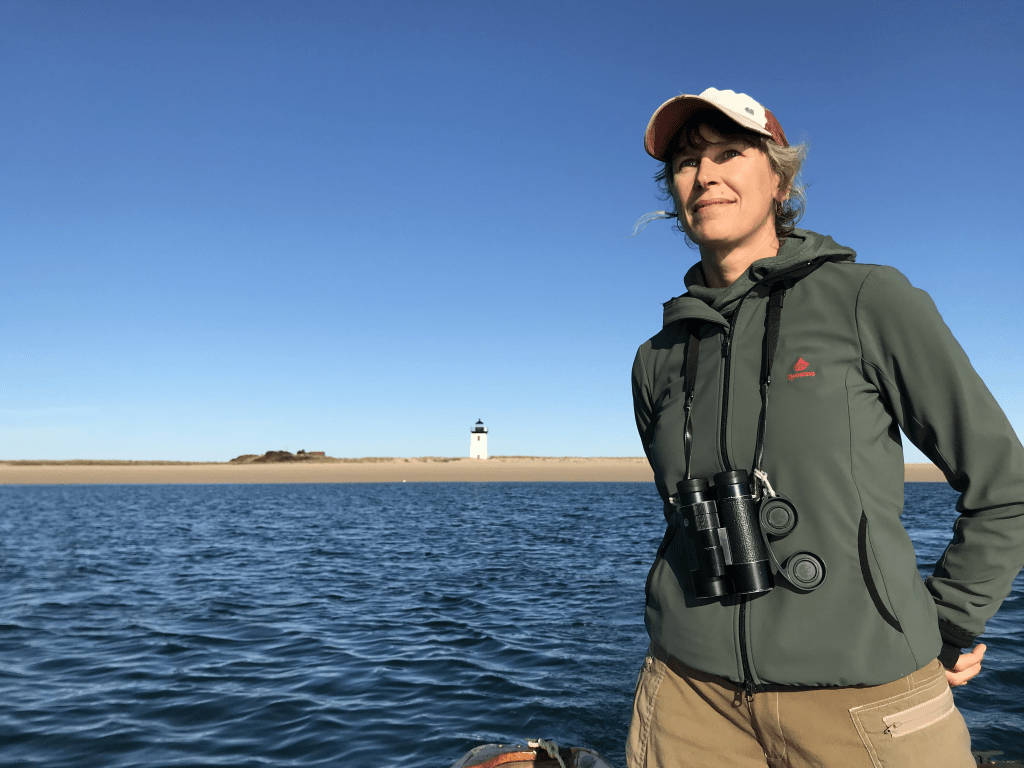
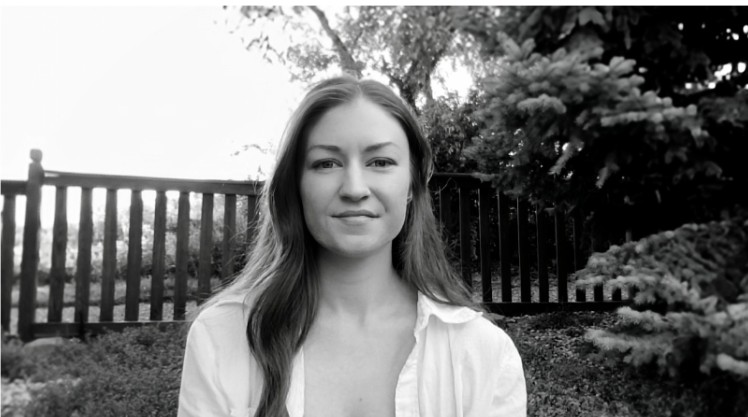
SOFAR Author Elizabeth Bradfield

Rather she embraces her voyageur-self.  “Vagus means wandering.  My days vaguer / and vaguer.  Was it yesterday or last year…. Where did time go?” (46). Bradfield recognizes she is buoyed, lifted up and jettisoned. An estrogen-related propulsion, a uteral roam within a world she wishes to explore.  

Her sights are added by, “Ded Reckoning” (48).

To know where you are and when

you’ll get where you’re going,

to deduce via reckoning, look to landmarks…

The known….

Which hold unknowns.

And through these renderings Bradfield has come to, “know / roughly where [she is]” (48) proving that life lessons are a constant moving equation.

In “Held/Treasured/Secret” Bradfield carries fragility within her.  She knows life is fragile like a paper nautilus.  She cups it in her hand, fingers curl shell-like.  By doing this, she understands that what she holds dear is a responsibility.  Picking it up, carrying it this far, requires a vigilance.  Yet decerning when it must be set down is the ultimate lesson of letting go.Elizabeth Bradfield furthers these lessons as an educator.  She teaches at Brandeis University in Waltham, Massachusetts and is the Director of Poetry at Western Colorado University’s low-residency MFA in Creative Writing Program in Gunnison.  Her work is heavily lauded.  Interpretive Work won the Audre Lorde Prize in Lesbian Poetry.  Approaching Ice was a finalist for the James Laughlin Award.  Cascadia Field Guide: Art, Ecology, and Poetry was a winner of a Pacific Northwest Book Award.  She also is the Editor-in-Chief of Broadsided in which Ekphrastic Poetry is in conversation with artwork.

SOFAR

BY ELIZABETH BRADFIELD

AVAILABLE THROUGH PERSEA

Shelli Rottschafer (she / her / ella) completed her doctorate from the University of New Mexico, Albuquerque (2005) in Latin American Contemporary Literature. From 2006 until 2023 Rottschafer taught at a small liberal arts college in Grand Rapids, Michigan as a Professor of Spanish. She also holds an MFA in Creative Writing with a concentration in Poetry and coursework in Nature Writing from Western Colorado University (2025).

Shelli’s home state is Michigan, yet her wanderlust turns her gaze toward her new querencia within the Mountain West where she lives, loves, and writes in Louisville, Colorado and El Prado, Nuevo México with her partner, photographer Daniel Combs and their Pyrenees-Border Collie Rescue. 

Discover more of Shelli’s work at: www.shellirottschaferauthor.com
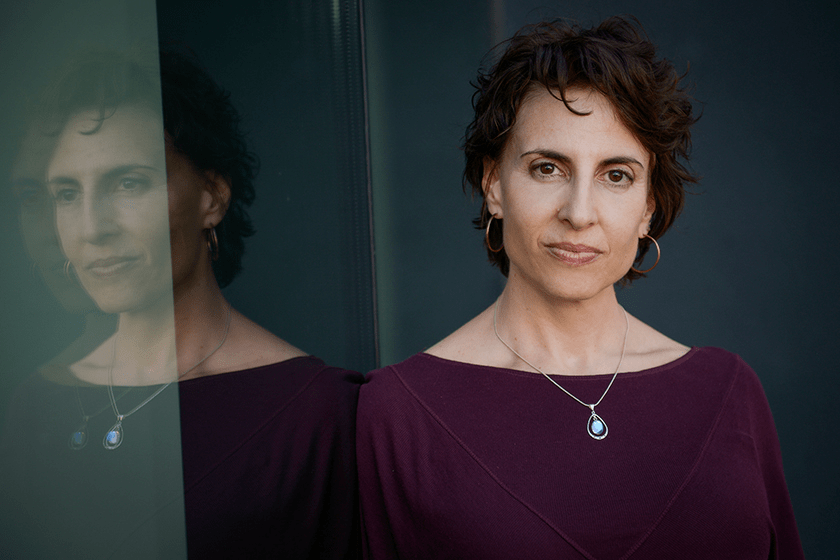
South Broadway Interviews // Devon Bower

DEVON BOWER

Devon Bower (she/her) is a poet, editor, and bookseller in Northern Colorado. She has a BA in English literature from Colorado State University. Her work links lineage with landscape, often experimenting with eco- and docu-poetics. Devon is proud to have served as an editor for the Front Range Review and has a forthcoming publication with Blood+Honey.

Devon is our Content and Social Media Strategist at South Broadway Press.

Art is what helps us survive. It is truth among lies, hope among pain.

Devon Bower
SBP: WHAT IS FUELING YOUR CREATIVITY RIGHT NOW? WHERE DO YOU FEEL THE MOST CREATIVE?

DB: I place a big focus on landscape in my writing, so I often feel most creative after experiencing or researching my immediate natural world. Change—good, bad, or in-between—inspires reflection, making nature a prime source to energize my imagination.

SBP: WHAT MADE YOU FALL IN LOVE WITH POETRY?

DB: My peers. I’ve learned from them that poetry isn’t just an expression of personal creativity—it is an ethos. Poetry is a way of living. It’s in our rituals and in our chaos and in our care for one another. I always used to think of myself as someone who just wrote poetry, until a writer friend called me a poet. This simple yet powerful distinction encapsulates the kind of art we inspire in each other.

SBP: WHO DO YOU HOPE FINDS YOUR POETRY? WHO IS YOUR ART FOR?

DB: My poetry needs to be for me first, but I hope it finds the person who is farthest from myself. I hope it finds someone who is the total opposite of my person and acts as a bridge between our two minds.

SBP: IF YOUR WRITING WERE A KEY, WHAT DOOR WOULD IT UNLOCK, AND WHAT WOULD YOUR READERS FIND ON THE OTHER SIDE?

DB: Whatever the door is that my writing unlocks, I know where it leads: outside. Outside the home, outside of stagnancy, outside the self. The door opens to the backyard, to the forest, to memory.

SBP: WHAT POEM THAT YOU’VE WRITTEN RECENTLY WENT TO A PLACE YOU WEREN’T EXPECTING, OR WHICH WAS THE MOST/LEAST CHALLENGING TO WRITE?

DB: I never thought I’d write an ars poetica poem, but a recent piece didn’t quite make sense until I added in that factor.

SBP: WHAT HAS BROUGHT YOU JOY THIS LAST YEAR?

DB: Building more of a writer community has been really important to me this year. From casual weekly workshops to book clubs to attending readings, my small but mighty cohort brings me joy and comfort.

SBP: WHAT IS YOUR CURRENT OBSESSION?

DB: My past, current, and always obsession is my cat, Benny. I adopted him in 2021 as a kitten and have loved growing with him.

SBP: WHAT MAKES SOMETHING HARD TO WRITE OR CREATE?

DB: The more personal the poem, the longer it takes for me to “get right”. But once either I or it have had enough time to put the words together, the more fulfilling the poem becomes.

SBP: WHAT IS THE VALUE OF WRITING AND ART IN THE CURRENT STATE OF THE WORLD?

DB: Art is what helps us survive. It is truth among lies, hope among pain. Andrea Gibson wrote a beautiful poem called “Yellowbird”, in which a line reads: “We have to create. It’s the only thing louder than destruction”.

Book Review: What the River May Bring by Erin Robertson

BOOK REVIEW:
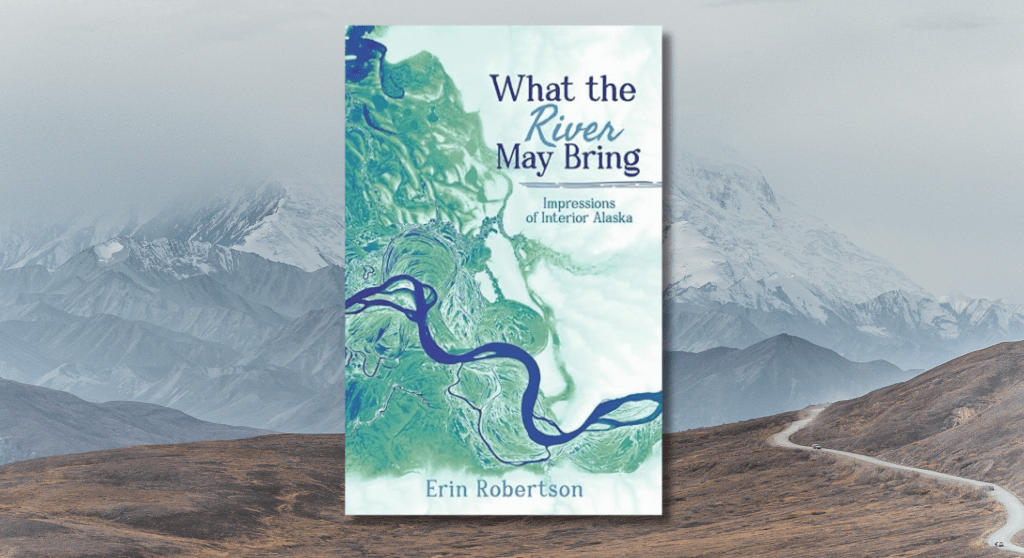
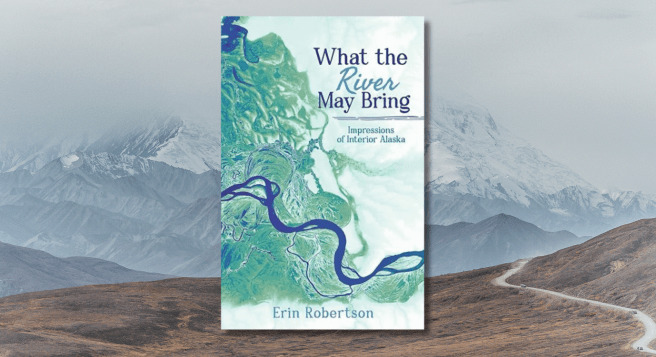
WHAT THE RIVER MAY BRING: IMPRESSIONS OF INTERIOR ALASKA BY ERIN ROBERTSON

A BOOK REVIEW BY SHELLI ROTTSCHAFER

Robertson gathers her words to advocate for the land and the confluence of both the Koyukuk and Yukon Rivers.  During her time in the Koyukuk National Wildlife Refuge she was embedded with biologists, collaborating with her craft through the Artist-In-Residence program “Voices of the Wilderness.

Her poetry draws us in, witnesses to her experiences upon this land, and helps us envision her impressions of interior Alaska.  It all begins, “when the float plane’s buzz fades” as she first settles into her sub-arctic residency.  She meets the, “devoted swans, tender loons, [and] dancing cranes.”  She follows moose tracks and moss lined trails.  These relationships with the other-than-human creatures she encounters bring her company.

Glaciers, and clouds, and wild country greet her.  Upon arrival in the Alaska Interior she leaves behind “creature comforts” and chooses a new freedom; trading suburbia, her partner and children, for a growing winter white and jagged mountains.  It’s a new opening, a new era of possibility for her.  “Wilderness Eve” seems to recollect a childlike wonder, a new version of awaiting gifts below a Christmas Tree:

waiting to see

what this wilderness holds

sleepless and sleepy

dreaming the space

and the silence (21).

Her time in Alaska and her observations while there is an unveiling where she comes to realize: 

I knew I hit the lottery

but hadn’t quite known

how many riches there’d be (25).

Robertson marvels at nature’s natural wonders.  For her, the Yukon River inspires just like Georgia O’Keefe’s infamous cloud-scapes or French Impressionists’ swirling lines.  The river:  

It bends and dapples and distorts…

Adding and subtracting shades (27).

Still, “You never know what / the river may bring… Everything comes down the river / if you watch long enough” (29).  And yet, like the old adage, one can never step in the same river twice, its purge and rejuvenation brings new waters that can both cleanse and drown.

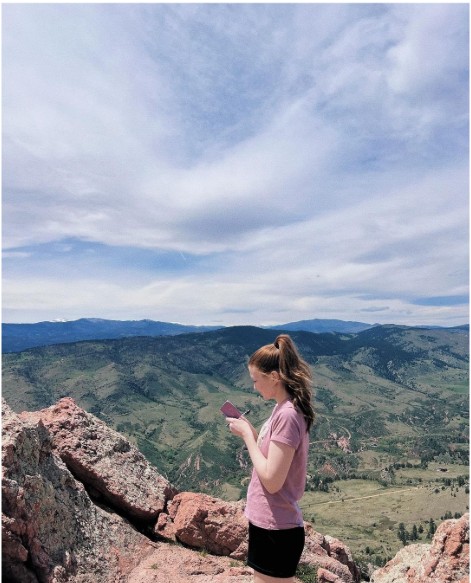
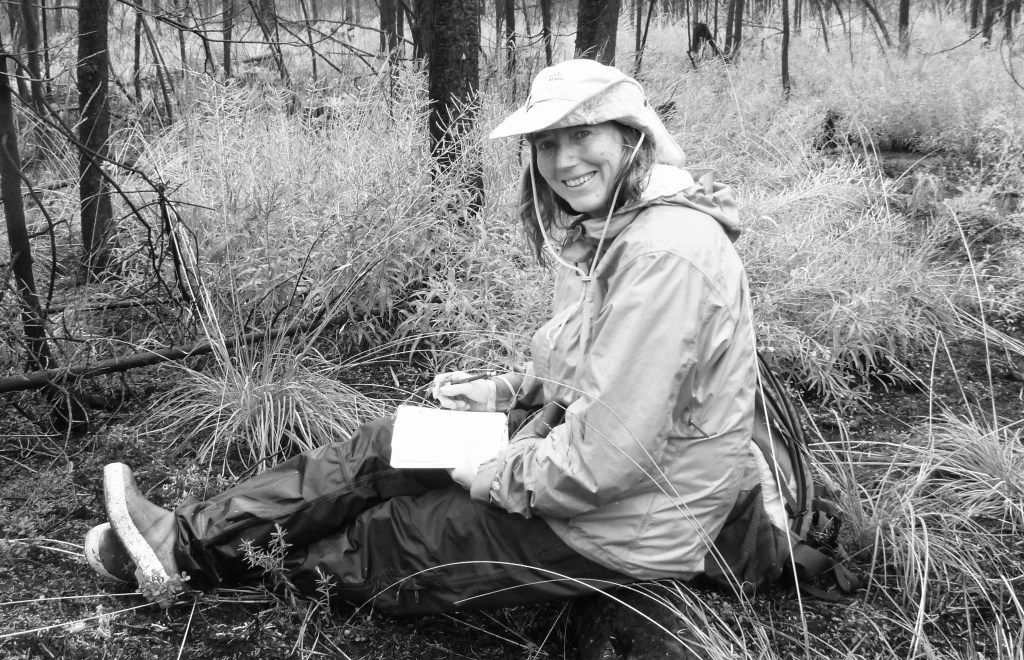
Author Erin Robertson

In her poetic meanderings, Robertson also takes on the persona of “Other Animals” like otter, caribou, peregrines, and Swainson’s Thrush.  She watches their lives, their passage onto new territory, and their passing into the beyond.  It’s a moment, a flicker, a stillness juxtaposed to the more rapid pace of her life back “home” in Colorado.

Fire, too is a constant, not only in the Alaskan Interior but throughout the Mountain West like Robertson’s home upon the Front Range.  She notes:

after the fire

naked birches are

black and white tapers

all blown out (56).

Even after a “Severe Burn” she comments on the stark beauty:

The burn dazzles

despite a blackened past (57).

Seemingly, it is a reality that we all have to come to accept because out of destruction, the ashes can reinvent a newness, a regrowth, another possibility.

Robertson’s experience as an Artist-In-Residence is a testament to her “Vocation” (105).  She embraces where this has taken her:

so many options open

when you go where you’re called

when you do what you love

when you toss every last bitter pill aside…

the earth is humming

with so many ways to play

what will you try next? (105).

This is the challenge that she sets before us.  In her closing poem, “Accounting for Awe” she sets us straight, like one hiking boot in front of the other and asks:

What is the sum of these days of devotion?

An accounting of the endless ways to direct awe.

Anywhere you look there’s a one-inch bit of wonder…

To not let it all burn yet (107).

Here is our reason, in our act of love for nature, we will find compassion for ourselves.

Boulder County Poet Erin Robertson carries this love for nature and compassion forward. She is the founder of BoCo Wild Writers where she teaches outdoor nature writing classes.  Her work can be found at http://www.erinrobertson.org

WHAT THE RIVER MAY BRING: IMPRESSIONS OF INTERIOR ALASKA

BY ERIN ROBERTSON

AVAILABLE THROUGH RAW EARTH INK

Shelli Rottschafer (she / her / ella) completed her doctorate from the University of New Mexico, Albuquerque (2005) in Latin American Contemporary Literature. From 2006 until 2023 Rottschafer taught at a small liberal arts college in Grand Rapids, Michigan as a Professor of Spanish. She also holds an MFA in Creative Writing with a concentration in Poetry and coursework in Nature Writing from Western Colorado University (2025).

Shelli’s home state is Michigan, yet her wanderlust turns her gaze toward her new querencia within the Mountain West where she lives, loves, and writes in Louisville, Colorado and El Prado, Nuevo México with her partner, photographer Daniel Combs and their Pyrenees-Border Collie Rescue. 

Discover more of Shelli’s work at: www.shellirottschaferauthor.com
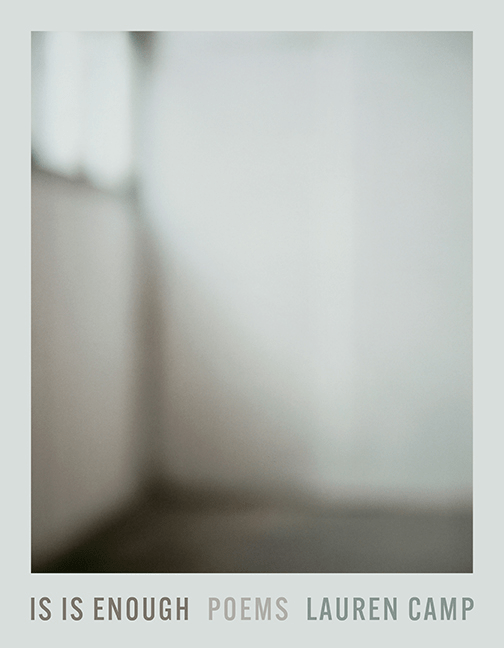
Book Review: Brooklyn ave. Hymnal by Andy Riley

BOOK REVIEW:
BROOKLYN AVE. HYMNAL BY ANDY RILEY

A BOOK REVIEW BY EDEN HEFFRON-HANSON

One of my main impressions of Andy has always been that he prints chapbooks like other poets print rejection slips. The first time I met him, at Wolverine Publick House in Fort Collins, he was carrying a bundle of self-printed books for the reading. Later, when he invited me over for homemade absinthe, he had more from the past year for me, from the “early years”. While I have long delighted in his exciting cacophonic phrasing and interesting imagery, what I have most admired from him was the nonstop DIY ethic which kept him writing and printing instead of waiting for approval. 

Thus, it is with great pleasure I am reviewing Andy Riley’s debut 87-page serial poem Brooklyn ave. Hymnal. A book about moving to Seattle that is so rife with character observations and daily ennui, chronic pain and stunted sex drives, that truly it will leave you searching for an answer to the question, why would you move to Seattle? 

 Maybe it’s so Riley could “get out to see Red Pine” from Seattle or live on the street of the “high school where sir mix a lot went”, perhaps it’s so he could live a ten-minute walk from “three old growth trees”. Or maybe Riley moved to Seattle for the same reason anyone moves anywhere, to see something new and make sense of it, to turn around and produce a work of art grounded deeply in a place and time that hadn’t grown dull from repetition. What we receive is a poem facing down the alienation and loneliness of being literally ungrounded. We receive addresses to the dead and separated, to long distance friends, and the ever-aloof state of Colorado. 

Author Andy Riley

We are introduced to a poet navigating public space and the struggle for connection between strangers. I delighted in the man in camo pants trying to train surf, the howler under the tunnel on the light rail, and the couple who waves back at the narrator from under the bridge. The poem builds us a world of characters vying for attention, a series of exhibitionists mirroring the short, showy writing of the poetry itself. 

Having read shorter renditions of Riley’s writing, the sometimes-eclectic chapbooks he described as his “EPs”, I was excited to see how his style would take to a book-length poem. The use of short sequences allows for concentrated bursts of energy sympathetic to his style, while the relationality allows for an opening up into moments of satori. One of my favorite sections in the poem is election day which both contains the rapid fire “bodily steam footfalls mirage/ like climbing a ladder” and the wide-open couplet “hate of the unknown is traditional/what of this hate of the known”.  The book also shares my love of nouns you can grind your teeth on. Brooklyn ave. uses to full effect the regional “noggins”, the scientific yet punk “oxytocin boot black”, and a whole quatrain about “priapism”. More space allows Riley more exploration in word choice and sound, and it’s lovely to see him opt for a yummy and timely dialect.

The building blocks of short poems translate into a feeling of discovery throughout each that Riley deftly sustains through the book.

Riley’s adjective phrasing, which delights in novel syntax while also bending the grammar of sentences, help him create metaphors from bite sized lines of language. Lines like “no flower columbine”, “smack gridlock/migraine-iacal car-ships” or even the simple “ATM smoke shop” recreate adjectives from modifiers into carriers of essential natures for each of the nouns. The building blocks of short poems translate into a feeling of discovery throughout each that Riley deftly sustains through the book. 

The only places of the book that confused me were moments of rhyme where the poet slips into a register more reminiscent of Shelly and Dickinson than Weiners or Spicer. Compared to the breakneck speed at which the poetry generally moves the section “the dawn nay dies/it flies.” or “ah/T-shaped wisteria” felt lethargic. However, the register never seems to be employed without irony or self-awareness and there are plenty of moments where rhyme or abstraction is seasoned to taste in the poem. There are also brilliant sections subverting form such as the telegram-like “when I speak” section. Overall, the spots that stick out and interrupt the flow of the poem are done with subtlety and creativity that brings the larger project in balance with itself. 

We may never know why one moves to Seattle. However, we do know what one does with the experience. Riley gives us an istoria making sense of public space and loneliness in a large explorative sequence. Brooklyn ave. Hymnal is an assertive ennui filled poem making sense of the daily mess that we each navigate to produce art. The creativity and power of his style is on full force here while his craft remains a love letter to poets like John Weiners and Frank O’Hara that have long informed his work. It’s a delight to have such a strong showing from such a young western poet.

BROOKLYN AVE. HYMNAL

BY ANDY RILEY

AVAILABLE THROUGH PILOT PRESS

Eden Heffron-Hanson is a writer and poet living in Brooklyn, New York. She traditionally writes love poems but in her down time would looooove to review your work (edenheffha@gmail.com or @edenheffha on Instagram). She has been published in Beyond the Veil PressSouth Broadway Press, and Mountain Bluebird Magazine.

Editor Interviews // Chris Bullock

CHRIS BULLOCK

Chris Bullock, otherwise known as Tall City, has self published a few volumes of his work, and has been presenting his poetry at open mics and showcases for quite some time now, even reading for audiences with a rudimentary grasp of English. He has written and been published by South Broadway Press, has displayed art and curated exhibitions at The Lab on Santa Fe, has toured the country a few times with The Nicotine Fits, has sung his poetry inspired lyrics along his autoharp at venues and open mics, has spun original beats for freestyle rappers in Colorado and New Mexico, has studied in China on scholarship from community college, among other activities, and has recently decided to get a little more serious and diligent about something.

Writing is a way to formulate an ideal thought that is fluid and perfect from beginning to end. Some readers find life and emotion in it, others find some kind of death and a doubt of self.

Chris Bullock
SBP: WHAT IS FUELING YOUR CREATIVITY RIGHT NOW? WHERE DO YOU FEEL THE MOST CREATIVE?

CB: I feel the most creative when I am bored and my thoughts start playing around.

SBP: WHAT MADE YOU FALL IN LOVE WITH POETRY?

CB: Failing at almost everything else I have tried.

SBP: WHO DO YOU HOPE FINDS YOUR POETRY? WHO IS YOUR ART FOR?

CB: I am not sure people will find my poetry and I usually write it to get it out of my head, and if I think it’s pretty cool, then I leave the apartment and go share it with someone, and I am not too concerned with whether they like it or not.

SBP: IF YOUR WRITING WERE A KEY, WHAT DOOR WOULD IT UNLOCK, AND WHAT WOULD YOUR READERS FIND ON THE OTHER SIDE?

CB: Writing is a way to formulate an ideal thought that is fluid and perfect from beginning to end. Some readers find life and emotion in it, others find some kind of death and a doubt of self.

SBP: WHAT POEM THAT YOU’VE WRITTEN RECENTLY WENT TO A PLACE YOU WEREN’T EXPECTING, OR WHICH WAS THE MOST/LEAST CHALLENGING TO WRITE?

CB: A poem about the many elements of my diverse background, which felt like a rant, but the outcome was that it was praised as one of my best.

SBP: WHAT HAS BROUGHT YOU JOY THIS LAST YEAR?

CB: Sleeping really well, I forget when it was.

SBP: WHAT IS YOUR CURRENT OBSESSION?

CB: Accumulating enough money to afford Denver rent and stay off the street. Otherwise, Colombian style salsa dancing, boleros, reading books in languages I don’t fully understand, and eavesdropping on strangers on public transit.

SBP: WHAT MAKES SOMETHING HARD TO WRITE OR CREATE?

CB: Reluctance and avoidance.

SBP: WHAT IS THE VALUE OF WRITING AND ART IN THE CURRENT STATE OF THE WORLD?

CB: Fairly low but as George Wallace, poet laureate of Suffolk County confided to me, “Poetry is a vow of poverty.”

Editor Interviews // Debra Keane


DEBRA KEANE

Debra Keane (she/her) is a Denver poet, artist, advocate, social worker, facilitator, and identical twin. She’s written over 1,000 daily poems and simultaneously squirms at and strives for creative vulnerability in her everyday. Her work has been published by Twenty BellowsBeyond the VeilLast LeavesSouth Broadway Press, 40West, and ALA Editions.

I don’t know that writing, art, ​or poetry will save us​, but it can save its individual creators and receivers for a little while. It gives us a way to lean in, to make sense of, to understand what it means to be alive​ in our particular moment, and in all the moments past and in whatever’s coming.

Debra Keane
SBP: WHAT IS FUELING YOUR CREATIVITY RIGHT NOW? WHERE DO YOU FEEL THE MOST CREATIVE?

DK: I am relishing this particular moment in my own brain, heart, and spirit. I have structured my day-to-day to be filled with creative practices and deadlines, so my creativity is fueled by the routine of my commitment to meeting the page/paper/canvas at intervals. It’s such a dang treat to encounter myself over and over again against our backdrop of global and individual pain and joy and grief and knowing and not knowing.

SBP: WHAT MADE YOU FALL IN LOVE WITH POETRY?

DK: Poetry came along in my childhood and broke all the rules of language I was learning in this beautiful, strange, abstracted, and queer way. I’ve always been a listener and observer; poetry gave me a lens to search for the beauty of the world – the poetry of everyday conversation, sound, literature, trees, emotion, thought – all of it. Poetry also has such an efficient impact-to-word ratio! ​G​iving voice to the unmentionable with such brevity. What’s not to love?

SBP: WHO DO YOU HOPE FINDS YOUR POETRY? WHO IS YOUR ART FOR?

DK: I want my poetry to be found by anyone who could read or hear it and go, “huh” in some way. ‘Huh’ could be for a spark of recognition, a moment of delight, a confusion, a reckoning. I love the idea that one of my poems could save my own life and then simply go kiss someone else on the cheek as it passes them by. My art is absolutely for me first: it lets me know if it wants to be shared outside of my audience of one, and then usually won’t shut up until I get it to the right person or people in my life.

SBP: IF YOUR WRITING WERE A KEY, WHAT DOOR WOULD IT UNLOCK, AND WHAT WOULD YOUR READERS FIND ON THE OTHER SIDE?

​DK: My writing is the key to my own existence! By training or happenstance or personality, I have not always paid attention to what my brain/body/spirit is communicating, and so meeting the page every day is the way that I can re-/discover that I do in fact exist and am having a deep human experience that is simultaneously unique and universal. Behind that door, readers would find me and my host of speakers waving at them and shrugging and pointing at everyone and everything with awe.

SBP: WHAT POEM THAT YOU’VE WRITTEN RECENTLY WENT TO A PLACE YOU WEREN’T EXPECTING, OR WHICH WAS THE MOST/LEAST CHALLENGING TO WRITE?

DK: ​My poems have been walloping me with their grief surprises at the bottom of the bag. And then there’s a weird burnt french fry of anger that keeps butting in every few weeks as I write daily. I don’t mind them, though. People perceive me as a really joyful person, and I absolutely am, though I think only because I let grief and The Anger Fry speak in my work.

SBP: WHAT HAS BROUGHT YOU JOY THIS LAST YEAR?

DK: ​Meeting myself again in a really sweet, unrestrained way and embodying a sense of spaciousness. Trees, flowers, my nephews.

SBP: WHAT IS YOUR CURRENT OBSESSION?

​DK: I love my houseplants dearly. They all have names and enjoy visitors.

SBP: WHAT MAKES SOMETHING HARD TO WRITE OR CREATE?

DK: It’s hard to write or create when I have too specific a vision for a project and don’t leave space for the unfolding of what’s underneath what I think I’m trying to say. Or when I’m trying to be clever — oh my gosh, watch out. 

SBP: WHAT IS THE VALUE OF WRITING AND ART IN THE CURRENT STATE OF THE WORLD?

​DK: I don’t know that writing, art, ​or poetry will save us​, but it can save its individual creators and receivers for a little while. It gives us a way to lean in, to make sense of, to understand what it means to be alive​ in our particular moment, and in all the moments past and in whatever’s coming. I love that we can look back and recognize ourselves in the work of the ancients and our contemporaries. What a treat that things have both always sucked and always been amazing — writing and art is the record of that truth.

Book Review: In the Soup by John Calderazzo

BOOK REVIEW:
IN THE SOUP BY JOHN CALDERAZZO

A BOOK REVIEW BY SHELLI ROTTSCHAFER

Calderazzo is an accomplished Nature Writer and emeritus professor within the English Department at Colorado State University, Fort Collins.  In The Soup is his latest poetry collection.  Expressed in three sections Calderazzo relays how he feels, in the soup, in the thick of life-after-retirement on the “Big Day,” as he is “Gathering Voltage,” and one “Windy Day at the Dump.”

Calderazzo begins with his titular poem, “In the Soup” – a psychedelic homage to his inner-man found at the bottom of a can of turkey noodle soup.  Calderazzo ponders the ingredients. What makes a man, what makes the contents of life, what inspires our mindfulness?  The ensuing pages hope to reveal these answers.

PART I: BIG DAY

“Second Coming” wonders about our connection to fading stars and skies laden with floating feathers that cascade like snowfall (13).  Calderazzo takes up his lament for extinct and endangered species.  The Passenger pigeon, “that once blocked the sun” now, “bearing down on oblivion” (13).  Will their eradication be the future for howling wolves and roaring grizzlies?  The same goes for unshackled rivers, and sludge gray oceans.  What will their fate be as climate change deepens?  Some may deny these cause-and-consequence actions but, “even the wind-bitten crew of / the farthest-out whale boat… began to comprehend / what we had done” (14).  

In “The Secret Life of Mountains: Front Range of the Rockies,” Calderazzo explicates his home-place in a meditation of tercets:

Deep in,
a lupine meadow
scored with trails

softens, mists over,
dousing spot-fires
of glacier lilies (33).

It is Spring. The Front Range is emerging into new life.  The:

Pasque flowers
close their petals
like eyelids folding (33)

into meditation,
relieved from 
the trespass (34)

This is Calderazzo’s means of telling his reader to “Go lite” and “Think Like a Mountain” as Aldo Leopold implores.  Yet to also take on John Muir’s challenge, “The mountains are calling and I must go,” but do so with care in order to preserve their beauty, and to protect them from “boot scrape” and drone’s “beauty-lust” (34).

PART II: GATHERING VOLTAGE

“Way Stones” told in three numbered stanzas stories acts of subtle environmental activism.  Beginning with his friend who knocks over cairns – the way stones marking paths on trails.  His friend, who shakes his head in disgust and kicks the keystones which topple in disarray, demonstrating that he prefers, like Robert Frost, to take the road less travelled by.  However, Calderazzo actually doesn’t mind them.  The stone pyres, “suggest a tall dance / with gravity” marking where, “The trail / goes this way… [and] Death is that way” (43).  Calderazzo notes that in other lands, cairns value prayer, offer blessing, and lead the way, “A last ride / through the stars,” which is entirely a different matter.

Author John Calderazzo

PART III: WINDY DAY AT THE DUMP

“Windy Day at the Dump” is a necro-pastoral poem which details environmental decline’s  connection to humanity by listing the things discarded within a landfill.  The poem documents Calderazzo’s personal letting-go of things and moments in his life that now decay within the dump’s depths.  Medical records of a last parent to die, the draft of a youthful novel too embarrassing to recycle, love letters, a broken wall clock, a fizzling floor lamp.  These objects mark his passing of time and are his mile markers of maturation.  They are the cairns that lead the way to his end flight (68-69).

Calderazzo’s closing poem of his collection, “Passing through” is his quest through Wingo, Kentucky in search of his final resting place.  However, “The casket shop has moved” and so he decides to, “pass on a casket, thank you.”  Instead he chooses for his final destination to be a “high flower valley” surrounded by “peaks of snowlit fire.”  He prefers for his ashes to “zephyr off while friends & family / lift their arms & sing” (87).  And in this way those who would remember him, mimic his chosen poetic lineage as they burst into a Whitman-like mighty yawp.

Calderazzo’s collection, In The Soup (2025) by Middle Creek Publishing & Audio nods to his literary community and those who came before him.  Through this gathering, he enters their company, and encourages others to tell their stories, communicate to the public about the importance of wilderness preservation, and find those ancient cairns while trekking among high mountains around the world.

IN THE SOUP

BY JOHN CALDERAZZO

AVAILABLE NOW!

Shelli Rottschafer (she / her / ella) completed her doctorate from the University of New Mexico, Albuquerque (2005) in Latin American Contemporary Literature. From 2006 until 2023 Rottschafer taught at a small liberal arts college in Grand Rapids, Michigan as a Professor of Spanish. She also holds an MFA in Creative Writing with a concentration in Poetry and coursework in Nature Writing from Western Colorado University (2025).

Shelli’s home state is Michigan, yet her wanderlust turns her gaze toward her new querencia within the Mountain West where she lives, loves, and writes in Louisville, Colorado and El Prado, Nuevo México with her partner, photographer Daniel Combs and their Pyrenees-Border Collie Rescue. 

Discover more of Shelli’s work at: www.shellirottschaferauthor.com