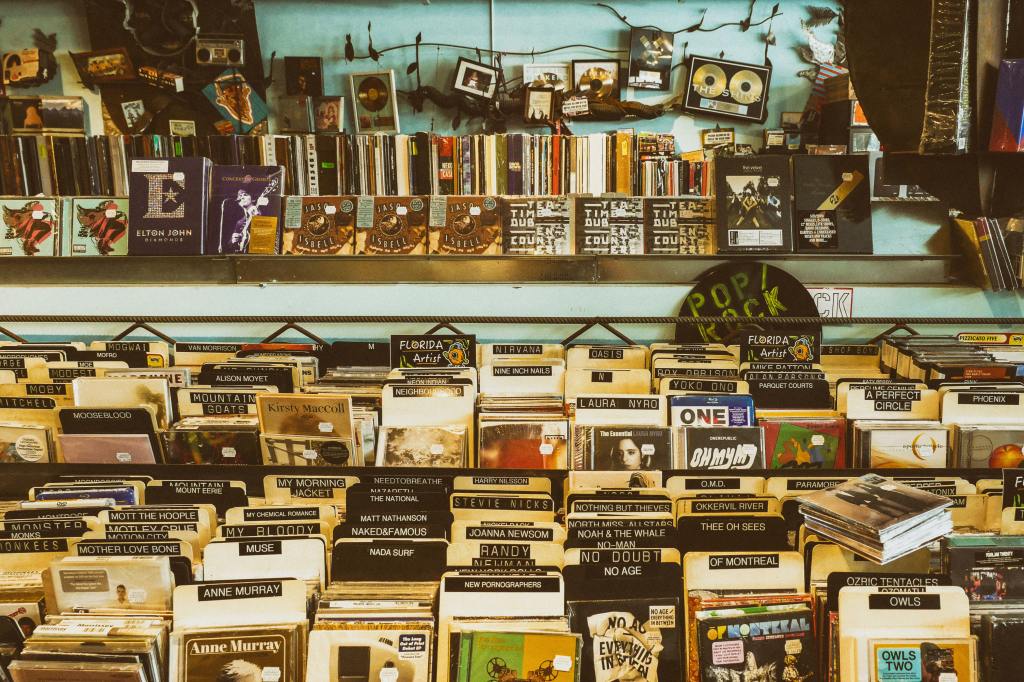
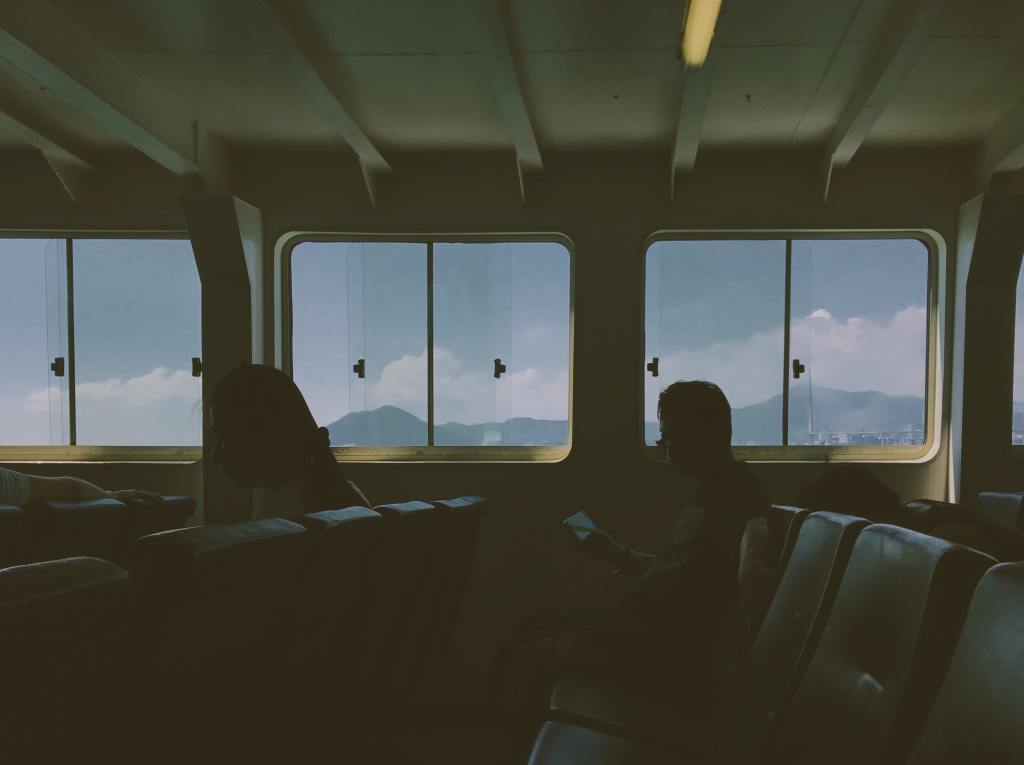
a broken- window wind and these flutters of unsettled evenings, pushing elbows through shelves in a second- hand bookshop.
pages flutter wildly, falling wide open – flags flying to signal all nations.
DS Maolalai (he/him) has been described by one editor as “a cosmopolitan poet” and by another as “prolific, bordering on incontinent”. His poetry has received eleven nominations for Best of the Net and eight for the Pushcart Prize, and has been released in three collections; “Love is Breaking Plates in the Garden” (Encircle Press, 2016), “Sad Havoc Among the Birds” (Turas Press, 2019) and “Noble Rot” (Turas Press, 2022)
Even in light of all this good I feel down I have been opening my chest up Letting all the creatures in Trying to heal my aversion To mycelium I grow to reach another root Couple Intwine Become closer to another being
I don’t know if I search for the right thing I am tethered to all my past mistakes And rotten relationships I try to make my roots grow out And into the deep Dark underground Explore the things That I only glimpse on the surface
The underground is terrifying The place from which new life springs Is not so easy to navigate I am a labyrinth Within a labyrinth Trying to solve a beautiful puzzle Always finding myself in the wrong place And exactly where I should be
Sojourner “Hughes” Davidson is a poet based out of the DMV area. Their interest in poetry began in high school English and grew in college as they began reading and writing more poetry. As a college student, they had two poems published in my college’s lit mag (The Greenleaf Review) and worked as the art editor. Their work has also been published in Knee Brace Press. Hughes’ poetry tends to explore politics, identity, relationships, the mind, and the body. They try to bring everything back to the mind and the body. Hughes believes poetry is felt both emotionally and physically, and a poem is great when it reaches you in both places.Instagram
Teaching my (step)sister to smoke in the Taco Bell parking lot
BY MONICA FUGLEI
We smoked first, remember? I thought
the tacos would cover our breath,
rolled the windows of the Mustang down,
opened the moon roof to look at the stars.
We were so young, then – summer before
your junior year. I’d just bought my first Docs,
wore baby doll dresses. Looking at the sky, I
wondered if this was sisterhood, if we finally
melted our lives together, if I had a shred
of what you had with your blood sister–if the
Marlboros, the tacos, the sky, the way we passed
our cigarette back and forth–if this was sisters
but no, it wasn’t the smoking, it was the drive-thru
fight when I forgot the mild sauce, when I backed up
the car, when I nearly hit the car behind us,
the way you yelled and laughed,
it was later when you rocked my daughter through the night
while I slept nearby, exhausted, it was later still
when you packed up your life to move home
after we learned our father was dying,
it was in the ICU when we shared earbuds
the night before we said goodbye to him,
the way our heads came together, tethered,
hospital curtains open, the way the stars
remained.
Monica Fuglei (she/her) currently teaches in the Department of Composition, Creative Writing and Journalism at Arapahoe Community College in Littleton, Colorado. A 2019 Pushcart Prize nominee, her work has recently appeared in Mason Street Review, a thin slice of anxiety, and The Hidden Peak Review. When she’s not writing or teaching, she’s usually knitting or tweeting on #AcademicTwitter.
Josh Gaydos (he/him/his) is a self-taught poet that currently resides in Colorado. He has been published in Barren Magazine, Door Is A Jar Magazine, The Lettered Olive and The City Quill. For 2023, he is releasing a poem a week on his free substack at https://joshgaydos.substack.com/InstagramTwitter
Someday, somewhere – anywhere, unfailingly, you’ll find yourself, and that, and only that, can be the happiest or bitterest hour of your life.
Pablo Neruda
What does this quote mean to you?
Trite but true with some flowers is this Neruda quote to me. It’s stuck around since I read it and though I am finding that finding of self a great deal less static than this quote implies, it keeps me aware that I could wake up in a decade’s time and find what I’d been running for or running from had made me into something I despised. Sorry for rhyming so much.
What books have made an important impact on you and why?
Too many so I’ll pull the first five that come to mind. East of Eden by John Steinbeck, captures human nature and our interconnectedness, the fact he addressed it to his young sons and was saying “here it is, everything” and delivers. frank: sonnets by Diane Suess, for the “isness”, not answering the Sirens call on a happy feeling or ending, the ability to paint a landscape as big as a coast and also write a poem about the grout around a brick (I’m being figurative here). What Work Is by Phillip Levine, for laying out that blue-collar / American working condition with romanticism and disdain, to put himself in it, distance himself from it, and paint individuals like they were in the room with you. Voyage of the Sable Venus and Other Poems, the ‘other poems’ in that just drop you somewhere and you’re immersed, it could be India and you feel the dense downpour with a herd of water buffalo walking by or New Orleans, or Compton. Robin puts you there in a way I haven’t been transported before or since. Another big one for me is The Artist’s Way by Julia Cameron. My mom had given me that when I really went headfirst into this writing thing. That book helped me to make a point to find art and make space for art wherever I was. Watch a movie, read a book, spin some vinyl and pull feeling or a scene from everything.
What is the value of writing and art in the current state of the world?
Sanity. Gelling and coming to terms with the cracks.
How has writing and art helped to form the person you are today?
I wouldn’t be here without it, and I don’t just mean serving a guest editing stint for this press. I’d be dead, or fishing with my hands and a line in the Gulf, or possibly I’d be a merchant marine. Most likely dead though.
Barefoot and listening to Fiona Apple, feeling as eternal at 33 as I did at 9 years old, at 12, just as likely for every emotion I have ever had to destroy me or vitalize me, just like every feeling is a Grand Canyon, barefoot on the gravel that is every stripe of red that music has ever made me relive, invincible and vulnerable at the edge of realizing that a chasm is beautiful because of what it exposes.
Mickey Thompson (she/they) is a poet, biologist, and teacher who grew up in Arizona and has now found her heart home in Northern Colorado. Their work has appeared in “Multiverse: An Anthology of Superhero Poetry of Superhuman Proportions” from Write Bloody Publishing, and one self-published chapbook that was stapled together on the arm of a couch in Tucson.
I wake to sleep and take my waking slow. I feel my fate by what I cannot fear. I learn by going where I have to go. -Theodore Roethke
Sleep is like food for my father. It is simply fuel for old Mexican Men. Always stirring in the early am hours –for prayer, for stamps, or for chess. No beauty in closed eyes. My sleep now is as food for my father has been.
Ironic now, how my father and The Middle East have made amends. The 2am World Cup Futbol games that the continent of Qatar sends. Sleep is like food for my father. It is simply fuel for old Mexican Men.
The last few months in Los Angeles, I worked the graveyard shift 10pm to 10am. Six months later I put in my two weeks and moved home at my parents request. No beauty in closed eyes. My sleep now is as food for my father has been.
Now home drinking coffee and wine. I call it Roethke’s Wake to Sleep Blend 2am I walk to the bathroom, occupied by him. Later the kitchen again in his possess. Sleep is like food for my father. It is simply fuel for old Mexican Men.
As ghosts we haunt these halls each night, of my old home to no end. Conversing with our demons and angels , some damned and some blessed. No beauty in closed eyes. My sleep now is as food for my father has been.
Old blood never sleeps well– doesn’t now, didn’t then. Much unforgiven in our chests, walking hearts without rest. Sleep is like food for my father. It is simply fuel for old Mexican Men. No beauty in closed eyes. My sleep now is as food for my father has been.
Cid Galicia is a Mexican American poet who taught in New Orleans for over the past decade. He is in the final year of his MFA, through The University of Nebraska Omaha. He is a poetry editor for The Good Life Review, a reader for The Kitchen Table Quarterly, and this year’s FIRECRACKER Poetry Manuscript Awards. He was the recipient of the Richard Duggin Fellowship—granted for demonstrated excellence in writing, runner-up for the Academy of American Poets Helen W. Kenefick Poetry Prize, and most recently nominated for the Helen Hansen Outstanding Graduate Student Award. He is currently living in Los Angeles as an Intern to The Editor for The Red Hen Press. His work has appeared in The Watershed Review, the National Poetry Month Issue of The Elevation Review, Trestle Ties Issue 5, and the upcoming spring issue of Trampoline.
I finally stood, happy at disrobement Brought about by some principalities Some fundamental truths not escaped Alone, free, tied to each being Nakedness in the forming. I tried to put a stop to it Afraid once, though only once Allowing layer upon layer to melt Slither away into better forms – Serve better suited seekers And quickly I latched on to the fact of my emblazoned bare Such a funny patch; so many distinct markings – though all in all a large converging pink Naked, as naked as one may be.
Abhishek Todmal is a writer based in Pune, India. He is currently working on his first novel – a piece of comedic fiction. His poetry has most recently been featured in an issue of DASH Literary Journal. Amongst other things, he enjoys keeping active and loitering aimlessly under the sun.
A poem which may be mistaken for the thank you letter I read out loud to the funders of the prestigious fellowship I won last summer, a fellowship which did absolutely fuck all to save my Autistic Black Muslim Body from being interrogated by those CBP/TSA terrorists at the airport
It strikes me as odd that this school, this fellowship, has no protocols in place for students that are forcibly interrogated at the border. I guess I shouldn’t expect much from an institution, and I guess I should bite my tongue and do the polite thing, talk about how amazing my trip was. But my trip was not amazing. It was fraught, painful, nerve-wracking. I was sick from the moment I got there to the moment I left. I walked into all types of bureaucratic walls—people not believing I was actually there to do research, and so forth. Worst of all, when I needed medical help, I had to pay out of pocket because the insurance was a formality. Oh sure, they reimbursed me for the expenses, but only partially. The idea of a medical evacuation was dangled before me, but I quickly lost hope in that. I was sick to my stomach the day I boarded my return flight, cutting my trip a full month short. Besides pain, all I had on my mind was TSA/CBP. Would they harass me? Where is home for someone like me? I am an Autistic Somali Man traveling from Kenya—that’s a perfect terrorist profile I fit. 20 Some hours later, I arrived in the states. They ask me pedantic questions about my research and MN Nice me with “good for you.” They do all this as they shuffle me into a tertiary screening line, confronted by lazy feds with mustard stains on their plaid shirts. I know what questions they want to ask me, because I’ve seen this movie before. But I refuse to answer their questions. I watch the older Somali man – the only other person asked to go to this special line before we can leave the airport – duck his head and smile and comply with their hellacious line of questioning. I stand my ground like a Zimmerman defense. But I am also weak. I can barely stand. They threaten to go through my luggage down to the underwear. To confiscate my devices and see who I’ve been talking to. We can do this the easy way or the hard way, they tell me. I can feel my heartbeat racing every time I recall this memory. There are no words to describe how livid I was when I finally got home—after answering their stupid questions, knowing I had no choice, feeling like a failure for acquiescing. I emailed my contacts at the university, both in my department and at the fellowship. There were a bunch of emails back and forth, a lot of concern and apologizing, but I knew nothing would come of it. I knew I would not see justice, just as I knew I was labeled a terrorist from a piece of shit country the moment I was born. I reached out to CAIR, the ACLU, filed formal complaints with CBP. Nothing nothing nothing came of any of it. All of this reinforced the idea that my life is worthless. Absolutely meaningless. And that is why I do the work I do, write the way I do, and live the way I do. I have no choice. I wish I could say I’ll be applying for this fellowship again. I have no reason to. And if I could go back in time, I wouldn’t have applied in the first place. Thanks for your time.
*Author’s Note: All of this really happened, from the events in the poem, to my reading this to the people who partially funded my trip. I was supposed to be more grateful, I guess? Funny, I’ve never felt good about thanking white people for anything, least of all a few measly dollars. Sometimes poems are all we have to cuss people out with. And if they wanna cuss back, well, I guess they’ll have to learn how to write poetry first. That’s a joke. Laugh./
Said Shaiye is an Autistic Somali Writer & Photographer. His debut book, Are You Borg Now? was a 2022 Minnesota Book Award Finalist in Creative Nonfiction & Memoir. He has contributed essays to the anthologies Muslim American Writers at Home, The Texas Review’s All-Poetry Issue, and We Are Meant to Rise: Voices for Justice from Minneapolis to the World. He has published poetry & prose in Obsidian, Brittle Paper,Pithead Chapel, 580 Split, Entropy, Diagram, Rigorous, Night Heron Barks, and elsewhere. He holds an MFA from the University of Minnesota, where he was a Graduate Instructor of Creative Writing, as well as a Judd International Research Fellow. He teaches writing to Autistic kids through Unrestricted Interest, as well as in the English Departments of several colleges in the Twin Cities.
This poem is from South Broadway Press’ new anthology, Dwell: Poems About Home.Purchase here.
lately done, lately love ‘neath garlands neatly trimmed nearly featureless, without tethers or hands fastening to a pledge of allegiance they cannot keep, to a creator who spun the trees like screws before the sign off scene, like polished high heel shoes
lately done, lately love with timid approach to cuckoo clocks dipping beaks in sanded hours, our end left with a note that will oil from skin with us, vinyl and wood, needle and mud could forget the impression made without the guesswork of carbon dating
lately done, lately love no fruit will fall from the mail ordered apartment gardens, boxed up dirt and seed seen indirectly like one another, decomposition composed alone to conjoin and disintegrate, barren, bearing
Josh Gaydos (he/him/his) is a self-taught poet that currently resides in Colorado. He has been published in Barren Magazine, Door Is A Jar Magazine, The Lettered Olive and The City Quill. IG: @jgwrites22
Disappearing wings made from the milky way while rose buds bloom under my shirt.
Sleepy sweet tears streak into snot freezing in my wind-blown hair.
& I’ll forget the drawer full of clean underwear.
Cradled between dolls & boys will be boys skinned knees—all the same.
A body still void of stories. In the morning, blood on the sheets like a war without warning.
Sunbeams cascade through clouds. With my belly on a boat & head in the bathroom—
whispering in the mirror: Don’t be scared of motherhood or the absence of fathers.
Marissa Forbes (she/her) is a writer of all genres. She is an art and writing teacher for creative nonprofits in Colorado, a poetry Instructor for Community Literature Initiative, and the Managing Editor of Twenty Bellows. She was awarded an Author Fellowship from MVICW in 2021 and since 2020 has published numerous short stories and poems in literary journals internationally, which are found on www.marissforbes.com. Her full length collection, Bridging the Gap: Poems & Ethos for Emily Warren Roebling is slated for publication in October 2023 from Finishing Line Press. Forbes lives a colorful life in Denver, Colorado with her two children, dog, and cat. Follow her on Instagram: @word_nerd_ris.