Two Poems | Ted Vaca

Image: NKMG

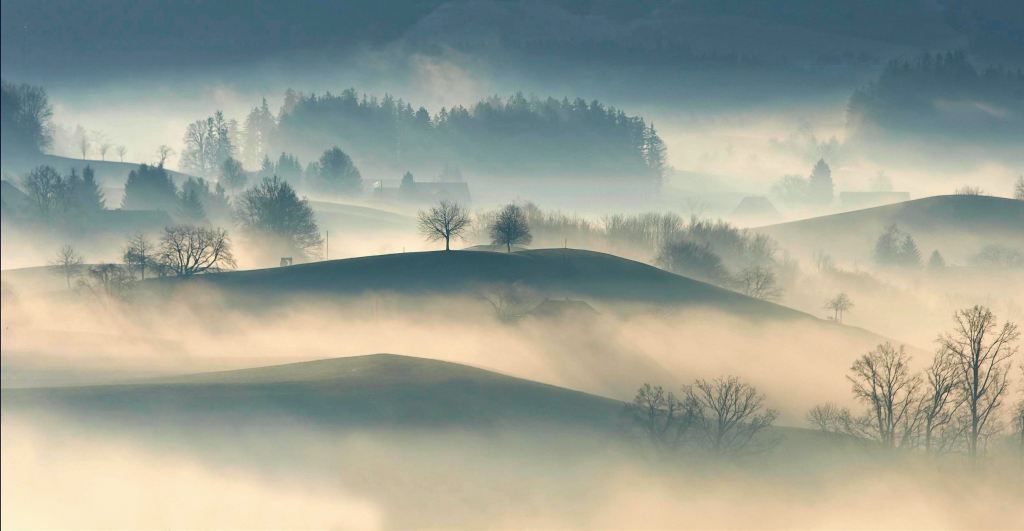
The Spring Has Been Wet

BY TED VACA

drowning those on the surface
underneath it’s downpour

you are very much
as the spring
this year

we can only pray
hope is real
practice deep breaths
plan in positive accord

as in what may grow

closer

perhaps the squirrels
will not eat the strawberries
but better
to put a barrier between
them and the fruit

I’m sure the weeds
and wild grass will
stay a few weeks
more green before
the summer sizzle

maybe we may
take advantage of
both the growing tumble
and the withering

to pull from the rain
and the land the best
we can

to add to the home
we share within us

set the table
prepare the meal
and may neither one
of us be cut

the cosmic within and without

BY TED VACA
YOU MIGHT WANT


to think deeply
about where you
come from

To Think Deeply About Where You Come From

TO
THINK		DEEPLY
ABOUT	       WHERE
YOU		COME

FROM

to think
deeply
about

to open the eternal
gold-fringe lined
burgundy curtain
on the stage manager's signal

let the show begin
step upon the stage
stomach in turmoil
mind electric
your eyes 
             wide wild
             and excited

to accept what is
within 
                            is without

to accept what is
                                            without is within

the universe  s
                 s            p
               l                  i
                      a   r      


out and in
unfolds engulfs
consistently for a manufactured
lineage of time

the universe
                              doesn’t care about
                                                                     TIME

time manmade	           time the cursor
from birth to death	   and how much
                                           can you accomplish

time the accomplishment

                                            measure of worth and meaning

time the killer the waste of

                                           the sought after for proof of
                                           deeds and diplomas

the microscopic 
                                            is 	C O S M I C
the cosmic is
                                                      microscopic

the embryo in their sack 

utero evolving galaxies

spinning and star beings
born in a chemical-chance
at becoming only to be seen
in awe by the dark matter
that surrounds

Incomprehensible!

our eternal selfs
witnessed
mirrored not above
not below 
but all around

breaking the novelty of direction
the compass explodes and the earthly mind
is set free of dimensions then intuned with the way
then again becoming unknown
as a dream
separated
from the expansion

we’ve not far to go
to reach & realize

Ted Vaca, Denver poet father lover crime fighter / semi holy somewhat sweet can be bitter / published here and there / Founder of The Mercury Cafe poetry slam / Coach of the 2006 Championship Denver Slam Team / Member of 1995 Championship slam team from Asheville NC / Intergalactic Provocateur

Crossing | Lorraine Caputo

Image Nick Collins

CROSSING

Our ship cuts a
quiet wake across the
Río de la Plata
The harbor of Buenos Aires
slow motions
away from us
The muddy haze of
pollution hangs
within the labyrinths
of canyon streets,
thick o’er the poor
south barrios

~ ~ ~ ~ ~ ~ ~

The fringed skyline
further behind
us now
The sun silverplates
the water, dead
fish bobbing
Ships far asea
coming in or
leaving this port
& to our east
the dark risen shore
of Uruguay

~ ~ ~ ~ ~ ~ ~

Wind strong up
on the deck, slicing
the bright sun
That once-far bank
& isles nearing, heavy
with thick-leafed trees

Lorraine Caputo is a wandering troubadour whose poetry appears in over 400 journals on six continents, and 20 collections of poetry – including On Galápagos Shores (dancing girl press, 2019), Caribbean Interludes (Origami Poems Project, 2022) and the upcoming In the Jaguar Valley (dancing girl press, 2023). She also authors travel narratives, articles and guidebooks. Her writing has been honored by the Parliamentary Poet Laureate of Canada (2011) and thrice nominated for the Best of the Net. Caputo has done literary readings from Alaska to the Patagonia. She journeys through Latin America with her faithful knapsack Rocinante, listening to the voices of the pueblos and Earth. Follow her adventures at www.facebook.com/lorrainecaputo.wanderer or https://latinamericawanderer.wordpress.com

Ladders | Shome Dasgupta

Image: Mike van den Bos

Ladders

Sun—suppliant. Folded skies,
a swallow: mirrored creeks,
trailing—drifting, forever
a mashing, mashed—fists
of bark, scratched and scarred
like beaks of melee—like eyes
full of mud, stung from powdered
stones.

Juxtaposed: craved teeth, snarled brow—
a puff and a pout, such were the memories
of glass and dew—of patched mounds
tied by clasped grass, fingers crossed—
a crossing among sticks of light, like
hypnotic grazes of skin and bone, a release.

Pebble for pebble—a toss and a skip,
a broken roof made way for a charm,
floating—bumping—a ray of shadow
for tongues to find the path, a path—
wayward fallen upon knees, thin
and pressed—one leaf or two, feathered
like a rooster’s crow—so let it be gone—
so let our failures dwindle in our palms
as those who stagger and find bits
of rope to climb until we look down
and see the dirt of our wrists.

Shome Dasgupta is the author of The Seagull And The Urn (HarperCollins India), and most recently, the novels Cirrus Stratus (Spuyten Duyvil) and Tentacles Numbing (Thirty West Publishing House), and a poetry collection, Iron Oxide (Assure Press). His writing has appeared in McSweeney’s Internet TendencyJabberwock Review, New Orleans Review, New Delta Review, Arkansas Review, Magma Poetry, and elsewhere. He lives in Lafayette, LA and can be found at www.shomedome.com and @laughingyeti.

Ode to my one weirdly long arm hair | James Cole

Image: Matt Artz
Ode to my one weirdly long arm hair

that I cut you with surgical scissors, the ones
                            I use to split the lidded eye	
                 that I know you
as an invisible blonde, though in my aging I grow
                            darker by in blight. 	
               becoming, in sheepish sense, 
father to a talisman, that I spoke thread and now
		             I glean this wheat
	       of me, my fields a pair of fore-veins,
fallow plough works kept clutter null in gold.
		            I would, if you were
	      still with me, give you as a gift
to some storied hero deprived of golden boon
		             who must loose his heavy
             halyard and sail to meet his imprisoned
lover in a donjon across the sea. 
		            Sooner, I could let
             you grow, and warp so long you poke 
out every needle’s eye, string them all together
                            into chimes of cuspate sheer,
	      tie hooks and pinch with leaden sinkers
to cast, and fish, and never again fear hunger. 
		            And if I did not kill you,
	       you would be with me in those hours
when loathing struts and claps its fulcrum bell
		             along my streets, the cure
	     it sells, a miracle, and I can attest:
‘it’s true,’ I tell myselves, ‘if I can grow an arm
	    hair as long as this, it’s all true!’
		          You are with me
	    even if a nub, even if your root be plucked,
or scraped in some dragging from my seat
		            to dance, even if 
	       in oil you escape, be it popped from
frying pan or pyre, be it vivacious, sebaceous, supreme.
		            You may leave,
	      but don’t ask me. You don’t need my
permission. I am not my arm. You are not a guest.

James Cole is a poet, author, filmmaker, and scientist based out of Charlottesville, VA. He is currently working on his Ph.D. in neuroscience at the University of Virginia. His writings have appeared in numerous journals, including Poetica Review, Artemis Journal, and Carolina Muse, among others. In 2019, he released his first collection, Crow, come home, through VerbalEyze Press. James also servse as an editor for The Rumen Literary Journal

Palinode // Basil Crane

Image: Ricardo Gomez

Palinode

BY BASIL CRANE

This time,—————————–
as a lullaby.
I do not dare open my eyes
as I kiss———————————-
you though who am I——–
if I take not this opportunity —————-
to see
when there are only ———
so many moments left
to look? Four months ago —————
on the air mattress —–
wedged with my back——————————
to your sister
Whom I love———————
so well ———-
I still fear
the power of will —————–
who could understand
the power of will ————————-
we grow ——-
in distance
as you grow taller?———————–
I want you to get ——
everything you want——————————
to know what would have happened
if I had never met you———————————————–
would I still be a metaphor———————-
of space? Had I been a girl for nothing
but delusions that can allude —————————–
to me you do not cry but say
the way you portray the human ——————-
body is beautiful”
no, I am no longer artwork only——–
a self-portrait.– ————————————-
I am the ghost——————–
to whom you gave a body
of mist
I paint a picture of mythic mornings ———————
when water smokes with fog————
I could melt into ———————————–
gentle as my eyes —————
are tired when———–
you grow
taller will you still be able to ————
hear me when I weep?
I do not know—————————–
if I want you to I do ————-
not know
how to ask you ——————
to listen——–
To the day that is new ——————
with future———————-
days are new and mornings————
are warmer when I find myself
waking with you safe ——————————
inside my stomach.

Basil Crane (They/He) is a trans, Jewish poet born in Los Angeles and raised not far outside Philadelphia in a house in the woods. They are currently focusing on surviving their last years of high school and hope to study writing in higher education. This is their first publication.

Soon | Quinn Ponds

Image: Pawel Czerwinski

Soon

When I was little my Da was still in the Navy. I would often miss him and sit on my mum’s lap and cry, “When is he coming home?” She would tell me gently, trying to ease my heart, “soon”. I would always ask how long “soon” was, but was always told: “It is soon”.
—-In my mind the word “soon” sounded like the sun as it was setting, orange and yellow mixing in the sky and extinguished on the horizon. It seemed like “soon” would only be a day.As I grew older I realized “soon” was much longer. I learned that “soon” is what adults say when they do not have an answer. I began to believe that “soon” did not exist. Now that I am older I realize “soon” is so much longer. “Soon” can be months. It can be years, but it never feels “soon”.”Soon” is always an uncertainty, never a promise.
—-“Soon” can be a lifetime.

Quinn Ponds‘ education and career are in psychology, but she has always held a passion for writing short stories and poetry. There is certainly something to be noted about using psychology in writing fiction! One of her humorous poems about tacos has been published in The PHiX- Phoenix Magazine, and a short fiction piece titled “The Humid Hours” can be found in The Dark Sire Literary Journal. Her cat-themed flash fiction “Baby’s Breath” is in Literally Stories, July 27th, 2022 and her latest published story, “Gather the Darkness” can be enjoyed at Everyday Fiction, December 21st, 2022.

Two Poems | Catfish McDaris

Image: Johannes Beiharz

The Mirage

Juanito screamed in the rain
and drank from the sky trying to
figure where he went wrong and
lost his way. He met a beautiful
maiden, they ate rabbit and quail,
soon she led him up a steep trail.

Billy The Kid

We could see the white butts of antelope
across from the Kid’s grave, we’d turn south
to the Pecos River to fish, swim, and party

I almost died twice there, once by drowning,
I dove in and hit a boulder under the surface,
my dad rescued my knocked-out carcass before
the river swallowed me whole; years later in

The back of a pickup partying, parked in yucca,
mesquite, and creosote bush chaparral, a rhumba
of tangled rattlesnakes attacked from the brush

People leaped out and ran like jackrabbits with
coyotes in hot pursuit, now days after so much
graffiti and desecration to Billy the Kid’s tomb-
stone, authorities have put a cage around it

Folks say Billy was so dangerous, even his
ghost might escape, the red caliche dirt roads have
hills of petrified wood, crumbling adobe churches
with faded white crosses and plastic flowers in
the church yard, tumbleweeds blown against graves.

Catfish McDaris has been in many magazines, books, and broadsides. He’s a 30-year small press and 3-year Army artillery veteran, from Albuquerque and Milwaukee. Currently Cat’s selling wigs in a dangerous neighborhood in Milwaukee.

The Performance | Haven Nasif

Image: Felix Mooneeram

The Performance

I have been enamored lately by the concept of messy, bloody, cathartic, altering the fundamentals of our societal responses to the constant bile-rising of glamorization and the need to perform sexuality, nonchalance, purity, a gold standard picture of a horrid, mangled creature draped in her own characters, choking on forced importance. She screams as everyone captures her slow death on video. Her sisters look on with pity and smugness and a bit of simmering jealousy, as though this will save them from a similar fate; if they escape visibly unscathed they still have not won. These women have become masters of compartmentalisation, as all women must be, slipping into routine numbness to block out the binging and purging on every false escape that appears in sterile media giving us new idols. She is broken down and sobbing hysterically on the floor. It is the greatest performance of her life because she only gets to have one before she is shoved behind biting remarks, cursing that her emotions seem to envelop her rather than cursing that she must carry these burdens at all. She is scratching and clawing at her skin as if to dredge herself out of the euphoric manipulation that is false womanhood. Her sisters are mourning the loss. She dies, finally, not with a guttural scream, but with a deep breath and quiet resignation. Her sisters exchange calm looks before descending upon her corpse with vulturous frenzy, dressing themselves in her memory to be her activist and champion, while she has already been sold and forgotten to make way for the next performance, to be a sacrifice satisfying the screeching ache of defeat we’ve felt since we were girls. Her red lipstick is smeared but in the way that makes her look thoroughly kissed, not the way that lipstick actually smudges, and her mascara is running down her face in her tears like she put them there to drop on cue. She screams and cries and her sisters applaud, her sisters are paralyzed as they fantasize about being in her position. Her perfect curls are held in her hands as she rips them out of her head. We continue to cheer and she lets her lungs fill with her own spit as her moaning is swallowed by the awe of her beauty as she falls apart. We clap and laugh and make knowing eyes at each other. We are so proud of being able to stay afloat. This, unfortunately, does not save us from the same fate. We sit, and feel, until we too are screaming.

Haven Nasif (she/her) is a queer poet native to Boulder, Colorado, currently living in Eugene and studying both English and Women’s, Gender, and Sexuality Studies at the University of Oregon. She has had work published in Portland’s Spit Poet Zine and often shares her writing through her Instagram, haven.nasif.

In Defense of Early 2000s Pop-punk Songs with Needlessly Long, Self indulgent Titles. | Gage Anderson

Image: Caio Silva

In Defense of Early 2000s Pop-punk Songs with Needlessly Long, Self indulgent Titles.

1.
There is a sound which when
fused to last night’s last light
will scrub the patina away leaving
a palimpsest for your auguries, a place
you will scribble your initials into.

There is a sound that overtakes
the buzzing of headphones. It is a violin
string leashed to the drill bit lodged in the throat. It is
ripped from the larynx, swaying— a pendulum—
an inverted metronome.

2.
They Say All Roads Lead to Rome, but I’ve Been Walking a While and the Roads Have Only Led Me to You
is the actual title of a song I wrote in high school.

3.
There is a sound that waits
in a guitar case
in a room a thousand miles away. This sound is
unburnished, unfinished, waiting for its number;
its number is the chorus. It goes like this:
the mirror that grew out of the mud
looked at the sky and asked “are you so blue
because it is my favorite color, or is it my favorite color
because you are so blue?”

4.
My grandma wears hearing aids and still hears music in everything. That’s why she calls my poems
songs.
is a poem I will probably never finish because how could it ever be good enough?

5.
There is a sound which is a hollywood
promise in monochrome halted
on a film of silver dust.
The daguerreotype recalls
each eyelash, the quiver in the shoulder blade,
the contour of the hip
which is the mercurial vapor— which is the building
across from mine where the indigo weds
the sun-drenched gray panels and vaulted ceiling—
which is the burning iodide amber, a perfect asphalt etching.

6.
There’s a reason Chuck Taylors have been in style for over a century, and it isn’t baseball, basketball, or James Dean.
Is the actual title of a song I wrote in college.

7.
Cassettes rattle when the tape has to be reeled
back into place. The rattle is a sad
song that you’ve quilted to happy
memories. So the minor chords are
anchors, and the anchors are
floating up;

it is a bleak but urgent hope to feel what you’ve felt
before again;
it is a chase;
it is as close as you will ever get
again.

Gage Anderson (he/him) was born in Centennial, Colorado and garnered a love of storytelling from the age of ten. He graduated with a BA in Creative Writing from the University of Washington Seattle. His poems have appeared in Capillaries Journal, Bricolage, AU Speculative Fiction Journal, Twenty Bellows Online Journal and “We Are the West: A Colorado Anthology.” Gage believes that poetry is the closest he has ever come (or ever will come) to performing real magic; still, insists on calling himself a magician.

https://www.instagram.com/ganderson2275/

Swing Set | Sophie Gullett

Image: Autumn Bradley

Swing Set

I. Yellow

Ten little fingers clutch like honey in my hair and pull at freckles
golden as the mustard seeds that loiter in the brine
she pours into her cup. Each little burst her lips pucker
like a slit accepting a pearly button.

A slash of sun on the sidewalk
baking the dandelion chalk outline and hollowed out footprints
where I had held my feet still
carving a name, a year.
Under her nails the same neon color
the same sweetly acidic smell.

On my neck her breath is sticky, heavy with vinegar
and sugar and spit. The crease of her jeans, grass dyed and gaping
reveal knees prickled with little ghost pins
that someone will have to teach her how to shave.

Smaller but the same shape, her hands wrap around chains
with a yolky rubber coat. Her Barbie sneakers
tied with two fraying bunny ears
pump up dirt at her back and she moves
back and forth.

I cannot care for her.

II. Green

Salty whisps rest on her temple, turning dark as she floats.
She is whiter and cooler in places she presses
otherwise blushing red bubbling.
Lids flip up, marshmallow green
swimming through frog eye salad.
She whines that the water is too hot for her
and someone will need to adjust the tap.

There is not enough space for both of us.
Sideways brings a surge, her hand at my face
pushing my eyelids down and in.
Her hands catch on mine like her Pikachu kite
trembling between tree branches. Winter at our necks
she pulls, snagging leaves, hair.

At our feet, the drain is shrinking green brown silver.
Her toes dipped blue
pale as she pushes, pink as she curls back.
A gurgling suck, then swaying silence.
She untangles, flatter but not by much
leaving fuzzy outlines on the fraying mat.
Pages nest facedown
peppered with sweating hollows like her neck’s center.
She wants me to read it to her
as if we don’t both know it by heart.
Without the blanket of steam legs are static,
arms slick and bumpy. Bone cradles bone
both grow colder in the damp quiet.

I cannot care for her.

III. Red

On her lap, a shiny overgrown beetle
balanced between chin and thigh, wobbling as her ankle rotates.
Our feet crisscrossed red and pale
cracked open lobsters in the grass, glistening with butter.

A sidewalk sloping upward boasts spray paint stickers
words she knows but doesn’t yet dare to say,
but will need to be told to stop saying.
A lowercase z, her body hunkers over the wall
cement oozing between brick, dirt oozing between toes.

We squint, searching for the rusty crawdads
clawed into a kelpy ponytail like her hands
weaving my own into river currents.
Like a hawk above a burrow
she sights glistening red and follows,
helmet at her hip.

She runs along the ditch, growing smaller.
Someone will measure her height
in gentle pencil marks on a closet door.
Her hair is long, before she took her scissors to it
and sprinkled it over the red stone patio for nests,
feeling like Laura Ingalls. I bury my face in the grass
sharp against my nose and eyes.

I will not care for her.

Sophie Gullett (she/they) currently lives in Denver, CO where she works as an educational researcher and amateur sewist. She has previously been published in The Broken City, The Raw Art Review, and Colorado’s Best Emerging Poets.