Track the progression of comedic methodologies from the 1990s through the early and late 2000s, as demonstrated in the different stages of TheSimpsons (from satire—early ‘90s—to sitcom—mid ‘90s—to absurdist comedy—late ‘90s—to deconstructionist meta-parody—early 2000s—to randomized pop cultural overload—current)—as a show that persisted while changing to align with the comedic zeitgeist, to demonstrate the shift from postmodernism to metamodernism. Do this and don’t look out your window—one of many belonging to the tenement building you and your father have lived in all your life—and, whatever you do, definitely don’t go out the door and catch a cab to the hospice, at least not until you’re finished.
Connect these Simpson-stage-shifts to the shifts orchestrated by other popular comedies.
Anchor Man (which you and Dad would quote), in tandem with Family Guy (which only you would quote) popularized the absurdist non-sequitur pop cultural references and self-referential allusions to the pop cultural references (the ones they make). Anchorman as the shift toward absurdity and Family Guy toward non-sequitur meta-referential pop culture—FG commenting on the humor of Will Ferrell, and eventually even on itself (deconstruction). Simpsons had to change to keep up.
Remember the hinder-sounds of the door opening and closing around 8pm every night—after the two of you ate dinner, where he helped you with your homework, and if you finished quick enough he’d watch the first fifteen minutes of a rerun with you while getting ready (this happened less and less as you both grew older)—and how you’d strike out all the lights, after he’d said love you as the door shut, so the room danced with the shadows of the movement on the screen, and remained there in the dancing light until the door opened and closed again, around 6am (this time without a love you but instead a soft groan), and until the dancing shadows drowned in the sunlight streaming through the window you rarely looked out then, back when he could work, and even more rarely now.
Connect to Frederic Jameson’s diagnoses of postmodern culture, and thereby late capitalism, as schizophrenic—i.e. extends the symptoms of the psychoanalytic qualifications of Schizophrenia (unable to accede into the realm of language, thereby unable to form a solid identity—no “I”=no ego) to the masses in the form of pop cultural overload of disconnected webs of signifiers (e.g. MTV rapid fire television) that confuse the subject and make critical thinking near impossible—let alone clear thinking, let alone human connection outside the network of pop-cultural reference. Argue that pop culture has only increased its rapid fire pace.
Connect to escaping into the naked glow in the dark of the living/dining room (first from the television, then the computer, now both), and to the way the nature of that escape changed as plot and image changed, and how the shouting and the crying and the laughing from the other apartments, and out the window, first made the quiet of yours feel loud but eventually became indistinguishable from the shouting and crying and laughing from the screen and from your body, as did the hinder-sounds of the door opening and closing and the love you’s and soft groans (which became first a light cough and then a violent hack and then a quiet but constant groan that you barely hear anymore because you don’t visit the hospice).
In postmodern pop culture the rapid fire imagery was slow enough to still allow for some forms of critique—thus the satire, sitcom, and abusurdist stages of the Simpsons. He wasn’t sick during these stages, though the coughing began toward the end of the third.
Anchorman as the justification for the type of absurd humor that makes the pop references of FamilyGuy a valid form—i.e. it executed absurdity in such a way that the masses could embrace. This is the limit of postmodernism and thereby late capitalism. The overload of the convoluted webs of interwoven signifying chains as only made possible by the existence of the internet. This shift is the movement toward meta-modernism: e.g. Youtube culture. You remember this shift because he bought a computer, despite the voicemails from the medical billing agencies, and he gave it to you for homework and said Stay classy San Diego, and instead of saying thank you, you said I feel like a talking baby punching Ferrell in the face for making Bewitched—in a good way, and he might have laughed were it not for the coughing and for not getting the reference.
Family Guy and Simpsons picked up on this shift, and the rapid-fire webs of signifiers became more convoluted, randomized, and meaningless outside of its own network of reference. He thought the Simpsons had fallen off. You disagreed.
Argue that postmodernism was less insidious than metamodernism because the speed and volume of despotic webs of signifiers has exploded with the development of the internet. The overload of self-referential nonsense make subversive critique near-impossible in that it is sucked into the meta-ironic whirlwind. When Dad said love you, you used to say it back, but then you just started to quote shows, and he knew what you meant; then you started to quote YouTube videos of clips from shows, and he didn’t.
Finish this soon so he can read it before he dies.
Wesley Hunt hails from Baltimore, Maryland, and is a writer, experimental filmmaker, musician, and connoisseur of fine Salisbury steak. He is a former editor at the literary magazine The Welter, and graduate of University of Baltimore. His words have appeared in publications such as Horror Sleaze Trash and The Fine Print. Listen to his music at treeforts.bandcamp.com. Or don’t. This is a democracy, after all.
I ask you ..to take this cup from me. I don’t want ..to die alone in a white room ..some Monday, my lungs ..full, but without ..a breath left.
[TV]
BY KEVIN RABAS
…….I. …….You can stop the TV, …….get off your phone, and write. …….It may hurt …….to think, but you can.
…….II. …….If you don’t write ……….or make songs …….or paint, you have ……….to go and live in some …….other person’s dream.
[unintended birthday gift]
BY KEVIN RABAS
The neighbors have it, the pastor and his 6 kids, held a bday party the night before the lockdown started, and now they’ve got it, every single one.
Past Poet Laureate of Kansas (2017-2019) Kevin Rabas teaches at Emporia State University, where he leads the poetry and playwriting tracks and chairs the Department of English, Modern Languages, and Journalism. He has thirteen books, including Lisa’s Flying Electric Piano, a Kansas Notable Book and Nelson Poetry Book Award winner. He is the recipient of the Emporia State President’s and Liberal Arts & Sciences Awards for Research and Creativity, and he is the winner of the Langston Hughes Award for Poetry.
YOU CAN VISIT OUR FUNDRAISER FOR THOUGHT FOR FOOD HERE.
In these times of COVID-19 and social isolation, many people are out of work and lacking the resources necessary to even feed themselves.
South Broadway Press, the parent LLC of South Broadway Ghost Society, would like to help suppport local non-profit Denver Food Rescue by raising funds through an anthology of poetry entitled “Thought For Food”.
What Denver Food Rescue does:
We increase health equity with Denver neighborhoods by rescuing high-quality, fresh produce and perishable foods that would otherwise be thrown away by grocery stores, farmers markets, and produce distributors. With the help of our amazing volunteers, the food we rescue is delivered (often biked!) to Denver neighborhoods for direct distribution at No Cost Grocery Programs (NCGPs). NCGPs are co-created with existing community organizations like schools, recreation centers, and nonprofits that are already established and trusted within the neighborhood, decreasing transportation barriers. Residents of the NCGP community lead the distribution of rescued food, and many also help with food rescue shifts. This participation decreases stigma of traditional food pantries, empowering each neighborhood to create a program that is appropriate for their culture & community.
“Food For Thought” will be an anthology featuring a single poem by each selected contributor. Copies of “Thought For Food” will be available to contributors for $6. They will sell to other folks for $15 each.
Poems can be on any theme. If you’d like to be prompted, consider writing on the theme of food, or on life in the face of a pandemic.
“Thought For Food” marks South Broadway Press’ first release.
Submissions for this project will close on May 11th of 2020.
We will accept previously published materials.
If you would like to submit please send an email to submissions@soboghoso.org with the following information:
Subject: THOUGHT FOR FOOD
Your name.
A brief 100-word-or-less bio.
Up to three poems as a Word document or a Google Doc. We are not paying contributors for this project, but contributor copies will be available at a discounted rate of $6 each.
Please email us at submissions@soboghoso.org with any questions.
All bed pillows
All beach towels
All down comforters
All wall décor frame framed wall art and mirrors
All frames, albums and scrapbook kits
All custom decorating galaxy collection fabrics
All bath rugs
All solid color towels
All sheets and sheet sets
All blankets and throws
All bed-in-a-bag comforter sets, bedspreads and quilts
All juvenile bedding and accessories
All mattress pads
All games and clocks
All mattress and metal pads
All wicker bath accents
All accent and area rugs
All decorative pillows
All table linens
All decorative accessories and replacement shades
All pet gifts
All bath accessories
All shower curtains
All bath scales
All Comfort Zone therapeutic pillows
All Comfort Zone therapeutic mattress pads
All bedroom furniture
All dining rooms plus two free chairs w/ a 5-pc set purchase
All home office and entertainment centers
All sectionals, sofas and recliners
All occasional tables
All accent furniture and curios
All furniture accessories
All ready-made window coverings
All home collection candles
Are 30 percent off of regular price
Fifteen years old was when Shane Allison wrote his first poem. Since then his poems have appeared in countless kick ass literary journals such as Chiron Review, West Wind Review, The Brooklyn Rail, and others. He is the author of four collections of poetry. His new collection Sweet Sweat is out from Hysterical Books. He is also the author of two novels. Harm Done and You’re the One That I Want.
“Oh, yeah,” said Maddy. “I made it into a drinking game. I drank every time she spoke.”
“She’s just so sexist,” said Kirby. “How can a woman be that sexist?”
“Hey,” she said. “We can do anything you can.”
We were in the Sic Bay. It was New York University’s unofficial student health center, which was preferable to the actual Student Health Center, because Kirby only charged for the weed.
Kirby was a grad student in the NYU School of Medical Technology. He was going to be a repairman for robot surgeons. “Until they learn how to repair themselves,” he always added.
He and Maddy lived in Rubin, a residence hall overcompensating with ivy so thick you could barely see the brick beneath its leaves. You could still smell it. Rubin was so infused with secondhand hops that, on a hot day, the bricks smelled more like loaves of bread. It was the cheapest housing on campus, because the antiquated structure couldn’t support central cooling. On a hot day, you were lucky if all you could smell was beer.
I lived in the Bobst Library and Computer Lab.
NYU had recently gotten caught up in a ponzi scheme. It was the Pyramide Inversée of the Madoff scandal, which no one liked to talk about, so of course, it history repeated itself. Tuition went up. So did housing. I lived en plein air for a while, but it was hard enough being homeless in New York City even before Central Parking paved over the green roof to make room for more cars.
When the Bobst Library closed in the small hours of the morning, I hid in the bathroom. The security guards never swept the stalls. They never policed their butts either, so there was always something to smoke while I waited.
I slept during the day, but it was a college library, so they were used to that. I woke up screaming, but they were used to that too.
“You should hire a bodyguard,” said Kirby. Even Maddy looked confused by the non-sequitur, and she got an A in Non-Sequiturs I.
“They don’t have that category on Craigslist,” she said.
“Not Craigslist.” He started pacing. “The dark web.”
After Campus Public Safety found out about the death threats, they did a few extra bike-bys of our building. Kirby said that was bullshit. Maddy said it was “about as useful as cupping a corpse.”
She explained the idiom, but that led to a whole new series of questions, including how long she had been Jewish, and what exactly went on when her people sat Shiva.
I raised my hand. “What’s the dark web?”
“The dark web refers to any website hosted on an anonymous network like Tor. It’s technically legal, in a read-the-fine-font sort of way, but the websites that exist on it are not. You can buy anything on the Silk Superhighway with enough digitally laundered currency. You remember that girl who sold her kidney to buy an iPhone? It’s always harvest season on the internet. People who view this item also viewed drugs, guns, and kiddie porn. You can even hire an assassin. The Unicoder will make it look like an accident for anyone who refers a friend. You’ve probably never heard of him, but he’s totally dark net famous.”
“No, Miriam,” said Maddy, without looking up from her phone. “We aren’t hiring The Unicoder. He only has two stars.”
I lowered my hand.
“I could be your bodyguard,” said Kirby. “For the right compensation.”
“Don’t be a pig,” I said.
“Would your parents pay for one?” asked Maddy.
“I doubt it.”
To be fair, of all the ways I could have disappointed my parents in college, I don’t think they had considered “starting a cult.”
The Gift started as a side hustle. Kirby designed it for me, and coded it in BASIC, despite my initial confusion and offense. He had three side hustles: App designer, Uber Driver, and sous chef, or as he put it: the real triple threat.
The Gift was an app combining witchcraft with psychology. The name was a reference to DEAR MAN GIVE, an acronym from the Dialectical Behavior Therapy module on Interpersonal Effectiveness: Describe, Express, Assert, Reinforce, Mindful, Appear confident, Negotiate. Gentle, Interested, Validate, Easy manner.
After the Gift went viral, I had to Urban Dictionary my own slogan. Apparently “Dear man, give,” was a versatile expression that could contextually mean any of the following: Yes, no, maybe, and exclamation of victory, a greeting, an insult, or a request for sexual services.
I started full-fidelity Dialectical Behavior Therapy three weeks after my first panic attack. Three days into first module, my parents took me off their insurance. I didn’t qualify for the university’s health plan, because I was taking less than twenty-four credits per term.
Anyone could be a witch, but their persecution (and prosecution) had always been a feminist issue. Early witches were just women who said “no” to men.
The Salem Witch Trials were mostly the result of misogyny (and hallucinogens). Although only twenty people were executed in Salem, compared to the scores of thousands in France, Germany, and England (the Spanish Inquisition had insisted that ordinary standards of evidence be applied).
In 1967, the Yippies levitated the Pentagon. (Hallucinogens were probably involved on this occasion as well.) During the 70s, W.I.T.C.H. (Women’s International Terrorist Conspiracy from Hell) and other feminist groups chanted slogans such as, “We are the daughters of the witches you couldn’t burn.” In 2017, a neo-W.I.T.C.H. group was formed for the Women’s March.
Historically speaking, the popularity of witchcraft tended to peak during periods of social unrest. The Cold War brought Wicca, Dianic Witchcraft, and cultural appropriation. The Orange Scare brought emoji spells, and more cultural appropriation. After they took our health insurance, it was only a matter of time.
The Gift went from seventeen downloads to seventy thousand overnight, and the hits just kept coming. Per day, I averaged fifteen autograph requests, thirty kiss requests, half a dead animal, and two marriage proposals. My death threat count had dropped to five. They were very flattering death threats too. Most of them only wanted to kill me so they could absorb my power.
I had everything I’d ever wanted, except for sleep.
“How did you do it?” Kirby asked.
I blew a smoke ring. “It must have been the deal I made on Craigslist. This guy had a listing under Mobile App Promotion, but he insisted we meet at the corner of 5th and Couch, at night. Instead of payment, all he wanted was a picture of me. What was his name? Ugh, I’m so bad with names, and he had so many.”
“Prince?”
“That was one of them.”
Maddy blew a smoke dragon. “Your strategy seems to be working, Miriam.”
“Strategy?” I repeated.
“Your strategy.” She spoke louder, as if I was deaf or Siri. “Taking a break from social media.”
“Oh, that strategy.”
“The internet is calling it your vow of silence. You’re maintaining the air of mystery around the Gift. It helps that the only thing you ever post on Twitter are pictures of cats. Of course that won’t work forever. You may have to hire a ghostposter. Try to get the one who works for the Kardashians. I think they just won a Pulitzer.”
“I have a question,” said Kirby.
“Just one?” I asked.
“Is this all psychological, or do you actually believe in magic?”
I shrugged. “You can’t believe in nothing.”
Maddy snapped her fingers. “Enigmatic. Good. I don’t think you’ll need a ghostposter.”
“Of course I can,” said Kirby. “It’s called atheism.”
“No,” I said. “I mean, you can’t believe in nothing. There’s no such thing as nothing. Even in a vacuum, there are particles and antiparticles and they are inherently unstable, which is probably what caused the Big Bang, but we don’t know. We don’t know what happened before the Planck epoch. We don’t know why there’s no such thing as nothing. We don’t know why we exist, but we do, and we’re complex enough to question the nature of that existence. That implies inherent meaning. We may not know the meaning of life, but we can’t deny it. We are not an accident.”
Maddy snorted. “Speak for yourself.”
I ate dinner by the campfire light. I had started the fire all by myself. For kindling, I burned dry branches. For tinder, I burned dry leaves. And my hair, but that was an accident.
Dinner was a life hack for campfire-grilled cheese sandwiches. I didn’t understand why they were called life hacks when they were supposed to be easy. Hacking was harder than it looked. There were only two windows, one progress bar, and no time limit. And the progress bar turned out to be Kirby’s music.
Although to be fair, I almost started a forest fire.
I stayed in the Catskills until the new president took office. Then I turned around and drove west. I didn’t even stop to eat. Drive-thrus seemed safer. Of course, Taco Bell backfired since I had to stop three times after that.
I drove until we ran into water or Border Patrol. Then, like a Roomba, I did an about-face and drove in the opposite direction. Along the way, there were rest stops, supply runs, and open road. The white noise of the electric van’s fake engine. The white noise of the news.
It started small. In Texas, a woman was refused service at Starbucks because she had a pentacle on her shirt. It was Captain America’s shield.
Her case didn’t even make it to the Supremes, but it was a benchmark. Witches had separate bathrooms and water bottle filling stations. They even had their own schools, which were not as nice as Harry Potter led them to expect.
Maddy led the protests, so she was the first arrest.
The president repurposed several government facilities to serve as correctional camps. They were supposed to “provide a remedial setting for aggressive therapies,” and that was the PR version. The camps used aversion therapy, administering drugs that made people sick and then showing them tarot cards. The suicide rate was off the roof.
The Kardashians’ Pulitzer-winning ghostposter got herself sent to the camps on purpose. She managed to release some footage before “committing suicide.”
I wanted to help, but it was hard to get a Twitter account verified when you were a fugitive from justice.
I patted myself down before leaving the van. Wallet, phone, keys, knife, knife, knife, knife, knife. Drive-thrus seemed safer, but sometimes you just had to enjoy the supersized things in life.
Another old man was taking the ball pit too literally. The children were crying into their french fries— as if the sodium content wasn’t high enough already.
No one noticed when the Unicoder drew his gun. It was an antique revolver. A financial statement piece. Point and click.
No wonder he only had two stars.
“I’m going to sue McDonald’s,” I said.
“You wouldn’t be the first,” said the Unicoder.
I drew my athame. The ceremonial blade was traditional in design, double-sided and black-handled.
“You really think you’re going to do any damage with that little pigsticker?”
“Let’s find out, pig.”
He ruined the moment by laughing.
“Hey, I have a question.”
“Just one?” he asked.
“Why do you do it?”
He shrugged. “It’s a side hustle.”
“I meant Uber.”
“Oh.” The Unicoder blinked. “Easy to make it look like an accident. A lot of people refer friends. More than you might think…. Miriam?”
I had that feeling— when you knew there was something that you were supposed to be doing, but you couldn’t remember what. In this case it was breathing.
“Miriam!”
I was having a panic attack.
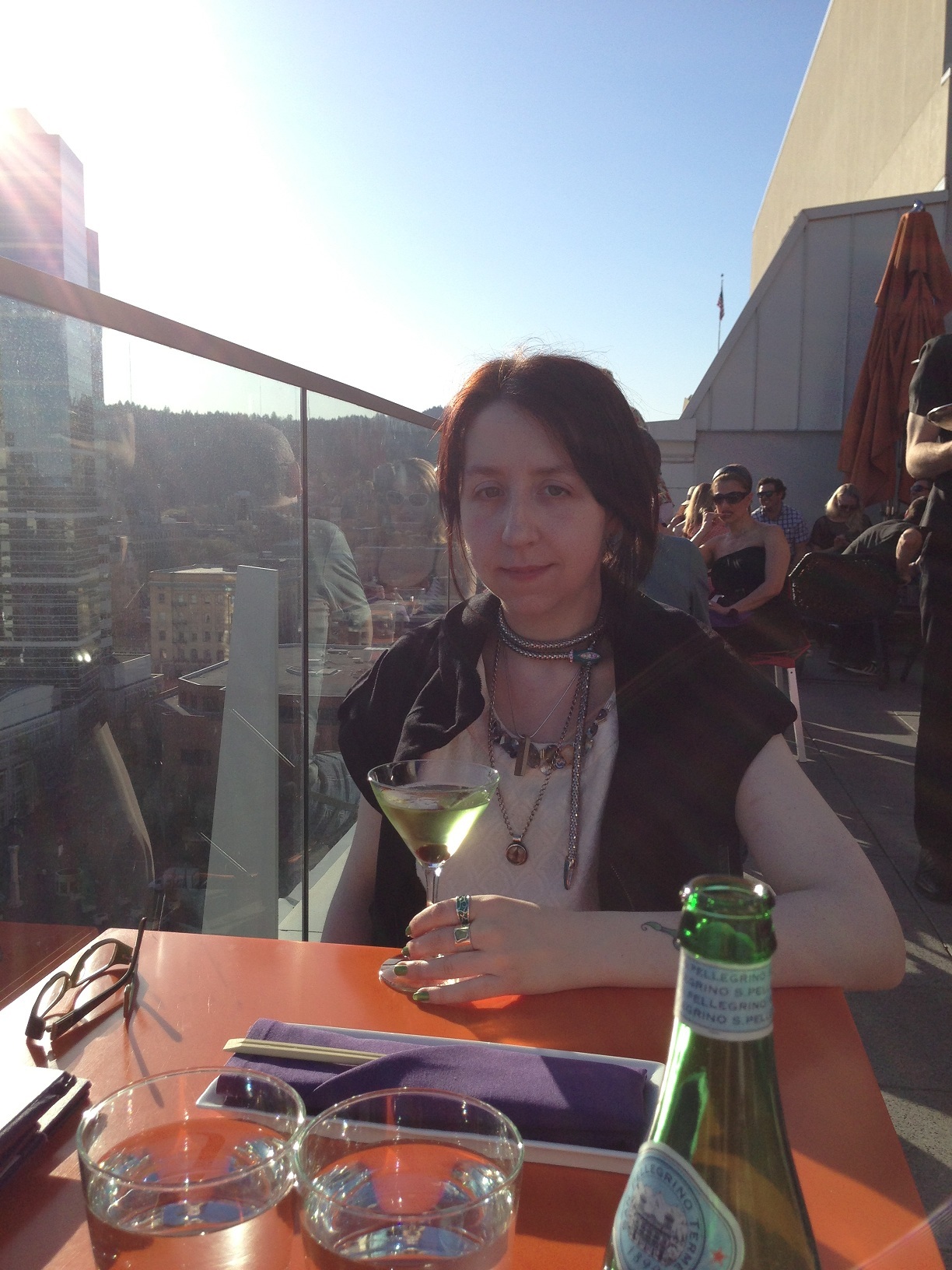
Lucy Mihajlich lives in Portland, Oregon. Her first book, Interface, was chosen for the Multnomah County Library Writers Project, where it appeared on the list for Best of the Library Writer’s Project 2017.




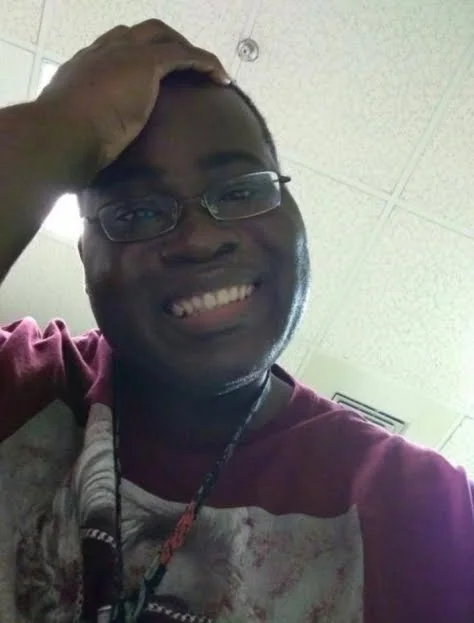 Fifteen years old was when Shane Allison wrote his first poem. Since then his poems have appeared in countless kick ass literary journals such as Chiron Review, West Wind Review, The Brooklyn Rail, and others. He is the author of four collections of poetry. His new collection Sweet Sweat is out from Hysterical Books. He is also the author of two novels. Harm Done and You’re the One That I Want.

 south broadway press