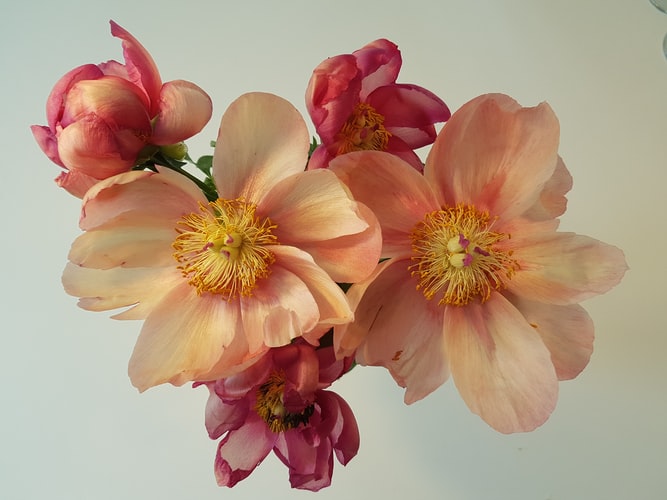
Oh poets and their peonies! “As big as human heads” Jane Kenyon exalts, her pen heavy with extravagant language, enormous metaphors as big as life.
The perfume of such heady description smothers me, face-first in the reproduction of perfumed pistol and stamen. Yet it keeps the real makings of this craft at a distance.
Amongst poets, there’s a secret censorship of creation surrounding their beloved peonies— afraid too close they’ll catch the inner workings of such art.
Aware they’ll see, let’s be honest, the ants. Mary Oliver admits they exist. That something dark and alien spiders across this beauty.
She knows that a necessity for budding is this cutting, this eating. Knows that the cataract of leaves covering the bud must feed the hungry just enough. Must just hold back the swarm to unlock the flower’s form.
These thousand tiny bites release a poem as well. The flowering depends on it yet can also kill. So we unleash the ants but prevent such furtive legs from going too far within. Allow the justice of devouring so that the exquisite sweetness opens.
Inside any creation is a little taste of destruction. To pretend otherwise would be outrageous.
Amy Wray Irish (she/her/hers) grew up near Chicago, received her MFA from the University of Notre Dame, then fled the Midwest for Colorado sunshine. She has been published in Spit Poet Zine and Thought for Food; she has work upcoming in Progenitor and Chiaroscuro. Her third chapbook, Breathing Fire, won the 2020 Fledge Competition and is now available from MiddleCreek Publishing. For more information go to amywrayirish.com.
Along the cliffs of Ceann Sibéal herds of sheep graze, weighed down by crimped fleece.
Rough-hewn Celtic crosses, slathered in dust and moss, peek out from brittle underbrush.
A boat slices through still bay waters, inboard motor stirring up foam as the throttle is revved.
A gray dorsal fin approaches the vessel. With a barrel roll and flick of his flukes, Fungie the bottlenose dolphin launches
into the air, slips back under the surface, and reemerges to nuzzle starboard and port sides with his rostrum.
The Ring of Kerry is bathed in gold as Dingle’s red and white lighthouse guides Fungie back to the bosom of the Atlantic Ocean.
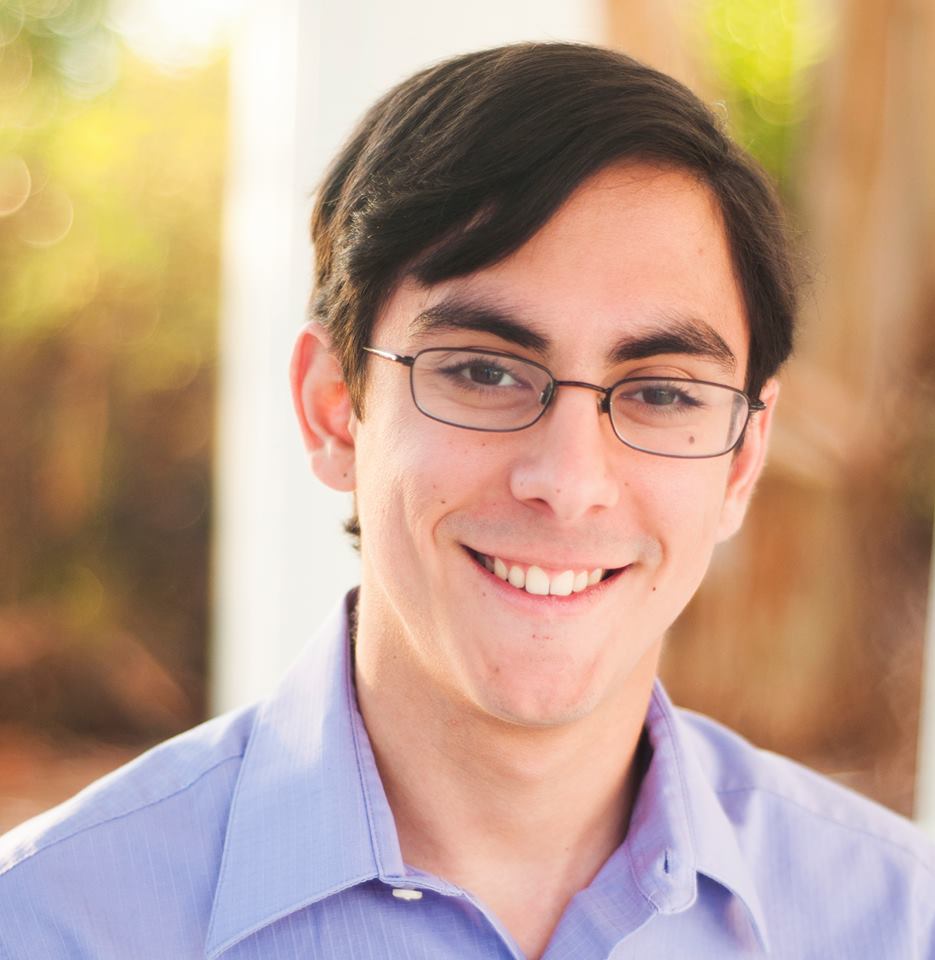
Sean Woodard (he/him) is a doctoral student at the University of Texas at Arlington. He also serves as the film editor for Drunk Monkeys. His creative works has appeared in NonBinary Review, The Cost of Paper Vol. 4, and Found Polaroids, among other publications. You may follow him at http://seanwoodard.com, Twitter @seanwoodard7326 and Instagram @swoodard7326.
Yellow suits April, with her tiny porcelain doll face, wispy blonde hair, and raspy voice. She looks so pretty in yellow. It’s a warm late summer afternoon. April’s yellow sundress flutters as we walk along the stone path through her mother’s vegetable garden. She’s wearing red plastic sandals that slap the path stones. Muscular tomato vines grow along the weathered privacy fence, with cracking red fists of tomatoes. Big zucchinis hang from a bamboo pergola like the legs of green giants. Things fly about, small dark birds and glinting insects; big blue flies knock into us; everything smells of tomato stalks and rotting tomatoes and snails.
Come, April says. Come with me. At the end of the path stands the peeling white garage with the broken door and its red roof softening like crayon in the sun. It’s cool in there, April says and takes my hand in her hand, waxy and warm. It is cool in the garage, but not that cool. It smells of gasoline and mown lawn. But there is no car. She shows me a red iron pump her father uses to pump air into the tires of his red bicycle. He rides the bicycle to his job at the steel mill about a mile down the road. My father used to work there. He worked there before the fire. We lived in a different house before the fire. I only remember it a bit, in little bits.
April and I play checkers. She beats me. She says that she never beats her daddy. I don’t say anything, but I think her father must be mean not to let her beat him now and then. What about your daddy? she asks. He died, I say, in a fire. That’s sad, she says.
She unfastens her right sandal, removes it from her foot, and shakes out a stone. Her foot is small and white and delicate. Her baby toe has no toenail. I smile at her. She puts her sandal back on, tightens the strap. We play checkers again. She beats me again. I don’t like losing, but I don’t mind losing to her. Winning makes her so happy. Do you miss your daddy? she asks. I tell her I don’t remember much of him; I was small when he died. I hope my daddy never dies, she says. We play checkers again. This time I win.
Her mother brings us lemonade. Her mother all bright and wearing white with red polka dots, red lipstick, white sandals, and toenails painted red. How you kids doing? she brightly asks. We’re fine, April says. That’s terrif, says her mom. That’s just dandy.
Mommy, April says, you know what I want? I want daddy to live forever. Aw, her mother says, that’s so sweet. I’ll tell daddy what you said, hon. Okay, now, you kids be good. I’ll bring snacks in a bit. Does your friend like peanut butter and jelly sandwiches? Do you like peanut butter and jelly sandwiches, little man? she asks me. I nod. I like them. I’m not hungry, but I like them.
Later, I tell April that her daddy will die one day. She stares at me with her small blue doll eyes; they look like little marbles. After a long moment she asks, Why would you say that? Well, everybody’s going to die one day, I say — but now I know I’ve made a mistake. The vibration between us has changed. I should not have said that about her father dying, no matter how true. I try to apologize, but she lowers her head and curls a hand to her mouth. Big tears drop from her eyes.
April, I say softly, I’m really sorry I said that about your father. But my words only make her cry harder. I’m afraid that if her mother comes out she will think I hit her daughter or hurt her somehow. I’m so sorry, I say again, but April makes a sound in her chest and points to the garage door. Out, she says. I want you out. Without another word I leave.
A week goes by and I don’t see April. I don’t try to call 0n her. I feel bad for what I said. I feel like a bad kid. I am a bad kid. I try hard to be good, but I am bad. My grandmother used to say I was born that way. She died. Now she says nothing. Then Mr. Ward next door tells me a dump truck hit April’s father while he rode his bicycle to work. He died immediately, Mr. Ward says. Poor bugger.
My mother goes to the funeral, but I don’t. She tells me it was very sad, almost as sad as my father’s funeral. Poor bugger.
I don’t see April for the rest of the year. Every day I think about her. I miss her. I miss her little face, her button nose, her small white feet, her blue doll eyes. I hear she’s gone to stay at her grandmother’s place for now because her mother is having problems. When I see her mother standing on her front porch she looks sad, so sad. Her eyes are dark; she’s lost a lot of weight. She doesn’t say hello to me. She doesn’t even see me. April must have told her what I said in the garage. Maybe she blames me for her husband’s death. I should have never said anything.
Angry with me once for talking back to her, my mother told me that I had started the fire that caused my father’s death. She said that I’d been playing with matches in the basement — after she had told me more than once to never do this — near a can of kerosene, and set everything on fire. Later she said it wasn’t true. But I believed her the first time.
Sal Difalco is a Sicilian-Canadian satirist and writer currently living in Toronto.
Reviewed by South Broadway Press Editor, Brice Maiurro
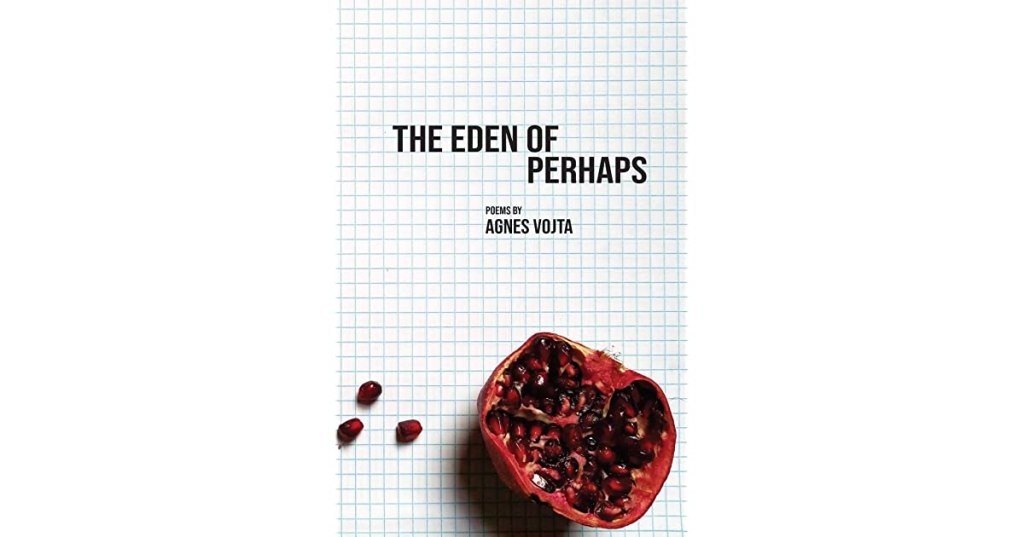
Agnes Vojta’s full-length poetry collection, The Eden of Perhaps, finds itself welcomed into a lineage of poets existing in liminal spaces. In an early poem in the collection, What If, Vojta asks the reader “what if the answer is not here/there, either/or, but both, between, and?” In our society, plagued by othering, perfectionism, and divisiveness, Vojta’s poems continue to ask the right questions all throughout the collection.
I believe it is often the work of a poet to consider grey space. This may feel contrary to what someone thinks of when they think of a poet, self-assured and convicted, preaching their gospel or anti-sermon to an enraptured audience, but there is often more truth when a poet brings along a healthy sense of humility. Poets like John Brehm speak to and curate collections on impermanence. In a 2020 episode of the podcast Between the Covers, Pulitzer Prize recipient Natalie Diaz encourages the acknowledgement of not understanding, or even misunderstanding. Ocean Vuong, in his poem Someday I’ll Love Ocean Vuong shares with the reader “the most beautiful part of your body/ is where it is headed.” Many great poets have learned to walk the tight rope of transition, to balance on the line of maybe.
I was particularly stricken by Vojta’s poem, Atonement:
Sometimes I wish I belonged to a religion that practices confession.
I can walk in the forest and confess to the trees, kneel by the river and whisper to the water, stand in the field and shout to the sky – but who will pronounce me shriven?
I have to prescribe my own penance, whip my body to exhaustion to drown out the mind’s self-flagellation,
and wait for the unpromised peace.
Being raised Catholic, I am no stranger to this attitude of religious penance that Vojta brings forth in the four short stanzas of Atonement, but though she mentions at times she longs for this space of confession, she ultimately settles, or unsettles, in the uneasy space of waiting “for the unpromised peace.” Vojta’s style at times reminds me of the beloved American poet Mary Oliver. An iceberg—in the sense that often below the surface of the deceptively simple words is ten secret tons of depth. Vojta is something of an iceberg herself. In Atonement, she seems to remind us that religion may present us some feeling of closure, but where a truth lies is in understanding that no peace is promised. These are the words that could shake a world free of the imprisonment of ignorance and return us to a shared experience of unknowing.
The book is brimming with bop after bop. In Seeds of No Return, Vojta, in a kind of magic, bans “the word never” from her mind. In Accomplished Hamster, Vojta manages to turn the cute allegory of a hamster on its wheel into a dark social commentary on hopelessness. Vojta’s poems are no stranger to humor, but they wield it like a knife. In Greeting Cards They Don’t Make, Vojta stands on her soapbox to announce the world’s lack of a greeting card that appropriately states inside “I hope the bastard rots in jail.”
It seems to me that Vojta must live her life as a student to poetry, often passing through the world with dreamer’s eyes. Finding compassion in the dying words of the Mars rover, Vojta creates a beautiful eulogy for a robot in My Battery is Low and It’s Getting Dark. Vojta hoists a feminist fist of dissent that RBG would applaud throughout the collection, including a disruptive reworking of such classic, albeit dated, fairy tales as Rapunzel and Sleeping Beauty.
What’s refreshing about Vojta’s Eden of Perhaps is that it is, in fact, a collection. The poems are in conversation with each other, coming together like a multitude of seeds in the juiciest most pungent pomegranate you’ve ever eaten, unapologetically dripping all over the blueprint of a broken society.
Having read Vojta’s poems, I find myself more willing to say “I don’t know” as I move through my daily life, and while this may sound like some kind of defeat to some, for me it’s a nice walk through the garden in an imperfect Eden that feels more real than anything that they are trying to sell us.
The Eden of Perhaps was published by Spartan Press and is available for purchase here.
Yes, Florida’s also in the South. Yes, we’ve been there. Yes, we’re planning to go there again, maybe this summer; no, we didn’t know anyone in that school, but yes, we all know someone in that school.
Yes, the kids are safe…well, not really safe. I talked to M this morning about what to do: whether to wait in the first fire alarm, how to listen in hallways, where to hide if she needed to.
Then I sent her to school with her cello and packed lunch as if this were normal.
As if I should be talking to her about survival, instead of test scores and school dances. As if any of us know what 6th grade is like when you’re worried about making it home alive. Yes, I say, I realize this is not normal. Yes is to say, I know the rest of the world doesn’t understand, and neither do we. No, I say, it won’t make anything change. It won’t end America’s love affair with guns because we’ve seen that we’ll let children die over and over again and that’s what it means.
I stop and think and almost finish. We’ll let children die before we run background checks. We’ll let children die before we stop automatic and armor-piercing and the hard-on for the NRA.
But I realize all those are just conditionals to the central fact, and the fact of the matter is America let’s its children die.
We’ve been letting them die.
I remember Columbine; I remember Sandy Hook. I remember all the stories in between and all the schools since.
Yes, I say, America.
Keri Withington (she/her) is an educator, vegan, and pandemic gardener. Her poems have appeared in numerous journals and anthologies, including The Wild Word and Blue Fifth Review. She has published two chapbooks: Constellations of Freckles (Dancing Girl Press) and Beckoning from the Waves (Plan B Press). Withington lives with her husband, three children, and four fur babies in the Appalachian foothills. You can find her in Zoom classes for Pellissippi State, trying to turn her yard into an orchard, or on FB (@KeriWithingtonWriter).
his lips were purple and his breath was gone after I tried to blow it back inside of him but it blew my hair up over my crying eyes as I listened for his heart and checked for his pulse, a man so full of life the night before, but a heart attack woke him long enough to reach over to my bed to wake me up so I could save his life. I remained asleep as we both fell out onto the floor in between our beds his dead body pinning me into a rug burn that did not heal for weeks after his life force passed through mine and left me standing there, gazing at him there in the middle of the floor– done and over with and never again–until I realized his life force found refuge in mine when I heard him laughing inside of me.
Kevin Ridgeway is the author of Too Young to Know (Stubborn Mule Press) and nine chapbooks of poetry including Grandma Goes to Rehab (Analog Submission Press, UK). His work can recently be found in Slipstream, Chiron Review, Nerve Cowboy, Plainsongs, San Pedro River Review, The Cape Rock, Trailer Park Quarterly, Main Street Rag, Cultural Weekly and The American Journal of Poetry, among others. He lives and writes in Long Beach, CA.
a sketch of the 12 bar blues, approximate C major, central and key. now I play occasionally
in passing at a party – my close friends onto my limited repertoire but acquaintances somewhat impressed. especially since it seems I can improvise; just fiddle it a little with the left hand over pentatonic scales. that’s how you do it – learn how to play like it’s nothing. be casual – order in spanish and in french when you all go on holiday. know
how to wire a plug at the table. how to drive cars manual. spell certain words. play a little piano. how to write a poem about doing other things.
DS Maolalai (he/him) has been nominated eight times for Best of the Net and five times for the Pushcart Prize. His poetry has been released in two collections, “Love is Breaking Plates in the Garden” (Encircle Press, 2016) and “Sad Havoc Among the Birds” (Turas Press, 2019)
Glass Cactus is a Denver-based screenwriting and filmmaking team.
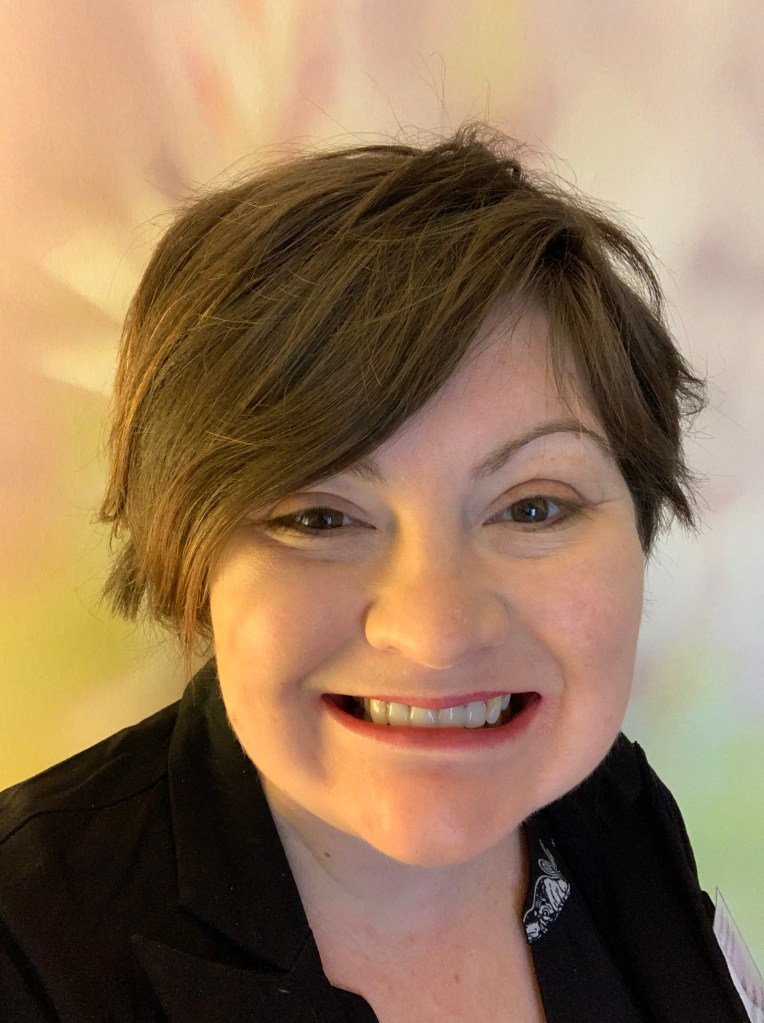
Amanda E.K. is a queer writer, filmmaker and writing coach, and the former editor-in-chief of Denver, Colorado’s Suspect Press. She writes for Playlove and Out Front Magazine, teaches a weekly drop-in writing class, and she’s currently pitching her memoir about growing up in fundamentalist purity culture. Follow her on IG @amanda.ek.writer.
Jack Oberkirsch is a film/media composer from Denver, CO. His musical background is mostly comprised of playing drums and guitar in local and touring punk/hardcore bands. In the last few years however, he made a transition to composition and writing instrumental music. Of course, he still does play in a few local bands although things have slowed down in that field since COVID.
Working on The Pandemic In Pollyville has definitely been a challenge for Jack. With it being in the style of silent film, music has to cover the entirety of each episode which meant Jack had to write progressions and melodies that could carry the entire episode from start to finish. Also, the music used was very different in style from episode to episode so Jack had to tackle genres of music he had never attempted before to score some of the installments.
Eli Whittington is a mediocre farmer and an okay parent. They enjoy long walks on rhe forest floor because the ocean is really far from here, and kind of scary. They are the author of ‘Treat me Like you Treat me like you Earth’ published by the late Suspect Press. They also have two tracks of spoken word on Black Marlet Translation’s Punketry album. They are really bad at playing banjo, but will always be, more punk than Brice.
Elizathebeth.com has poems on it that are nearly impossible to read on a phone.











 south broadway press