Book Review: compost your despair by hayden dansky

Book Review: compost your despair by hayden dansky

A BOOK REVIEW BY LIZA SPARKS

Compost Your Despair is Hayden Dansky’s love letter to Palestine, community organizers, to the “queer and weird and trans and disabled,” to the “dark and indigenous,” to “those of us who live in liminal spaces, or are kin to it,” to their past self, to anyone who feels empathy, anyone with a heartbeat.

The speaker in these poems writes with a fierce urgency that begs us to pay attention and asks us to move our bodies towards action.

In “Now That I Have a Voice,” the speaker defiantly asserts:

So let them
Burn me
with the rest of them
Burn me like they did
my ancestors before time and place
made me white
Burn me like the heathen they call
me for my love, desire, joy
Burn me with the rest because
now that I have a voice
I will never close
my mouth

These poems tumble down the page like spoken word and it does feel like Dansky is speaking just to us. They capture our attention. They invite us in to the prayer. This poetry is a communal act—a protest poetry spoken on the street.

They write in, “Until They Hear Us:”

What else can we do
besides scream from every corner

There is not a lot of excess in these poems; there is not flowery language, sentimentality, romanticization of struggle. They write with a conversational language that seeks to be understood. In “Climate” they write:

it really, really matters how we treat
each other

There is the examination of complexity and Dansky struggles with their own positionality of privilege and oppression. They write:

Peace is a process of
relationship to self
just as much as
relationship to other.

They write, in regards to the ongoing genocide in Gaza,

I will scream that this is not
my Judaism.

These poems demand a megaphone.

There is not the promise of peace or justice, but an impulse towards it. In “Until They Hear Us,” the speaker repeats, “I will try” and “I can try.” It is a vulnerable and humble sentiment. In times like these, what else is there to do but try? Trying is the first step towards action.

There is a force in these poems that is driven by the musicality of repetition, like the drumbeat of “Burn me” in the final stanza of “Now That I Have a Voice.” The speaker is not afraid to write in defiance of powers that will oppress them and the people they love, and they will say it again.

In the poem, “Climate” the speaker struggles with the power of words. What can words actually do in “a burning world.” They write, “How can I trust these words.” Yet, Dansky is driven to speak, to write, and to share. There is a deep desire to be heard. There is a fierce drive to express.

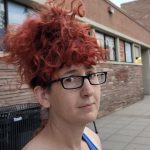
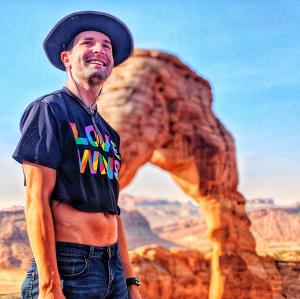
Author Hayden Dansky

These poems bring to mind the Audre Lorde quote: “I have come to believe over and over again that what is most important to me must be spoken, made verbal and shared, even at the risk of having it bruised or misunderstood.” With that same sentiment—Dansky must speak, must write, must share.

There’s a hunger in the speaker to understand the past and the present, to make sense of the trauma and their position and responsibility.

In “Nex” there is a firm defiance against the powers of hate:

Our bodies are resistance.
Our love is survival.
Our identities are our anchors,
always in transition.

“Nex” is addressed to Nex Benedict, a 16-year-old non-binary student, youth, and precious soul who died as the result of anti-LGBQTIA+ policies. Dansky’s poems do not exist merely on the page, but are in deep conversation with the world around them.

And although the world around them is apocalyptic, there is hope in these poems. In “A Pandemic Note to the Creative Organizers,” the speaker writes:

You are not alone.
When you listen
you will remember
you never have been.

and in “A Pandemic Note to Self,” the speaker asserts:

Fall into the earth like it’s your home
It has always been.

Dansky’s impulse towards social justice is driven by a deep love for their fellow humans and for the world. In “Gaza” they write:

called by a deep love
of all humanity
of a belief
that nobody will be free
until we all are.

Compost Your Despair asks the reader to look at their own privilege and positionality—What drives you? What moves you? What do you love?

In “Pride,” Dansky reminds us that

Pride is not complacency

our lives are choices
and we are choosing to stay

Dansky’s poetry asks the reader: What are you choosing to do with your life? What are you choosing to do with your voice?
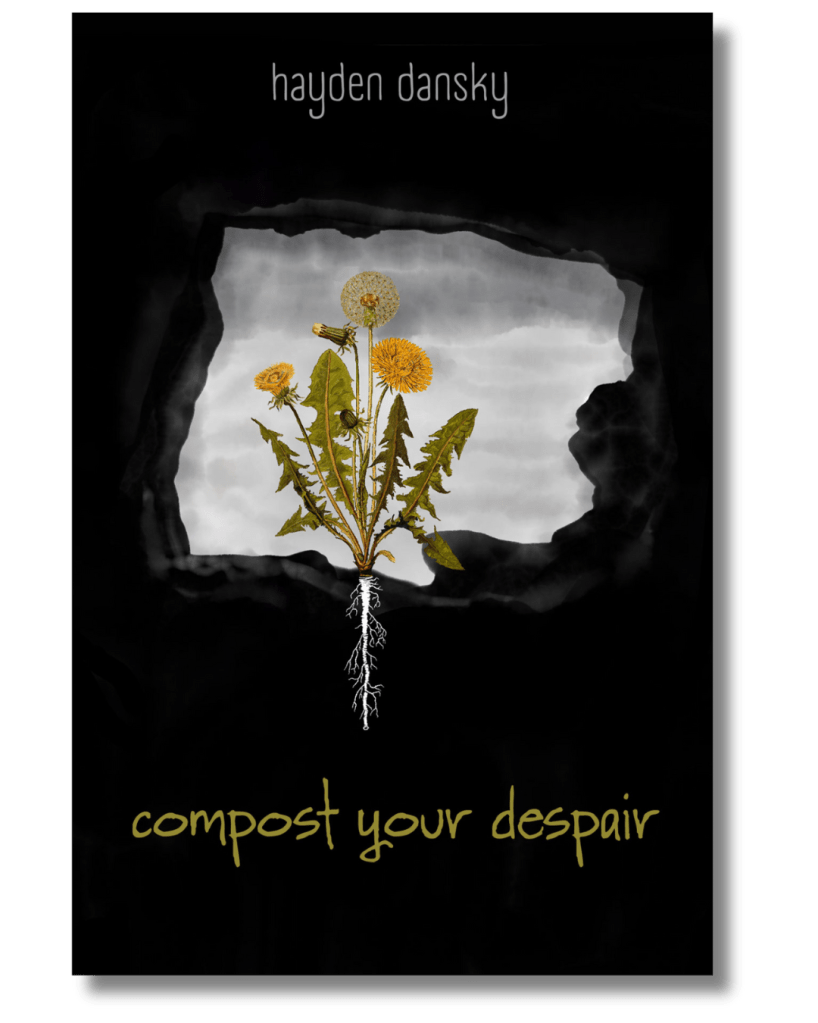
compost your despair

BY HAYDEN DANSKY

AVAILABLE NOW!
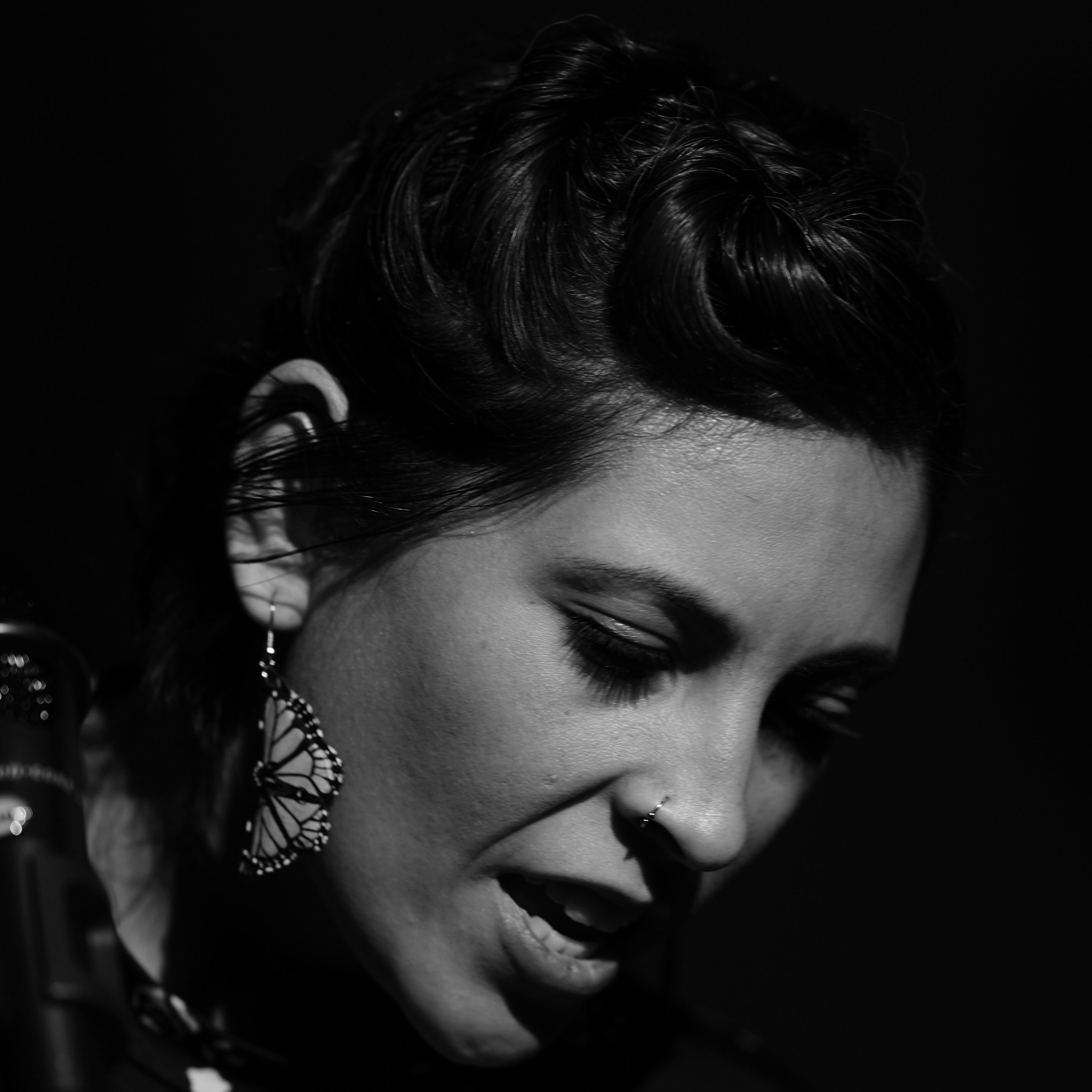
Liza Sparks (she/her) is a student in the 2025-2026 Poetry Collective at The Lighthouse Writers Workshop in Denver, Colorado. Liza follows her literary obsessions and collects books the way toddlers collect rocks and pinecones (beloved friends, sacred treasures). She is a Pushcart Prize and a Best of the Net nominee.

She writes me recipes like love letters // Jordan Stanley

Image: Horvath Mark

She writes me recipes like love letters

BY JORDAN STANLEY
I. 
Dress the table while I’m out 
with the cloth stitched in 
sideways sliced strawberries 
lay the sharpened swords 
whisking wands and Florida water
for the wrists 
for the three gallons of rain 
required to make one tomato as red 
and ready as this 

II. 
Mince each morsel of carrot 
into a carrier pigeon 
to the heart 
bearing blessings from 
your childhood table 
the one with the wobbly 
leg and Sunday paper stains 

III. 
Pick and sniff the peach peel 
under your fingernails 
like perfume and drain the 
French press slow 

IV. 
Notice how a split open 
blood orange looks both 
like a pair of lungs and 
a pussy and recall 
there is more than one way 
to breathe 

V. 
Look at our life according 
to jars in cabinets 
emptied and stuffed 
with hours of ourselves 
homemade hand-pickled 
in a city where you see 
the seasons change not 
so much in the trees 
as in the coconut oil 
on our shelf 

VI. 
Open your skull like a pomegranate
and rub your thumbs inside 
the ruby rind to remember 
you are not Persephone no 
you are only pleasure seeker 
with a mother 

VII. 
Stuff your sharp tongue 
down in your lip like 
dip and let loose the licker 
that thrusts hungrily into 
the night sky like honey 
so sweet we rub it on 
our tongues on 
our wounds on 
the names of our lovers 

VIII. 
Breathe and let 500 butterflies 
fall out with wet wings beating 
against your molars and let your 
belly hang out and your bowls 
overflow and whisk me away 
whatever you do 
whisk me away 
with you 

Jordan Stanley (she/they) is a queer poet and content writer who loves to perform at open mics across Los Angeles where she now lives. She has pieced together her heart and found home in Boulder, CO; Brooklyn, NY; Boston, MA; Elon, NC; and Suffield, CT over the last 10 years. Follow her on Instagram @jaystanz for writing, sewing, cooking and baking enthusiasm.

Tolling | Jasmine Nicole Maldonado Dillavou

Image: Bruno Thethe

Tolling

We were always gender-fucked
Wannabe Lover Bunnies
Pink in Gay Bar lighting
Drunk on
Drinks more expensive than our worth and worthless in our day glow night crawl awe-ness
We own nothing
But the love we exchange in Instagram photos and photosynthesis
which is the product of high heels on wood floors
This place
once a post office now a dance club now a church
I can’t pray anymore though
I get tired
and horny
Like winter-born babies
and serotonin thirsty high school drop-outs
We are in love with each other.
We
the chosen family that resembles some cult-like Ghost Club
We haunt each other’s hearts
Never letting too much in
Never letting our feet touch the floor-were always dancing
Even in our dreams
SZA beats bounce off living room walls
But it sounds like church bells
Tolling

Jasmine N. Maldonado Dillavou is an okie-Boricua poet and artist based out of Colorado Springs. Her work explores the intricate private-sphere of Latinidad and femininity through large scale installations and written word. She is most passionate about telling stories in vulnerable ways in hopes that it may open the door for others to do so as well. 

If We Are All Just God in Drag | Carson Elliot

Image: Brian Suh
If We Are All Just God in Drag
After Baba Ram Dass

Then I will paint my lips with your poetry,
batting eyes at the singularity of a millenia–
                                               This shade always looks so good on you.

Pluck stars from the sky and sew into the fabric
of a time when I last felt this beautiful.
                                              You know, it’s breathtaking.

I can hum a tune that will set even the
most doubtful tongue aflame.
                                              Sit trembling in this blessed creation.

I, who speaks truth into life,
who molds the earth within my hands.
			                       No golden idol can outshine this glory.

Our becoming is the most tender act,
watch curve and angle bless the ground you walk.
			                       Remember when everything was beautiful?

Carson Elliot (they/them) is a nonbinary poet and educator living in Nashville, TN after spending many years in the quiet corners of Northeast Ohio. Their work focuses on the intersections of transness, spirituality, the natural world, and questions of becoming. Their work can be found in publications such as Samfiftyfour, Pile Press, Third Iris, Fifth Wheel Press, and New Note Poetry. Carson lives with their cat, Toast. Instagram: @heyitscarsonk

Three Poems | Aimee Herman

Image: Michal Matlon

removed

Trae sang Frank Sinatra to my left as the doctor removed a drain from my right.


I wasn’t ready to look down yet.  


Later, I apologized for the blood I leaked onto the paper, covering my doctor’s white leather chair.  


I’m sorry for my mess, I said, an apology with a footnote, of which the dissertation is still being written.  


With compression off for the first time in eight days, I assemble as much oxygen as I can.  I inhale 


the width of North America and exhale four decades in this body.  


My eyes unclench; they are not fists.  


The doctor praises my body, her work.  


You are an artist, Trae says to her.  


Slowly, I drop my head.  


My chest is my favorite book pulled open to the best part.  


It is flat, bruised. Nipples like squashed berries on the sidewalk, sort of charred and uncertain.  


I have survived this pain. And my new chest is  
                                                                                                                       beginning

a narrative therapy exhibition

part one.

Debra, my therapist, writes me a letter to prove medical necessity for bilateral mastectomy. I become  a card catalogue of mental distress, two disorders and a dysphoria. The letter calls me consistently  depressive; suddenly, I feel so seen. Why must we demonstrate our unwellness for health insurance  assistance when no man has to take a photograph of his flaccid penis in order to qualify for erection  renewal.

part two.

Strobe light images of sensations and feelings. My feminist hides, squinting every letter into a scared  pill bug. My body is a neighbor I wave hello to, with preference to keep our conversations no longer  than a nod. We pretend we are strangers; it is better this way. There was a time before I flinched. Before  I looked at men and thought about their penises as bullet holes left in women’s bodies. Before what I  wore became a billboard for who I was, how I identified, rather than just cotton and comfort. Before  my dentist declared all the reasons my teeth were complicated derelicts: drugs, lack of flossing, all  those panic attacks and New Jersey water. Before my body had scars named after the men, named  after the meds, named after me. Before that HPV diagnosis. Before that colposcopy where my  girlfriend and I watched my cervix projected on a screen as though it were the star of a new sitcom  about genital warts and bad decisions. Before my body became a crime scene or the DSM-5 or a chalk  outline of a former life or a tear-soaked handkerchief or a protest poem or a ghost or a  misunderstanding 

or a question mark.

footnote

It comes back. It threads itself into the thin skin of my eyelids, jackhammers itself against my chest,  creeps into the wax in my ears. It has been cut out, but it comes back. It has been drowned out with  liquor and hops, but it swims to shore. It has been numbed with powders, chemicals, pickpocketed  medicine cabinets; it keeps waking back up. It. It is genetic. It is unruly, unpredictable. It does not care  you do yoga now or pretend to meditate. It has no interest in what you call yourself now, how you  (try to) see yourself now. It is not going away. It. It stops you from getting jobs, from believing in  yourself, from maintaining friendships, from committing to most things. It starts fights. It. It carries  a switchblade. It. It cannot be quieted by pharmaceuticals; in fact, it dares you to try that again. It does  not cower under doctor’s orders. It hates the term self-care. It is the most persistent part of you. It is  the one element of you that has not given up. It. It. It has locked your doors and windows, so forget  trying to walk out. It reminds you (in case you have forgotten) how worthless you are. It. It expects  nothing of you. It. It. It. It is immune to surgery and sermons. It may will never go away. It. It. It. It.  It. It. It. It. It. It. It. It. It. It. It. It. It. It. It. It. It. It. It. It. It. It. It. It. It. It. It. It. It. It. It. It. It. It. It. 

Aimee Herman is a queer, nonbinary educator and writer. They are the author of two books of poetry and the novel “Everything Grows”. In addition, their work can be found in journals and anthologies such as BOMB, cream city review, and “Troubling the Line: Trans and Genderqueer Poetry and Poetics“. They currently host a monthly open mic in Boulder called Queer Art Organics. Aimee is extremely enamored with libraries, ukuleles, and the moon.

Home | Caleb Ferganchick

Home

Growing up, my home was a closet. Not the metaphorical closet where I tucked my sexuality. More precisely, my home was an 8x11in guide to Colorado fish my grandfather gave me to mold my sexuality. Which I tucked inside my closet. In which were tucked letters to my adolescent loves like Jamie, Ally, Shelly, and Jack (especially to Jack). In which, I dreamed of our skeletal home without closets. Where my mother did not tuck her guilt, and the father did not tuck his abusive addictions. Where Jack drove the Hot Wheels car he gave me after our play date. Just like Ken in Aqua’s Barbie Doll. 

There is no instruction manual with the postscript delivered by the owl to your closet proclaiming, “You’re a homosexual, Harry.” By trial and error, you come to understand the fragility of home. And the fragility of queer. And how both must often be constructed like lean-tos on the pull-out couches of allies. 

Like tornados, like earthquakes, like tsunamis, like men in I.C.E. uniforms, my nature was a disaster a home could not weather. So, home became a lonely rainbow. A refraction of tears staining pictures of cutthroat trout. 

Whether by cosmic dramatic irony or systematic oppression, when your home is queer, so often your home becomes a bar. Where fags bundle like fags. And smoke fags. And drink like, well, like fish. Most of whom are obsessed with being fish. So, I learned a new language that gave transformative space to my transient home. Sashay! Shontay! Cinched! Boots the house down! Beat for the gods!

I learned that language, too, was a home. Ours was one that could not be deciphered. Because no one cares to decipher why our family struggles with substance abuse at nearly twice the average rate. How our expansive forest of intersectional trees denoting our lineage drinks from a stigmatized watering hole. Yet, the branches stay sturdy enough for us to take our lives at five times the average rate. 

I have read enough obituaries to know how mine may sound. Taken unexpectedly. After a long struggle. As if the struggle was never an indication of the homophobe. Or the revolver. Or how unsurprisingly often they’re the same. I mean, the gay homophobe with a revolver. Taking a family with him that would have died to show him how to live. In a home called queer. 

I will be survived by a long list of family that never embraced me. With no mention of the love that allowed me to survive.

But I have found home. 

My home is not a structure I ride shotgun to in Jack’s hot wheel car. Home is not a bed on which I lay my head when the world insists I don’t belong. My home cannot be taken by a natural or xenophobic disaster. Home is not a mortality statistic. My home is not an early grave. 

My home is queer.

And I vow my home will always be open to anyone who thinks theirs is just a closet filled with unread love letters. 

Caleb Ferganchick is a rural, queer, slam poet activist and author of Poetry Heels (2018). His work has been featured and published by the South Broadway Ghost Society (2020, 2021), “Slam Ur Ex ((the podcast))” (2020), and the Colorado Mesa University Literary Review. He organizes the annual “Slamming Bricks” poetry slam competition in honor of the 1969 Stonewall Riots and serves as a board member to Western Colorado Writer’s Form. A SUP river guide, Caleb also dreams of establishing a queer commune with a river otter rescue and falconry. He lives in Grand Junction, Colorado.

This poem is from South Broadway Press’ new anthology, 
Dwell: Poems About Home. Purchase here.

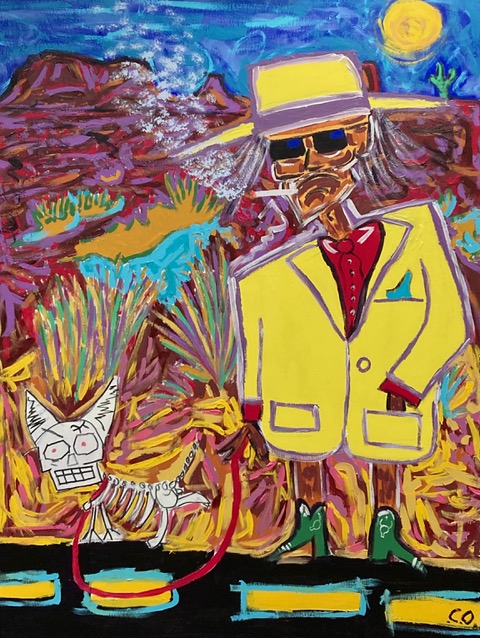
I am queer noir | Cipriano Ortega

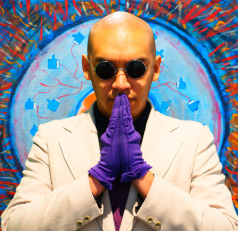
Image: Cipriano Ortega

I am queer noir

I am queer noir.
The smoked clenched night.
The dark alley,
The pissed stained bathroom club floor.
I am the slammed door of rejection.
The constant rampant tapping to let me in.
The hot palpitation of a night.
The hookup line and sinker.

I am the low end speaker, the part of you that know’s something’s wrong.

I hold the light of morning inside my heart.

I am queer noir.

Cipriano Ortega (they/them) has been fortunate enough to have their work recognized and shown both nationally and internationally.  Cipriano strives to create works of art that probe the mind and make people question what they perceive as the normative. Whether that is shown in music, theater, visual art or some sort of culmination of all of the above; Cipriano enjoys blending all creative forms of expression. As a sociological artist, Cipriano deconstructs the worlds around them and observes it under a nihilistic perspective. As an indigenous POC, they also have no choice but to deal with colonialism head on by making it a daily practice to see the divisions we as a society create and continue to make the ‘normative.’

The Dance Floor | Caleb Ferganchick

Image: Portuguese Gravity

The Dance Floor

if I die on the dance floor tonight
know that I did not go willingly

that tomorrow I had dreams
of morning breath kisses
from a boy I pray is left behind

if I die on the dance floor tonight
console yourself that it is how we wish

for I died doing what I loved
surrounded by friends and family
peacefully in muted gunfire

if I die on the dance floor tonight
please don’t stop the music

I cannot bare to hear the silence anymore


Caleb Ferganchick is a rural, queer, slam poet activist and author of Poetry Heels (2018). His work has been featured and published by the South Broadway Ghost Society (2020, 2021), “Slam Ur Ex ((the podcast))” (2020), and the Colorado Mesa University Literary Review. He organizes the annual “Slamming Bricks” poetry slam competition in honor of the 1969 Stonewall Riots and serves as a board member to Western Colorado Writer’s Form. A SUP river guide, Caleb also dreams of establishing a queer commune with a river otter rescue and falconry. He lives in Grand Junction, Colorado.

Second Surface | Amanda EK + Jesse Livingston


Glass Cactus is a Denver-based screenwriting and filmmaking team – Amanda E.K. and Jesse Livingston – currently pitching TV pilots and creating surreal short films.

Amanda is a queer writer, filmmaker and writing coach, and the former editor-in-chief of Denver, Colorado’s Suspect Press. She writes for Playlove and Out Front Magazine, teaches a weekly drop-in writing class, and she’s currently pitching her memoir about growing up in fundamentalist purity culture. Follow her on IG @amanda.ek.writer.

Jesse is an author and musician from Denver, CO. In addition to writing non-fiction articles for local and national publications, his fiction has appeared in audio magazines such as Pseudopod and The Drabblecast and in print venues like Suspect Press and Speculative City. In 2019 Jesse wrote and directed his first film, the Lovecraft-inspired horror thriller The Blue Room.

Together Jesse and Amanda have written a TV pilot called Hazelwood about a small-town musician searching for a collection of his vanished mentor’s mysterious paintings. The screenplay was a Second Rounder at the 2020 Austin Film Fest.
Second Surface is their first filmmaking collaboration.

Genesis – Philip Matthews

NC048 © D. Johnson, courtesy of the Colorado Photographic Arts Center

Flutter at no wide open mind.

I did not think like an individual eyelash. 

I did not move in the hourglass house, 

perpetuating itself of flashes of quicksilver of fish-knives. My parents. 

When the sermon was streamed in the old South, it was creamy, a small amount amounting. 

Whatever I thought of / against me, little queer hook, I was writing on my centurial skull. 

Until something ovarian. A tucked testicle. I felt her tapping, almost at full plank: Petal.


Philip Matthews is the author of “Witch” (Alice James Books, 2020) and “Wig Heavier Than a Boot” (Kris Graves Projects, 2019), a collaboration with David Johnson. A poet from eastern North Carolina, he currently resides in Sauk County, Wisconsin where he is Director of Programs at Wormfarm Institute. Up to this point, his practice has anchored in site-specific meditation and performance: he is curious about what happens next. philipandpetal.com / @philipandpetal

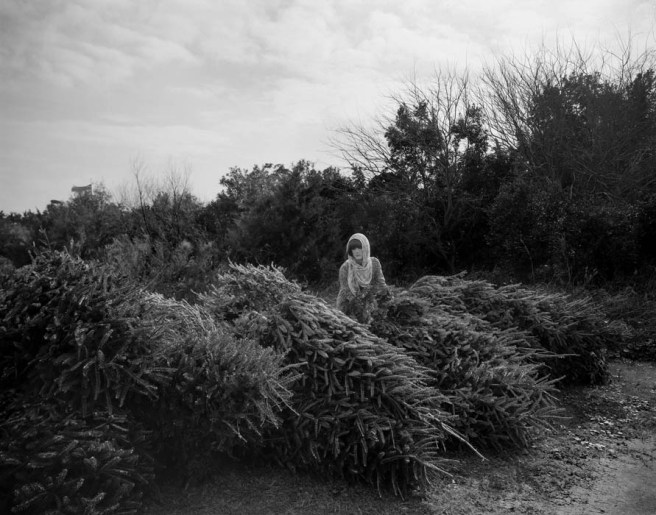
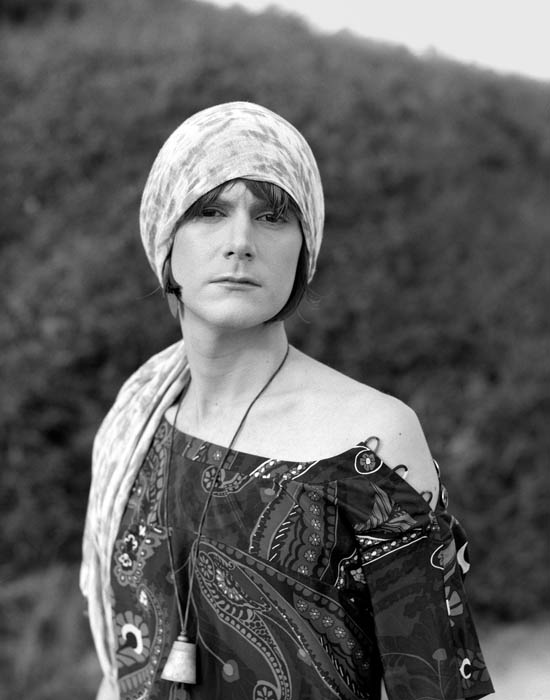
The Colorado Photographic Arts Center has an exhibition Aug 14- Sept 23, 2020. The Space Between explores issues of queer identity, sexuality, and relationships through the works of three contemporary artists, including two photographers and a poet.  In “Through the Lens of Desire,” Kris Sanford uses vintage photography from the 1920s – 1950s to explore an imagined queer history. “Wig Heavier Than a Boot,” is a collaboration of poetry and images that reveals Petal, a persona whom Philip Matthews manifests to write about and David Johnson photographs.