


black and white photo: @jseigar
submit to south broadway ghost society.

Sonic-tidal | Pareidolia | How does a whirlpool breathe? I see what you did there |
You blew out the stretch marks of your blimpish gut | Popped yrself a pair of gills |
Oxygenic tummy wounds | Flabby respirators | I get it | Vision returned in the form
of engorged areola | Optic tentacles | Gastropodic Nips | Auditory axilla | To tell
you a secret is to endure rough odors | But how do you eat? How do you eat with
waves? You punctured your own belly button, is it? With those long and jagged nails
| You’ve filed w/ barnacles | You fisted the pit; an orifice | Broke off your little
slashers | Stabbed ‘em into dentures | That hungry tummy chews for itself | Gored |
Self-mutilation as a method to resurrect and experience the joys of experience |
Fulfilling scars—

Kris Hall / C. C. Hannett / kmwgh is a writer who feels queasy when he identifies himself as a writer. Or anything, really. Author of I Gave This Dream to a Color, Triune, and SAGA ctrl (Spuyten Duyvil) + a number of chapbooks. He is the event organizer for Quake: An Everett Lit Crawl and Poetry: Uncharted. Currently, he is the Managing Editor for Really Serious Literature (@rlysrslit) and their Disappearing Chapbook Series. Work has been placed with Softblow, DREGINALD, Gramma, Juked, etc. He currently lives with his wife and three animals somewhere in the PNW and/or behind you.
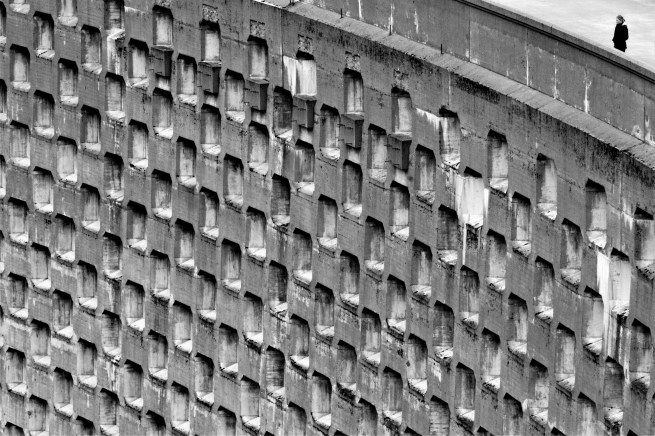
Photo: @jseigar
A memory built
of white and black squares
where pieces you
can’t quite see walk,
hop and battle.
Sets get mixed—
his queen doesn’t match
your castle
and liveried knights
wander questlessly.
You focus your
weary brain, fierce
as any bishop’s but
you just can’t remember
your next move.
Mark J. Mitchell’s latest novel, The Magic War just appeared from Loose Leaves Publishing .A Full length collection of poems will released next year by Encircle Publications. He studied writing at UC Santa Cruz under Raymond Carver and George Hitchcock. His work has appeared in the several anthologies and hundreds of periodicals. Three of his chapbooks— Three Visitors, Lent, 1999, and Artifacts and Relics—and the novel, Knight Prisoner are available through Amazon and Barnes and Noble. He lives with his wife the activist and documentarian, Joan Juster and makes a living pointing out pretty things in San Francisco.
A meager online presence can be found at https://www.facebook.com/MarkJMitchellwriter/
Photo: @sweetdangerzack
submit to south broadway ghost society.

You come up from bayou country
all skinny and tanned
with your herbal teas
and crushed roots
warning of magic voodoo spells
in an accent barely understandable.
This is western Pennsylvania
where hex signs are powerful
and pig iron and slag
heat muscles forged from steel.
The people here
eat scrapple and pierogies
for breakfast
and
dance in blizzards
just to entertain themselves.

R. Gerry Fabian is a retired English instructor. He has been publishing poetry since 1972 in various poetry magazines. His web page is rgerryfabian.wordpress.com. He is the editor of Raw Dog Press. His novels, Memphis Masquerade, Getting Lucky (The Story) and published poetry book, Parallels are available at Smashwords and all other ebook stores. Seventh Sense, his third novel has been published by Smashwords. His second book of published poems, Coming Out Of The Atlantic is slated for publication in 2019.
When I took Holly to the waterfront, she told me I was destined to be a father.
“You’re going to have a girl,” she said. “And you’re going to raise her alone.”
Holly and I had been hanging out a lot the last few weeks, staying up til 4am walking around her neighborhood. One night we laid down in the middle of the street at the end of the cul de sac. No cars came. And if they had, we would have seen them coming. As I curled up in one of the blankets we had brought with us, Holly climbed up a tree that the cul de sac had been built around. It stood surrounded by pavement on all sides. I had to look down as she climbed because small leaves, twigs, and dust fell from where she rustled. I protected my eyes, and even though nothing had gotten in them, I felt them swell and water.
This trip to the waterfront was my attempt to expand our relationship, to begin to define it. I was nineteen and barely knew myself, let alone how to date this beautiful independent woman who, although she was my age, had secrets in her eyes I could not begin to uncover. She was a lion. She had an unruly mane of hair that she was always trying to move out of her eyes. She was looking out at the water. We barely spoke. I did not know how to respond. I knew I did not want kids, but I never told people I dated what I really wanted. I didn’t want to scare anyone off.
“Yeah, I haven’t given it a lot of thought, to be honest,” I said. “It all depends on the person, you know?”
But she had already decided I would be alone. Whoever the mother would be was already gone, unreachable. Although Holly was a few feet away from me, she could have been a sea away.
We sat on the rock by the waterfront on the same blankets we had used in the cul de sac. She was telling me she hated her nose. She said she thinks it is too big. She didn’t look at me. She looked at the water. I didn’t know what to say. It was a big nose if you isolated it, if you took it out of context and held it in your palm. I imagined holding her nose in my hand. She looked down at her stomach.
“I’m going to get a nose job my last year of college. And I’ll probably have my stomach done.”
She did not mention her eyes. She loved her glasses. The way she stroked the frames gently with her index fingers. The glasses framed her eyes perfectly, and she knew it. The nerdy infatuation I felt for her intensified every time she tilted her head down and looked up at me, when my world became those eyes perfectly framed.
The whole time we were talking, I had been watching two brothers, no older than twelve. Their father was nearby sitting down in a chair he had brought with him, a retractable one he had brought in a bag slung over his shoulder. He had a simple fishing rod that he held loosely in his hand. Every once in a while, he brought up a fish. His two boys were doing something on a bit of pavement down from us, near the cooler the father was placing the fish in. They were quiet, looking down at the pavement, doing something with their hands, like tracing something out deliberately.
After the boys left with their father, Holly and I stood up to leave. And we could see down the way to the pavemented area, and we could see what the boys had been doing so meticulously. Twenty-three stiff fish bodies laid rotting in the sun. The father had not taken any of the fish to eat later. It struck me in the gut as a waste of life, to catch and discard on hot pavement. It was death without a function. And then I saw what the brothers had been doing so meticulously. They had taken out the eyes. Forty-six eyes altogether that they had cut out together, as a team. The eyes were nowhere to be seen. Perhaps they kept them. Somewhere there was a bag full of fish eyes.
I attempted to move the dead fish off the pavement into the water. I picked up two big sticks and attempted to move one, like I was using enormous chopsticks. Holly halfheartedly followed my lead. She said nothing. I could not measure her discomfort or shock. She would not look at me.
I got one fish into the water, but it floated vertically, its mouth open, holes for eyes.
When I dropped her off at her car after a silent drive back, she hugged me and looked up at my eyes for the first time that day. It became clear. We were not going to talk about the fish.
“You’ll probably name her something like Penelope. She’ll draw on your walls with crayon, but you won’t care. You’ll pick up a crayon and draw right along with her.”
I laughed a hollow laugh and nodded. “You can always wash a wall,” I said.
In the reflection of her car, I saw Penelope, but just for a brief moment. She was wearing a summer dress and ballet slippers, and the Robin’s Egg Blue crayon was tight in her hand as she drew a vertical line from as far as her arm would reach above her head to the moment she can feel the touch of her hand against her toes.
But then just as quickly as I had seen her, she was gone. And without consciously trying, another image flooded my brain: a small Ziploc bag full of fish eyes, in an underwear drawer somewhere, covered in t-shirts and boxers, a testament to a productive day.

David Rawson is the author of A Jellyfish for Every Name and Proximity (ELJ Editions).
Actions have resonance. Actions are things. All things resound. They continue to resound in the place they happened.
Driving back home one night from visiting her mother in Atlanta, last Tuesday actually, Lara sung along with the stereo, the low highway rolling by with yellow ticks of paint and reflectors in the dark. The song was melancholy with a refrain to belt out legato and intense, allowing Lara to emote while belting, tears forced from her eyes. The last time she heard this song was through headphones in the much more public location of the treadmill at the gym. She couldn’t do her listen then the justice that she could now. As it ended, she stopped at one of the annoying stoplights on this highway.
She started back off from the light into the darkness, building up speed again, and she saw a flicker of light ahead on the right shoulder. She wondered what it was. It was a quick intense wonder and she released the gas gradually to look. When she saw it was a candle flickering at a flower-decked cross, she braked and pulled over.
The night was chilly, but she left the car without getting her jacket from the back seat. She hit the hazards and shut the door, scanning the night. Whoever lit the candle was gone, for how long she didn’t know, but it was still lit against the windy whizz of the cars on the highway. Lara knew what the cross meant, and she always thought the concept was strange. Why come here when the person is most likely buried somewhere else? Do the loved ones, family members, always go to both, here and the grave? She thought they probably went to the latter on the birthdays and here on the other day.
Today must be that day, she thought, and this must be the spot. Lara stood in front of the cross. Three cars passed behind her, all big sport utility vehicles, all fifteen miles per hour over the speed limit and the wind they brought cut through the knit tights she wore under her skirt. The flame flickered, flickered, flickered, cutting hard back against the wind each time in its partial glass enclosure, finally standing hard again.
This was the spot.
Lara turned around and looked at the highway. It didn’t look so violent now. There were cars with their lights far back to the left, behind the red light, and far taillights to the right horizon, but right here, right now, it was a dark peaceful place. She lowered at the knees and sat down her dark skirt into the cool damp earth.
Her ass cooled and a chill went up her back. She lay her legs out flat and slowly down her back went to the earth; just a t-shirt marring little of its chill. The flickers of the candle were just above her head. Every few flicks brought the shape of the cross or the flowers, or both, a terrifying shadow. Lara held her breath with such force she choked. She coughed and jerked against the earth, loosening it and generating more chills. It was hard to breathe, hard to catch her breath again. The white lights on the horizon to the left closed in on her. She held tight to her breath, pressed her back to the slight hill of the ground, and the candle went out as the torrent of traffic overtook where she was.
In that one moment, in that place, there was so much noise from the cars, released from the traffic light, Lara could hear nothing; from the bright of their lights she could see nothing; from the intense pain of the place she could feel nothing, and through the thudding off-time beat of death her heart could not complete. When the traffic abated and she could see again and hear again her breath released and her heartbeat resumed.
Lara knew everything and felt it all, all the pain. She rolled to her side to retch, and retching and rolling slushed in the wide puddle she had released and in which she now lay. It was awful, all awful. She stood and whipped her face with her hand and against her short sleeve. She was achy and cold, wet from the waist most of the way down. Without turning to look back at the cross, flowers, or candle—the cross made and laid by Jose’s mother Marisol, and the flowers from both his Tia Julieta and Tio Juan, and the candle placed and lit tonight by his sister Miryam—she slowly staggered down the hill to her car.
Pushing her legs through the ache she got to the car swiftly. On the hillside of the car she leaned on the back passenger for a moment to catch herself. She needed to get out of here fast. She got in the car and gunned it, just drove, off from the shoulder and out down the highway, as a panic overtook her and her nerve endings. She cried and wanted to scream and punch the wheel, but held it, she had to focus and get away. Twenty miles and fifteen minutes down the road she pulled over on the shoulder and got out to run around to the side and retched again. Ducking down into the back seat she took off her t-shirt and wiped her face with it, cleaning her mouth and dabbing at her eyes. Luckily the jacket she had with her was a raincoat-style and came down to her mid-thigh. She removed her skirt, tights, and panties all in one motion, stepping out of her boots to get it all down. With a clean corner of the t-shirt she wiped at herself where she was still wet and then balled all her clothes up into a wet gross mess and shoved it into a plastic grocery bag littering the floor of her car. Lara then stood with the jacket on and put her back to the road to button it. With a newspaper from the backseat she padded the driver’s seat so she wouldn’t get filthy again and got in to leave.
Why me, was all Lara thought the rest of the way back to Athens. It had all already happened to Jose, why did she need to feel it all too. It lingered in her memory, her whole body, her muscle memory, in a way that it couldn’t for Jose, for he was dead. She kept wanting to scream but instead just ached and drove. Other than “why me,” she did think “poor Jose,” but what he felt only lasted a moment whereas for her it continued to linger; she could even see the car that hit him, hear the crunch of plastic bumpers and metal frames, and feel again and again the metal into skin and into bone. Her seatbelt felt so tight as she drove, Lara felt the way it choked the breath out of Jose, but she was scared to take it off.
She needed to go straight to the library. Lara had been cutting close the drive all night.
She left Atlanta with just enough time. The stop at the flickering candle slowed her down and now she had no time to remedy the situation that she was naked under her coat except for a bra. She could call in, but what would she say, “I see dead people, or really just one dead guy, but mostly I just feel him, the pain of his death;” and the absurd humor in this potential interchange gave some levity to her state. But Lara still couldn’t think straight and come with any good excuse, passively with no better option to cross her mind she headed to the library for her late evening shift.
When she pulled into the parking deck a clear thought cut through the residual ache and lit upon her consciousness, Rose. Rose would be working the front desk. Rose is always either to or from the gym on one end of her shift or the other. Rose would have a change of clothes, gym clothes at least.
Lara grabbed her purse and phone and ran from the deck into the library. Rose greeted her with a smile at the front desk.
“Hey girl, why you rushing, you are just in time, and just in time to do a lot of nothing.”
“Hi Rose,” she gasped out of breath, “do you have your gym bag with you, or is it in your car? Please say you have it.”
“I have it, Jeez, I was gonna go late after work. Why?”
“Excellent,” Lara leaned on the desk and then paced in a circle catching more breath.
“Can I borrow your gym clothes right now? Maybe you will have time to go by the dorm before the gym after work for more. Please, its important.”
“You need my gym clothes? Why? What are you wearing under that coat? Girl, what have you been up to? Seriously?”
“Please, I can’t really explain. Will you just help me out?”
“Sure, relax, it’s fine, here you go,” and Rose reached down beneath the high desk and drew up a red and black gym bag. “But you owe me a story at least and an explanation of why I wasn’t invited to whatever craziness you have been up to.”
Lara took the bag and agreed, laughing off her friend. She clocked in and then changed in the bathroom glad that she and Rose were roughly the same size, except for in the chest, but luckily her bra had survived the filth and soiling. She quickly cleaned her face and crotch the best she could with hand soap and set to work. There was a full cart of books needing to be reshelved and she hoped the methodical mindless repetition of her slow uneventful job would cool and calm her down.
What was on the cart brought her first to the third floor and then up to the sixth. Up and down the stacks she breathed slowly, focusing on each breath, like she learned in yoga. She paid close attention to call numbers and her work and her mind wandered about the books, up and down each aisle, film theory, biographies of directors, then African oral literature and folk traditions. It seemed funny to her that all of this should be on the same floor, but there were only seven floors so it had to all mix together in some way. At the end of an aisle Lara noticed a wooden chair off in the corner, a chair that should be at one of the study tables in the floor’s common area near the elevators. This section of the sixth floor was the most private part of the library, and Lara knew, though not first hand, of its reputation as a popular make-out spot. Most likely explains the chair, either way, it was her job to straighten up behind the library visitors so she went to get it.
The chair faced the plain off-white corner, cold and isolated and for the second time tonight Lara felt a compulsion, she needed to sit in the chair. The second she sat down she shut her eyes and felt the tongue. She opened her eyes and there was no one around but her eyes slammed shut again and she felt the tongue again. It was right against her, it was right against her and it was right. A boy’s face flashed before her shut eyes, a boy she had never seen before, his eyes shut too, just going to town and humming and she could feel the humming burn-cooly out from the spot into her thighs; and then a different boy’s face, and then a girl’s. Lara pulled her eyes, open no one around. There was a girl’s face she didn’t know, a second ago before her shut eyes, between her legs, but they weren’t her legs, and the girl was more than just tongue, she was lips and mouth and sucking, so warm. And then Lara felt the waves, three hard-breaking waves over her, stiffening everything, boiling her blood. The first two were familiar, similar to long orgasmic waves she had felt before but the last broke shorter, cresting earlier, in three stalls and jerks and then nothing, no resolution. Her hair follicles on her head and down her arms, toes, and fingertips tingled as she drooped out of the chair and crawled into the stacks towards her cart.
All the pain from earlier was gone, and the aches had transformed; Lara was spent. Slowly she pulled herself up to sort of slump against the cart. She hadn’t bothered to borrow panties from Rose’s bag, but now the gray sweatpants she did borrow were a wet shade darker in the worst, most obvious location. Lara was done. She was done with this night. She was spent, wet, and freaked out. She was so done with other people’s feelings, other people’s experiences. She didn’t feel like herself and she didn’t feel real.
Lara rolled the cart as cover in front of her to the elevator and down to her coat for better cover. She clocked out and on her way past the front desk she told Rose to tell their supervisor she was sick, it was food poisoning, she had to go. Lara was very done with this night.
Over the next few years these moments of heightened sensitivity continued to occur, but never as bad as this first night, never two in one day. The world became a minefield for Lara, and as she slowly understood what was happening, she became increasingly careful of where she sat or lay down, where she let herself relax with her guard down. She could never really know though, hence the minefield feeling. She never told anyone about these experiences and could think of no practical use for this ability of hers. Her “sensitivity to locations” was more a curse than a power. Mostly it was just disruptive and embarrassing, but she did learn to control her reactions to some degree. Sadly, all her practice and preparation couldn’t prepare her for that one fateful night where and when she learned how her father really died and what kind of person her mother really was.

A curious amalgam of the corporeal and phantasmagoric, Jordan A. Rothacker will birth forth his fourth-birthed book in February, 2019 under the title, Gristle: weird tales (Stalking Horse Press). As every story is a ghost, “All Things Resound” will haunt that book as it does this site. Close your eyes… can you see her… what dark truth does Lara know about her family…
This candy paint city, sparkling in razor wire,
Cannot hold the eyes of any- because they see twice.
They see my nails, five dots that are not empty.
My fingers look like their house,
Loving eyes meet mine,
Flit down, and stay
With those chipping lavender and dirt walls,
Which so resemble their city,
Which scare these ancient people,
Who live, warm and forgiving.
People who do not know how to love me,
Because of those chipping dots,
And that scares them most
As they hustle through streets crumbling.
art: @jseigar

In the morning I forget the feeling of your hands.
I forget the movement of our bodies together and instead dance from empty room to empty room.
Here I wander, wishing for shutters to bang, for rattling chains.
In my house we are all ghosts.

photo: @nate_dumlao
You burned it all to the ground.
In a flaming baptism of self-righteous
forgiveness
you let the past go.
Like you could burn off the cowardice
if you sat in the heat long enough.
Like you could sear yourself
into being someone better
if I was gone.
If I never happen.
If our memories
were just a smoke show.
You probably thought the ash would
fertilize the next garden.
Our garden became a graveyard
and years collapsed like kindling.
But there’s an ashy taste
left in your mouth
no spring flood can wash away.
No one else can feel
the soot in your teeth.
But you do.
How nice to think
you could incinerate a ghost.
We both know
you
were
the
death
of who I was.
It’s not something
you can smolder.
You promise your next girlfriend one day
you’ll get all the tattoos that have to
do with me
removed
and you don’t tell her each time you
smell a flower
you inhale puffs of smoke.
KJ Kindling is a naturalist, a feminist, a rescue dog enthusiast, a seventh generation Coloradoan, and a naturalist. She’s currently working on three novels, two of which are verse novels, and one book of poems. You can find more of her work at www.kjkindling.com or on her Instagram or Pinterest (@kj.kindling).


 south broadway press