Book Review: In the Soup by John Calderazzo

BOOK REVIEW:
IN THE SOUP BY JOHN CALDERAZZO

A BOOK REVIEW BY SHELLI ROTTSCHAFER

Calderazzo is an accomplished Nature Writer and emeritus professor within the English Department at Colorado State University, Fort Collins.  In The Soup is his latest poetry collection.  Expressed in three sections Calderazzo relays how he feels, in the soup, in the thick of life-after-retirement on the “Big Day,” as he is “Gathering Voltage,” and one “Windy Day at the Dump.”

Calderazzo begins with his titular poem, “In the Soup” – a psychedelic homage to his inner-man found at the bottom of a can of turkey noodle soup.  Calderazzo ponders the ingredients. What makes a man, what makes the contents of life, what inspires our mindfulness?  The ensuing pages hope to reveal these answers.

PART I: BIG DAY

“Second Coming” wonders about our connection to fading stars and skies laden with floating feathers that cascade like snowfall (13).  Calderazzo takes up his lament for extinct and endangered species.  The Passenger pigeon, “that once blocked the sun” now, “bearing down on oblivion” (13).  Will their eradication be the future for howling wolves and roaring grizzlies?  The same goes for unshackled rivers, and sludge gray oceans.  What will their fate be as climate change deepens?  Some may deny these cause-and-consequence actions but, “even the wind-bitten crew of / the farthest-out whale boat… began to comprehend / what we had done” (14).  

In “The Secret Life of Mountains: Front Range of the Rockies,” Calderazzo explicates his home-place in a meditation of tercets:

Deep in,
a lupine meadow
scored with trails

softens, mists over,
dousing spot-fires
of glacier lilies (33).

It is Spring. The Front Range is emerging into new life.  The:

Pasque flowers
close their petals
like eyelids folding (33)

into meditation,
relieved from 
the trespass (34)

This is Calderazzo’s means of telling his reader to “Go lite” and “Think Like a Mountain” as Aldo Leopold implores.  Yet to also take on John Muir’s challenge, “The mountains are calling and I must go,” but do so with care in order to preserve their beauty, and to protect them from “boot scrape” and drone’s “beauty-lust” (34).

PART II: GATHERING VOLTAGE

“Way Stones” told in three numbered stanzas stories acts of subtle environmental activism.  Beginning with his friend who knocks over cairns – the way stones marking paths on trails.  His friend, who shakes his head in disgust and kicks the keystones which topple in disarray, demonstrating that he prefers, like Robert Frost, to take the road less travelled by.  However, Calderazzo actually doesn’t mind them.  The stone pyres, “suggest a tall dance / with gravity” marking where, “The trail / goes this way… [and] Death is that way” (43).  Calderazzo notes that in other lands, cairns value prayer, offer blessing, and lead the way, “A last ride / through the stars,” which is entirely a different matter.

Author John Calderazzo

PART III: WINDY DAY AT THE DUMP

“Windy Day at the Dump” is a necro-pastoral poem which details environmental decline’s  connection to humanity by listing the things discarded within a landfill.  The poem documents Calderazzo’s personal letting-go of things and moments in his life that now decay within the dump’s depths.  Medical records of a last parent to die, the draft of a youthful novel too embarrassing to recycle, love letters, a broken wall clock, a fizzling floor lamp.  These objects mark his passing of time and are his mile markers of maturation.  They are the cairns that lead the way to his end flight (68-69).

Calderazzo’s closing poem of his collection, “Passing through” is his quest through Wingo, Kentucky in search of his final resting place.  However, “The casket shop has moved” and so he decides to, “pass on a casket, thank you.”  Instead he chooses for his final destination to be a “high flower valley” surrounded by “peaks of snowlit fire.”  He prefers for his ashes to “zephyr off while friends & family / lift their arms & sing” (87).  And in this way those who would remember him, mimic his chosen poetic lineage as they burst into a Whitman-like mighty yawp.

Calderazzo’s collection, In The Soup (2025) by Middle Creek Publishing & Audio nods to his literary community and those who came before him.  Through this gathering, he enters their company, and encourages others to tell their stories, communicate to the public about the importance of wilderness preservation, and find those ancient cairns while trekking among high mountains around the world.

IN THE SOUP

BY JOHN CALDERAZZO

AVAILABLE NOW!

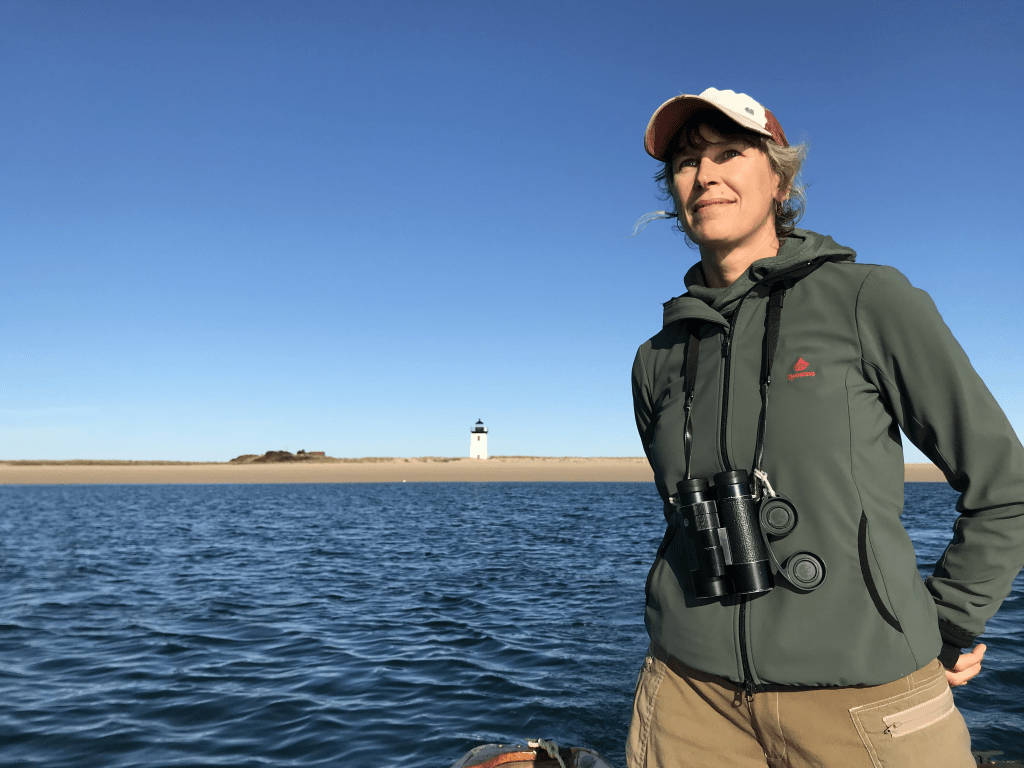
Shelli Rottschafer (she / her / ella) completed her doctorate from the University of New Mexico, Albuquerque (2005) in Latin American Contemporary Literature. From 2006 until 2023 Rottschafer taught at a small liberal arts college in Grand Rapids, Michigan as a Professor of Spanish. She also holds an MFA in Creative Writing with a concentration in Poetry and coursework in Nature Writing from Western Colorado University (2025).

Shelli’s home state is Michigan, yet her wanderlust turns her gaze toward her new querencia within the Mountain West where she lives, loves, and writes in Louisville, Colorado and El Prado, Nuevo México with her partner, photographer Daniel Combs and their Pyrenees-Border Collie Rescue. 

Discover more of Shelli’s work at: www.shellirottschaferauthor.com

Book Review | Another Death Bed by Jasmine Maldonado Dillavou

Another Death Bed by Jasmine Nicole Maldonado Dillavou
A review by Chris Bullock

“a moment of pause with things that matter” 

Jasmine Nicole Maldonado Dillavou

Another Death Bed (but this one is more comfortable, and the sheets just came out of the dryer)

During my time “studying” in China, I learned to see art not as much a hustle and grind, but rather as way of being. While taking an introductory Mandarin class, most classmates said they were pursuing business and politics, which only elicited a nod from the teacher, a middle-aged guy from Shanghai. When I said I enjoyed art, he gave a pause and a grin, then said an artist is blessed because an artist is never bored. From others there I got the same impression, a few said they wanted to be friends with an artist because an artist thinks differently than most, offering refreshing if unpredictable conversation. I had a local Chinese musician buddy who offered me drugs, guns, and often spoke his mind. When I said I was studying education, he interrupted me to say “Chris, you are not teacher. You a fucking artist.”

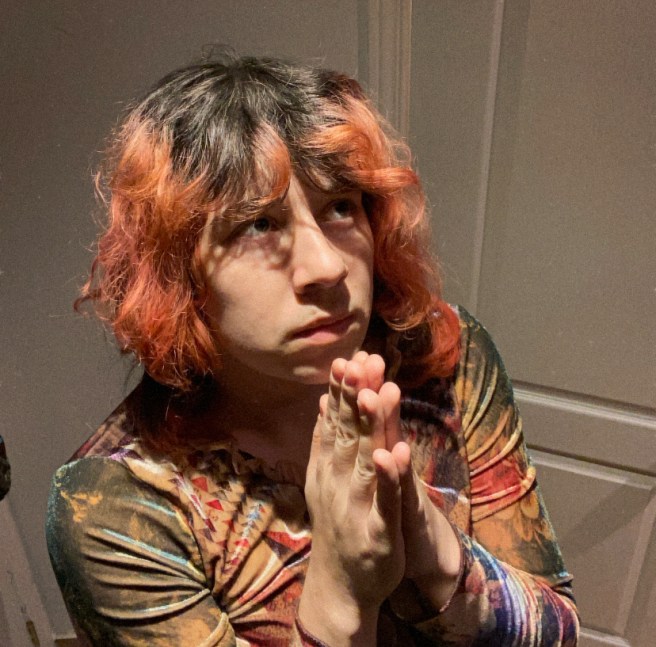
Artists, poets, and other rabble often share with us the process of discovering themselves and the world, and Another Death Bed by Jasmine Nicole Maldonado Dillavou, or Jasmine, offers that insight of a sitting in her brain as life unfolds. She rummages through the closet for an old stackable chair and offers us a seat in her mind, and she points out things which are as new to her as to you. You might expect to read a few pieces and set the book down, but time has suddenly passed and you have finished the book and wondering if there is something you missed. These are notes in the head of a creative, and as she puts it “a moment of pause with things that matter.”

I had first made her acquaintance upon returning from China to Colorado Springs, and attending a monthly discussion salon put on by Non Book Club Book Club. I had lived in the Springs and never found it repressive or backwards, rather I had come upon the same inspiration that has made it attractive to artists since the Broadmoor School. It was a bohemian life, piecing together rent how I could, playing concerts, going on tour, attending poetry readings, wandering art galleries and alley ways. In contrast to Denver, where quite a few were on hustle and grind mode and unwilling to open up for fear you might plagiarize and profit, in the Springs I found a tight knit and relaxed misfit milieu wherein just seeing differently made you different. Similar to my time in China. Fucking artists. 

A few things had changed since my time away, however. All these creative students and faculty from UCCS were not only putting on events, but also inviting you out to see it. Living downtown, meeting up just to chat about what we are up to. Trying out unusual ideas, without even a business plan or a merchandise table. It is true what Denver diehards might say, the Springs could be boring, but it also encouraged you to do something to fill the boredom, even if as in her case, “riding a Lime Scooter the wrong way down Bijou Street with a big black hat on.”

This collection is the writer discovering her mind as it emerges, and sharing it with you. An invitation to sit in her head on an extra chair pulled from the storage closet, a place which is rough around the edges and unaccustomed to guests, but will make do if you show up. A peek into Tejon Street bars, rubbing elbows with the most normal people imaginable, as an artist with other oddballs making things happen in warehouses, restaurants, bookstores, parking lots, on the street, wherever there is an emptiness screaming to be borrowed and occupied temporarily. Art for art’s sake, after which the observer can’t point out any details but just feels like something invisible has changed. 

One moment it is “the girl whose thighs don’t touch leaves the bathroom in front of me at the punk show” and the next is finding graffiti in the bar that says “I want to be dead with my dad”. One moment it is living your Boricua being and all the cultural weight and expectations, the next you are really just an artist and you are your “own greatest fear,” writing down your mind as you uncover it. Even after the tour is done, I am still in the chair on a dusty studio floor, and one of the legs of the chair is off-balance. But instead of complaining about it, I just rock a little, for art’s sake.

To grab a seat of your own, you can pick up the book in Colorado Springs at True North Art Gallery, Garfield Gallery, or Westside Stories. Or you can contact her on IG @jasminrunswithscissors or Jasminedillavou.com and if you are feeling extra boring, try Amazon.

About the Reviewer

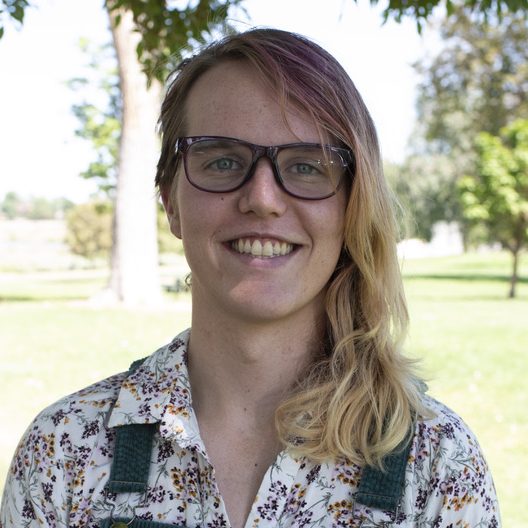
Tall City (Chris Bullock) was born and got bigger on Long Island, New York. He did a few things then moved to Colorado Springs after trying to study in Paris. He did a few things there too, then moved to Denver, where he went back to school for foreign language. A couple of years on scholarship in China, and he is back in Denver. 

Book Review | without water by Lawrence Mack

Hugging the hurt: without water by Lawrence Mack
A review by Chris Bullock

“bravery is hugging the hurt you know will come” 

Lawrence Mack

Several lines stood out to me while reading without water by Lawrence Mack, but this seemed to encapsulate not only the poetry but the whole approach to writing and living. Lawrence’s poetry is not only hugging the hurt, but anticipating the hurt, welcoming the hurt, and dancing with the hurt, finally making the hurt feel at home as a guest or part of the family, with some tea set out on the table. It is a book of poetry both deeply personal on an emotional level, but also as approachable and light as two strangers making small talk in the bar.

I had known Lawrence mostly through dance, as a frequent guest to several events around town, as someone who may study dance but still also enjoys dance. I had no idea he was a poet, but some of the best poets out there have developed lives which in turn inform their writing, like a written mirror held to life, and without water is not only a mirror, but a moving mirror, as if the surface of the bay, on which we float, until we wash ashore at the end. 

These poems have a very casual air, recommended for any aficionado of Frank o’Hara and the New York School. Frank narrated his day with minor inconveniences and pleasures until learning that Billie Holiday had died, writing about the small everyday things in a way that underlines both their simplicity and importance. Tributes to friendships and relationships as important elements of life, with the brevity and wit of social interactions, wherein we let slip a penetrating insight between remarks about the weather. 

Small talk hints at bigger things, or small talk avoids bigger things, but why do we need to address bigger things? Agnostics believe that the mind of man could not possibly comprehend the mind of God, so why try? Live how you are, who you are, when you are, with others or alone. It is what it is. We construct an independent image in the mirror, but we are also our past, with or without a family environment. The made could not possibly comprehend the maker, so don’t worry about it.

Probably the one that stuck in my mind after reading was “at least there are snacks”, picking up as a casket is lowered, and ending with the little things hinting at the big things “Pops says don’t forget the sandwiches in the trunk / Mom curses—she wouldn’t have bought so many / if she’d known so few / would show up”

This book really is a dance in stepping from pain to redemption to dry wit to exhaustion to joy within a single page, but also with the sense it was no big deal, just a dance, so lighten up if you can. Part of the environment is a newfound sobriety and understanding that sobriety can be the ultimate high, and taking please in noticing everything with a clear mind, and making the conscious choice to welcome the hurt that underlies any addiction. The hurt re emerges, the hurt approaches you, the hurt seems frightening, but it is also part of you, it is you. Once you accept it, you hug the hurt, dance with it, even welcome it into your life. And after any big welcome, there is small talk, topic to topic, and without water is a book of small talk which not only welcomes you and makes you comfortable, but also honors the struggle we may have endured to reach such nonchalant comfort. 

How do you get a copy of a book if the poet is always out dancing awake and asleep? I would try an email to lawrencewritespoems@gmail.com and he will get to it when the music stops.

About the Reviewer

Tall City (Chris Bullock) was born and got bigger on Long Island, New York. He did a few things then moved to Colorado Springs after trying to study in Paris. He did a few things there too, then moved to Denver, where he went back to school for foreign language. A couple of years on scholarship in China, and he is back in Denver. 

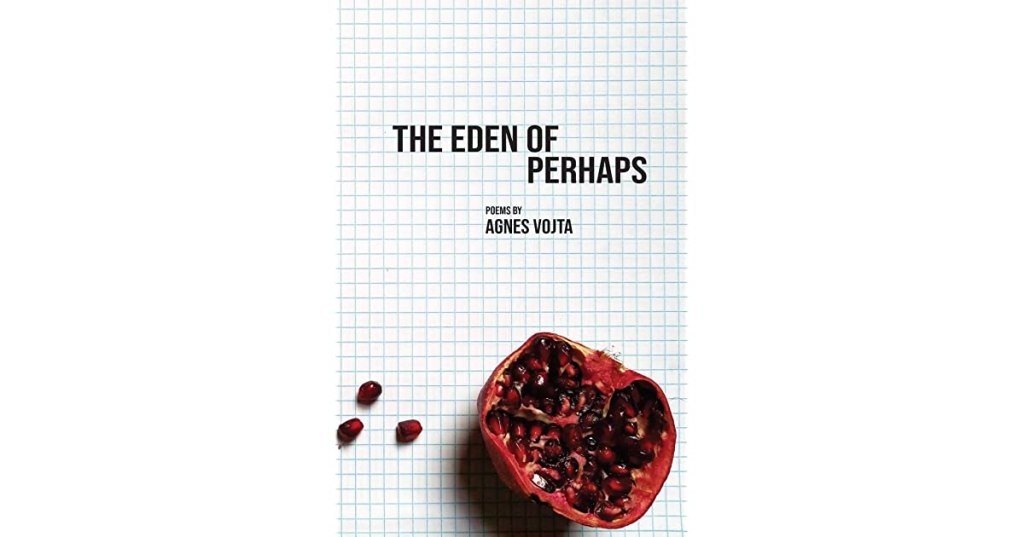
Book Review | The Eden of Perhaps by Agnes Vojta

Reviewed by South Broadway Press Editor, Brice Maiurro

Agnes Vojta’s full-length poetry collection, The Eden of Perhaps, finds itself welcomed into a lineage of poets existing in liminal spaces. In an early poem in the collection, What If, Vojta asks the reader “what if the answer is not here/there, either/or, but both, between, and?” In our society, plagued by othering, perfectionism, and divisiveness, Vojta’s poems continue to ask the right questions all throughout the collection.

I believe it is often the work of a poet to consider grey space. This may feel contrary to what someone thinks of when they think of a poet, self-assured and convicted, preaching their gospel or anti-sermon to an enraptured audience, but there is often more truth when a poet brings along a healthy sense of humility. Poets like John Brehm speak to and curate collections on impermanence. In a 2020 episode of the podcast Between the Covers, Pulitzer Prize recipient Natalie Diaz encourages the acknowledgement of not understanding, or even misunderstanding. Ocean Vuong, in his poem Someday I’ll Love Ocean Vuong shares with the reader “the most beautiful part of your body/ is where it is headed.” Many great poets have learned to walk the tight rope of transition, to balance on the line of maybe.

I was particularly stricken by Vojta’s poem, Atonement:

Sometimes I wish I belonged
to a religion that practices confession.

I can walk in the forest and confess to the trees,
kneel by the river and whisper to the water,
stand in the field and shout to the sky –
but who will pronounce me shriven?

I have to prescribe my own penance,
whip my body to exhaustion to drown out
the mind’s self-flagellation,

and wait for the unpromised peace.

Being raised Catholic, I am no stranger to this attitude of religious penance that Vojta brings forth in the four short stanzas of Atonement, but though she mentions at times she longs for this space of confession, she ultimately settles, or unsettles, in the uneasy space of waiting “for the unpromised peace.” Vojta’s style at times reminds me of the beloved American poet Mary Oliver. An iceberg—in the sense that often below the surface of the deceptively simple words is ten secret tons of depth. Vojta is something of an iceberg herself. In Atonement, she seems to remind us that religion may present us some feeling of closure, but where a truth lies is in understanding that no peace is promised. These are the words that could shake a world free of the imprisonment of ignorance and return us to a shared experience of unknowing.

The book is brimming with bop after bop. In Seeds of No Return, Vojta, in a kind of magic, bans “the word never” from her mind. In Accomplished Hamster, Vojta manages to turn the cute allegory of a hamster on its wheel into a dark social commentary on hopelessness. Vojta’s poems are no stranger to humor, but they wield it like a knife. In Greeting Cards They Don’t Make, Vojta stands on her soapbox to announce the world’s lack of a greeting card that appropriately states inside “I hope the bastard rots in jail.”

It seems to me that Vojta must live her life as a student to poetry, often passing through the world with dreamer’s eyes. Finding compassion in the dying words of the Mars rover, Vojta creates a beautiful eulogy for a robot in My Battery is Low and It’s Getting Dark. Vojta hoists a feminist fist of dissent that RBG would applaud throughout the collection, including a disruptive reworking of such classic, albeit dated, fairy tales as Rapunzel and Sleeping Beauty.

 What’s refreshing about Vojta’s Eden of Perhaps is that it is, in fact, a collection. The poems are in conversation with each other, coming together like a multitude of seeds in the juiciest most pungent pomegranate you’ve ever eaten, unapologetically dripping all over the blueprint of a broken society.

Having read Vojta’s poems, I find myself more willing to say “I don’t know” as I move through my daily life, and while this may sound like some kind of defeat to some, for me it’s a nice walk through the garden in an imperfect Eden that feels more real than anything that they are trying to sell us.

              The Eden of Perhaps was published by Spartan Press and is available for purchase here.

South Broadway Press: 2018 in Review

blackbird

South Broadway Press was founded in October of this year, and that already feels like a lifetime ago. Over the last three months, there has been a plethora of amazing poems, fiction and non-fiction among other magic on the journal. I wanted to take a minute to look back at some of the highlights of the year.

a specific hell

A Specific Kind of Hell: Writing and Survival in America’s South

In “A Specific Kind of Hell: Writing and Survival in America’s South” Blake Edward Hamilton gives us an in-depth look at what it was like to grow up in the South as a young gay man and an outsider. Through his creative non-fiction essay, he paints an important picture of American climate that continues to be challenged today.

3

Three Poems by Sam Pink

In three short poems that seem to belong together, Sam Pink captures the magic of mundane moments of life, leaving it up to you to decided where between existentialism and nihilism they fall.

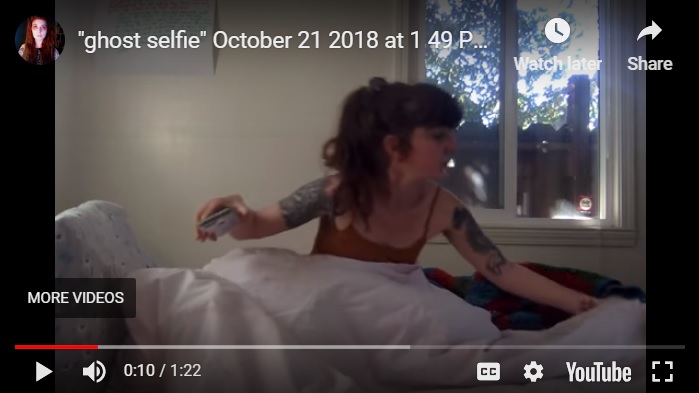
ghost selfie

Ghost Selfie by Alexandra Naughton

Alexandra Naughton combines selfie videos with paranormal activity in only 82 seconds. Watch it with the closed captions on.

bird

Girl Gone by Natalie Sierra

“Someone fed me nostalgia through a tube and I thanked him with my cunt…” begins Sierra’s poem and the momentum just keeps on from there. Sierra herself feeds us nostalgia through an undeniably strong, sardonic voice.

taco bell

Best Title of a Piece on The Journal

Recognition for best title of a piece on the journal has to be a three way tie between:

“Put Me on a Dog Leash and Make Me Eat Taco Bell of the Floor” – Nate Perkins

“A Wink May Be The Same as a Nod to a Blind Man, But That Doesn’t Mean He’s Going to Lend You His Credit Cards to Get a Bunch of New Spongebob Squarepants Tattoos Unless You’ve Got Some Pretty Serious Collateral” – David S Atkinson

and

“I Got Drunk and Pissed on the Side of Buffalo Exchange” by Ghost #62.

In “Put Me on a Dog Leash…” Perkins sends us barreling through the anxiety of money, relationships and depression at roughly 300 miles per hour.

In “A Wink May Be The Same As a Nod…” Atkinson gives a quick glimpse at the end of the world – where it’s really not that big of a deal.

In “I Got Drunk and Pissed…” anonymous Ghost #62 looks at self-destructive behaviors and seasonal depression.

I’m thinking there might be a correlation between long titles and apathy.

matchstick

Three Poems by Ahja Fox

In three poems, Fox looks at her relationship with her mother, her identity and God, giving us a better collective idea of where the poet is coming from and where she is headed.

There was so much great work on the journal this year. This is by no means a complete list, but really just a quick look at some of what really stood out to me. I highly encourage you to take a look back through the pages of the journal at all the amazing voices we’ve had the opportunity to share.

Thank you all for making 2018 a great year for South Broadway Press. I cannot wait to see what 2019 brings.

Brice Maiurro
Editor-In-Chief
SBP

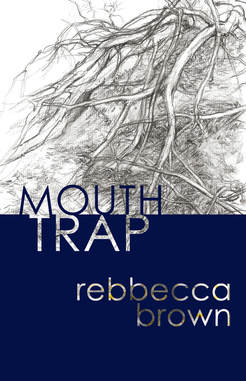
mouth trap by rebbecca brown – a review by seth berg

mouth trap

October sings to me like a sexy yodeler, alternating abruptly between chest-voice and falsetto, simultaneously eerie and enchanting, vocal vibrations shaking foliage free. It is fitting then, that Rebbecca Brown’s brilliant prose collection Mouth Trap, Arc Pair Press, 2018, landed with a boisterous thud through my otherwise uneventful mail slot. This is a fascinating, musical, often melancholic collection from an alternate dimension. Brown has crafted dreamy, sometimes nightmarish, micro-worlds that challenge the confines of three dimensions. From the onset, she delivers an intentional, intelligently snarky heft which challenges the reader to engage in immediate self-examination:

Object (pg. 1):

There is nothing to stand and declare loneliness when the wind scratches against saplings—initial here, initial there, toward anything, something seems.

Brown crafts precise catastrophes designed to enlighten and frequently induce hallucination. In doing so, she left this reader feeling sculptured, but not at all fearful:

Not Exactly Clear    or There (pg. 3):

She listened to someone singing in a rain soaked sky at the bottom of an ocean. Someone offered fleeting moments and a sack of teeth that clattered and clashed against a touch that smelted numb.

 Body parts—sometimes human, sometimes animal, always precise—abound in various contexts resulting in multi-tiered transmogrifications affecting speaker and reader alike. The aforementioned self-examination becomes blurred as reader and speaker are both bodies of aged stardust contorted by the frailty of shared emotion, the uncertainty of voice:

The Circuitry (pg. 23):

There I am—one star, the sickle constellation. It is part and parcel. It is meted out. This is how I tell time etches bodies bright to sallow.

 The shadows wrap themselves around my legs and make themselves available in ways lovers never can be. I’ve forgotten the way someone else smells frictive and pleasured. I’ve forgotten who is speaking.

 I am reminded of Timothy “Speed” Levitch’s vignette from Waking Life during which he states “Before you drift off, don’t forget, which is to say remember, because remembering is so much more a psychotic activity than forgetting.” As Mouth Trap progressed, I found myself vivaciously embracing the psychotic activity that Brown has embedded throughout this exploration, not needing to remind myself to remember to remember as Brown forced me to confront the past on multiple occasions:

This Began (pg. 35):

You, my blue bird, my bumble bee, my lightning, my white hot streak of pleading, lead me like fission, like fragments of yesterdays colliding through the sight of park swings shifting legs into the sunshine. You, my sentence, my likening, my one word into the next, full of sense and senseless. I’ve forgotten where I’ve lost you. In a pocket, in a figment of the past where the verbs all lie, buried with worms and writhing.

 While Mouth Trap resounds with weird zest, Brown maintains room for sweetness and heart, fully considering the need to appreciate and honor those who labor to create:

To the Artist (pg. 36):

I’ve never written to anyone dead before, and since the weather’s in my bones, now I have time to tell you, I respect your work, not to say I’d want the same, all those crossing of lines, dabbling and doodles, the constant trail of cocker spaniels yellowing behind, and since these are inconsistencies, dumb dumb mysteries with no witch to cackle at, throw stones, thank you please. I suppose your hair is fizzling into sticks through triangular stars toward the valleys, where you weren’t, but maybe are, and that’s what I wonder, wish upon, so that I might say somehow, I admire how you hung on the walls like a dead mouth trap.

 While I openly admit that I have a soft spot for literary strangeness, I am also objective enough to ignore my aesthetic preferences as I seek literary rarities and complete collections that resonate with intelligence and masterful dedication. Mouth Trap is indeed a rarity in it’s ability to simultaneously convey dynamic human spirit while inducing hallucinations; is stands brazenly atop a peak like a minstrel thought extinct. Brown has invigorated my love of prose poetry and I will psychotically and consciously remember this book until I have danced myself into exhaustion:

The Dancers in the Book are Getting Tired (pg. 60):

Lithe bodies of filament and flesh tirelessly stretch their legs and recline in the dutiful taut of muscle. In the story, they motion toward endings fictitious, firm in coming and going. She says and he says: a body straining to skin and ashes this is where we are and will be. The clock marking page turn and photograph a drying artifact crafts a paper syntax. They extend and bend the pages all the while weary not aware of the worm the moth and cocoon’s wrap.

SBGS December

You can find more about Rebbecca Brown on Goodreads.

Seth Berg is a hatchet-wielding forest-dweller who digs tasty hallucinatory literature. A hot-sauce-addicted pyromaniac with an MFA from Bowling Green State University, Berg fantasizes about flight without mechanisms, alien glyph systems, and snowshoeing through your nocturnal dreamscapes. He is a professor, poet, artifact-maker, and amateur astrophysicist whose mathematically coded collections of poetry will haunt, invigorate, provoke, and inspire you.

Berg’s first book, Muted Lines From Someone Else’s Memory won the Dark Sky Books 2009 book contest. His second book, Aviary, co-authored with Bradford K. Wolfenden II, won the 2015 Artistically Declined Twin Antlers Contest, and was released by Civil Coping Mechanisms in January of 2017. Other poems and short fiction can be found in Connecticut Review, 13th Warrior Review, Spittoon Literary Review, BlazeVOX, Heavy Feather Literary Review, The Montucky Review, Masque & Spectacle, and Lake Effect, among others. Recently, poems were anthologized in GTCPR Volume III and Daddy Cool. He lives in Minnesota with his two supernatural children, Oak and Sage, and his magical better half, Kori. He loves your face. 

You can find more about Seth Berg at mutedlines.com and on Goodreads.

YEE-HAW, Cletus!!!

Photo: @bantersnaps