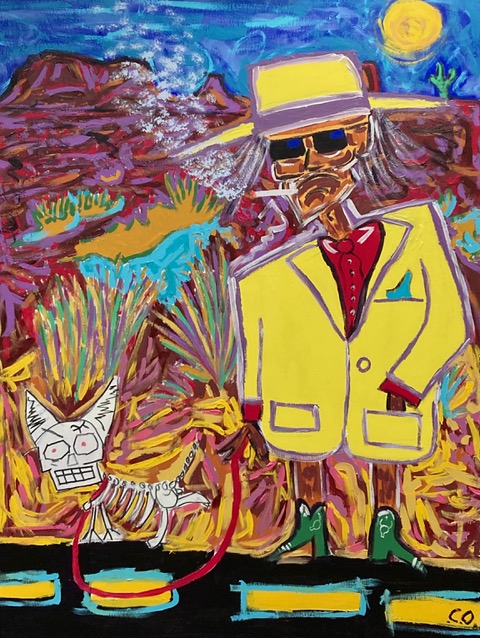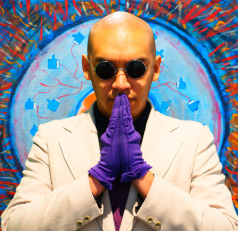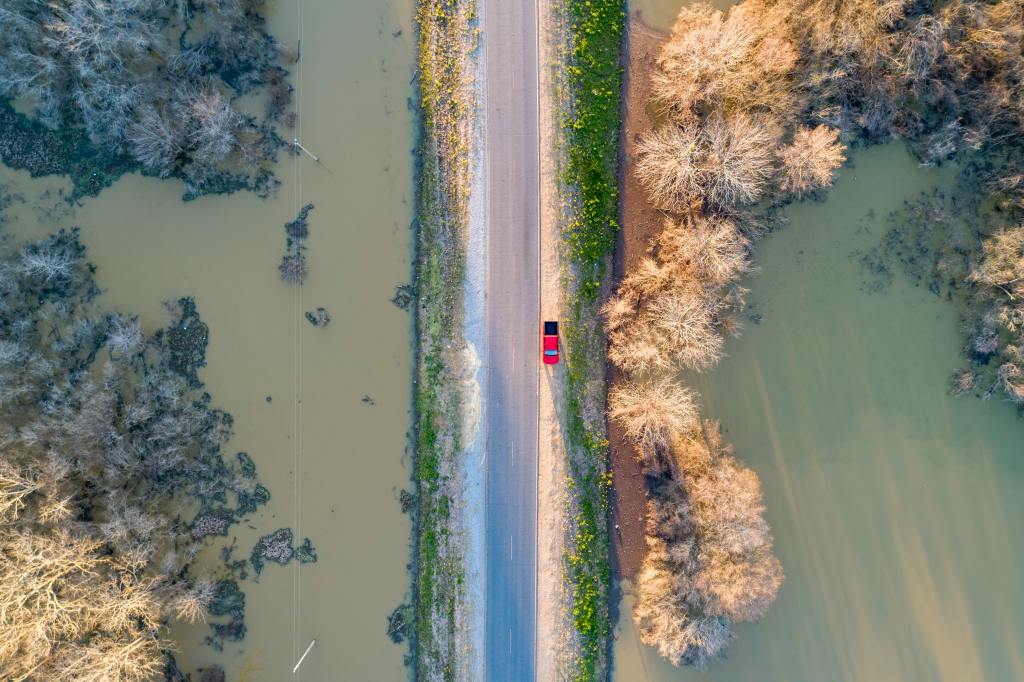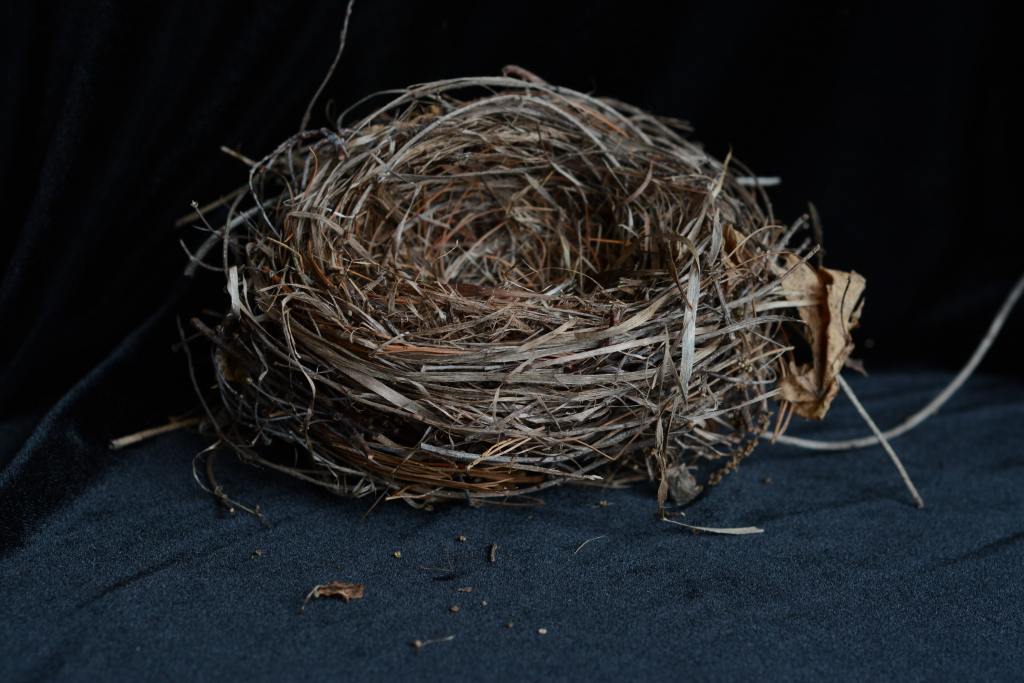
Kodak Black Man Reads Poetry | Said Shaiye

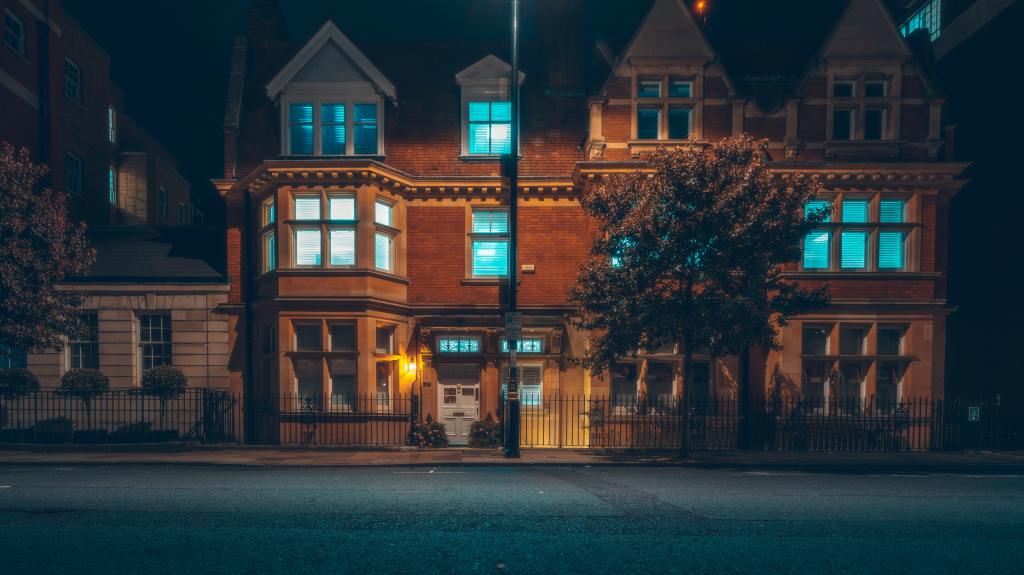
Image: Ben Kolde

Kodak Black Man Reads Poetry

St. Paul 2021 

You double tap hold your Airpods. Noise canceling activated. You have your sunglasses 
on. 

You are indoors, in a book shop, somewhere in St. Paul, Minnesota. You are waiting for 
your turn to read. All these people are here to watch you read. Not just you, though. It’s 
never just you.  

Your mentor is on stage reading an essay. He is animated. He can spit like a muhfucka.  

You realize what essay he’s reading, and how traumatic it is for you to listen to. It 
reminds you of the Summer of Floyd, when everything burned around you. When you 
were afraid of racists from Wisconsin, who drove through these streets, laying cans of 
gas in alleyways. Shooting up Black homes. Coming back later that night to set them on 
fire. 

You ask yourself how on God’s green earth you ended up in a place as racist as America.

You realize you never had a choice. Much like being a writer, you never had a choice. 

Your family left Africa for this shit.  

On your first night in America, it was a drive-by on your block in Atlanta.

You’ve always told that story and repeated that catchphrase: we left Africa for this shit? 

You’re in the thick of it now. That essay is starting to crescendo. You can see the impact 
it’s having on your mentor. He is getting more animated in his delivery. 

Damn, that nigga can spit. 

Also: he is feeling it. You are feeling it, too. Pacing the corners of the room, nervous. You 
turn on Kodak Black. Kodak raps about murder, but it calms you down. Kodak raps 
about the things which he was born into, which he had no choice but to survive. Kodak 
raps about the struggle cuz it made him a man. You know about the struggle, but this 
audience of white faces won’t understand. 

Your mentor is done reading now. It’s almost your turn to go on stage. You instinctively 
start walking towards him. You meet him just outside the audience’s expectant eyes. 
White people are always expecting something from us, aren’t they?  

You embrace your mentor, now. He is shaking. You see the tears in his eyes. Not quite 
tears, but more like… a swelling, of moisture, just shy, of teardrops.

You hug him now. You stand there hugging. It is a shared struggle, these Black male 
bodies, in this country built on the understanding that all your bodies are worth 
is the price of strange fruit. 

Poplar trees, nigga. Emasculation. Manhood stuffed inside of mouth. Tarred
and feathered. 

This the country where niggas like you come up missing. Whether you rap about murder 
like Kodak, or you stand in front of white audiences like a poet professor. You could come up missing, young nigga. No matter how old you are, you will always be a boy to  them. 

And you know this. Not even deep down, you know this consciously. 

That’s why you don’t care about their praise, about their critique, about their putdowns.

You don’t care about their fear of your manhood. About their fetishes surrounding it.

You don’t care about their cuckold fascination.  

White wives, Black dick. You don’t care about it. 

You only care about your words, about your honor, dignity, life.  

You go on stage to spit these bars, but you don’t even care about them half the time. 

You only care about this moment, this shared embrace. Two Black men, acknowledging 
each other’s existence. Holding each other in ways that the world is incapable of.  

You only care about the now.  

And now… you go on stage.  

Dim the lights.  

Turn off that Kodak. 

Fade to Black Man.

Said Shaiye is an Autistic Somali Writer & Photographer. His debut book, Are You Borg Now? was a 2022 Minnesota Book Award Finalist in Creative Nonfiction & Memoir. He has contributed essays to the anthologies Muslim American Writers at Home, The Texas Review’s All-Poetry Issue, and We Are Meant to Rise: Voices for Justice from Minneapolis to the World. He has published poetry & prose in Obsidian, Brittle Paper, Pithead Chapel, 580 Split, Entropy, Diagram, Rigorous, Night Heron Barks, and elsewhere. He holds an MFA from the University of Minnesota, where he was a Graduate Instructor of Creative Writing, as well as a Judd International Research Fellow. He teaches writing to Autistic kids through Unrestricted Interest, as well as in the English Departments of several colleges in the Twin Cities.
Editor Interviews | Josh Gaydos


Josh Gaydos (he/him/his) is a self-taught poet that currently resides in Colorado. He has been published in Barren Magazine, Door Is A Jar Magazine, The Lettered Olive and The City Quill. For 2023, he is releasing a poem a week on his free substack at https://joshgaydos.substack.com/ Instagram Twitter

Someday, somewhere – anywhere, unfailingly, you’ll find yourself, and that, and only that, can be the happiest or bitterest hour of your life.

Pablo Neruda

What does this quote mean to you?

Trite but true with some flowers is this Neruda quote to me. It’s stuck around since I read it and though I am finding that finding of self a great deal less static than this quote implies, it keeps me aware that I could wake up in a decade’s time and find what I’d been running for or running from had made me into something I despised. Sorry for rhyming so much.

What books have made an important impact on you and why?

Too many so I’ll pull the first five that come to mind. East of Eden by John Steinbeck, captures human nature and our interconnectedness, the fact he addressed it to his young sons and was saying “here it is, everything” and delivers. frank: sonnets by Diane Suess, for the “isness”, not answering the Sirens call on a happy feeling or ending, the ability to paint a landscape as big as a coast and also write a poem about the grout around a brick (I’m being figurative here). What Work Is by Phillip Levine, for laying out that blue-collar / American working condition with romanticism and disdain, to put himself in it, distance himself from it, and paint individuals like they were in the room with you. Voyage of the Sable Venus and Other Poems, the ‘other poems’  in that just drop you somewhere and you’re immersed, it could be India and you feel the dense downpour with a herd of water buffalo walking by or New Orleans, or Compton. Robin puts you there in a way I haven’t been transported before or since. Another big one for me is The Artist’s Way by Julia Cameron. My mom had given me that when I really went headfirst into this writing thing. That book helped me to make a point to find art and make space for art wherever I was. Watch a movie, read a book, spin some vinyl and pull feeling or a scene from everything.  

What is the value of writing and art in the current state of the world?

Sanity. Gelling and coming to terms with the cracks.

How has writing and art helped to form the person you are today?

I wouldn’t be here without it, and I don’t just mean serving a guest editing stint for this press. I’d be dead, or fishing with my hands and a line in the Gulf, or possibly I’d be a merchant marine. Most likely dead though.

What is something that matters to you?

Time. 

Floor Bare | Jessica Rigney

Image: Tim Huefner

Floor Bare

And here you are standing
two feet bare on the floor of
your kitchen turning back
to the wall behind as though
he were standing bare-footed there
with you again as he did
those years prior. Before
the days dissolved into the rising
of time immemorial and you
who had just kept your head
above water now live
in the after so far below you have
come to know the nocturnal
creatures who in quiet habits roam
from shore to shore only under
all the weight of dark stars.
What can you do but let
flow through your fingers—the now
and him too though he was yours
for a time and gave you
such happiness.
The distances between
keep widening and soon it will be
that you cannot recall his eyes
or the scent amongst his thick curls.
Turns out you knew—had known
all along this was coming. It was why
you held him close for so long
why you saved him in dreams
so many times you lost count. It was
the one sure thing you held
in your heart and though you knew
it to be true you gave him
everything even so—even though
you knew in the coming years
he would be gone from you.
And here you are standing
two feet bare on the floor of
your kitchen turning back
to the wall behind you as though
he were standing bare-footed there.

Jessica Rigney is a poet, artist, and filmmaker. She is the author of Follow a Field: a Photographic & Poetic Essay (2016), Entre Nous (2017), Careful Packages (2019), and Something Whole (2021). Her work was nominated for a Pushcart Prize in 2022. She lives and wanders in Colorado and northern New Mexico, where she films and collects feathers and stones. www.jessicarigney.com

This poem is from South Broadway Press’ new anthology, 
Dwell: Poems About Home. Purchase here.

A Special Place | Norbert Góra

Image: Birmingham Museum’s Trust

A Special Place

There is no such
second place in the world
where so many noteworthy
moments have been saved.
How many of your breaths
flickered on the walls,
how many of your tears
soaked the floor,
nobody knows.
A part of your heart
will stay here forever,
no matter where
the wings of fate take you.
It’s a magic point,
the mind remembers it
as the heart longs for it,
one and only—home.

Norbert Góra is a 32-year-old poet and writer from Poland. He is the author of more than 100 poems which have been published in poetry anthologies in USA, UK, India, Nigeria, Kenya and Australia.

This poem is from South Broadway Press’ new anthology, 
Dwell: Poems About Home. Purchase here.

House of my Heart | Taylor Jones

Art: Taylor Jones

House of my Heart

I’m airing out the house of my heart.
All the cobwebbed corners,
the shelves of knickknacks,
are being dusted
unmercifully.
I’m opening the shutters
letting the wind blow out
the musty smell of disuse.
I’m putting flowers
in all the rooms.
Even the basement, the attic
ignored for so long
are getting a going over.
All that old junk has got to go.
It’s just shelter for spiders
that tap away when the lights
come on.

I’m trying to put the house of
my heart in order.
“Smarten up,” I say,
adjusting the bowties of my fears.
“Stand up straight,” I say,
brushing off the jackets of my doubts.
“Everyone be on your best behavior,”
I say to my wants and needs.
“We have a guest coming.”

Taylor Jones’ fiction and poetry has appeared in Spit Poet Zine, Smoky Quartz, South Broadway Ghost Society, and Barren Magazine. Her website is: tjonesportfolio.wixsite.com/taylorjones. She was born and raised on the East Coast, but now lives in Denver, Colorado, in a house full of plants. Twitter: @I_heart_fungi. Insta: @tjonespainting

This poem is from South Broadway Press’ new anthology, 
Dwell: Poems About Home. Purchase here.

Pots & Pans | Zack Kopp

Image: Alexander London

Pots & Pans

The nt. is cold & flesh is sold   in galleries just down the road

       Long spaces of silence are speech   & the stars are knives 

      that stab @ your eyes

You stumble home past churches & brick shit-houses  

  all the pots & pans hating the buildings they live in

        All the houses are heads   & the windows are eyes

                 each house has a different haircut

       @ home, 

this is goddam 

serious business, lazy

electric red lilies asleep in the window, your eyes

playing tennis w/ stars & light 

       in a glass frying pan

               all nt.

Other times it’s a joyride,

                        exhaust pipes flashing in the sunset—zoom—

You get there. You have dreams. You love someone.

The only certainty infection w/ illusion. Some people are there. You 

try to make plans. It breaks down. You keep going. It hurts.

There are books, statues. It breaks down again. You keep going.

You’re the only one there. You’re the only thing real.

A storm of light on the plane of time. 

Zack Kopp is a freelance writer, editor, photographer, graphic artist, and literary agent currently living in Denver, Colorado. His informal history of the Beat Generation’s connections with Denver was published by The History Press in 2015. Kopp’s books are available at Amazon, and you can find his blog at the website for his indie hybrid press at www.campelasticity.com featuring interviews and articles and links to other websites. His improvised novel, Public Hair, was described by one critic as “simultaneously the best and worst book ever.” The latest chapter of Kopp’s “fantastic biography” (Cf. Billy Childish), Henry Crank’s History of Wonders is expected in 2022.


This poem is from South Broadway Press’ new anthology, 
Dwell: Poems About Home. Purchase here.

The Mother of the Oxford English Dictionary // Allison Maschhoff

Image: Quino

The Mother of the Oxford English Dictionary

BY ALLISON MASCHHOFF

mother, n.

definition a.

The female parent of a human being; [2]

as in the one who feeds you with her chest, the one who housed you next to her most sacred innards, the one your eyes search for as you cry.

a woman in relation to a child or children to whom she has given birth; [3]

            the unparalleled truth of motherhood: only one person will ever birth you.

the unbearable truth of motherhood: no world she births you into will as be as safe as the one she made.

(also in extended use) a woman who undertakes the responsibilities of a parent toward a child [4]

every place that has ever felt like a second home to me has had the influence of a woman who houses the strength and presence of a whirlwind framing everything from the door to the walls to my heart.

[2] [3] [4] from the Oxford English Dictionary

Allison Maschhoff is a creative writing MFA student at the University of Missouri, Kansas City. Her poetry has been published in The Blue Route, Green Blotter, Windfall, and Better Than Starbucks. She also writes fiction. You can find links to her work at www.allisonmaschhoff.com or follow @allison.maschhoff on Instagram.

This poem is from South Broadway Press’ new anthology, 
Dwell: Poems About Home. Purchase here.

I am queer noir | Cipriano Ortega

Image: Cipriano Ortega

I am queer noir

I am queer noir.
The smoked clenched night.
The dark alley,
The pissed stained bathroom club floor.
I am the slammed door of rejection.
The constant rampant tapping to let me in.
The hot palpitation of a night.
The hookup line and sinker.

I am the low end speaker, the part of you that know’s something’s wrong.

I hold the light of morning inside my heart.

I am queer noir.

Cipriano Ortega (they/them) has been fortunate enough to have their work recognized and shown both nationally and internationally.  Cipriano strives to create works of art that probe the mind and make people question what they perceive as the normative. Whether that is shown in music, theater, visual art or some sort of culmination of all of the above; Cipriano enjoys blending all creative forms of expression. As a sociological artist, Cipriano deconstructs the worlds around them and observes it under a nihilistic perspective. As an indigenous POC, they also have no choice but to deal with colonialism head on by making it a daily practice to see the divisions we as a society create and continue to make the ‘normative.’

Let Us Pray | reb

Image: Justin Wilkens

Let Us Pray

let us pray: bow your heads:

my head is over my knees: metallic air: rust: dust: blood:

mother left in april: for san antonio: hail mary: hail rains:

i am double buckled in the backseat: of a truck: inches away from being swept: into a flood: this town will later remember as: fierce:

I used to live in the Cowboy Capital of the World: wake up with ladybugs all over the pillow:

our grief: our downpour: stickers in our bare feet:

ford escape escapees:

grandma sends me a chain email about loving god: how reading the bible makes satan sick to his stomach:

we float to the end of the river and hot asphalt burns our feet until they swell and blister:

there is no other way back:

there is no other way:

to return to the mouth:

reb (she/they) is not a girl but is a horse girl. their heart is on fire! 

This poem is from South Broadway Press’ new anthology, 
Dwell: Poems About Home. Purchase here.

A CONDITION WITHOUT GHOSTS | Abigail Chabitnoy

Image: The Dark Queen

A CONDITION WITHOUT GHOSTS

I hadn’t seen the woman from Chicago in months
though the guy still walked their hulking labrador.

But this was the city in sickness
and in health, it wasn’t polite to impose.

Under what conditions might a sheet by the road
not assume a body? The shroud

stained funereal so near to the point
of some levied labor.

Is there a condition in which a ghost
is not suspected?

Plastic bags trawl the landscape. Stone
beds wait for us to seed.

The clementines congeal into the grapes
shrink past sweetness and affix themselves

in the rot of last month’s spinach. Already dust
settles in the bedroom and piss from a recalculating cat

shadows the tile in the study
if you know where to look.

Last week I found a sand dollar with only a small hole
left of center, I reminded myself

even the winged rats had to eat, had to
play some part, so we’re told.

Even birds, requiring something solid to alight
have been known to thread the nest with our disposal.

This morning I saw the black spot
my left ovary a cavity

from which my ark had wrested in motion.
But what about the body

that might or might not have been
underneath the sheet?

The condition always the same:

Let me be some manner of ship
or yes, again, a fish

suited to these streets

Abigail Chabitnoy, member of the Tangirnaq Native Village in Kodiak, is the author of How to Dress a Fish (Wesleyan 2019), shortlisted for the 2020 International Griffin Prize for Poetry and winner of the 2020 Colorado Book Award, and the linocut illustrated chapbook Converging Lines of Light (Flower Press 2021). Her poems have appeared in Hayden’s Ferry Review, Boston Review, Tin House, Gulf Coast, LitHub, and Red Ink, among others. She currently teaches at the Institute of American Indian Arts and Eastern Oregon University low-residency MFA programs as well as Lighthouse in Denver. Find her at salmonfisherpoet.com.