
Human Nature
Do not say that you do not see what I see.
Do not say that you do not feel the walls closing in on you, that
you do not hear the click of the key turning, locking you in a box like a coffin, because
nothing is as simple as it seems.
Beyond the borders of those boxes that
sort skin like laundry into darks and lights, coloured or white,
telling tales about the danger posed by a single soot black sweater, hood pulled high,
or a dress, red as blood, thrown in with crisp white sheets because
it only takes one drop;
at the limits of those labels that
reduce people to chemical structures, to nothing but an arrangement of atoms
on one side of a double bond — cis, as in same, ordinary, natural, normal —
or the other — trans, as in different, unlike in nature, form, or quality,
unintelligible and illusory as such;
in between that fractured love that
physicians tried (in vain) to set straight before issuing diagnoses
of sexual deviation — sociopathic personality disturbances to be treated and tamed,
banished to bathhouses first, then bedrooms, now stashed away in closets and being
dared to come out;
within those colossal cracks that
some try to seal with pity, others with prayer, asking God for a miracle, a cure,
something to ease the suffering and numb the pain they attribute to being broken because
they cannot see the sunlight seeping through the cracks, cannot understand that
there is beauty in breaking;
there, in the spaces beyond and inbetween,
at the edges of perception where people are othered and alienated, separated and segregated,
where borders are built with walls made of bricks, not straw or sticks because
there, a harmonious wind howls at the rising moon and life dances with liminality like
humans with nature.
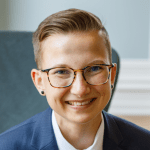
Leighton Schreyer (he/they): is a queer, trans*, disabled writer and poet based out of Toronto who describes themselves as fundamentally unsatisfied with the status quo. Through their writing, Leighton strives to see the unseen and hear the unheard, to make the invisible visible and tell the untold. They use their writing as a tool for activism and empowerment, challenging readers to reflect on the biases and assumptions that shape worldviews. As a current medical student, Leighton is particularly interested in the intersection of health, arts, and the humanities, and is passionate about using stories, storytelling, writing, and poetry as powerful tools for healing and connection.
 south broadway press